
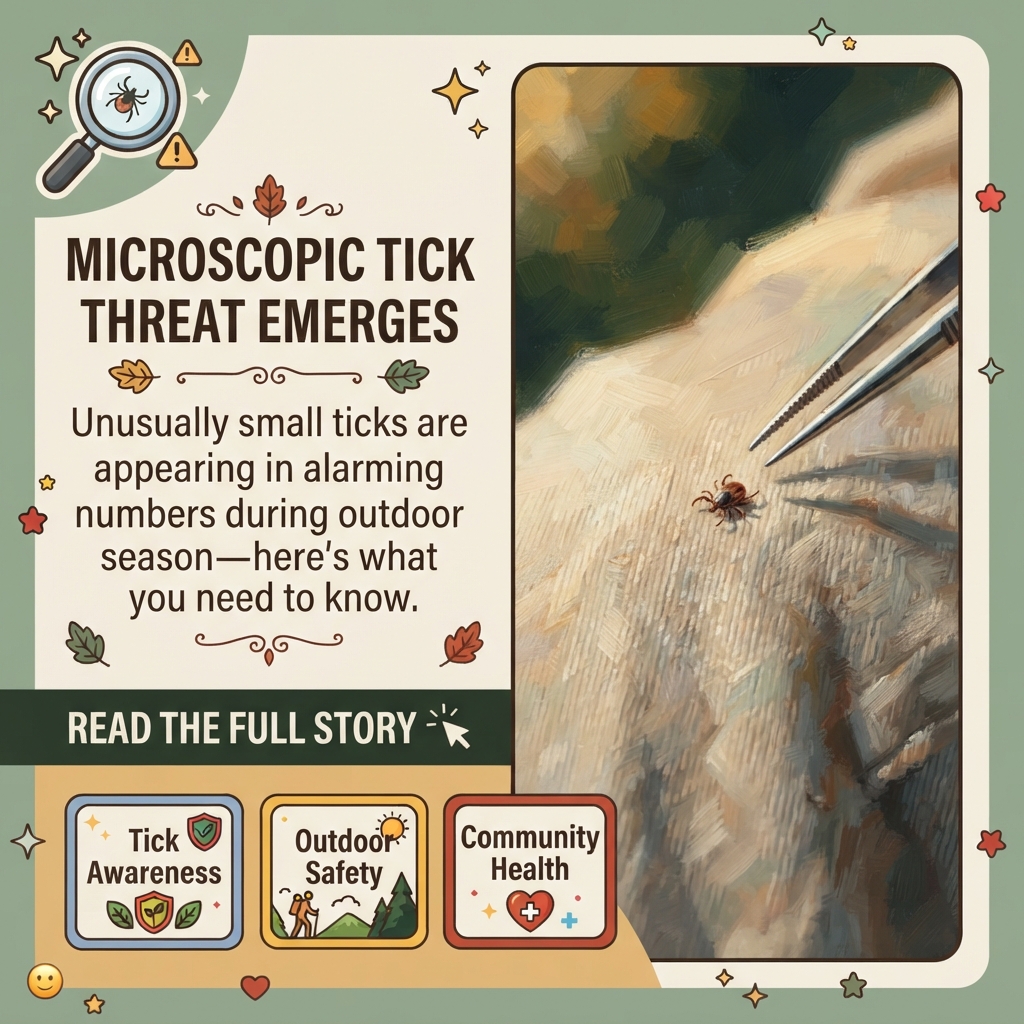
🪱 Unusually Small Ticks Spotted in Sequatchie Valley — What Farmers and Outdoor Enthusiasts Should Know
As spring and early summer bring residents outdoors for farm work, hiking, and pastoral activities across the Sequatchie Valley, a local farmer’s recent discovery is raising awareness about an unexpected tick threat: microscopic-sized ticks appearing in unusually large numbers. The finding highlights a seasonal pest concern that may affect anyone spending time in woods, tall grass, or pasture land in the region.
🔍 Why This Matters
Tick encounters are common in Tennessee’s outdoor spaces, but the discovery of unusually small ticks—so tiny that a toy digital microscope was needed to examine them closely—suggests a potential shift in tick behavior or population dynamics that residents should understand. 🌾 For farmers, ranchers, outdoor workers, and families who spend time in natural areas, awareness of tick size and behavior can affect how they protect themselves and their livestock. Ticks of any size can carry disease, and smaller ticks may be harder to spot during routine self-checks, potentially increasing the risk of undetected attachment.
❤️ Human Impact
The experience described—discovering approximately 10 ticks crawling up a pant leg after moving cattle—illustrates how quickly and unexpectedly tick exposure can happen during routine farm work. 🚿 The immediate response of taking a hot shower reflects a common protective measure, but it also underscores the discomfort and concern that tick encounters create for people working outdoors. For families with children, the discovery raises questions about how to safely check for ticks and what to do if smaller ticks are found. Parents and caregivers may need to adjust their tick-checking routines to account for the possibility of smaller parasites that are easier to miss.
📍 Local Perspective
The post specifically references Tennessee, the Cumberland Plateau, and farm life—all central to the Sequatchie Valley experience. 🏞️ The Cumberland Plateau region, which includes much of the Sequatchie Valley, is characterized by forests, pastures, and mixed-use land where both livestock and wildlife thrive. Tick populations in this area are influenced by seasonal temperature changes, humidity, and the presence of deer and other wildlife that serve as tick hosts. The observation of unusually small ticks may reflect broader ecological patterns or seasonal variations that are worth monitoring as the region moves deeper into warmer months. Whether this represents a new trend or a seasonal variation remains unclear, but the timing—early summer—aligns with peak tick activity in Tennessee.
🧠 What Residents Should Know
Based on the experience shared, several practical takeaways emerge for Sequatchie Valley residents:
- Check thoroughly after outdoor exposure: Spend time in woods, tall grass, or pasture? Conduct a full-body tick check, paying special attention to areas where ticks commonly attach (behind ears, along the hairline, in skin folds, and along the waistline).
- Don’t assume size: Ticks vary in size depending on their life stage. Nymphal ticks (immature ticks) are particularly small and easy to miss. If you find any tick, remove it promptly and safely.
- Use protective measures: Wear light-colored clothing to make ticks more visible, tuck pants into socks when in high-risk areas, and consider using tick repellent on skin and clothing.
- Know how to remove a tick: Use fine-tipped tweezers to grasp the tick as close to the skin as possible and pull straight out. Avoid crushing the tick or using heat, which can increase disease transmission risk.
🌐 Community Connections
This observation connects to broader community networks in the Sequatchie Valley: 🐄 farmers and ranchers who manage livestock and pasture land; outdoor recreation enthusiasts who hike and camp in the region’s forests; families with children who play outside; and local veterinarians and health care providers who advise on tick prevention and disease management. Schools and community organizations that sponsor outdoor activities may also benefit from understanding tick risks and sharing prevention information with participants. The shared experience of tick exposure—whether on a farm, in a backyard, or on a hiking trail—creates a common concern that can strengthen community awareness and mutual support.
💡 Opportunities for Connection
This discovery creates opportunities for residents to:
- Share observations: If you’ve noticed unusual tick activity, size, or behavior in your area, sharing that information with neighbors, local agricultural extension offices, or community groups can help build a clearer picture of regional tick trends.
- Learn together: Community groups, churches, or civic organizations could host informal educational sessions on tick prevention and safe removal techniques, especially as outdoor season peaks.
- Support local farmers: Understanding the challenges farmers face with tick exposure during livestock management can foster appreciation for agricultural work and create opportunities to ask how the community can help.
- Advocate for resources: If tick-borne illness becomes a concern, residents can work with local health departments and extension services to ensure adequate resources for education and prevention.
❓ Questions Worth Considering
As residents reflect on this tick discovery, a few questions may deepen community understanding:
- Have you noticed changes in tick size, behavior, or frequency in your area of the Sequatchie Valley over recent seasons?
- How do farmers and outdoor workers in your community currently protect themselves from ticks, and are there gaps in awareness or resources?
- What role might local wildlife populations (deer, raccoons, other animals) play in tick abundance, and how might that affect community land management?
- Are local schools and youth organizations equipped with tick prevention information for outdoor activities?
- How can neighbors support each other in staying safe during outdoor season?
🔮 What Happens Next
While this post documents a single observation, it may prompt broader attention to tick activity in the region as summer progresses. 📢 Residents who notice similar patterns are encouraged to report them to local agricultural extension offices (such as the University of Tennessee Extension), which track pest populations and can provide guidance. Health care providers may also see an increase in tick-related visits and questions as awareness grows. Community members who work outdoors should remain vigilant about tick checks and protective measures throughout the season.
🧵 Community Threads: The Invisible Network
This story reveals several important connections beneath the surface:
The farmer-to-family connection: A farmer’s discovery on a working farm becomes relevant information for families hiking in the same forests and playing in the same fields. The shared landscape creates shared risk and shared responsibility for awareness.
The livestock-wildlife-human link: Ticks that parasitize cattle also parasitize deer, raccoons, and other wildlife. The health of livestock, wildlife populations, and human safety are interconnected through the tick lifecycle. Farmers managing pastures are, in effect, managing an ecosystem that affects everyone in the valley.
The parent-to-parent network: A parent’s experience with tick discovery and removal becomes valuable knowledge to share with other parents. Schools, playgroups, and community organizations become natural channels for spreading practical safety information.
The outdoor recreation-agriculture connection: Hikers, campers, and outdoor enthusiasts share the same forests and fields as farmers. Both groups benefit from understanding tick risks and prevention, creating common ground for conversation and mutual support.
The seasonal rhythm: Tick season is part of the natural cycle that shapes life in the Sequatchie Valley. Residents who understand this rhythm—and prepare for it—strengthen their resilience and their ability to help others do the same.
🌱 Long-Term Community Impact
If unusually small ticks become a recurring pattern in the Sequatchie Valley, the long-term implications could include increased awareness and prevention practices among residents, potential changes in how farmers manage pastures and livestock, and greater collaboration between agricultural, health, and outdoor recreation communities. Over time, shared knowledge about tick behavior and prevention can reduce disease risk, strengthen community health, and deepen residents’ understanding of the natural systems that shape life in the valley. The discovery also underscores the importance of local observation and communication—residents who pay attention to their environment and share what they learn become informal educators and stewards of community health.




0 Comments