
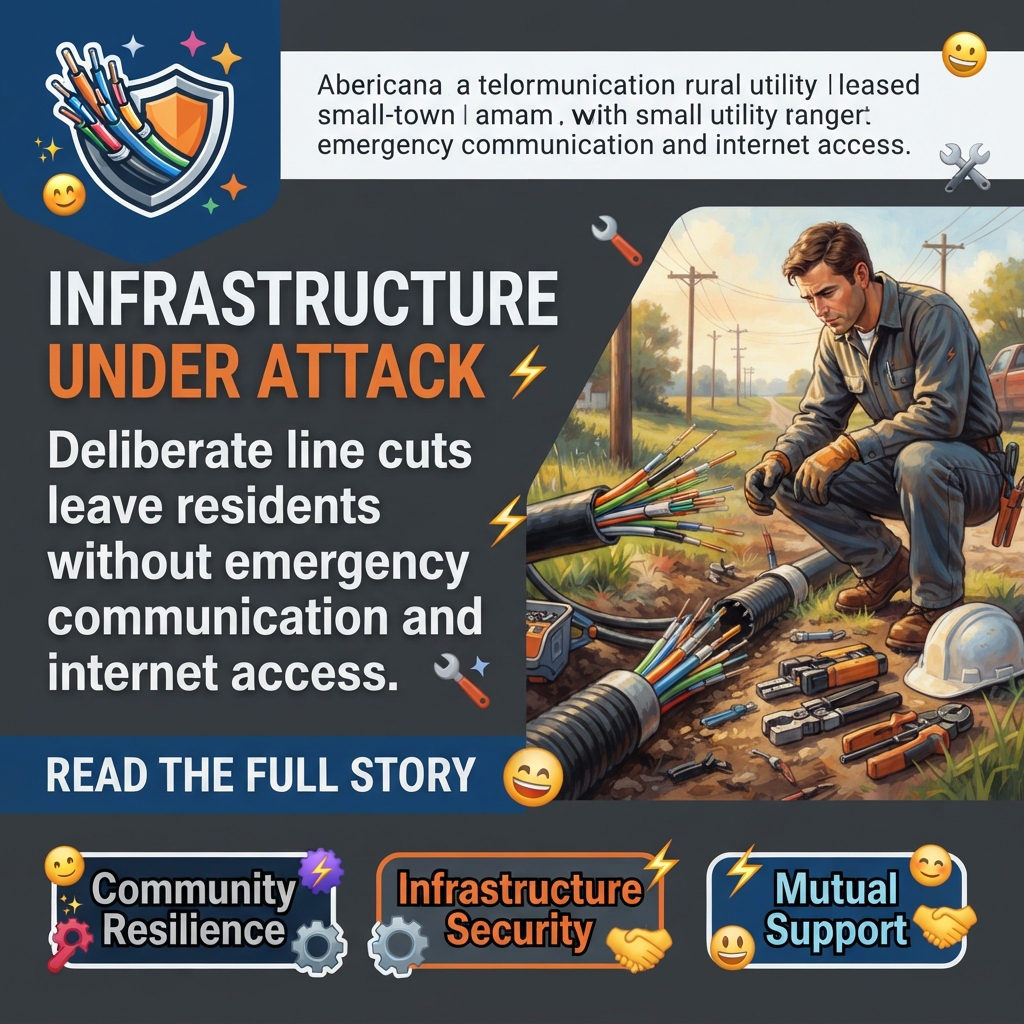
🚨 Intentional Line Cuts Disrupt Service in Daus Mountain Area — Bledsoe Telephone Cooperative Seeks Information
Residents and businesses in the Daus Mountain service area are without telephone and internet connectivity after fiber lines were deliberately cut, prompting Bledsoe Telephone Cooperative to launch a public appeal for information. The incident underscores the vulnerability of critical infrastructure that many rural communities depend on for emergency communication, business continuity, and daily life.
📍 What Happened
Bledsoe Telephone Cooperative reported an outage affecting its Daus Mountain service area on August 23, 2026. The cooperative confirmed that telephone and fiber lines were intentionally damaged—not the result of accidental construction, weather, or equipment failure. The cooperative’s crews mobilized immediately to restore service, but the deliberate nature of the damage raised concerns about infrastructure security and community safety. 🔧
❓ Why This Matters
In rural areas served by cooperatives like Bledsoe Telephone, internet and phone service are not luxuries—they are lifelines. When lines are cut, residents lose the ability to call 911 in emergencies, businesses cannot process transactions or communicate with customers, remote workers cannot access their jobs, and families cannot reach loved ones. The intentional nature of this damage suggests a deliberate act rather than a maintenance issue, raising questions about who might target critical infrastructure and why. 📞
For a region where broadband connectivity has become essential to economic opportunity, education, and healthcare access, any disruption to service—especially one caused by vandalism—represents a direct threat to community resilience. Cooperative members pay for reliable service; intentional damage puts that reliability at risk and may increase costs if repairs become frequent.
👥 Who Is Affected
The outage touches everyone in the Daus Mountain service area who relies on Bledsoe Telephone Cooperative for phone or internet service. This includes:
- Households without backup communication methods
- Businesses dependent on internet for operations, payments, or customer service
- Remote workers unable to access their jobs
- Seniors and vulnerable residents who may depend on phone service for medical alerts or family contact
- Emergency responders coordinating with residents in the affected area
🔍 What Residents Should Know
Bledsoe Telephone Cooperative is actively working to restore service and has asked the public for help. If you saw anything suspicious in the Daus Mountain area around the time of the outage, or if you have information about who may have cut the lines, the cooperative urges you to contact them directly or reach out to local law enforcement. Even small details—unusual vehicles, unfamiliar people in the area, or timing observations—may help investigators identify those responsible. 📣
The cooperative emphasized that community information is critical to resolving this incident and preventing future damage. Residents who witnessed anything are encouraged to come forward without hesitation.
⚡ What Happens Next
Bledsoe Telephone Cooperative crews are working to repair the intentionally cut lines as quickly as possible. Once service is restored, the cooperative and local law enforcement will likely continue investigating to identify who was responsible for the damage. Depending on the findings, this could result in criminal charges or civil liability for the responsible party. The cooperative may also review security measures to protect infrastructure from future vandalism. 🛠️
Residents should monitor Bledsoe Telephone Cooperative‘s official communications for updates on restoration timelines and any additional information about the incident.
🤝 Community Connections
This incident highlights the interdependence of rural communities on shared infrastructure. Bledsoe Telephone Cooperative is a member-owned organization—meaning the people it serves are also its owners. When infrastructure is damaged, the entire cooperative community bears the cost and inconvenience. The appeal for public information reflects a cooperative model that depends on member engagement and mutual support. When one member’s service is disrupted, it affects the stability and trust that holds the cooperative together. ❤️
Local law enforcement and the cooperative are working together to protect a resource that belongs to the community. This partnership between public safety and utility providers is essential in rural areas where infrastructure is often spread across wide geographic areas and vulnerable to isolated incidents.
💭 Community Questions Worth Considering
- What security measures are currently in place to protect critical infrastructure like telephone and fiber lines in rural areas, and are they sufficient?
- How can community members help protect shared infrastructure, and what should residents do if they notice suspicious activity near utility lines?
- What is the typical cost and timeline for repairing intentionally damaged fiber lines, and how does that affect cooperative rates or service reliability?
- Are there patterns of infrastructure vandalism in the region, or is this an isolated incident?
- How can rural communities balance the need for accessible infrastructure with the security required to protect it?
🔗 Community Threads: Infrastructure and Trust
The Cooperative-Member Relationship: Bledsoe Telephone Cooperative exists because rural residents banded together to provide service that larger companies would not. When lines are cut, it is not just a business disruption—it is a breach of the mutual trust that holds the cooperative together. Members depend on the cooperative to maintain service; the cooperative depends on members to protect and respect shared infrastructure. This incident tests that relationship and may prompt conversations about how the community can collectively safeguard the systems it owns.
Rural Infrastructure Vulnerability: Rural telephone and fiber lines are often spread across miles of open terrain, making them harder to monitor and easier to access than infrastructure in densely populated areas. This geographic reality creates both opportunity and risk. Communities like those served by Bledsoe Telephone must balance the need for accessible, affordable infrastructure with the reality that isolation can make that infrastructure vulnerable to vandalism or sabotage. Understanding this tension is key to building resilient rural communities.
Public Safety and Utility Partnership: When critical infrastructure is damaged, the response involves both the utility provider and law enforcement. This partnership is essential in rural areas where resources are limited and response times may be longer. The cooperative’s decision to involve the public in the investigation reflects a recognition that community awareness and vigilance are part of the security solution.
📊 Long-Term Community Impact
If intentional infrastructure damage becomes a pattern, it could have serious long-term consequences for the region. Repeated outages erode confidence in service reliability, which may discourage new residents or businesses from locating in the area. Rising repair costs could pressure the cooperative to increase rates, affecting affordability for members. More broadly, infrastructure vandalism signals a breakdown in community norms and shared responsibility—a warning sign that deserves attention from civic leaders, law enforcement, and residents alike. 🌄
Conversely, if the community responds by supporting the investigation, protecting infrastructure, and reinforcing the cooperative model, this incident could strengthen local bonds and demonstrate the resilience of rural communities that depend on mutual aid and shared resources.


0 Comments