
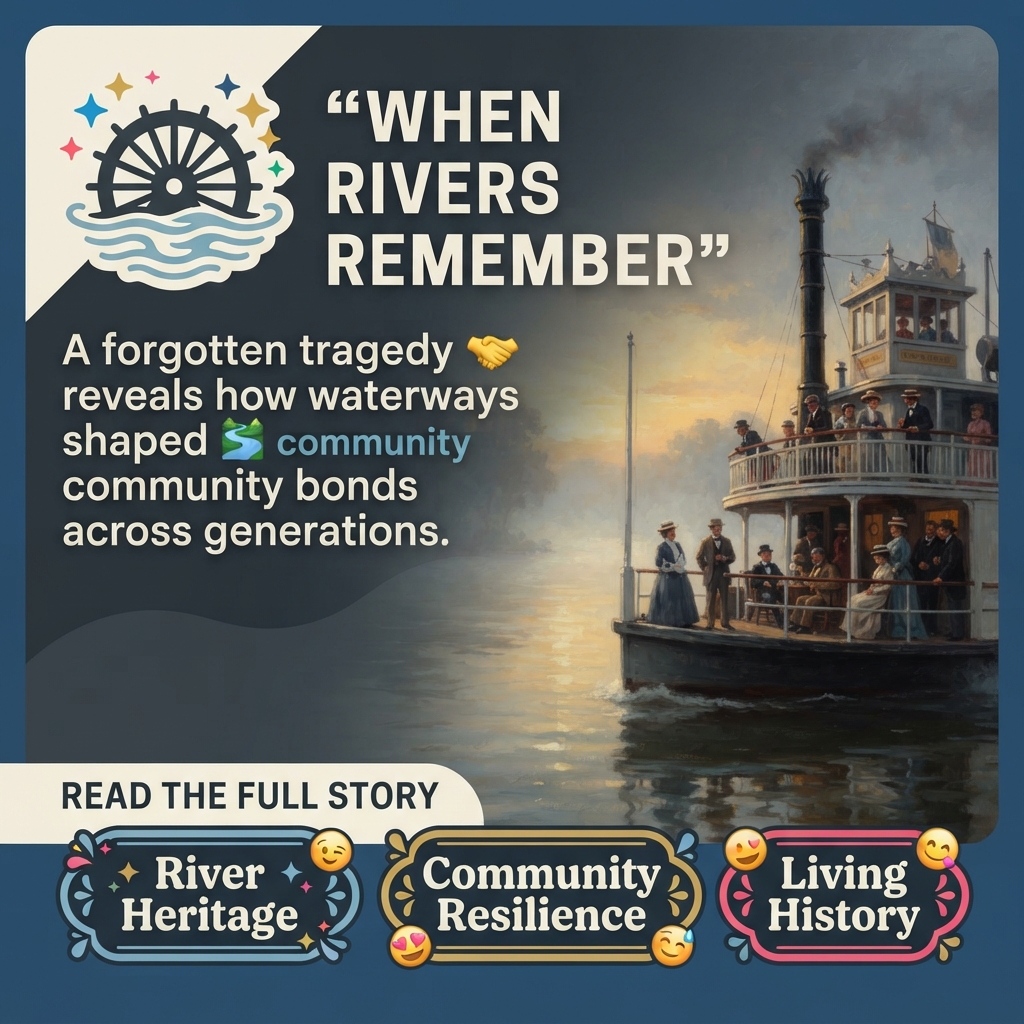
🚢 The Columbia Steamboat Disaster of 1918 — A Tragedy That Shaped American River History
While the Sequatchie Valley has its own rich history of river commerce and community gathering, the story of the Columbia steamboat disaster reminds us how waterways have shaped lives across the broader region for generations. On July 5, 1918, one of the deadliest disasters in Illinois River history claimed 87 lives—a tragedy that remains largely forgotten today, despite its profound impact on families and communities across Central Illinois.
❌ What Happened That Night
Nearly 500 passengers boarded the Columbia excursion steamer on the evening of July 5, 1918, for what promised to be a summer night of dancing, music, and community celebration. 🎶 Just after midnight, as the massive paddlewheel steamer made its return trip to Pekin, Illinois, disaster struck. The Columbia hit a submerged tree in the Illinois River near Creve Coeur. Within minutes, the vessel began sinking. A collapsed deck trapped many passengers below, leaving them unable to escape. 💔
👥 Who Was Lost
Eighty-seven people lost their lives in the disaster. Many were ordinary families from Pekin—57 of the victims came from that single community—and others from across Central Illinois who had simply chosen to spend a Friday evening enjoying the river. These were neighbors, families, and friends whose absence would reshape their hometowns forever. The scale of loss was staggering for communities already navigating the uncertainties of World War I.
📍 Why This Matters to Local Communities
The Columbia disaster represents one of the deadliest maritime tragedies in American river history, yet it remains largely unknown outside of local historical circles. 📚 For residents of the Sequatchie Valley and Central Illinois, the story carries deeper meaning: it reminds us how waterways have been central to community life, commerce, and recreation for generations. Rivers brought people together—for work, celebration, and connection. The Columbia disaster also reveals the vulnerability of those connections and the fragility of community bonds when tragedy strikes.
The tragedy occurred during an era when excursion steamers were popular gathering places for families and friends. These vessels represented opportunity, leisure, and the promise of shared experience. The loss of 87 lives in a single night devastated entire neighborhoods and left scars that lasted for decades.
🧵 Community Threads: How Waterways Connect Us
The Columbia disaster reveals several invisible threads that connect communities across time and geography:
River Commerce and Community Identity: Waterways like the Illinois River (and historically, the Tennessee River in the Sequatchie Valley) were lifelines for commerce, transportation, and social gathering. The Columbia served as a floating community center—a place where ordinary people could gather for celebration. Understanding this history helps residents appreciate how rivers have shaped local identity and opportunity across generations. 🌊
Shared Vulnerability: The disaster reminds us that communities are interconnected through shared risks and shared losses. When tragedy strikes one town, it ripples across the region. Pekin’s loss was felt throughout Central Illinois. This thread connects past and present: how do modern communities support one another when disaster strikes?
Memory and Collective History: The fact that the Columbia disaster remains largely forgotten—despite being one of the deadliest river disasters in American history—raises important questions about how communities preserve and share their stories. Local historians, genealogists, and community organizations play a vital role in keeping these narratives alive.
💡 What Residents Should Know
The Columbia disaster occurred on July 5, 1918, in the Illinois River near Creve Coeur, during the return trip from Pekin. The tragedy claimed 87 lives, with 57 victims from Pekin alone. The disaster has been largely forgotten by the general public, despite its significance in American maritime history. 📖
A video presentation created by Channel 309 reimagines the tragedy as a 1918 breaking newsreel, offering a creative way to understand how the disaster might have been reported if motion picture news cameras had been present. This approach helps modern audiences connect with the human reality of the event.
🤔 Community Questions Worth Considering
As residents learn about the Columbia disaster, several questions emerge:
- How do communities preserve and share stories of historical tragedy, and why does remembrance matter?
- What role do local historians, genealogists, and community organizations play in keeping these narratives alive?
- How have waterways shaped community identity and gathering in the Sequatchie Valley and Central Illinois, and what lessons does the Columbia disaster offer about those connections?
- When tragedy strikes a community, how do neighboring towns and regions support one another, and what does that mutual support look like today?
- What other significant local or regional disasters or events deserve greater public awareness and remembrance?
⏳ Long-Term Community Impact
The Columbia disaster had profound, lasting effects on the communities it touched. Families lost breadwinners, children lost parents, and entire neighborhoods lost neighbors in a single night. 😔 The tragedy reshaped how communities thought about public safety, maritime regulation, and the risks of leisure activities. It also left emotional and social scars that persisted for generations.
More broadly, the disaster illustrates how waterways—while offering opportunity and connection—also carry inherent risks. The tragedy contributed to evolving maritime safety standards and public awareness about disaster preparedness. For modern communities, it serves as a reminder of the importance of safety regulations, emergency response systems, and community resilience.
📣 Why Remembrance Matters
The Columbia disaster remains one of the deadliest disasters in Illinois River history, yet far too few people remember it today. 🕯️ Keeping these stories alive—through historical research, creative retellings, and community conversation—honors the lives lost and helps modern residents understand the deeper history of the places they call home. It also connects us to the broader human experience of loss, resilience, and community support.
For residents interested in learning more, the video presentation created by Channel 309 offers a unique entry point into this important historical event. Sharing these stories with family, friends, and neighbors strengthens community bonds and ensures that the lives lost in tragedy are not forgotten.
🤔Source
📰Other Stories
- Historic 1937 Home in Dunlap Offers 100% Financing — Mountain Views and Modern Updates at 188 Davis St. 🏡
- 🎉 Harris Park ‘s New Playground Opens July 4th in Dunlap , TN — Early Morning Debut for Independence Day
- 🔑 Sequatchie Post Medallion Keychain Connects Dunlap Shoppers to 40+ Local Business Discounts
- King Donuts Open July 4th in Dunlap — Early Morning Hours for Holiday ☕️🍩
- 🚗 Professional Car Detailing Now Available in Dunlap — Cases Detailing Launches with Affordable Pricing
- 🏢 Home Depot in Cookeville Now Hiring — Apply Online
- 🇺🇸 Daisy Lane Boutique Opens on July 4th for Biggest Summer Sale in Cookeville, TN

0 Comments