

🗳️Why People Don’t Participate Locally: A Framework for Understanding Voter Turnout, Civic Disengagement and Non-Participation
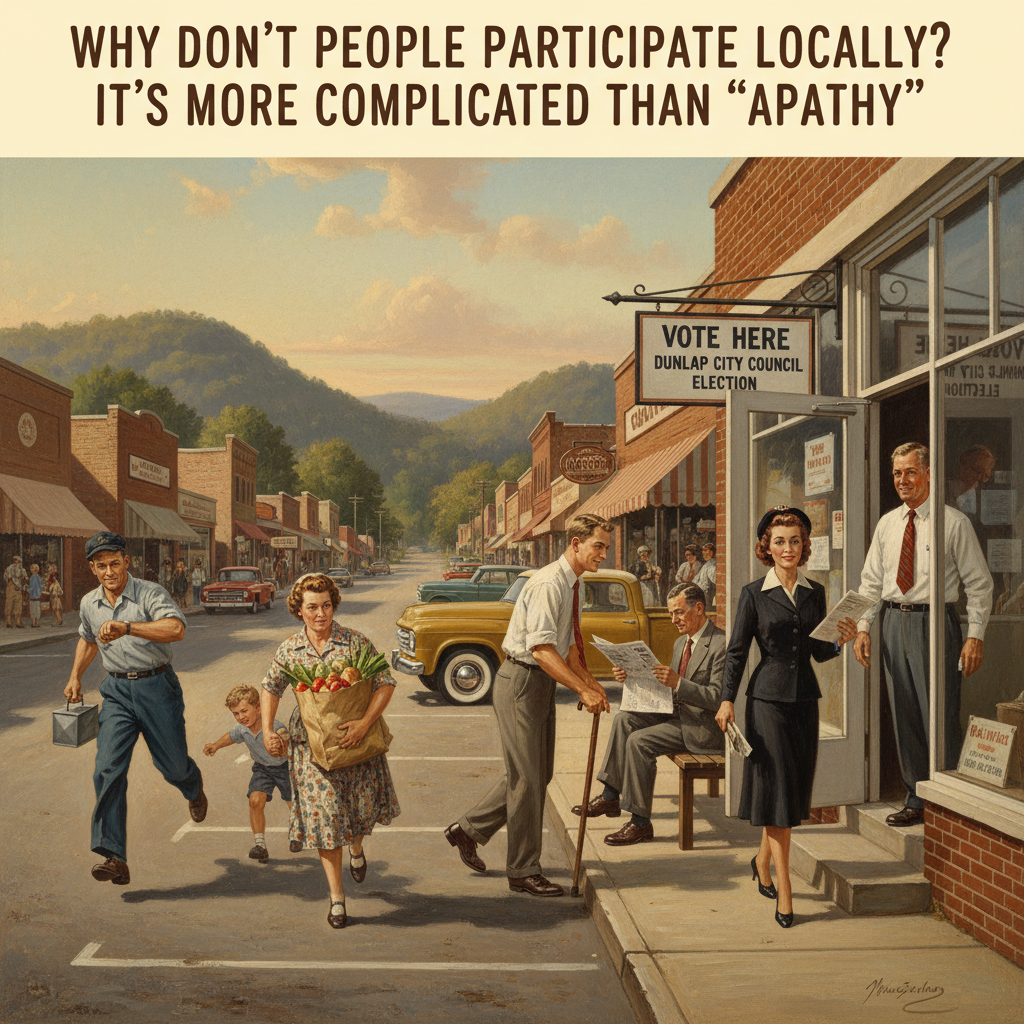
Why Don’t People Participate Locally? It’s More Complicated Than “Apathy”
🚧 Some people can’t participate. 📚 Some don’t know enough. 🏛️ Some have lost trust. 🤷 Some don’t see a meaningful choice. 🔨 Others believe they can accomplish more by helping their community directly.
When voter turnout is low, one explanation tends to appear almost immediately:
“People just don’t care anymore.”
Sometimes that is probably true.
But it is far from the only explanation.
When someone does not vote, attend a public meeting, participate in a civic organization, follow local government or otherwise engage politically, there may be very different reasons behind that decision.
And if we put everyone into one giant category called “apathetic,” we may completely misunderstand what is happening in our community.
📊 Low Participation Is an Outcome — Not a Diagnosis
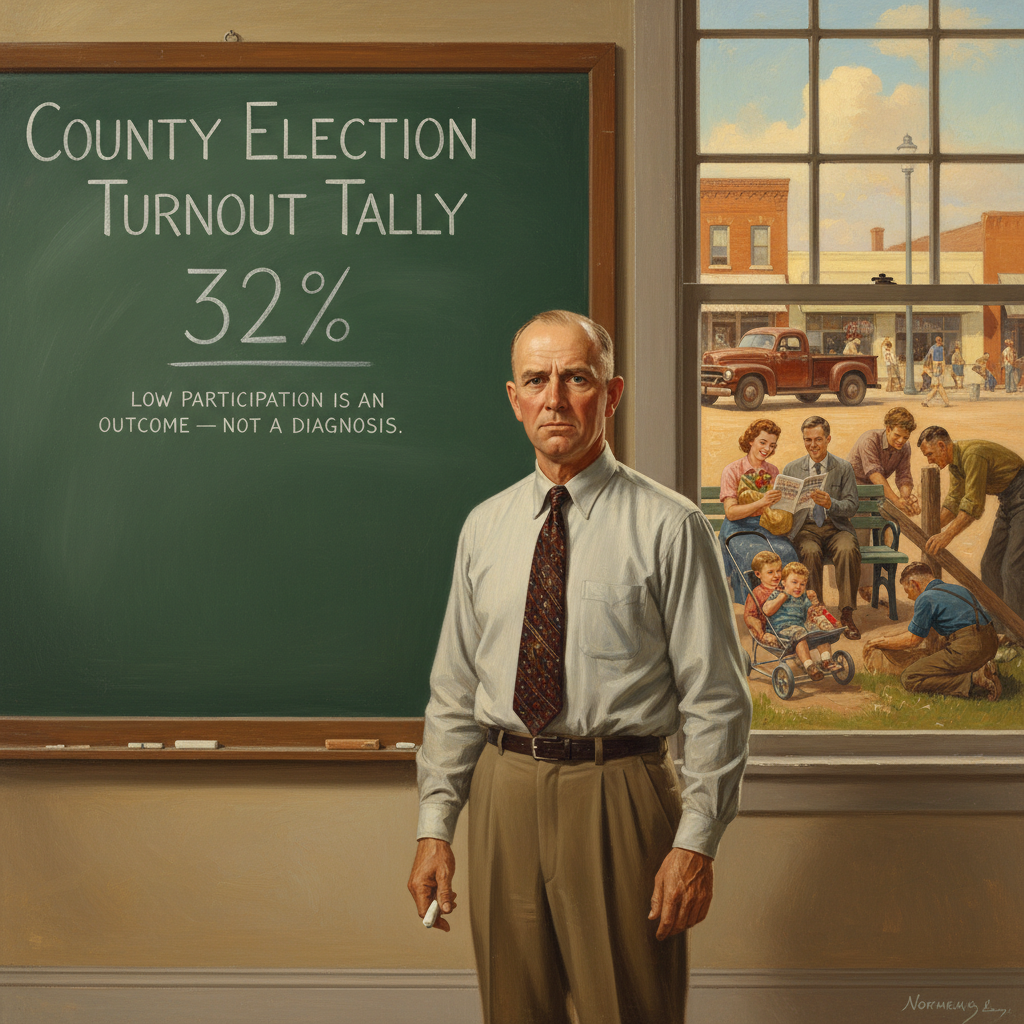
Low Participation Is an Outcome — Not a Diagnosis
Suppose 35% of registered voters participate in an election.
That gives us a useful statistic.
It tells us what happened.
It does not tell us why it happened.
The other 65% might include people who:
- 🚧 Wanted to vote but encountered a practical barrier
- 📚 Did not believe they knew enough about the candidates
- 🤷 Did not support any available candidate
- 🗳️ Saw little reason to participate in uncontested races
- 🏛️ No longer trust political institutions
- ⏳ Believe political participation is a poor use of limited time
- 😴 Are overwhelmed by everyday life
- 🔨 Prefer helping their community directly
- ⚖️ Have philosophical objections to political participation
- 🙈 Or genuinely do not care
Every one of those people appears exactly the same in the election results:
They didn’t vote.
But the reasons — and therefore the possible solutions — are completely different.
🚧 1. The Blocked: “I Wanted to Participate, But Couldn’t”
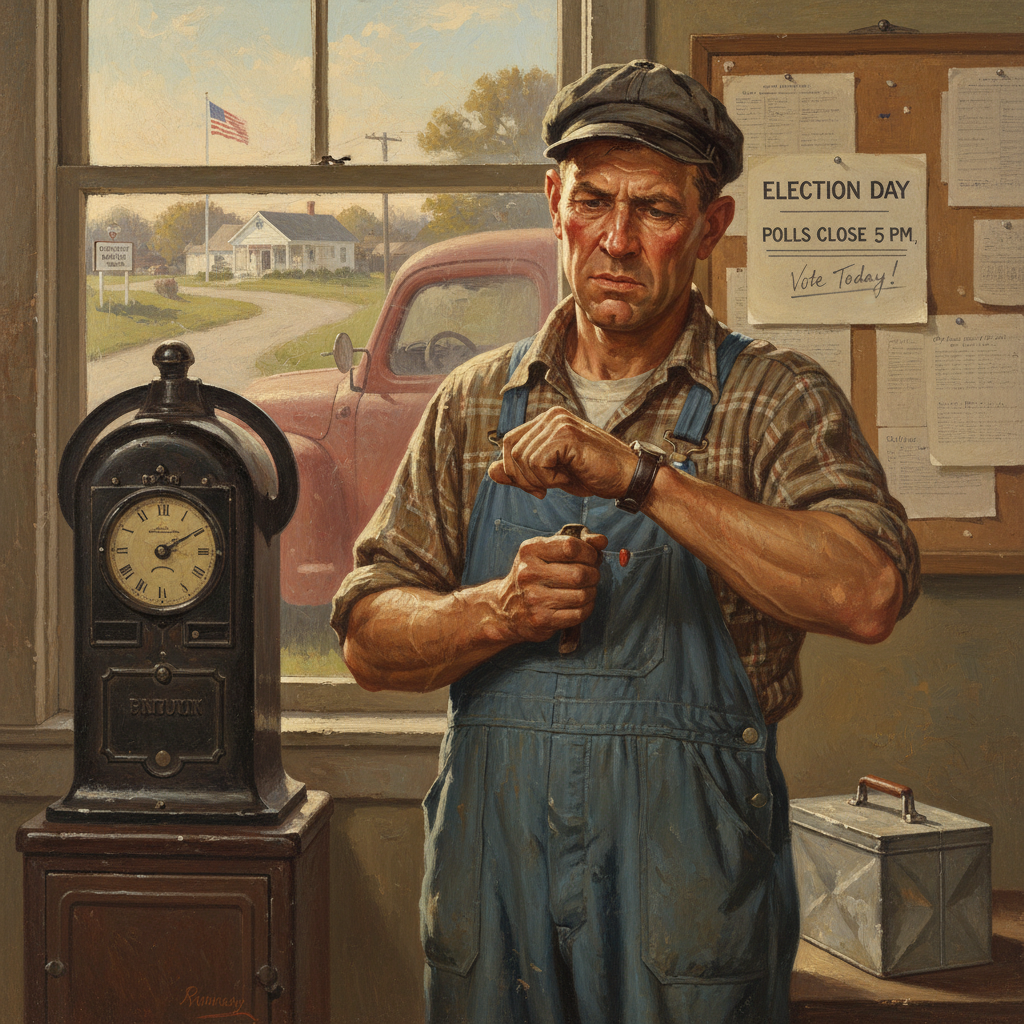
1. The Blocked: “I Wanted to Participate, But Couldn’t”
The simplest explanation is also one of the easiest to understand.
Some people intend to participate but encounter practical barriers.
Those can include:
- ⏰ Work schedules
- 💵 Lack of paid time off
- 🚗 Transportation
- 🩺 Illness or disability
- 👶 Childcare
- 👨👩👧 Family emergencies
- 🏠 Address or registration problems
- 📍 Uncertainty about where to vote
- 🛣️ Distance to assigned polling places
- 📅 Confusion about election dates or hours
These are primarily access problems.
They may be improved through better information, transportation assistance, early-voting awareness, registration reminders and more convenient participation.
Someone in this group probably does not need to be convinced that participation matters.
They need participation to be easier.
📚 2. The Uninformed: “I Don’t Know Enough to Make This Decision”
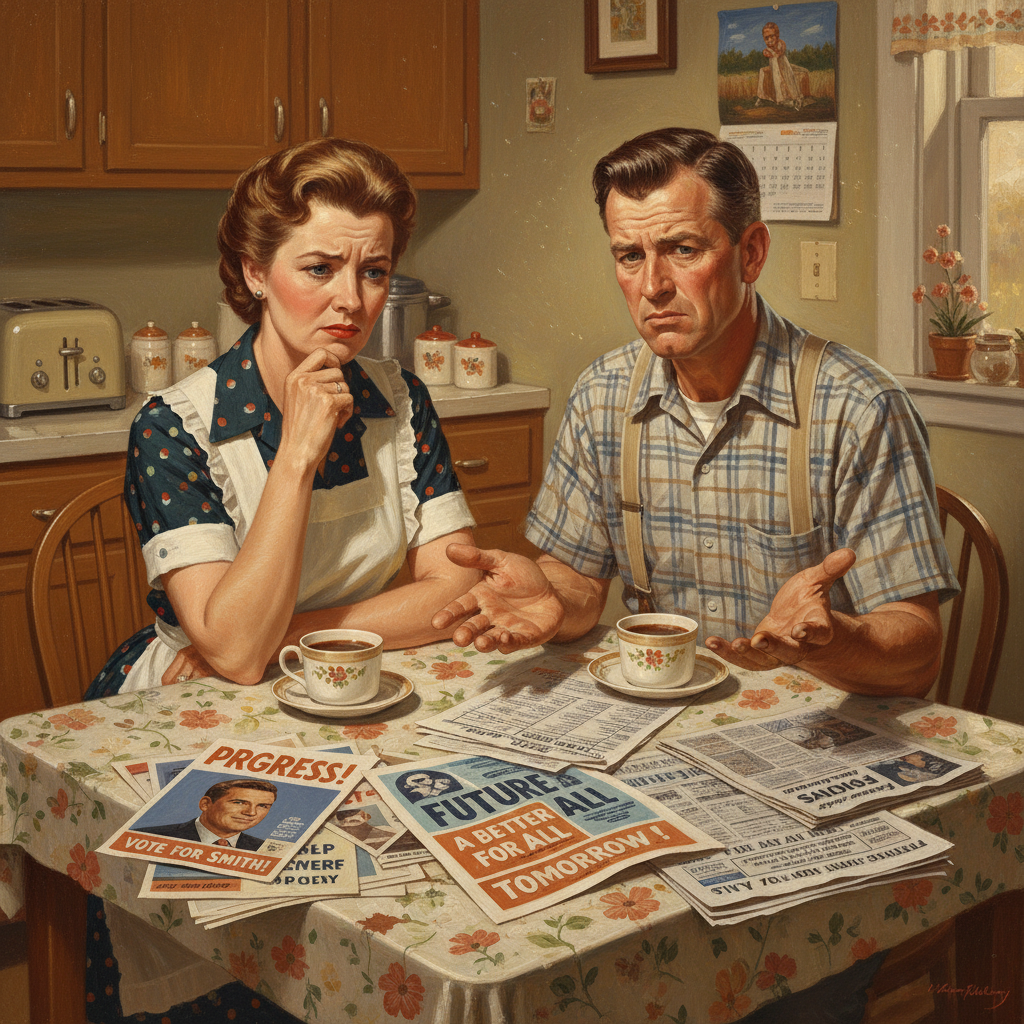
2. The Uninformed: “I Don’t Know Enough to Make This Decision”
Another person may know perfectly well that an election is happening but still choose not to vote.
Why?
Because they don’t feel qualified to choose.
They may not understand:
- 🏢 What a particular office actually does
- 👥 Who the candidates are
- 📋 What each candidate proposes
- ⚖️ How the candidates differ
- 💰 What proposed policies would cost
- 🔍 Whether campaign claims are accurate
- 🏘️ How the decisions would affect Sequatchie County
That person may not be apathetic at all.
They may actually take voting seriously enough to ask:
“If I don’t understand the decision, should I really help make that decision for everybody else?”
That’s an important distinction.
The solution isn’t simply:
“Tell them voting is important.”
The better response may be:
“Give them better information.”
📱 3. Information Can Exist Without Actually Reaching People
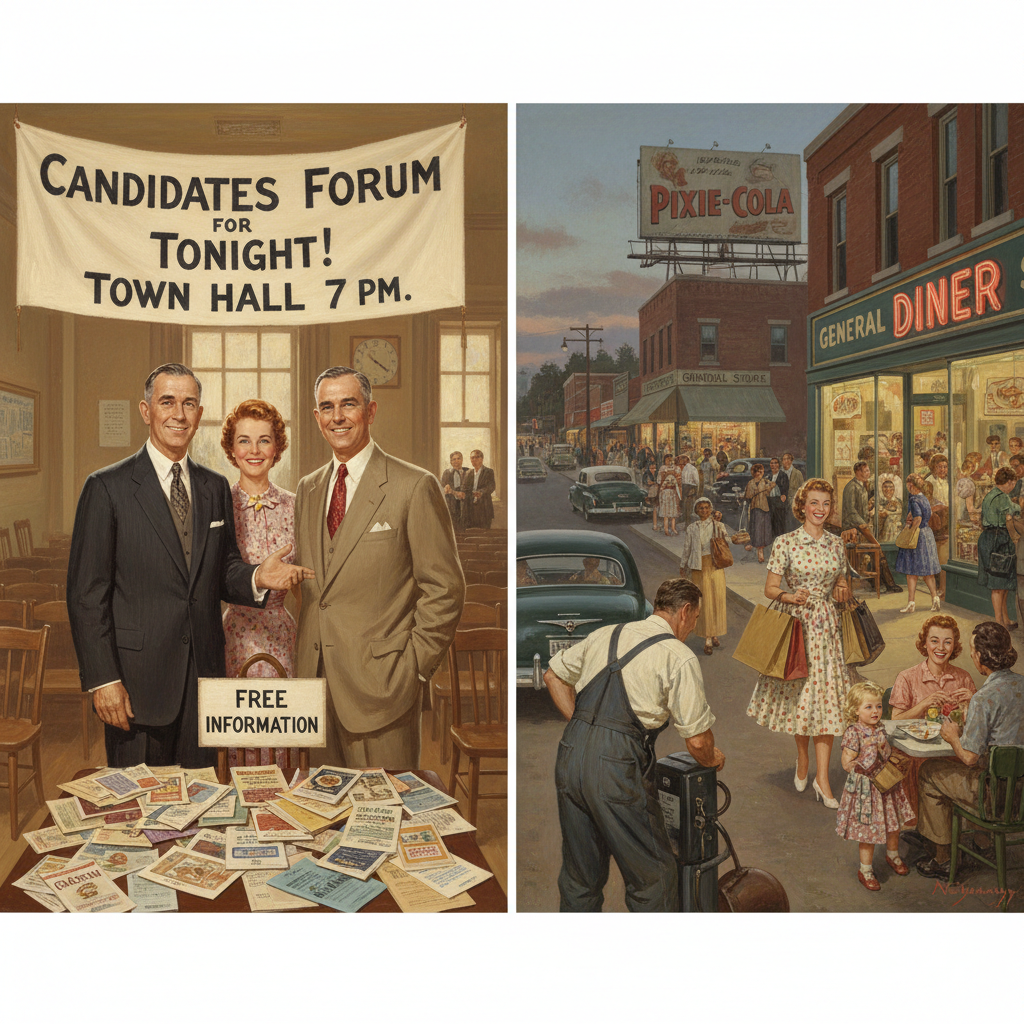
3. Information Can Exist Without Actually Reaching People
This creates another important distinction.
A community might legitimately say:
- 🎤 “We held candidate forums.”
- 📹 “We posted interviews.”
- 🌐 “The information was online.”
- 🤝 “We held meet-and-greets.”
- 📅 “The meetings were public.”
Yet residents can just as legitimately say:
“I never saw any of it.”
Both can be true.
There is a major difference between:
📤 Publishing information
and
📥 Successfully communicating information.
A government website nobody knows exists technically contains information.
A candidate forum attended by 50 people may be an excellent event, but it still reached only a small percentage of voters directly.
A Facebook interview may contain everything somebody needs to know, but Facebook doesn’t guarantee that every local resident will see it.
So perhaps we shouldn’t measure civic communication by asking:
“Did we make the information available?”
A better question is:
“Did the people who needed it actually receive and understand it?”
🤷 4. The Unrepresented: “None of These Choices Represent Me”
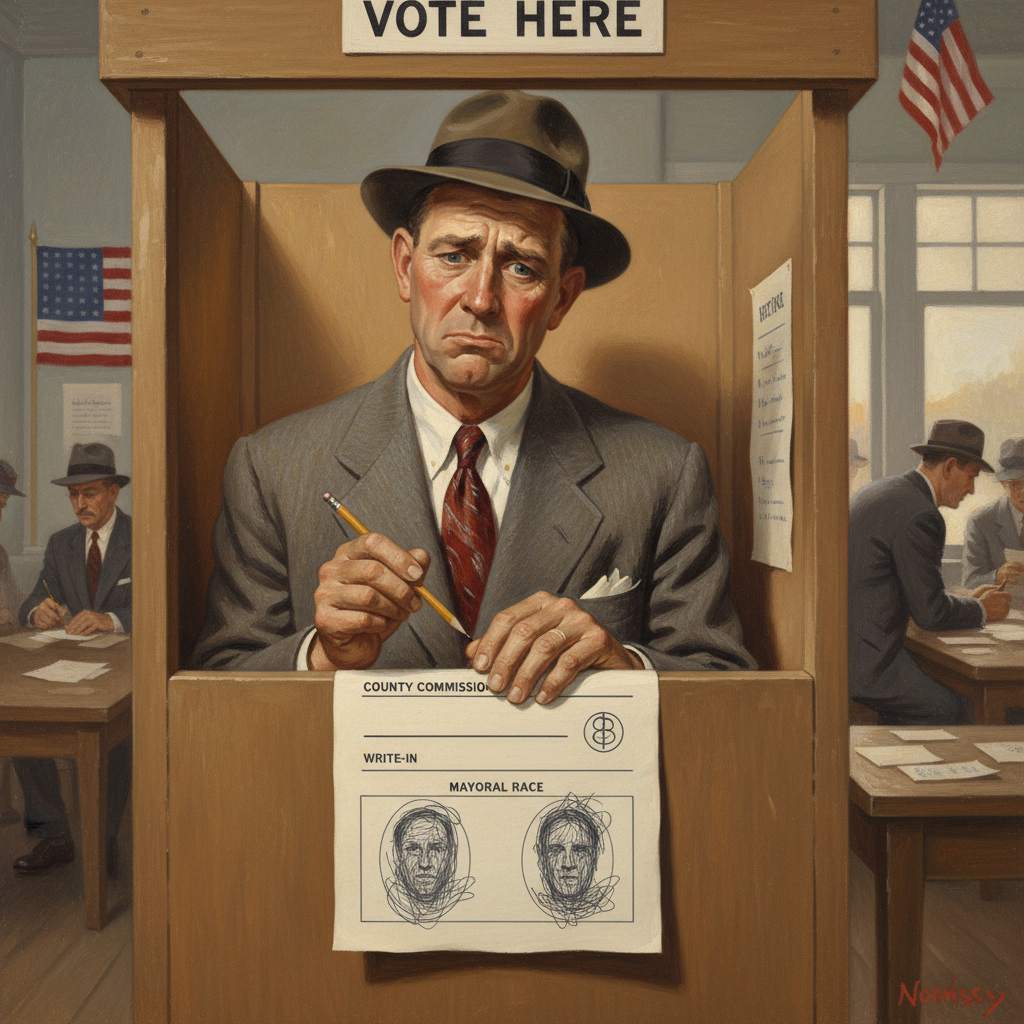
4. The Unrepresented: “None of These Choices Represent Me”
Voting becomes less compelling when the ballot doesn’t appear to offer a meaningful choice.
That can happen when:
- 1️⃣ Only one person is running
- 🔄 Candidates appear nearly identical on important issues
- 👎 The voter dislikes every available candidate
- 🔴🔵 Party affiliation substitutes for substantive differences
- 🎭 Campaigns revolve around personalities instead of governing priorities
An uncontested race creates an especially obvious problem.
If one candidate will win whether a particular citizen votes or not, some people understandably ask:
“What decision am I actually being asked to make?”
This is not an access problem.
It isn’t necessarily apathy either.
It is a competition problem.
🏛️ 5. The Distrustful: “I Don’t Believe the System Responds to People Like Me”
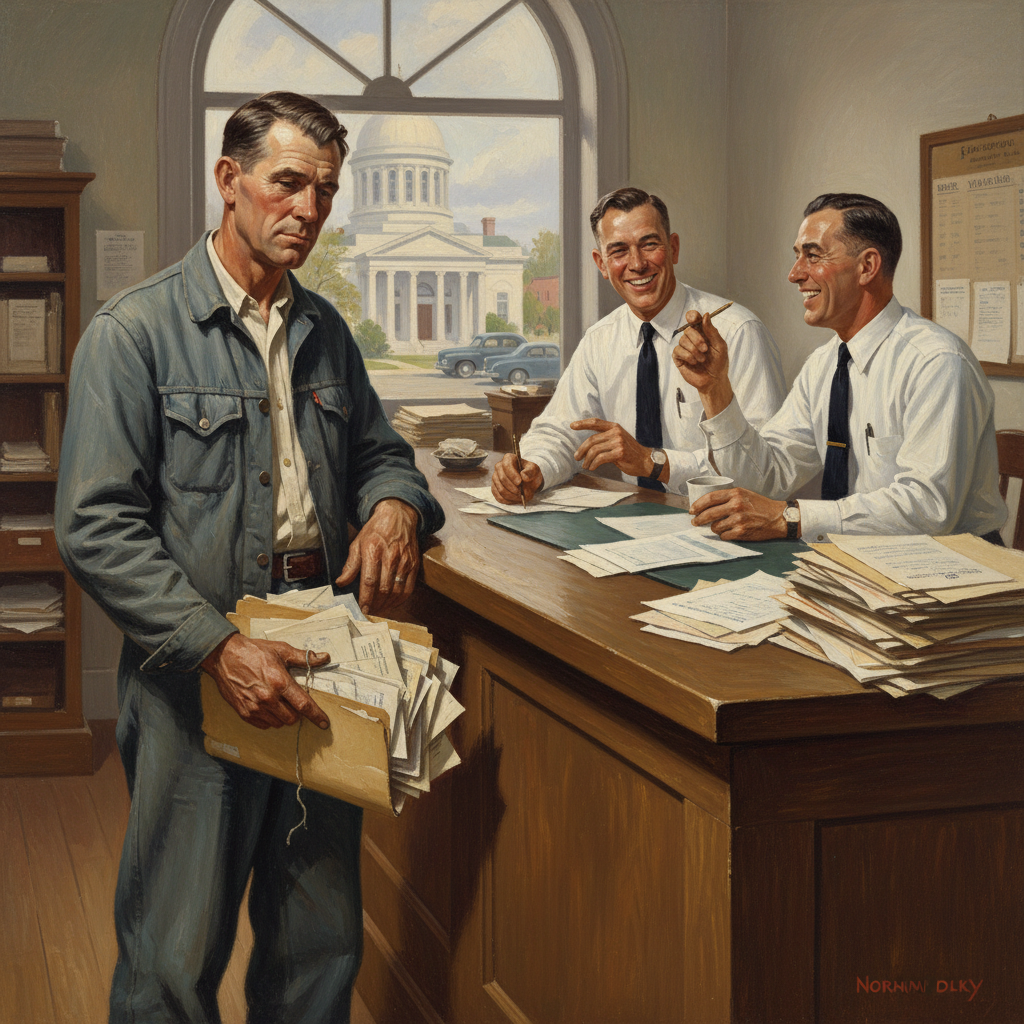
5. The Distrustful: “I Don’t Believe the System Responds to People Like Me”
Now we get into a much more difficult category.
Some people have simply lost confidence in government and politics.
They may believe:
- 🤝 Insiders have disproportionate influence
- 👨👩👧 Certain families or social networks dominate local politics
- 💰 Money carries more influence than ordinary voters
- 📣 Campaign promises disappear after Election Day
- 🚪 Government is inaccessible to ordinary residents
- 🔒 Institutions protect themselves
- 🙉 Officials don’t really listen
- 🔁 The same problems continue regardless of who wins
Some of those beliefs may be justified.
Some may not be.
But from the standpoint of understanding behavior, perception matters.
If someone believes participation produces no meaningful response, another:
🇺🇸 “GO VOTE!”
campaign doesn’t really address the objection.
You cannot solve a trust problem with a registration link.
Trust requires things like:
- 🔎 Transparency
- 📊 Measurable results
- 📝 Clear explanations
- ✅ Follow-through
- 📂 Accessible public information
- 👂 Visible responsiveness
- ⚖️ Accountability
⏳ 6. The Pragmatic Non-Participant: “Is This the Best Use of My Time?”

6. The Pragmatic Non-Participant: “Is This the Best Use of My Time?”
Every person has limited resources.
We have limited:
- ⏰ Time
- 💵 Money
- 🧠 Attention
- 🔋 Energy
- 📣 Influence
So whether we realize it or not, we constantly decide where those resources will produce the greatest return.
Consider two ways of spending an hour.
🏛️ Political Action
Research an issue → study candidates → attend a meeting → persuade other people → vote → hope the candidate wins → hope the candidate follows through → wait for results.
🔨 Direct Action
See a neighbor who needs help → help them.
The first approach can produce enormous consequences when multiplied across thousands of citizens.
But the second provides something psychologically powerful:
An immediate and visible result.
Someone can reasonably believe voting has value while still deciding another use of an hour has greater value.
That’s an opportunity-cost decision.
It isn’t necessarily apathy.
😴 7. The Overwhelmed: “I Have Bigger Problems Today”

7. The Overwhelmed: “I Have Bigger Problems Today”
Not everyone performs a careful cost-benefit analysis.
Sometimes people are simply exhausted.
They’re thinking about:
- 🛒 Groceries
- 💊 Medicine
- 🏠 Rent or mortgage payments
- 🚙 Car repairs
- 💳 Debt
- 👧 Children
- 👴 Aging parents
- 🩺 Health problems
- 💼 Job security
- 😴 Getting enough sleep to do it all again tomorrow
Local politics may genuinely matter to them.
It simply isn’t the most immediate fire that needs extinguishing.
Calling this “laziness” misses something important.
For many people, the scarce resource isn’t patriotism.
It’s bandwidth.
😤 8. The Politically Exhausted: “I’m Tired of the Fighting”

8. The Politically Exhausted: “I’m Tired of the Fighting”
Participation has another cost that doesn’t appear on a ballot:
Social and emotional cost.
Modern political discussion can include:
- 🔥 Personal attacks
- 🗯️ Rumors
- 😠 Arguments
- 🏷️ Political labels
- 👎 Online criticism
- 👨👩👧 Family disagreements
- 💔 Damaged friendships
- 📣 Constant negativity
In a small community, that can become particularly uncomfortable.
The person you disagree with politically may also be:
- 🏠 Your neighbor
- 💼 Your employer
- 🛒 Your customer
- 🏫 Your child’s teacher
- ⛪ Someone from church
- 🔧 Your mechanic
- 🍳 The person sitting beside you at breakfast
For some people, staying politically quiet is simply social risk management.
🎭 9. Campaigns Can Actually Drive People Away
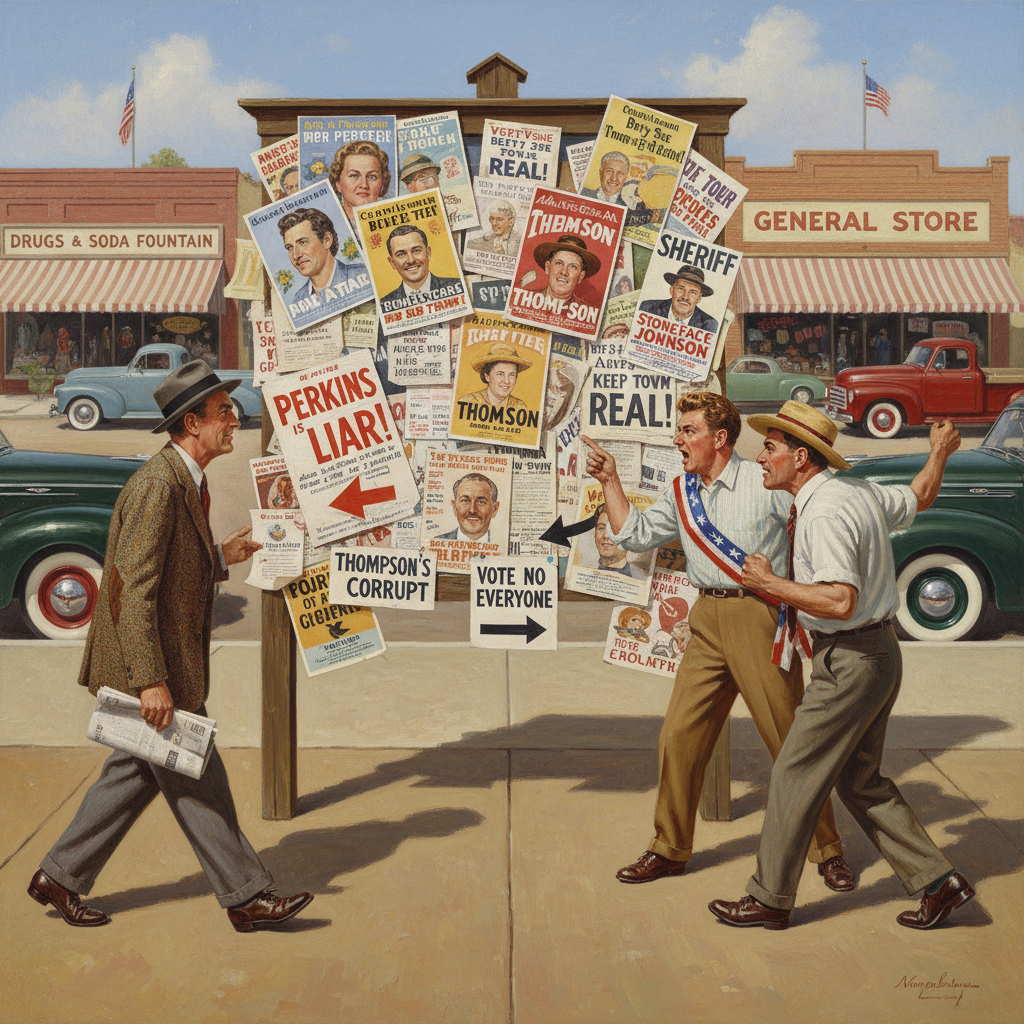
9. Campaigns Can Actually Drive People Away
Here’s another uncomfortable possibility.
Sometimes people don’t disengage despite political campaigns.
They disengage because of them.
If election season becomes dominated by:
- 💥 accusations,
- 🗣️ character attacks,
- 📣 rumors,
- 🔴🔵 tribal politics,
- 🪧 endless sign wars,
- 😡 outrage,
- and very little discussion of actual governing,
some reasonable people eventually conclude:
“I don’t want anything to do with this.”
That’s worth considering.
A campaign is supposed to convince citizens to participate.
If the way politics is conducted causes citizens to withdraw instead, the problem may not be entirely with the citizens.
🤝 10. Political Participation Is Not the Same Thing as Community Participation
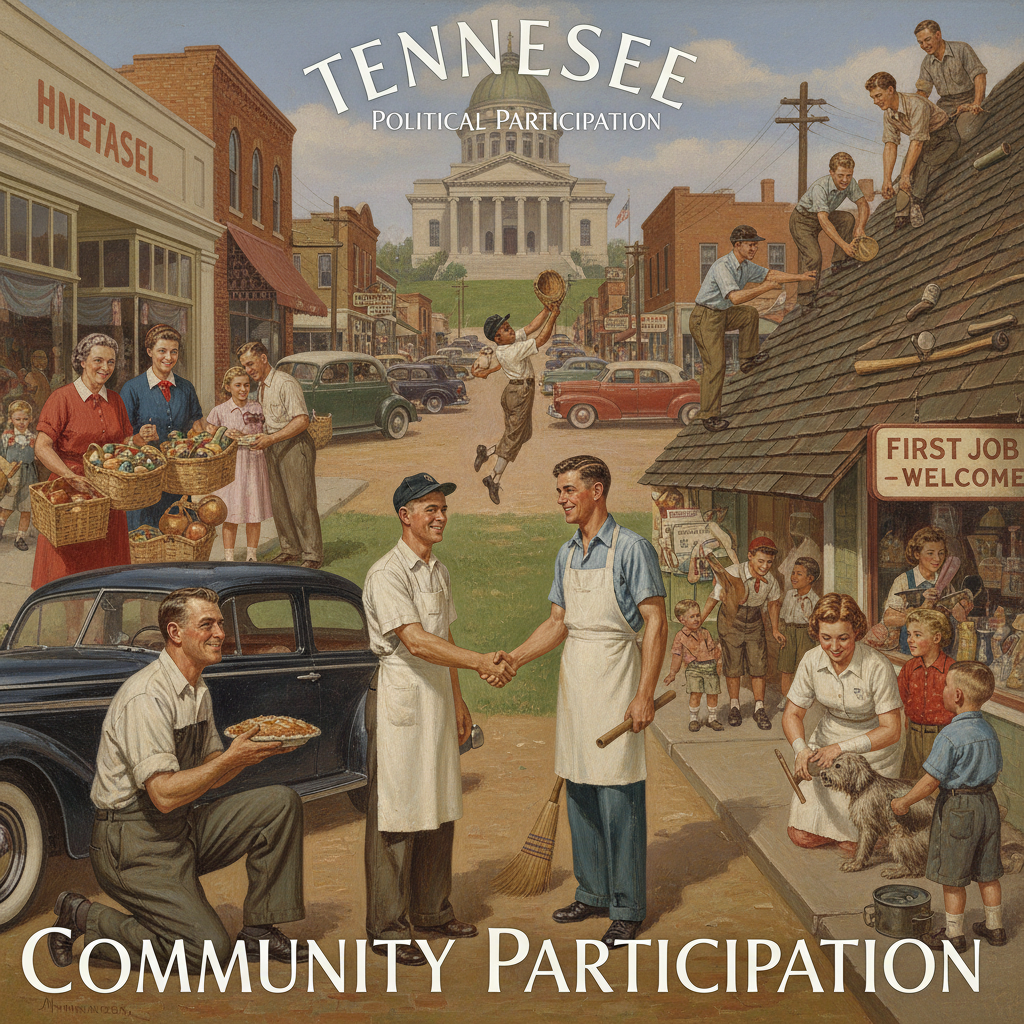
10. Political Participation Is Not the Same Thing as Community Participation
This may be one of the most important distinctions in the entire conversation.
We often measure “civic engagement” using political behavior:
- 🗳️ Did you vote?
- 🏛️ Did you attend the meeting?
- 📋 Did you join the committee?
- 📣 Did you participate in the political process?
But consider someone who rarely does any of those things and instead:
- ⛪ Volunteers through a church
- 🥫 Helps stock a food pantry
- ⚾ Coaches children
- 🧑🏫 Mentors teenagers
- 💼 Creates local jobs
- 🛒 Supports local businesses
- 🐕 Rescues animals
- 🚗 Gives people rides
- 🪚 Helps repair a neighbor’s home
- 💵 Quietly assists struggling families
- 🌳 Organizes neighborhood projects
Is that person really civically disengaged?
Perhaps not.
They may simply participate in their community differently.
🔨 11. The Direct Actor: “I’d Rather Solve the Problem”
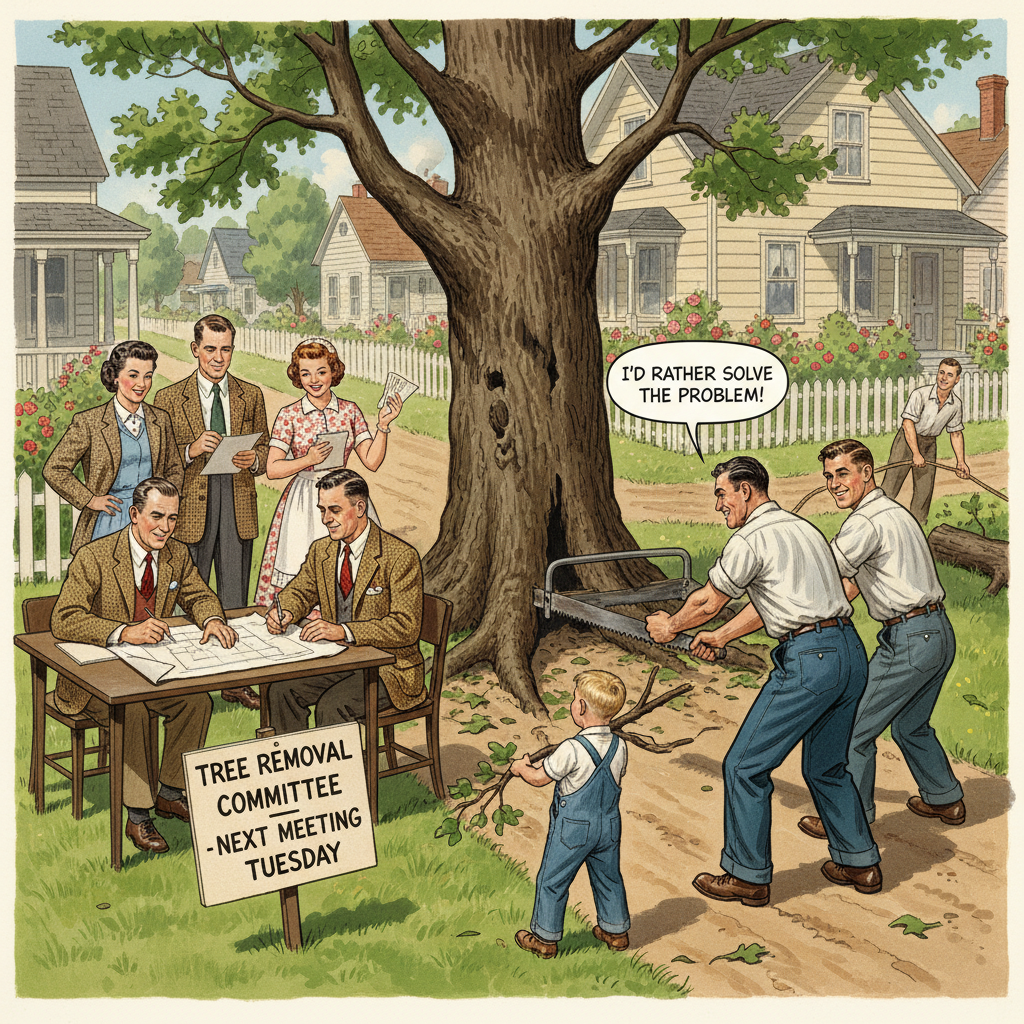
11. The Direct Actor: “I’d Rather Solve the Problem”
Some people consciously prefer direct action to political action.
Their reasoning is relatively simple.
If a problem can be addressed directly, why spend months trying to convince government to address it?
Compare:
🏛️ Political route:
Identify problem → build support → persuade officials → obtain approval → find funding → implement program → evaluate results
🔨 Direct route:
Identify problem → do something useful
Of course, some problems require collective institutions.
Individuals cannot independently operate an entire road network, court system or county emergency-service structure.
But many community problems can be addressed by:
- 🤝 voluntary organizations,
- 💼 businesses,
- ⛪ churches,
- ❤️ charities,
- 👨👩👧 families,
- 🏘️ neighborhoods,
- and individual residents.
A person choosing this route may withdraw political energy without withdrawing community energy.
⚖️ 12. The Principled Abstainer: “Do I Have the Right to Make This Decision for My Neighbor?”
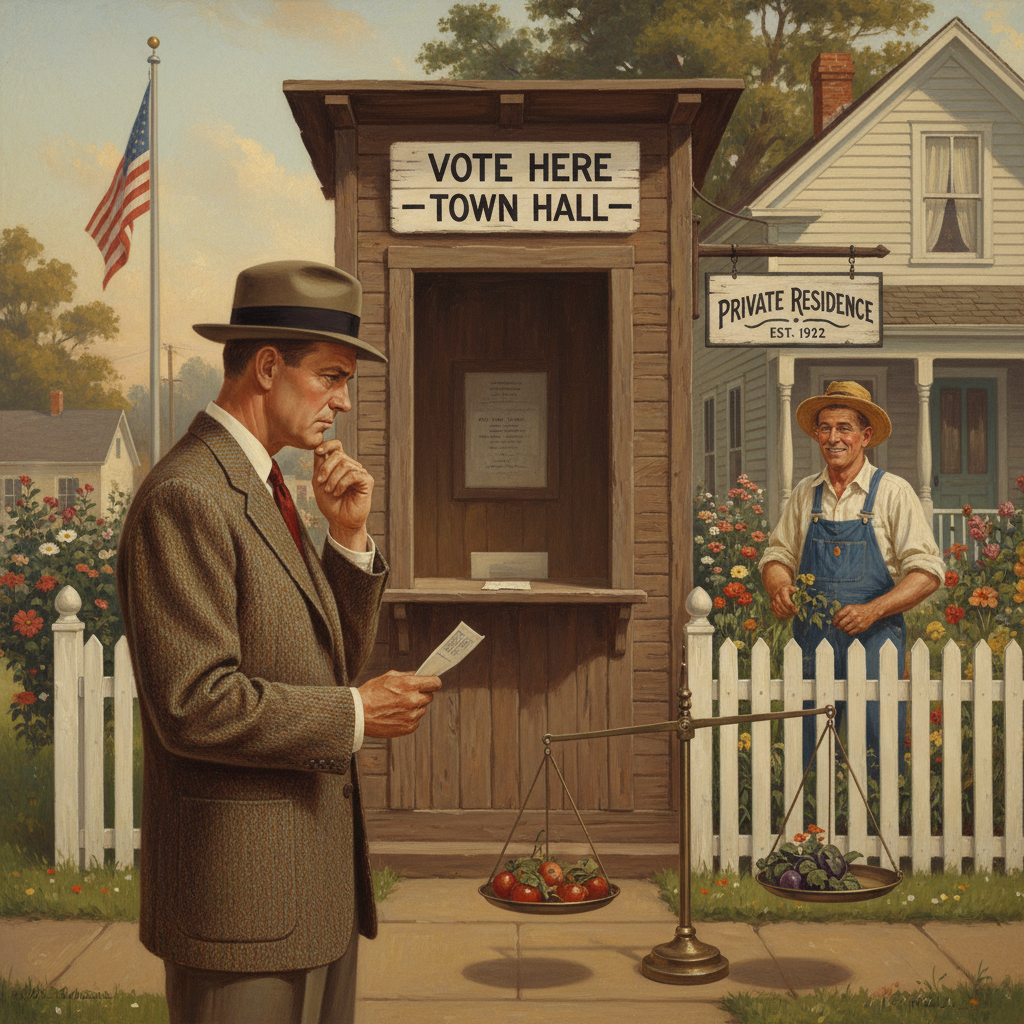
12. The Principled Abstainer: “Do I Have the Right to Make This Decision for My Neighbor?”
Then there is a philosophical objection that traditional turnout campaigns rarely address.
Some people ask:
“If I personally don’t have the moral right to force my neighbor to do something, does voting give me the right to have government do it for me?”
This question arises because government can ultimately use compulsory authority involving:
- 💰 Taxes
- 📜 Regulations
- 🏠 Property restrictions
- 🚫 Prohibitions
- ⚠️ Penalties
- 📋 Mandates
- ⚖️ Legal enforcement
A person holding this philosophy may worry that voting makes them morally responsible for coercive policies implemented by the person they supported.
For that person, abstention isn’t:
“I don’t care.”
It is closer to:
“I don’t want to authorize something I wouldn’t personally do to another person.”
Someone can certainly disagree with that philosophy.
But telling the person where the polling place is doesn’t answer it.
😈 13. The “Lesser of Two Evils” Problem
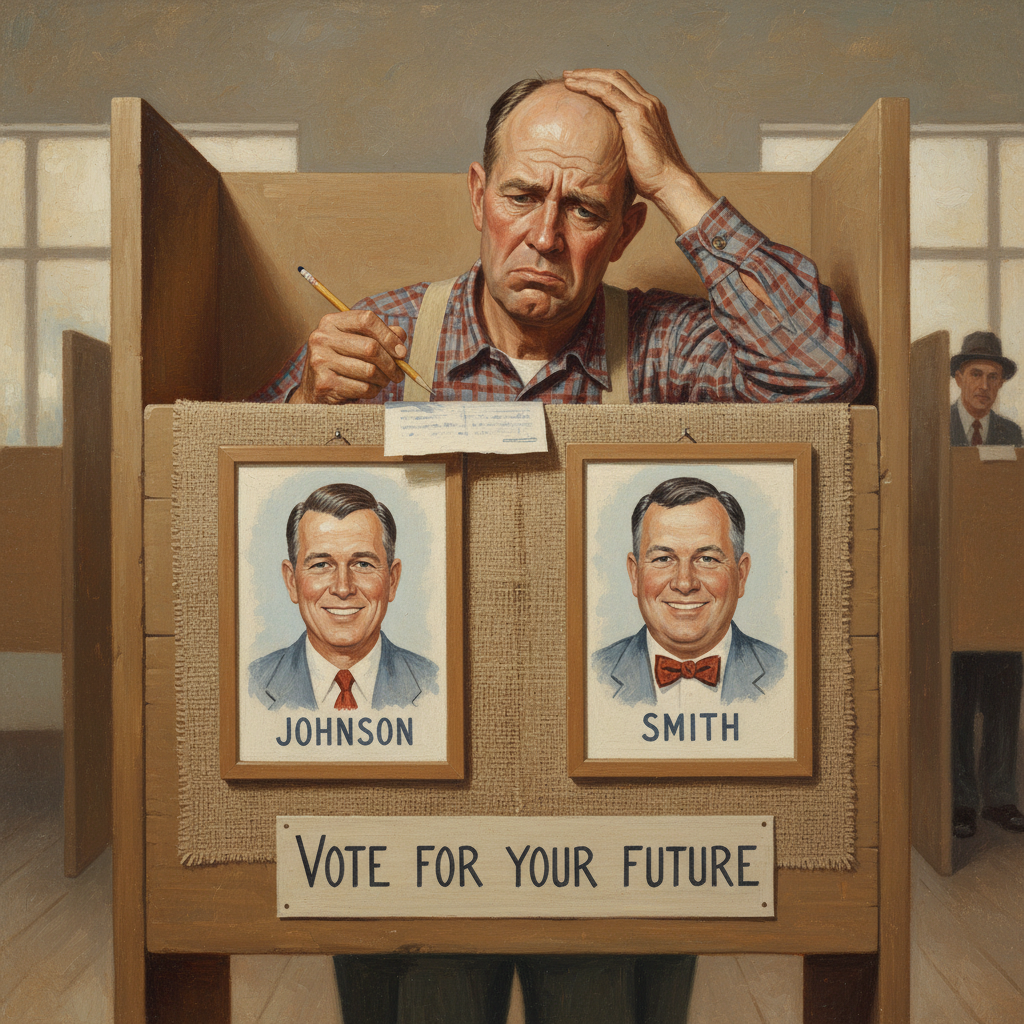
13. The “Lesser of Two Evils” Problem
Many elections eventually produce a difficult choice:
Neither candidate represents what a voter actually wants.
The conventional response is pragmatic:
“Vote for the person who will do less harm.”
That is essentially political harm reduction.
But some people object.
They ask:
“If I believe both choices are wrong, why am I morally obligated to endorse either one?”
This reveals a deeper disagreement about what a vote actually means.
Is voting primarily:
🧮 A practical tool for producing the least harmful available outcome?
Or is it:
✍️ A personal endorsement for which the voter carries some moral responsibility?
People who answer that question differently may make very different decisions on Election Day.
🧠 14. The Epistemic Question: Is an Uninformed Vote Better Than No Vote?

14. The Epistemic Question: Is an Uninformed Vote Better Than No Vote?
We frequently hear:
“Everyone should vote.”
But consider the extreme version.
Suppose someone knows absolutely nothing about:
- the candidates,
- the office,
- the budget,
- the law,
- the issues,
- or the consequences of either candidate winning.
Is society automatically improved because that person chooses a name?
That leads to an uncomfortable but legitimate question:
Can choosing not to cast an uninformed vote sometimes be the more responsible decision?
People can disagree about the answer.
But merely increasing the number of ballots cast doesn’t guarantee that the underlying decisions became better informed.
🇺🇸 15. The Other Side: “Voting Is a Civic Duty”
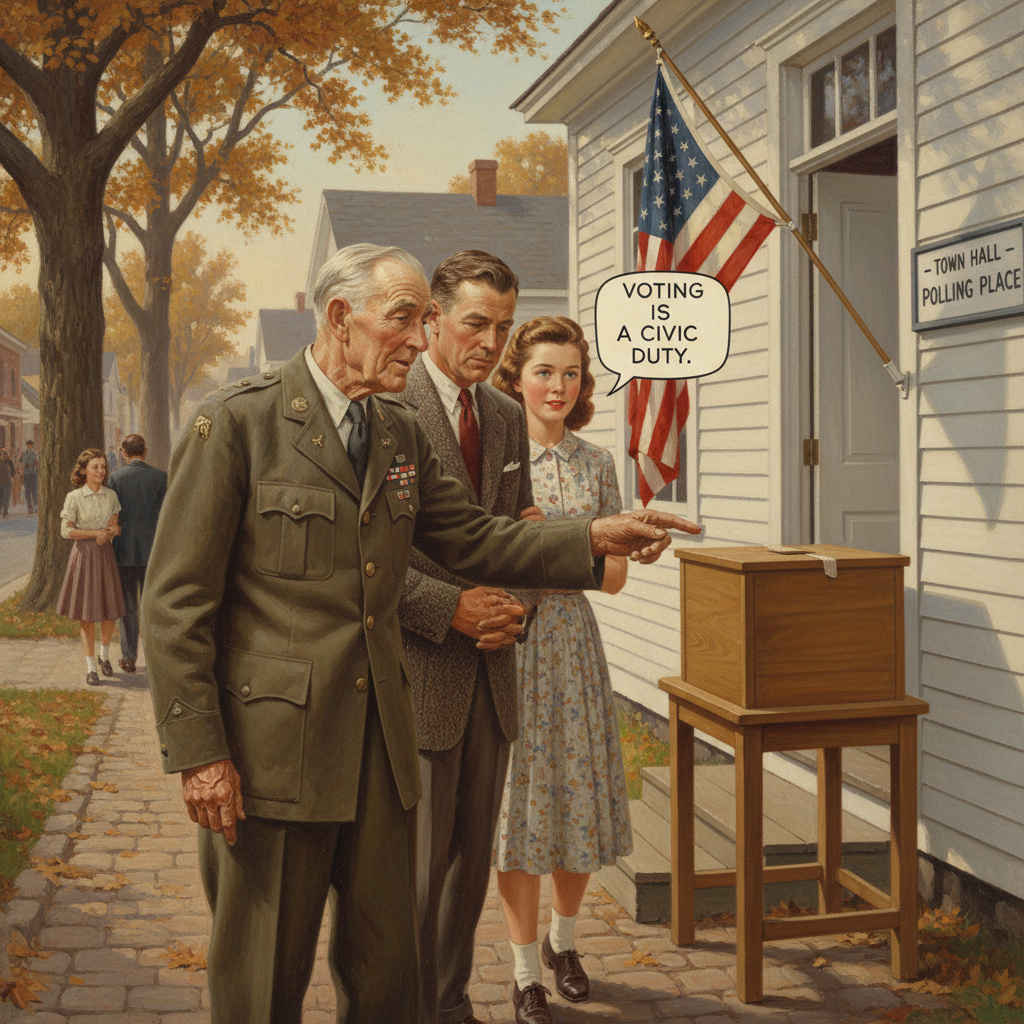
15. The Other Side: “Voting Is a Civic Duty”
There are strong arguments on the other side of this debate.
Many Americans believe voting is more than an individual choice.
They consider it a civic obligation.
And their reasoning deserves equal consideration.
🏛️ Government Will Exist Whether You Participate or Not
Not voting does not make government disappear.
Someone will still win.
Government will still:
- 💵 collect taxes,
- 📜 pass rules,
- 🚔 enforce laws,
- 🏫 operate schools,
- 🛣️ maintain infrastructure,
- 💰 approve budgets,
- and make decisions affecting residents.
From this perspective, abstention doesn’t eliminate political power.
It simply gives relatively more influence to everyone who does participate.
👥 Individual Votes Become Collective Outcomes
Another argument is mathematical.
A single vote usually does not decide an election.
But every election result is created by adding individual votes together.
If everyone concluded:
“My one vote doesn’t matter.”
there would be no functioning election at all.
🎯 Low Turnout Can Increase the Power of Highly Organized Groups
When most residents stay home, highly motivated groups can gain disproportionate influence.
Those groups might include:
- 💰 major donors,
- 🏢 industries,
- 📣 activist organizations,
- 🔴🔵 political organizations,
- 👥 government employees,
- or highly motivated ideological groups.
Broad participation can dilute concentrated political power.
🕊️ Elections Provide Peaceful Conflict Resolution
People will always disagree about:
- taxes,
- education,
- property,
- law enforcement,
- roads,
- development,
- and government priorities.
Elections provide a peaceful process for deciding who temporarily receives political authority.
That alone has considerable civic value.
🗽 16. Does Having a Right Mean You Have a Duty to Exercise It?
16. Does Having a Right Mean You Have a Duty to Exercise It?
This may be the philosophical heart of the entire disagreement.
One side says:
“Generations struggled to obtain voting rights. Representative government requires participation. Therefore, citizens have a responsibility to vote.”
The other side responds:
“A right normally includes the right not to exercise it.”
For example:
- 🗣️ Freedom of speech does not require us to speak.
- ⛪ Freedom of religion does not require us to worship.
- 👥 Freedom of assembly does not require us to attend meetings.
- 📰 Freedom of the press does not require us to publish.
So does the right to vote create an obligation to vote?
Reasonable people can reach very different conclusions because the disagreement begins with different ideas about citizenship, autonomy and social obligation.
🗯️ 17. “If You Don’t Vote, You Can’t Complain”

17. “If You Don’t Vote, You Can’t Complain”
This may be one of America’s most repeated election sayings.
Its intended logic is understandable:
“If you had an opportunity to influence the decision and refused, you bear some responsibility for the outcome.”
But there is another side.
A non-voter is still subject to:
- 💵 Taxes
- 📜 Laws
- 🏠 Property rules
- 🚔 Law enforcement
- 🏫 School policy
- 🛣️ Government services
- 🏛️ Decisions made by elected officials
They continue to have interests affected by government.
And someone who refuses to support either candidate may reasonably argue:
“Why does refusing both choices eliminate my right to criticize whichever one wins?”
The phrase may express frustration.
It doesn’t necessarily resolve the argument.
👉 18. Voter Blame Can Hide Another Question
18. Voter Blame Can Hide Another Question
After low-turnout elections, we often ask:
“What is wrong with the people who didn’t participate?”
Sometimes that’s a fair question.
But there’s another question worth asking:
“Why didn’t the candidates, institutions or process convince those people that participating was worth their time?”
Low participation can reflect citizen disengagement.
But it can also reveal:
- 👎 Weak candidates
- 1️⃣ Uncontested elections
- 📣 Poor communication
- 🏛️ Institutional distrust
- 🔥 Toxic campaigning
- 🚪 An inaccessible political culture
- 🤷 A lack of meaningful choices
Automatically blaming the non-participant risks preventing institutions from examining their own performance.
🧩 A Better Way to Think About the People Who Don’t Participate
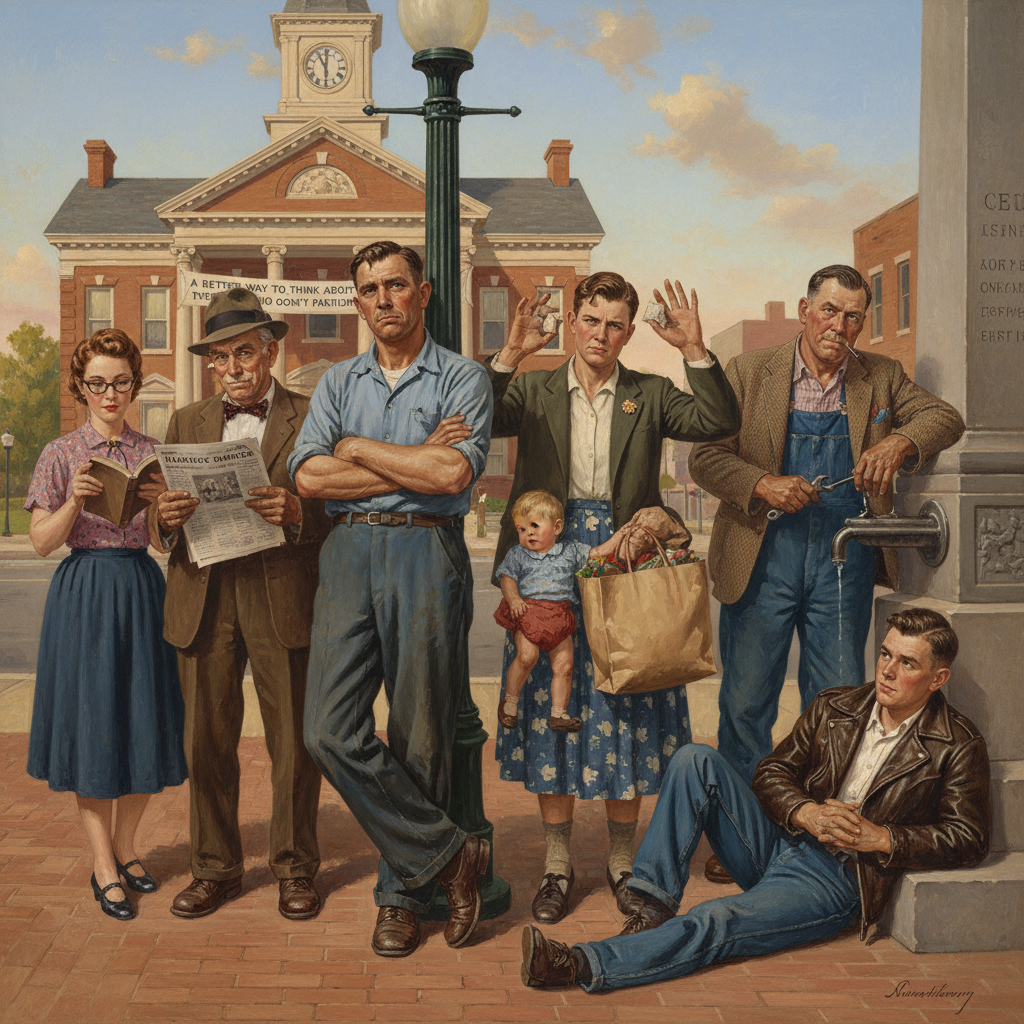
A Better Way to Think About the People Who Don’t Participate
Perhaps there is no single group called “non-voters.”
Instead, consider these categories:
🚧 The Blocked
“I wanted to participate, but couldn’t.”
Main issue: Access.
📚 The Uninformed
“I didn’t know enough to make a responsible choice.”
Main issue: Information.
🏛️ The Distrustful
“I don’t believe the institution responds to ordinary people.”
Main issue: Trust.
🤷 The Unrepresented
“Nobody on the ballot represents what I believe.”
Main issue: Choice.
😴 The Overwhelmed
“Other things in my life are more urgent.”
Main issue: Time and attention.
🔨 The Direct Actor
“I can accomplish more by solving problems myself.”
Main issue: Opportunity cost and personal agency.
⚖️ The Principled Abstainer
“Political participation conflicts with my philosophy or conscience.”
Main issue: Political philosophy.
🙈 The Truly Apathetic
“I really don’t care.”
Main issue: Civic disengagement.
That final group certainly exists.
The mistake is assuming everyone belongs in it.
🛠️ Different Problems Require Different Solutions
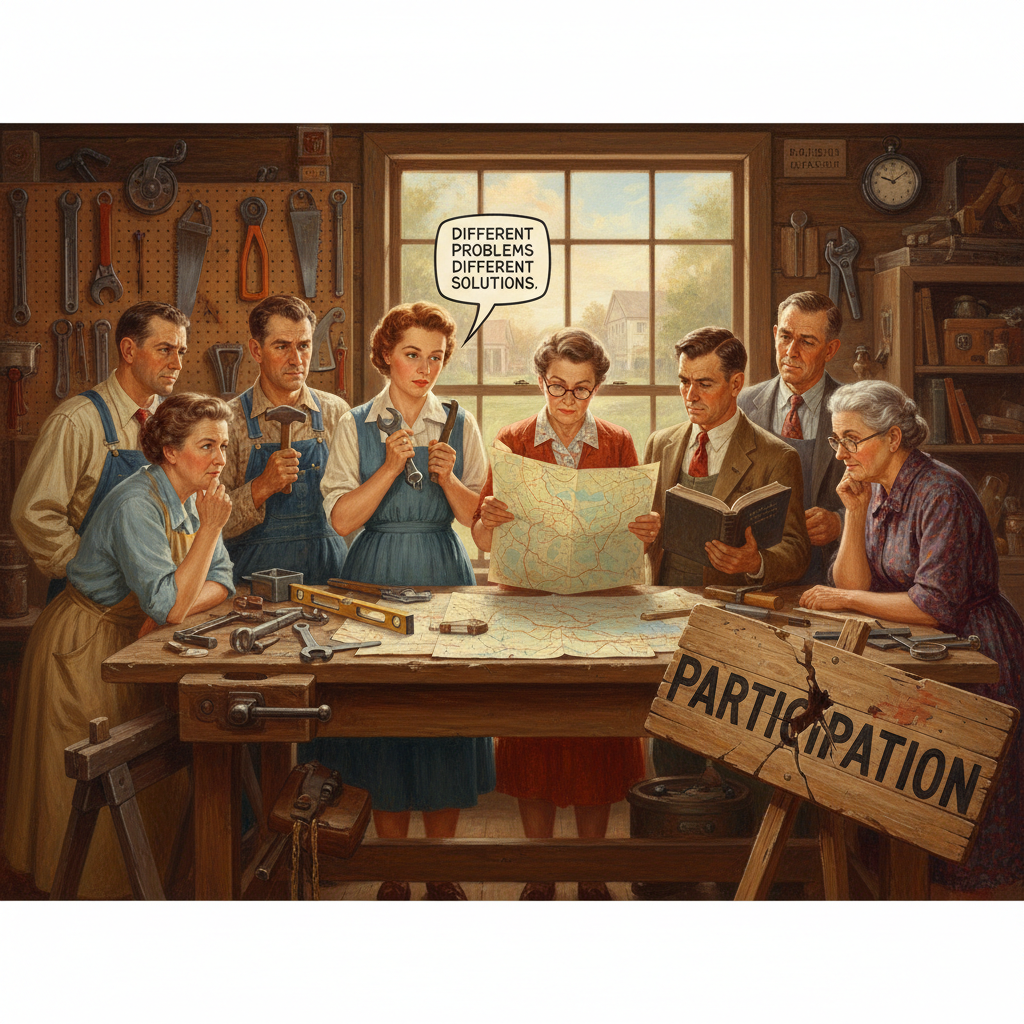
Different Problems Require Different Solutions
| 🧩 Reason | 🔧 Possible Response |
|---|---|
| 🚧 Access barriers | Transportation, scheduling, polling information and registration assistance |
| 📚 Lack of information | Candidate profiles, sample ballots, office explanations and neutral comparisons |
| 🤷 Lack of meaningful choice | Candidate recruitment and more competitive races |
| 🏛️ Institutional distrust | Transparency, accountability and measurable responsiveness |
| 🔥 Political toxicity | Policy-focused discussion instead of personal attacks |
| 😴 Attention scarcity | Make civic information faster and easier to consume |
| 🔨 Preference for direct action | Recognize non-government forms of civic contribution |
| ⚖️ Philosophical abstention | Engage the argument instead of assuming ignorance or laziness |
| 🙈 Genuine apathy | Demonstrate how local decisions affect everyday life |
❤️ Are We Measuring Civic Health the Wrong Way?
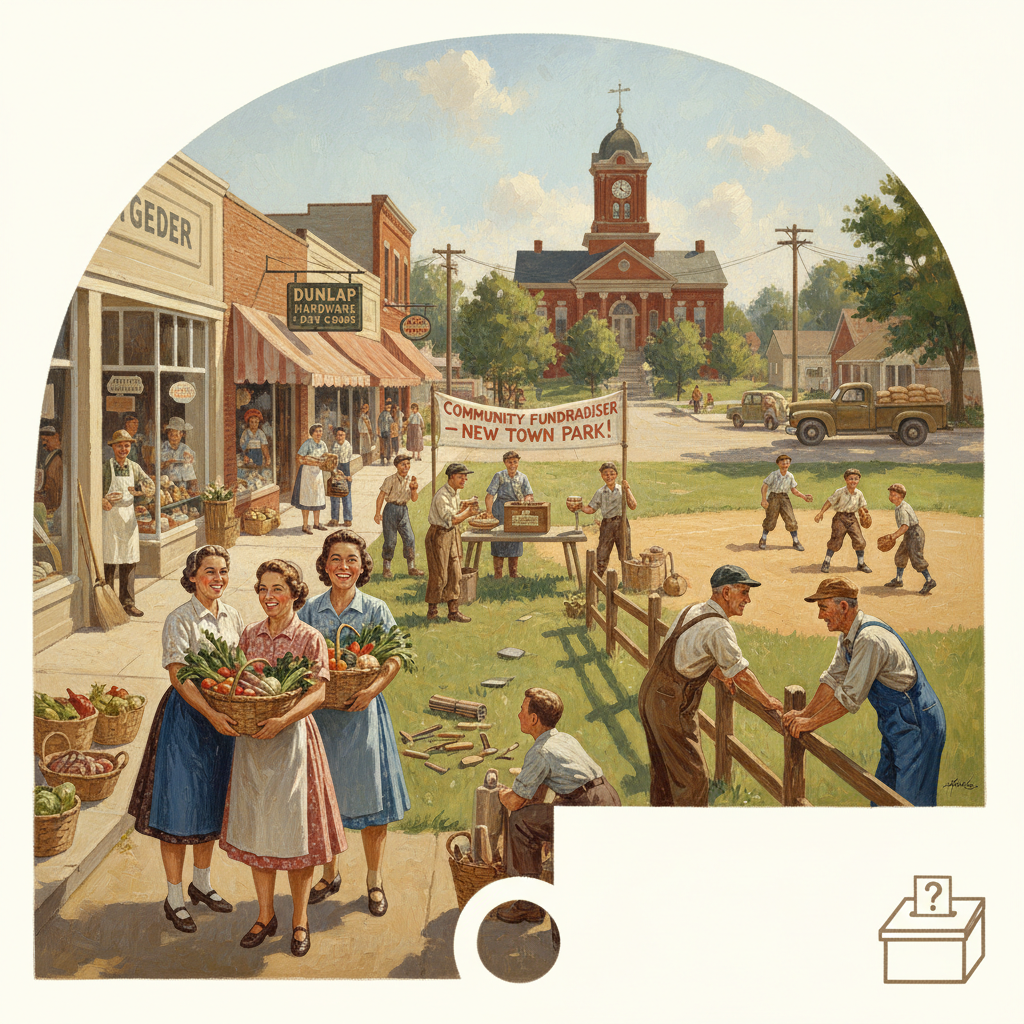
Are We Measuring Civic Health the Wrong Way?
Voter turnout matters.
But perhaps it isn’t enough.
Imagine two communities.
🏘️ Community A
Only 35% of registered voters participate.
But thousands of residents:
- 🤝 volunteer,
- 🛒 support local businesses,
- ❤️ help neighbors,
- ⚾ coach children,
- ⛪ participate in churches,
- 🥫 operate food programs,
- 🐕 rescue animals,
- 🎪 organize community events,
- and routinely solve local problems.
🏚️ Community B
Only 35% vote.
But residents are isolated from one another.
Few volunteer.
Few trust their neighbors.
Few participate in community institutions.
Most believe nothing they do can make a difference.
The voter-turnout statistic is identical.
The civic health of those communities is dramatically different.
🌄 Maybe Dunlap Needs a Bigger Question

Maybe Dunlap Needs a Bigger Question
Instead of asking only:
🗳️ “Why don’t more people vote?”
perhaps we should also ask:
- 🚧 Who wants to participate but encounters barriers?
- 📚 Who lacks useful information?
- 🤷 Who doesn’t feel represented?
- 🏛️ Who has lost trust?
- ⏳ Who believes the effort produces too little return?
- 🔨 Who contributes extensively outside politics?
- ⚖️ Who has deliberately chosen political abstention?
- 🙈 And who genuinely doesn’t care?
Until we know those answers, voter turnout tells us only part of the story.
💬 The Question We’d Like Dunlap to Answer
The Question We’d Like Dunlap to Answer
Which of these explanations sounds familiar to you?
Maybe you vote in every election.
Maybe you haven’t voted in years.
Maybe you participate in local government.
Maybe you avoid politics entirely but spend enormous amounts of time helping people around you.
Whatever your answer, we’d like to understand the reasoning behind it.
💭 What would make local participation feel genuinely worthwhile to you?
That might mean:
- 🗳️ Voting
- 🏛️ Attending a meeting
- 🙋 Volunteering
- 📋 Serving on a board
- 👤 Running for office
- 💼 Starting something useful
- 🤝 Helping a neighbor
- 🔨 Solving a community problem directly
Perhaps the goal shouldn’t simply be:
“How do we increase turnout?”
Maybe the larger goal is:
❤️ How do we build a community where people believe they have meaningful ways to contribute — and can actually see the results of doing so?
That’s a much bigger question.
And it may tell us considerably more about the health of Dunlap and Sequatchie County than voter turnout alone ever could.
📰 Dunlap.Today welcomes thoughtful disagreement. Understanding why our neighbors participate — and why some choose not to — is more useful than simply assuming people who make different choices don’t care.


0 Comments