
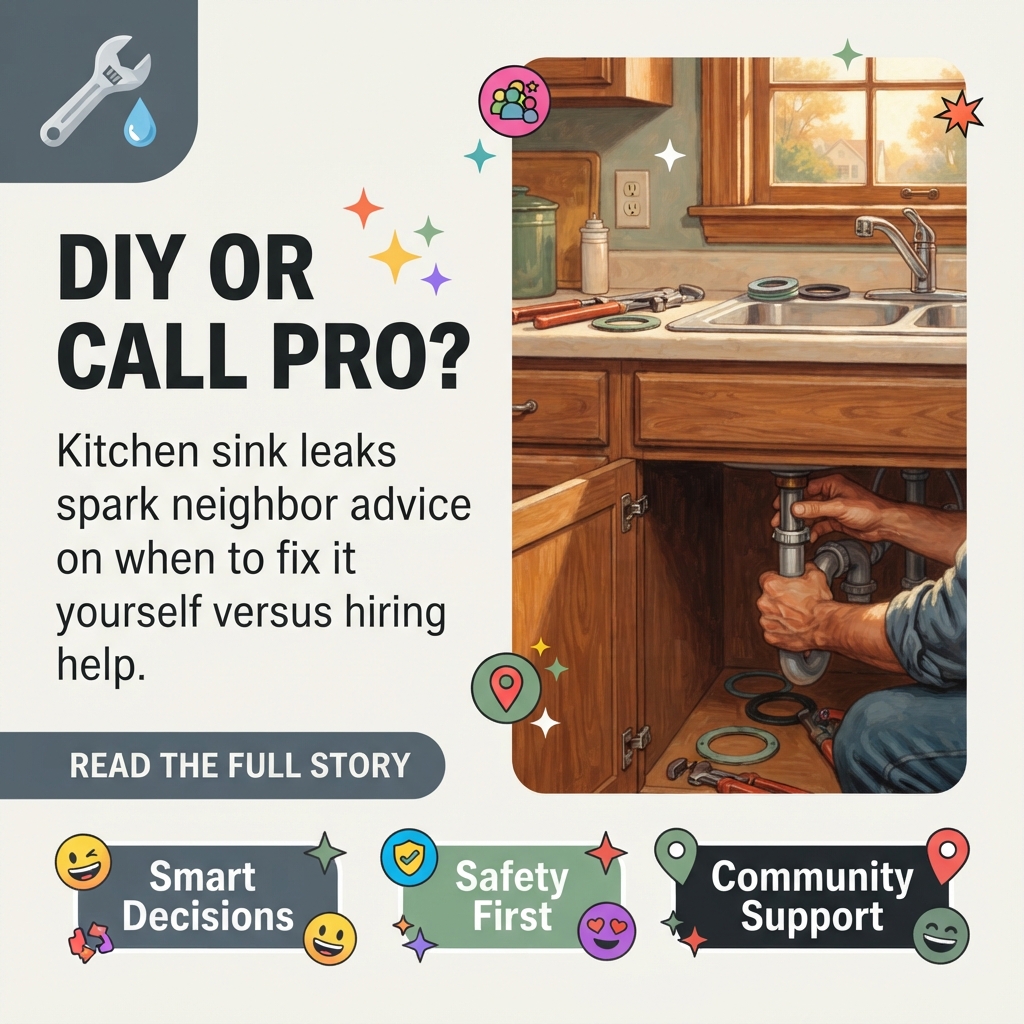
🔧 Kitchen Sink Plumbing Help: What Local Residents Should Know About DIY vs. Professional Repair
Kitchen sink plumbing problems are a common household challenge across the region, and when they strike, homeowners face a quick decision: tackle the repair themselves or call a professional. A recent community conversation reveals both the practical steps residents can take and the safety considerations that matter when water systems are involved.
📍 The Question on Many Minds
A local resident recently reached out to the community asking for suggestions on repairing or replacing kitchen sink plumbing—a straightforward question that sparked practical advice from neighbors. The response reflects a common pattern in rural and small-town communities: when something breaks, residents first look to each other for guidance, experience, and trusted recommendations.
💡 What Community Members Are Saying
The conversation that followed offers a mix of approaches. One neighbor suggested checking for leaks and considering whether to call a local plumber—a practical first step that acknowledges both the DIY option and the value of professional help. Another community member offered detailed technical guidance, emphasizing the importance of properly tightening pipe fittings, checking gaskets and seals, and ensuring that any electrical components (like garbage disposals) are installed safely with proper grounding and circuit protection.
That safety emphasis is worth noting. Kitchen sink plumbing isn’t just about stopping a leak—it involves water systems, potential electrical hazards if a disposal is involved, and the risk of water damage if repairs fail. The advice to prioritize proper installation and safety measures reflects the kind of practical wisdom that comes from experience.
❓ Why This Matters for Homeowners
Kitchen sink problems can escalate quickly. A small leak under the sink can become water damage to cabinets and flooring. A poorly sealed fitting can lead to mold or structural issues. And if electrical components are involved, improper installation can create safety hazards. For homeowners deciding between a DIY approach and calling a professional, understanding the stakes helps clarify the choice.
The cost of a professional plumber visit may feel high in the moment, but it’s often less expensive than repairing water damage or replacing cabinetry. For residents comfortable with basic plumbing work, the community conversation suggests that attention to detail—tight fittings, proper gaskets, and correct assembly—makes a real difference.
🤝 Community Connections and Local Resources
When homeowners in the area face plumbing challenges, they typically have two paths: learn from neighbors and online resources, or reach out to local service providers. The community’s willingness to share advice—even detailed technical guidance—shows how neighbors support each other in maintaining their homes. At the same time, professional plumbers and contractors serve an important role, especially for complex repairs, safety-critical work, or situations where a homeowner’s skill level or available time doesn’t match the job’s demands.
🛠️ What Residents Should Know Before Starting
If you’re considering a DIY kitchen sink repair, the community conversation suggests a few key points:
- Check for the source: Identify exactly where the leak or problem is occurring—under the sink, at the drain, or at the connection to the wall.
- Tighten fittings carefully: Pipe fittings and connections under the sink often loosen over time. Tightening them firmly (but not so hard you crack plastic components) can solve many leaks.
- Inspect gaskets and seals: Rubber gaskets and seals wear out and can be replaced inexpensively. Check them during any repair.
- If a garbage disposal is involved: Ensure it’s properly grounded and that all electrical connections are installed in a sealed, protected conduit box. This is not a DIY area if you’re uncertain.
- Know when to call a professional: If the problem involves the main drain line, if you’re unsure about electrical safety, or if the repair requires tools or skills you don’t have, a professional plumber is the safer choice.
⏭️ What Happens Next
For the resident who posted the original question, the next step is likely to assess the specific problem, gather the right tools or materials, and either attempt the repair or contact a local plumber. For the broader community, this conversation is a reminder that kitchen plumbing is a common challenge—and that neighbors, combined with professional expertise when needed, can help solve it.
🏘️ Community Threads: The Neighbor-to-Neighbor Support Network
The Advice-Sharing Tradition: In communities across the region, residents turn to each other first when problems arise. This conversation reflects a long-standing pattern of neighbors helping neighbors—sharing what they’ve learned, what worked, and what didn’t. That network is valuable, especially for routine maintenance and minor repairs. It also builds relationships and trust within the community.
The Professional-Neighbor Balance: At the same time, the conversation shows awareness that some jobs require professional expertise. The suggestion to “call a local plumber” acknowledges that while community advice is helpful, there are moments when trained professionals—who carry insurance, understand building codes, and have specialized tools—are the right choice. Communities thrive when both resources work together.
🤔 Questions Worth Considering
- If you’ve faced a kitchen plumbing problem, did you repair it yourself, call a professional, or combine both approaches? What would you do differently next time?
- How do you decide whether a home repair is a DIY project or a job for a professional? What factors matter most to you?
- Are there other common household problems in your area where neighbors regularly share advice and recommendations?
- If you’re a skilled tradesperson or contractor, how do you see the relationship between community advice and professional services? How do they complement each other?
💭 Long-Term Community Impact
Conversations like this one—where residents ask for help and neighbors respond with both practical advice and safety awareness—strengthen community resilience. When people know they can turn to each other for guidance, and when they understand the value of professional expertise, they make better decisions about their homes. Over time, that leads to better-maintained properties, fewer emergency repairs, and a stronger sense of mutual support. It also creates opportunities for local service providers to build relationships and reputation within the community—not through aggressive marketing, but through being the trusted professional that neighbors recommend to each other.
🤔Source
Lisa Martin – Resident asking for suggestions or help with repairing or replacing kitchen sink plumbing.




0 Comments