
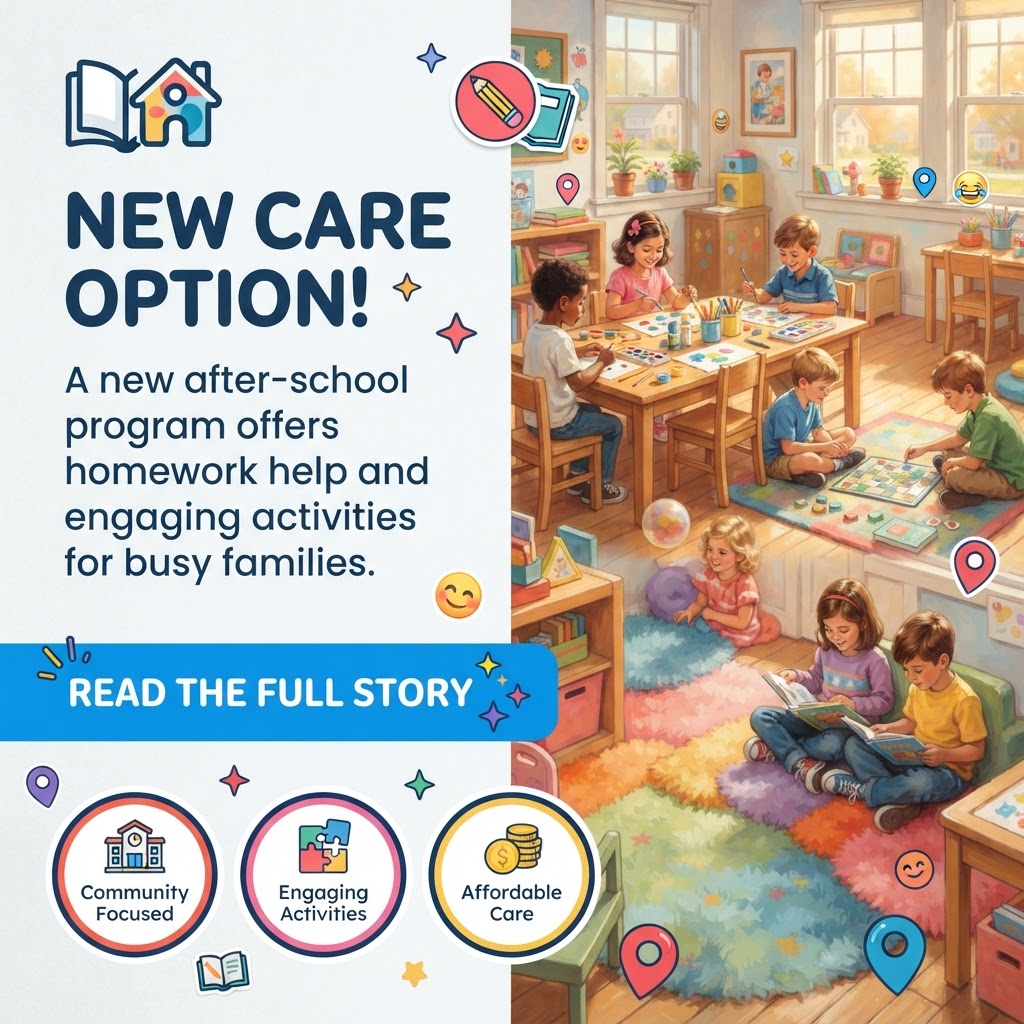
📚 After-School Care with Homework Help & Fun Activities Now Available in Sequatchie Valley
As parents and caregivers navigate busy schedules this school year, a new after-school care option is emerging to support working families—especially those seeking structured activities beyond the classroom. With summer winding down and fall routines settling in, Ms. Teresa’s After School Care offers a simple yet meaningful way for kids to unwind while staying engaged with homework, crafts, and active play.
Ms. Teresa’s After School Care is advertising its services as a local resource for children needing part-time or full-time care after school days. For $50 per week, families can enroll their kids in a mix of academic support, creative projects, and energetic activities like “bouncing” (likely a playful reference to games or movement-based fun). While the specifics of daily programming aren’t detailed yet, the offering aligns with a growing demand for affordable, community-centered childcare options that prioritize both learning and joy.
💡 Why This Matters
For many working parents in the Sequatchie Valley, after-school care is often a balancing act between affordability, convenience, and quality. Traditional daycares can be pricey or limited in availability, while informal arrangements like babysitting may lack structure—especially for kids who need help with homework or social interaction. Ms. Teresa’s After School Care fills a niche by combining essential academic support with hands-on activities, which could be particularly valuable for families who work shifts, commute long distances to jobs outside the valley, or juggle multiple responsibilities.
Beyond logistics, the care center also taps into a broader trend: parents increasingly seek out programs that foster creativity and movement in children’s routines. In a region where outdoor recreation and arts are cherished community values (think local festivals, school plays, and hiking trails), an after-school space that blends learning with play could resonate deeply—especially for families who want their kids to stay connected to the valley’s vibrant culture.
❤️ Human Impact
The potential beneficiaries of this care center are clear: children in elementary or middle school who need a safe, supervised environment after school hours. For some, it may be a lifeline for parents working evening shifts at businesses like local restaurants, farms, or healthcare facilities that operate outside traditional 9-to-5 hours. Others might include single parents, students pursuing higher education, or caregivers who rely on flexible work schedules.
Kids themselves stand to gain from structured downtime that balances screen time with interactive learning—whether through crafts, group games, or quiet study sessions. The $50 weekly rate could also make the service accessible to middle-income families who might otherwise opt for less formal arrangements (like a neighbor’s help) but prefer a more organized setting.
🏫 Community Connections
While Ms. Teresa’s After School Care is new, it fits into a network of existing local resources that support children and families in the Sequatchie Valley. Nearby schools like Sequatchie County Schools already offer after-school clubs or tutoring programs, but gaps often remain for kids who need care outside those hours. The care center could collaborate with schools on homework partnerships, volunteer reading programs, or even field trips to nearby attractions like Sequatchie Valley State Park.
Local churches (such as First Baptist Church of Dunlap or St. John’s Episcopal Church) frequently host youth groups and mentorship programs, and Ms. Teresa’s could complement those efforts by providing a dedicated space for kids to socialize in a non-religious setting. Additionally, the care center might draw on volunteers from community organizations like Sequatchie Valley United Way, which often support family wellness initiatives.
📍 Local Perspective
The Sequatchie Valley has a history of grassroots childcare solutions, from homemaker cooperatives in the 1970s to modern-day pop-up programs at libraries or community centers. What sets Ms. Teresa’s apart is its focus on affordability and flexibility—key priorities for families in rural areas where childcare deserts (areas with insufficient licensed care options) are a persistent challenge. Unlike larger daycares that may require long-term contracts, this offering seems designed for families who need intermittent or seasonal support.
For residents who’ve watched local businesses like The Sequatchie Valley Mercantile or Dunlap’s Main Street shops thrive by catering to families, Ms. Teresa’s could signal a shift toward more “neighborhood-style” care—where services are tailored to the community’s pace rather than corporate models. It also reflects a broader trend in Tennessee of parents seeking alternatives to traditional daycares, especially in smaller towns where options are limited.
🎯 Opportunities for Connection
Families interested in Ms. Teresa’s After School Care have several ways to engage right now:
- Contact the provider directly: While no phone number or email is listed yet, residents can message through the Facebook group where the announcement was posted (Sequatchie Valley Community Network) to ask about availability, trial days, or specific needs (e.g., transportation assistance).
- Share feedback: Parents who’ve used similar programs in the valley—such as those offered at local recreation centers—could offer testimonials or suggestions to help shape the care center’s approach.
- Volunteer or collaborate: Skilled tutors, artists, or physical education teachers in the community might volunteer their time for workshops. Libraries like Sequatchie County Public Library could partner to host book clubs or STEM activities.
- Spread the word: Word-of-mouth referrals are powerful in tight-knit communities. Parents who’ve struggled to find after-school care might share their experiences—and solutions—in local groups like the Facebook page mentioned above or at events hosted by Sequatchie Valley Chamber of Commerce.
🗓️ What Residents Should Know
At this stage, here’s what’s clear from the announcement:
- Services offered: Homework help, crafts, and “bouncing” (likely games or active play). No details on specific hours or age groups yet.
- Pricing: $50 per week for part-time or full-time care. Exact definitions of these terms aren’t provided—families should inquire about daily rates, drop-off/pick-up windows, and whether meals or snacks are included.
- Location: Not specified in the source post. Residents should ask if the care center is home-based (common for small providers) or located near schools/businesses for convenience.
- Next steps: Contact Ms. Teresa directly via the Facebook group to discuss enrollment, trial periods, or special accommodations (e.g., for kids with allergies or special needs).
⏳ What Happens Next
The next few weeks will likely focus on two key areas: establishing clear logistics and building community trust. Ms. Teresa’s team will need to finalize details like daily schedules, staffing, and safety protocols—especially if the care center is new or operates out of a private home. Transparency about these processes (e.g., background checks for caregivers, emergency plans) will be critical for parents evaluating the option.
On the community side, word-of-mouth recommendations and local media coverage (like this article!) could help gauge demand. If interest is high, Ms. Teresa’s might expand to include before-school care or summer programs—a common next step for small providers in rural areas. Residents can stay updated by following the Facebook group linked above or asking at their child’s school about partnerships.
🤔 Community Questions
As this new care center takes shape, here are a few questions worth considering:
- How might Ms. Teresa’s After School Care address the needs of families with irregular work schedules? For example, could it offer extended hours for shift workers or on-call professionals?
- What role could local businesses play in supporting this care center? Could nearby shops (like The Sequatchie Valley Mercantile) sponsor art supplies, or might a restaurant partner to provide snacks for kids during after-school hours?
- How can parents ensure their child thrives in a new care environment? What questions should they ask about staff-to-child ratios, conflict resolution policies, or how the center handles behavioral challenges?
- Could this care center inspire other providers to fill gaps in Sequatchie Valley’s childcare landscape? With demand for flexible options growing, might it spark conversations about subsidized care programs or cooperative models?
- What traditions or values could Ms. Teresa’s incorporate to reflect the valley’s community? For example, could storytime feature local authors, or field trips include visits to historic sites like The Sequatchie Valley Museum?
🌱 Long-Term Community Impact
If Ms. Teresa’s After School Care gains traction, its ripple effects could extend beyond individual families. Economically, it might reduce turnover for local businesses by helping employees feel more secure about childcare—especially in industries like healthcare or hospitality where shift work is common. Socially, the care center could strengthen intergenerational bonds: older residents with crafting skills or teaching experience might volunteer, while teens could earn babysitting jobs.
Culturally, programs that blend learning and play often foster creativity—a value deeply rooted in Sequatchie Valley’s arts scene (think annual festivals like the Sequatchie Valley Arts & Music Festival). By normalizing structured downtime for kids, Ms. Teresa’s could also reduce reliance on screens during after-school hours, potentially leading to more families attending community events or outdoor activities together.
For the care center itself, success might pave the way for expansion into other services—like a before-school program or parent workshops—or even a franchise model if demand grows. In the meantime, its existence signals that Sequatchie Valley’s families have options beyond traditional daycares, reinforcing the region’s reputation as a place where community needs drive innovation.
🧵 Community Threads: The Hidden Network Behind After-School Care
Every childcare provider in Sequatchie Valley weaves into a larger tapestry of local relationships. Here are some of the invisible threads connecting Ms. Teresa’s to the broader community:
🏠 The Home-Based Provider Thread
Many small after-school care providers in rural areas operate out of private homes, blending personal touch with flexibility. This model taps into Sequatchie Valley’s strong tradition of neighborly support—where trusted locals often fill gaps in services like childcare or elder care. For Ms. Teresa, this could mean leveraging her existing network to recruit volunteers or parents for shared carpools. Why it matters: Families may feel more comfortable enrolling their kids in a home setting where they know the provider personally.
🎨 The Creative Economy Thread
The care center’s emphasis on crafts and active play connects to Sequatchie Valley’s thriving arts and outdoor culture. Local artists, crafters, or even retirees with skills in woodworking or painting might volunteer to lead workshops—linking the care center to businesses like The Loft Gallery or Dunlap Farmers Market, where vendors often share their talents. Why it matters: Kids who explore art or music early on may grow up to support local cultural events, keeping the valley’s creative spirit alive.
🚗 The Shift-Work Thread
Sequatchie Valley’s economy relies heavily on industries with irregular hours—from healthcare and manufacturing to hospitality. Parents working nights or weekends often struggle to find after-school care, creating a niche that Ms. Teresa’s could fill. This thread ties the care center to businesses like Sequatchie Valley Medical Center or local factories, where employees might benefit from flexible childcare options. Why it matters: Reducing childcare stress for shift workers could improve retention and morale in key industries.
📚 The School Partnership Thread
After-school care providers often collaborate with schools to extend learning opportunities or fill gaps in extracurricular offerings. Ms. Teresa’s could partner with Sequatchie County Schools to offer homework help aligned with classroom curricula, or even host after-school clubs at satellite locations (like libraries or community centers). Why it matters: Strong school-care center ties can reduce the “summer slide” in learning and keep kids engaged year-round.
🤝 The Volunteer Thread
Small care centers thrive on volunteers—whether retired teachers, college students, or parents taking turns helping out. This thread connects Ms. Teresa’s to organizations like Sequatchie Valley United Way, which often recruit volunteers for family wellness programs. Why it matters: Volunteers bring fresh energy and specialized skills, while families who contribute time may feel more invested in the care center’s success.




0 Comments