
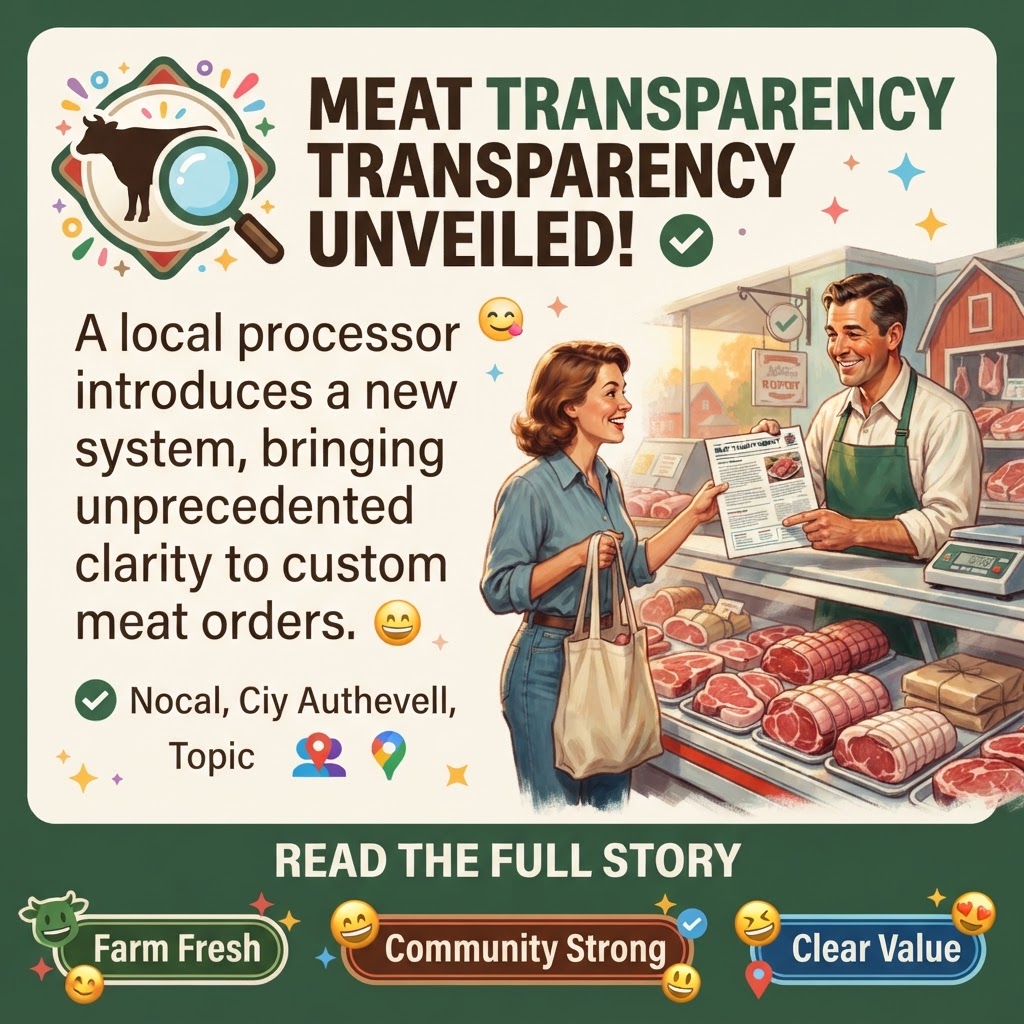
📊 Transparency on the Table: Local Processor Introduces Yield Reports for Custom Meat Orders
As Tennessee’s agricultural community continues to embrace direct-to-consumer farming practices, one small but meaningful upgrade at a local processor is making waves—literally. For families and foodies who invest in custom meat processing, knowing exactly what you’re bringing home has always been a question mark. Now, with a new yield report program, that mystery is disappearing from the Sequatchie Valley’s farm-to-table landscape.
🥩 WHY THIS MATTERS
The decision to process meat at home or through a local business often comes down to trust—and transparency. For many Sequatchie Valley residents, sourcing meat directly from farms and ranches means supporting local agriculture while enjoying higher-quality products. But the biggest question for customers has always been: How much will I actually get back?
With P3 Custom Meats’ new yield report system, that uncertainty is gone. Every processed animal now comes with a detailed breakdown of hanging weight, take-home weight, and even specific cuts—down to the last package of ground beef or roast. This isn’t just about numbers; it’s about peace of mind for families planning meals, budgeting for freezer space, and ensuring they’re getting fair value for their investment.
For local restaurants, caterers, and small businesses that rely on custom meat processing, this transparency could also mean better inventory management and fewer surprises when ordering bulk cuts. In a region where farm-to-table dining is growing in popularity, knowing exactly what you’re working with can make all the difference between a well-executed meal and one that falls short.
🤝 COMMUNITY CONNECTIONS
The Sequatchie Valley’s agricultural community thrives on connections—between farmers, processors, chefs, and home cooks. P3 Custom Meats isn’t just another processing facility; it’s a key player in the region’s farm-to-freezer network. This new yield report program reinforces those ties by:
- Supporting local farms: Many Sequatchie Valley producers rely on custom processors to turn their livestock into marketable cuts. Clearer yield reports help them justify their pricing and build trust with customers.
- Strengthening homegrown food systems: As more residents seek out locally sourced meat, tools like this one make it easier for families to commit to seasonal eating and reduce reliance on large-scale suppliers.
- Connecting chefs and small businesses: Local restaurants and caterers often source meat from processors like P3. Knowing the exact yield helps them plan menus more efficiently, reducing waste and improving profitability.
- Fostering transparency in Tennessee agriculture: The #TennesseeAgriculture hashtag on the post reflects a broader movement toward openness in the state’s food production. This initiative aligns with efforts to highlight the hard work behind local meat—from pasture to plate.
👨🍳 HUMAN IMPACT
The real story here isn’t just about numbers on a page—it’s about how this change affects everyday lives. For Sequatchie Valley families, the ripple effects could include:
- Better meal planning: Moms and dads stocking their freezers for the winter won’t have to guess whether they’ve over- or under-ordered. A clear breakdown of cuts means fewer last-minute trips to the grocery store for missing ingredients.
- More confidence in local purchases: When customers see exactly what they’re paying for, it builds trust—not just with P3 Custom Meats, but with all local farmers and processors in the region. That trust is the foundation of a thriving farm economy.
- Less waste, more value: Home cooks who love to cook from scratch will appreciate knowing exactly how much meat they’re working with. Whether it’s planning a holiday feast or prepping for game day, the yield report turns guesswork into strategy.
- A boost for small businesses: Local restaurants and food trucks that source meat from P3 can now order with more precision, reducing costs associated with over- or under-purchasing. For many small operators, that’s a game-changer.
🌄 LOCAL PERSPECTIVE
In Tennessee, where agriculture has been the backbone of communities for generations, transparency in meat processing isn’t just nice to have—it’s a reflection of how deeply rooted these businesses are in their regions. The Sequatchie Valley, with its mix of small farms and family-run operations, is particularly well-suited for initiatives like this.
This move by P3 Custom Meats echoes similar trends seen across the state, where processors and farmers are increasingly prioritizing customer education. In nearby counties, some local butchers have started offering “meat 101” workshops or even mobile apps to help customers understand cuts and storage. While P3’s yield report isn’t a digital tool, it serves the same purpose: demystifying the process so that every Sequatchie Valley resident—whether they’re a first-time buyer or a seasoned pro—can make informed decisions.
What sets this apart is the focus on custom processing. Unlike bulk orders where yields are more predictable, custom cuts vary based on the animal’s size and breed. For families raising their own livestock or purchasing from local farms, that variability can be a source of frustration. By addressing it head-on, P3 Custom Meats is doing what many in the community have been asking for: making local meat processing as straightforward as possible.
💡 OPPORTUNITIES FOR CONNECTION
While the yield report itself doesn’t require active participation, it opens doors for deeper engagement between P3 Custom Meats and its customers. Here’s how residents can get involved or learn more:
- Ask questions: Customers who’ve received their first yield report might share their experiences with neighbors or on local Facebook groups (like the Sequatchie Valley Farmers Market page). Comparing notes could help others understand how to best use the breakdowns.
- Visit P3 Custom Meats: While the post doesn’t specify location, many processors welcome walk-ins or offer tours. If you’re curious about their process—or just want to see the yield reports in action—reaching out could be a great way to connect with the team behind the initiative.
- Support local farms: The more Sequatchie Valley residents source meat from processors like P3, the stronger the demand for transparency—and the more incentive for other businesses to adopt similar practices. Buying local isn’t just about taste; it’s about shaping the future of how food is produced and shared in the community.
- Share the news: If you’ve used P3 Custom Meats before, consider sharing your thoughts on social media or with friends who are planning their own meat orders. Word-of-mouth recommendations can help spread awareness about this new program.
📋 WHAT RESIDENTS SHOULD KNOW
The yield report itself is simple to understand, but here’s what every customer should keep in mind:
- It’s included with every order: No extra fees or opt-ins—every processed animal comes with a detailed breakdown. That means the transparency is free for customers.
- The report includes everything: From hanging weight (the raw weight of the animal before processing) to the final take-home packages, nothing is left out. Even ground beef and trimmings are accounted for in the breakdown.
- It’s not just about numbers: The yield percentage (how much meat you end up with compared to what you started with) can vary based on factors like breed, age, and processing methods. Understanding this helps customers compare different processors or cuts.
- Use it for planning: Whether you’re stocking your freezer for the winter or prepping for a holiday feast, the report makes it easy to calculate how much food you’ll have on hand—and whether you’ve ordered enough (or too much).
🔮 WHAT HAPPENS NEXT
The yield report program is already live, but P3 Custom Meats may continue refining it based on customer feedback. Here’s what to watch for:
- Feedback from early adopters: If you’ve received a report, your input could shape how the system evolves. The processor might introduce additional details or even digital versions of the reports in the future.
- Potential for educational resources: With more transparency comes an opportunity to teach customers about meat cuts, storage tips, and cooking methods. Watch for workshops or guides that pair yield reports with culinary advice.
- Expansion of similar programs: If this initiative is successful, other local processors in the Sequatchie Valley—or even across Tennessee—might adopt similar transparency measures. The demand for clarity in food sourcing is growing, and P3 could lead the way.
- A stronger connection between farmers and eaters: As more customers see the value in knowing exactly what they’re buying, the conversation around local meat will shift. Expect to hear more about where your food comes from—and why it matters.
❓ COMMUNITY QUESTIONS
How has this yield report changed your perspective on custom meat processing? Here are a few questions to consider as you reflect on what it means for the Sequatchie Valley:
- Have you ever ordered custom meat before? What was your biggest concern about the process?
- How might this transparency affect your next purchase from a local processor—or encourage you to try one for the first time?
- What other ways could processors in our region improve communication with customers about their products?
- If you’re a farmer or rancher, how do you think yield reports could benefit your own customers?
- How does this initiative reflect the broader shift toward transparency in Tennessee agriculture—and what might it inspire next?
🌱 LONG-TERM COMMUNITY IMPACT
The yield report program at P3 Custom Meats is more than a convenience—it’s a step toward building a more resilient and informed food system in the Sequatchie Valley. Over time, its impact could include:
- A stronger local economy: When customers trust their purchases, they’re more likely to invest in repeat orders. This keeps money circulating within the community rather than going to out-of-state suppliers.
- Reduced food waste: Clearer yield information helps families and businesses plan meals more efficiently, leading to less spoilage and better use of resources.
- Higher standards for transparency: As one processor leads the way, others may follow suit. Over time, this could become a benchmark for how all local meat processors operate—benefiting every customer in the valley.
- Deeper community ties: When people understand where their food comes from—and exactly what they’re getting—they develop stronger connections to the farmers, ranchers, and processors who bring it to their tables. That sense of connection is at the heart of a thriving local food culture.
- Educational opportunities: The yield report could serve as a gateway for more in-depth learning about meat cuts, cooking techniques, and even sustainable farming practices. Workshops or online resources tied to the reports might emerge as a natural next step.
🧵 COMMUNITY THREADS
Every local business is part of a larger web of relationships that shape the Sequatchie Valley’s identity. P3 Custom Meats’ yield report program weaves into several key threads:
- The Farm-to-Table Movement 🌾➡️🍽️This initiative reinforces the growing demand for food that travels directly from farm to home or restaurant. In a region where agriculture is both an economic driver and a cultural touchstone, tools like yield reports help bridge the gap between producers and consumers—making the farm-to-table journey more transparent than ever.
- The Trust Economy 🤝Transparency isn’t just about numbers; it’s about building trust. In communities where word-of-mouth recommendations carry weight, initiatives like this one strengthen the bonds between customers and local businesses. When people feel informed, they’re more likely to support—and advocate for—their favorite processors.
- The Seasonal Food Culture 🍂➡️🥩Sequatchie Valley residents know the rhythm of the seasons—when crops are harvested, when livestock is processed, and when families stock up for winter. Yield reports align with this seasonal mindset by helping customers plan their meat purchases around availability and storage needs.
- The Education Network 📚➡️👨🍳Every yield report is a mini-lesson in food production. As more customers engage with the breakdowns, they’re likely to ask questions about cuts, cooking methods, or even how to select animals for processing. This could spark collaborations between processors and local schools, libraries, or culinary groups to host workshops on meat education.
- The Support Local Network 🛒➡️🌿When customers see the value in transparency, they’re more likely to choose local processors over larger, faceless suppliers. This strengthens the support network for small farms and ranches—many of which rely on custom processing to bring their products to market.


0 Comments