
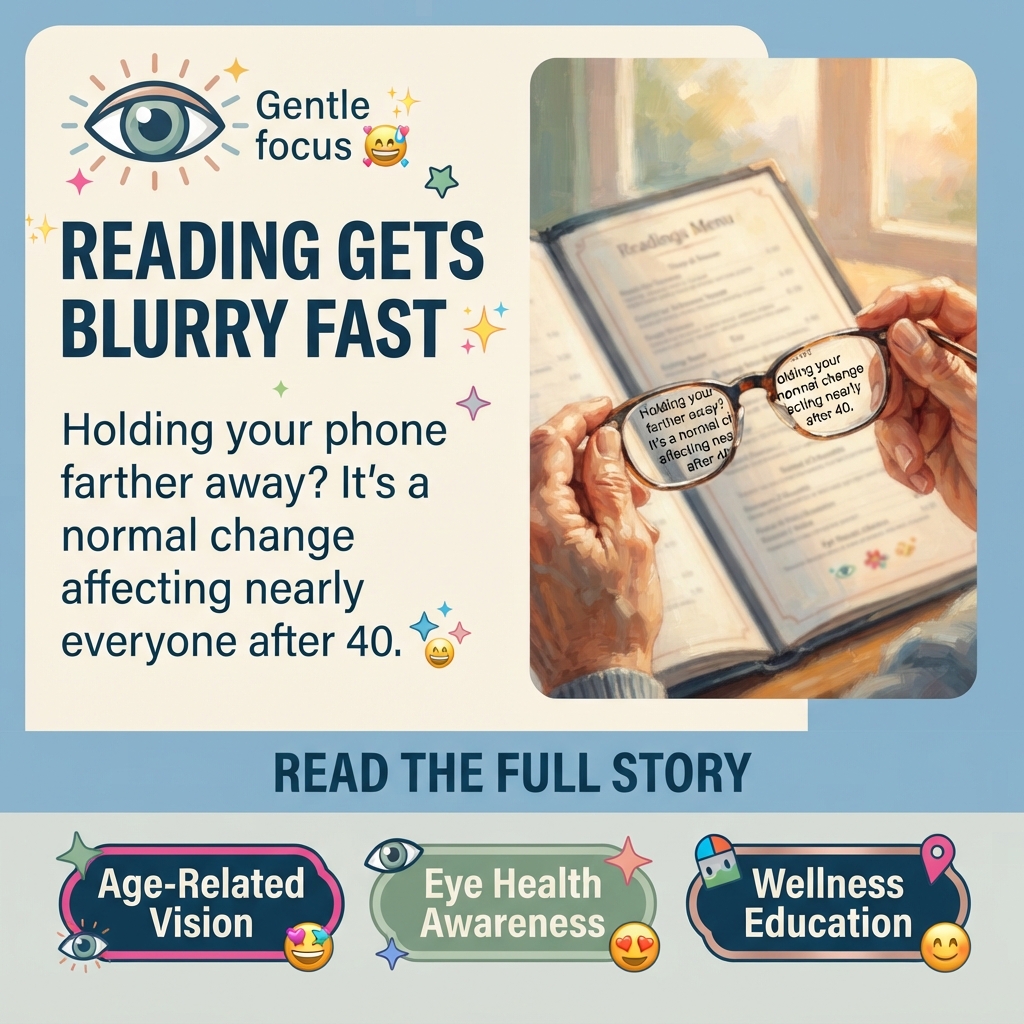
👁️ Understanding Presbyopia: Why Reading Up Close Gets Harder After 40
If you’ve recently found yourself holding your phone farther away or squinting at restaurant menus, you’re experiencing a common shift that affects nearly everyone as they age. Local eye care providers are sharing what you need to know about presbyopia-and why it’s a normal part of aging, not a sign of declining eye health.
📱 What’s Happening to Your Vision
According to Boyd Family Eyecare in Dunlap, Presbyopia is the age-related loss of your eyes’ ability to focus clearly on nearby objects. It’s not a disease or a sign that something is wrong-it’s a natural change that happens to virtually everyone, even people who have enjoyed perfect vision their entire lives.
When you’re young, the natural lens inside your eye is flexible. Tiny muscles surrounding that lens change its shape constantly, allowing you to shift focus instantly from distant objects to things up close. This process is called accommodation. But as you age, the lens gradually becomes less flexible. It can no longer change shape as easily, making it increasingly difficult to focus on nearby objects. That’s why the fine print that was easy to read a few years ago may suddenly appear blurry. ✨
🗓️ When Does It Start
Presbyopia commonly becomes noticeable sometime in your early to mid-40s, though the timing varies from person to person. Some people notice the change gradually; others seem to wake up one day and realize they can’t read without holding things at arm’s length.
❤️ Why This Matters for Your Daily Life
This shift affects more than just reading. It influences how you work, shop, dine, and enjoy hobbies. If you spend time on your phone, work with small details, or enjoy reading, presbyopia can change how you approach these everyday activities. Understanding what’s happening helps you make informed choices about correction options-whether that’s reading glasses, bifocals, progressive lenses, or other solutions your eye care provider might recommend.
💡 What Residents Should Know
The key takeaway from eye care professionals is this: developing presbyopia doesn’t mean your eyes are unhealthy. It’s a normal part of the aging process, just like gray hair or changes in skin texture. Recognizing the signs early and scheduling an eye exam allows you to address the change before it affects your quality of life.
If you’ve noticed difficulty focusing on nearby objects, holding reading materials farther away, or eye strain when doing close work, these are common signs worth discussing with an eye care provider. An eye exam can confirm presbyopia and help you explore correction options tailored to your lifestyle and needs.
🔍 What Happens Next
Local eye care providers are continuing to share information about presbyopia in upcoming posts, including how to recognize when it’s starting and why your near vision continues to change as you get older. Staying informed about these changes helps you take proactive steps to maintain your quality of life and visual comfort.
❓ Questions Worth Considering
- Have you noticed changes in your ability to focus on nearby objects, and if so, how has it affected your daily routine?
- What correction options-reading glasses, bifocals, progressive lenses, or contact lenses-might work best for your lifestyle and work environment?
- When was your last comprehensive eye exam, and would scheduling one help you understand your vision changes better?
- How can you and your eye care provider work together to find solutions that keep you comfortable and active?
👥 Community Connections
Eye health is a shared concern across all age groups and backgrounds. Whether you’re noticing presbyopia yourself, supporting a family member through vision changes, or simply curious about how your eyes work, understanding this common shift strengthens community awareness about aging and wellness. Local eye care providers serve as trusted resources for these conversations, helping residents navigate changes that affect quality of life and independence.
🌟 Long-Term Community Impact
As our region’s population ages, presbyopia and other age-related vision changes become increasingly relevant to community health and quality of life. When residents understand these changes as normal rather than alarming, they’re more likely to seek timely care, maintain their independence, and continue participating fully in work, hobbies, and community life. Education about vision health supports a more informed, proactive community.


0 Comments