
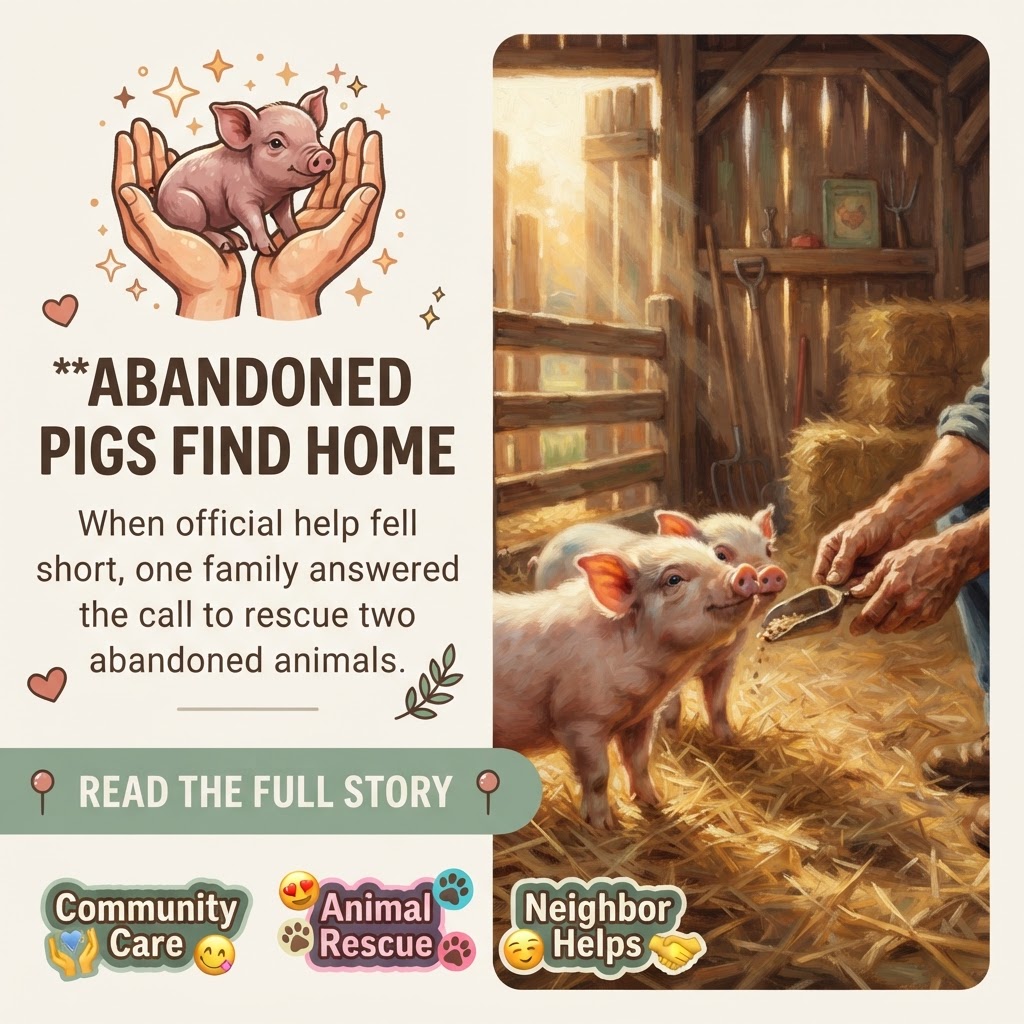
🐷 Dunlap Resident Rescues Two Abandoned Pot Belly Pigs — A Story of Unexpected Community Care
In a moment that captures both the unpredictability of rural life and the generosity of Sequatchie Valley residents, a local family has stepped in to rescue two pot belly pigs that were abandoned in a residential neighborhood. What began as a puzzling text message has become an unexpected act of animal rescue—and a reminder of how community members often fill gaps when official systems fall short.
❓ How Two Pigs Ended Up in a Neighborhood
The story began when a Dunlap-area resident received a cryptic text from her husband’s new work phone: “want two pigs?” 🤔 What seemed like a joke quickly became reality. Someone had dumped two pot belly pigs in a residential neighborhood where her husband’s coworker lives. When the family contacted animal services, they were essentially told the situation was not their responsibility—leaving the pigs without immediate care or a clear path to safety.
💪 Why This Matters to the Community
Animal abandonment in residential areas creates immediate challenges: safety concerns for neighbors, welfare risks for the animals, and uncertainty about who bears responsibility. In this case, the gap between the problem and official response created an opportunity—and a burden—for a local family to step in. The situation reflects a broader reality in rural communities: when formal animal control resources are limited or unavailable, neighbors often become the safety net. 🛡️
For the Sequatchie Valley, this story highlights both a community strength and a potential vulnerability. Residents with the resources and compassion to help do so. But the reliance on individual rescue efforts also suggests questions worth asking about animal welfare infrastructure in the region.
❤️ The Human Side of Rescue
The rescuer describes herself as someone with “a thing for hobo animals”—a phrase that speaks to a particular kind of community member: one who sees abandoned or struggling creatures and feels called to help. 🏡 This willingness to take on unexpected responsibility, often with limited resources or planning, is a defining characteristic of many rural and small-town residents. It’s also deeply personal work—caring for animals requires time, money, space, and emotional investment.
The fact that the family is now seeking naming suggestions for the pigs suggests they’re settling in for the long term, not viewing this as a temporary fix. That commitment matters. It means two animals have moved from abandonment to care, from uncertainty to a home.
🤔 Community Questions Worth Considering
This rescue raises several questions for the broader Dunlap and Sequatchie Valley community:
- How often do animals get abandoned in residential neighborhoods in our area, and where do they typically end up?
- What resources exist for residents who encounter abandoned animals, and are those resources adequate?
- How can the community better support residents who step in to help animals in crisis?
- Are there local animal welfare organizations or networks that could help coordinate rescue efforts and share resources?
🌱 What Happens Next
For now, the two pigs have found safety and care. The family is in the process of integrating them into their life—which includes the practical work of naming them and, presumably, providing shelter, food, and veterinary care. 🐷 Whether this becomes a permanent arrangement or a stepping stone to another home remains to be seen. What’s clear is that without this family’s intervention, the outcome for these animals would have been very different.
🧵 Community Threads: The Invisible Network of Care
The Rescue Network: This story reveals an informal but real network of people in the Sequatchie Valley who respond to animal crises. It includes the family who rescued the pigs, the coworker who alerted them, and potentially others in the community who have faced similar situations. These connections often exist beneath the surface—not formalized, not always visible—but they matter enormously when crisis strikes.
The Gap Between Official Systems and Community Need: Animal services responded to this situation by essentially declining responsibility. That gap—between what official systems can or will do and what the community needs—is where individual rescuers step in. Understanding this gap is important for the community: it shows both where residents are resilient and where there may be unmet needs.
Rural Values and Responsibility: The decision to rescue these pigs reflects values common in rural communities: a sense that if you see a problem and you have the ability to help, you do. This isn’t always formalized or celebrated, but it’s a thread that runs through many Sequatchie Valley families and shapes how the community functions in moments of crisis.
📍 A Moment of Local Connection
Stories like this one—small, personal, and rooted in real choices made by real people—are the fabric of community life. They show us who we are when systems fail, when unexpected challenges arrive, and when someone has to decide whether to look away or step in. In this case, a Dunlap family chose to step in. Their pigs now have names to choose, a home to settle into, and a second chance. 🌟
For the broader community, the question remains: How can we better support the rescuers among us, and how can we build systems that prevent abandonment in the first place?
🤔Source
📰Other Stories
- 🎉 Harris Park ‘s New Playground Opens July 4th in Dunlap , TN — Early Morning Debut for Independence Day
- King Donuts Open July 4th in Dunlap — Early Morning Hours for Holiday ☕️🍩
- 🚗 Professional Car Detailing Now Available in Dunlap — Cases Detailing Launches with Affordable Pricing
- 🐾 Lost Pig Petunia Near Mann Hummel in Dunlap — Community Seeks Her Safe Return
- 🇺🇸 Daisy Lane Boutique Opens on July 4th for Biggest Summer Sale in Cookeville, TN
- 🏢 Home Depot in Cookeville Now Hiring — Apply Online
- 🔑 Sequatchie Post Medallion Keychain Connects Dunlap Shoppers to 40+ Local Business Discounts




0 Comments