
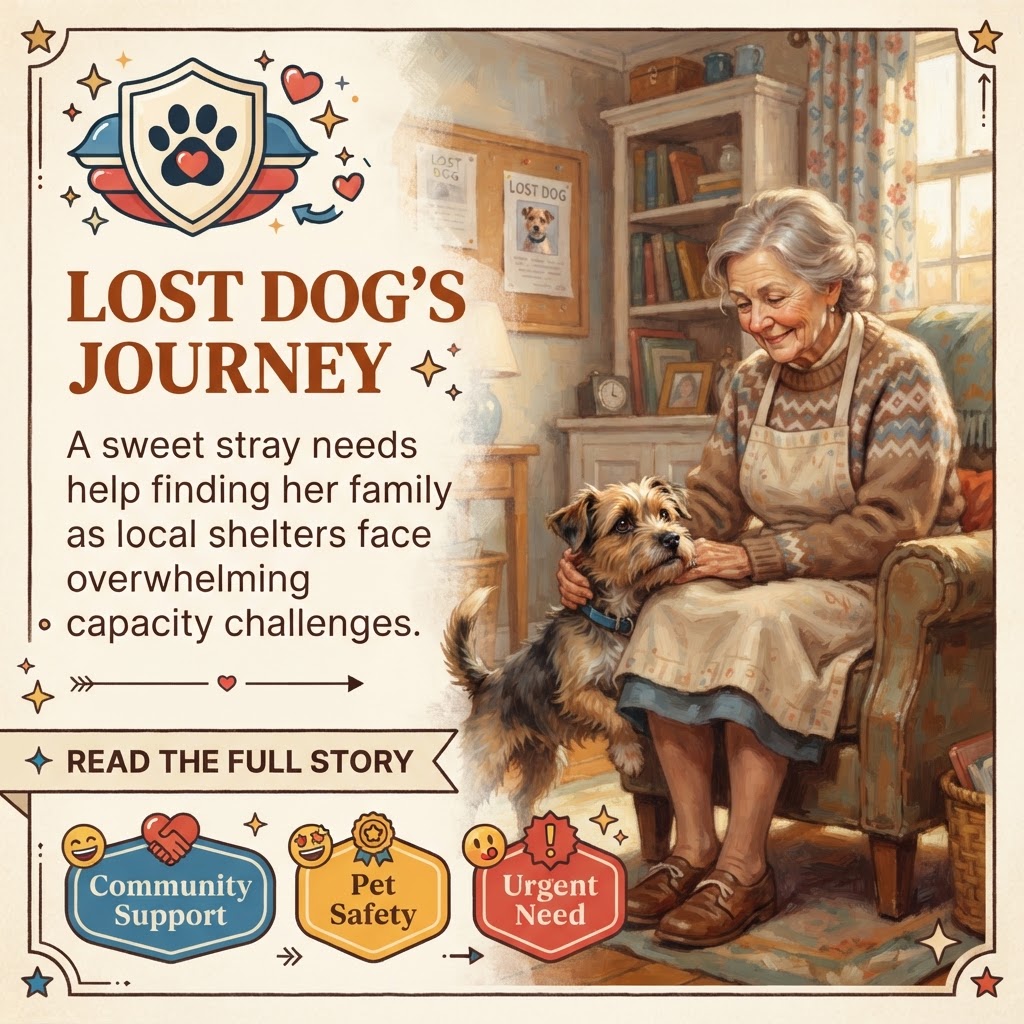
🐕 Stray Dog in Need of Owners After Local Shelters Reach Capacity
A heartwarming yet urgent story has emerged from the Sequatchie Valley, where a stray dog’s journey home depends on community vigilance. With summer travel and warm weather bringing more strays to area shelters, this case highlights both the challenges faced by local animal rescues and the collective responsibility residents share when pets go missing.
Nicole Campbell, a local resident, shared her experience finding a sweet stray dog after visiting three regional shelters—each at capacity or dealing with health outbreaks. Now caring for the pup temporarily, she’s reaching out to anyone who might recognize her or know her owners. “This girl is coming home with me,” Nicole wrote, emphasizing how quickly circumstances can overwhelm even well-intentioned animal services.
📍 Why This Matters
The story reflects a broader pattern across Tennessee’s rural communities: limited shelter capacity during peak seasons. With summer travel increasing the risk of lost pets, local shelters often face tough choices between intake limits and outbreaks. For residents, this means understanding how to help—whether by reporting strays responsibly, supporting shelters when possible, or staying alert for missing animals in their own neighborhoods.
Businesses like Rhea Animal Shelter, McKamey Animal Control, and HES Humane Society are already stretched thin. Their outbreaks and overcrowding ripple outward: fewer resources for adoptions, longer wait times for strays, and higher stress on volunteers. For families with pets, it’s a reminder that even well-loved animals can end up in unfamiliar situations—and their owners might not realize they’ve been lost.
❤️ Human Impact: Who’s Affected?
The dog in question is just one face of a larger issue. Pet owners may feel relief if someone recognizes their missing animal, but also anxiety about how quickly shelters can become overwhelmed. Volunteers and staff at local shelters are on the front lines, balancing ethical care with limited space—especially during outbreaks that force temporary closures or reduced services.
Neighbors and community members play a critical role too: spotting strays early can prevent them from becoming long-term shelter residents. For children in the area, stories like this also create teachable moments about responsibility, empathy, and how communities support one another—especially when it comes to animals.
🏡 Community Connections
This case ties into several existing threads within the Sequatchie Valley’s animal welfare network:
- Local shelters and rescues: Rhea Animal Shelter, McKamey, and HES have collaborated before on overflow situations. Their shared challenges underscore why residents often turn to Facebook groups like [Soddy Daisy, TN] for help when official channels are full.
- Volunteer networks: Groups like the Sequatchie Valley Animal Rescue League (if it exists) may step in to foster or transport animals during crises. Their work keeps shelters functional when capacity is tight.
- Churches and community centers: Some houses of worship and civic spaces occasionally host temporary foster care drives or adoption events, providing relief for overwhelmed shelters.
- Neighborhood watch programs: Residents in areas with active groups (e.g., [Your Neighborhood Name]) may already have systems to report strays or share flyers—this story could inspire similar efforts elsewhere.
🐾 Local Perspective: A Valley-Wide Challenge
Overcrowding at animal shelters isn’t new to the Sequatchie Valley. In 2025, local reports highlighted how seasonal surges—often tied to holidays or natural disasters—can strain resources. Unlike urban areas with dedicated pet adoption centers, rural shelters rely on a mix of public funding, donations, and community goodwill.
The current situation also reflects broader trends in Tennessee: limited shelter infrastructure in mountainous regions. While cities like Nashville have multiple humane societies, smaller counties often juggle intake between a handful of facilities. For Nicole Campbell’s dog—and countless others—the result is temporary foster care by kind strangers until owners are found.
🔍 Opportunities for Connection
If you’d like to help or learn more, here’s how residents can get involved:
- Report strays responsibly: Contact local shelters directly before posting widely online. Shelters can often reunite pets with owners faster than public appeals.
- Share flyers: Nicole Campbell is asking for help spreading the word about her dog. If you recognize her or know someone who might, reach out via the original Facebook post linked below.
- Support shelters proactively: Donations of food, supplies, or volunteer hours help prevent future capacity crises. Check with Rhea Animal Shelter, McKamey, or HES for current needs.
- Join a foster network: Some local groups accept volunteers to temporarily care for animals until they’re adopted or reunited with owners.
- Educate your community: Host a neighborhood chat about microchipping pets, spay/neuter clinics, or how to spot lost animals safely.
📣 What Residents Should Know
Key details from Nicole Campbell’s post:
- The dog is currently in temporary care with Nicole. She encourages anyone who recognizes her to message the original Facebook post directly.
- All three mentioned shelters (Rhea, McKamey, and HES) are currently at capacity or dealing with health issues (e.g., kennel cough outbreaks).
- No adoption fees or foster applications are being accepted at this time due to the emergency situation.
- The original post was shared in the [Soddy Daisy, TN] Facebook group on July 15, 2026. For updates, check the linked post or contact Nicole via the group.
🚀 What Happens Next
The next steps hinge on two outcomes:
- Reuniting the dog with her owners: If someone recognizes her, Nicole will work to return her as quickly as possible. Shelters often prioritize reunifications over adoptions during surges.
- Assessing shelter capacity: Local animal services may need to adjust intake policies temporarily or seek additional resources (e.g., foster homes, mobile clinics) to handle future waves of strays.
Residents can expect updates from Nicole through the Facebook post. For broader trends, watch for announcements from Rhea Animal Shelter or county animal control about seasonal preparedness plans.
🤔 Community Questions
As this story unfolds, consider reflecting on these questions:
How can our community better support local shelters during peak seasons?
What role do neighbors play in preventing strays—especially when pets go missing suddenly?
If you’ve lost a pet, what steps would make it easier to find them quickly?
How might temporary foster networks (like Nicole’s situation) reduce shelter overcrowding long-term?
What resources are missing in our area for pets and their owners during emergencies?
✨ Long-Term Community Impact
Stories like this one have lasting effects on the Sequatchie Valley’s animal welfare ecosystem:
- Strengthened community bonds: When residents step up to help (even temporarily), it builds trust and collaboration across neighborhoods, churches, and civic groups.
- Increased awareness of shelter challenges: Highlighting capacity issues can lead to better planning—whether through donations, volunteer training, or advocacy for expanded facilities.
- A culture of responsibility: Each time a stray is reunited or adopted smoothly, it reinforces the idea that pets are part of the community’s well-being—not just individual ownerships.
- Potential for systemic change: If this crisis sparks conversations about microchipping incentives or emergency foster programs, it could reduce future shelter surges.
🧵 Community Threads: The Hidden Network Behind the Story
This stray dog’s journey reveals threads that connect people and resources across the Sequatchie Valley:
- The Foster Care WebNicole Campbell’s temporary care highlights how informal fostering fills gaps when shelters are full. In rural areas, this often relies on trusted neighbors, friends, or community members—sometimes without formal programs in place. Strengthening these connections could create a more resilient system for future emergencies.
- The Facebook Group as a LifelineThe post’s origin in the [Soddy Daisy, TN] group shows how social media serves as both a tool for spreading word and a pressure valve when official channels fail. For residents unfamiliar with local shelters’ processes, groups like this can be critical—but they also rely on volunteers to monitor them.
- The Shelter Collaboration NetworkRhea Animal Shelter, McKamey, and HES’s shared struggles point to an unspoken agreement among rural shelters: they lean on each other during crises. This informal alliance could be formalized with joint training, shared resources, or a regional hotline for overflow situations.
- The Role of Pet Owners as First RespondersMany lost pets are found by residents—whether walking their dogs, driving through neighborhoods, or noticing unusual activity. This story reminds us that everyone is part of the solution, from spotting strays to reporting them promptly.
- The Human-Animal Bond in CrisisWhen pets go missing, their owners often experience stress, guilt, or grief—especially if they can’t afford shelter fees. This case underscores how animal welfare intersects with human well-being, and why community support (like foster care) isn’t just about the animals.
🤔Source

0 Comments