
🏺⛏️ Junior Archaeologists Needed: Sequatchie County Library’s DIG Program Uncovers History & Creativity
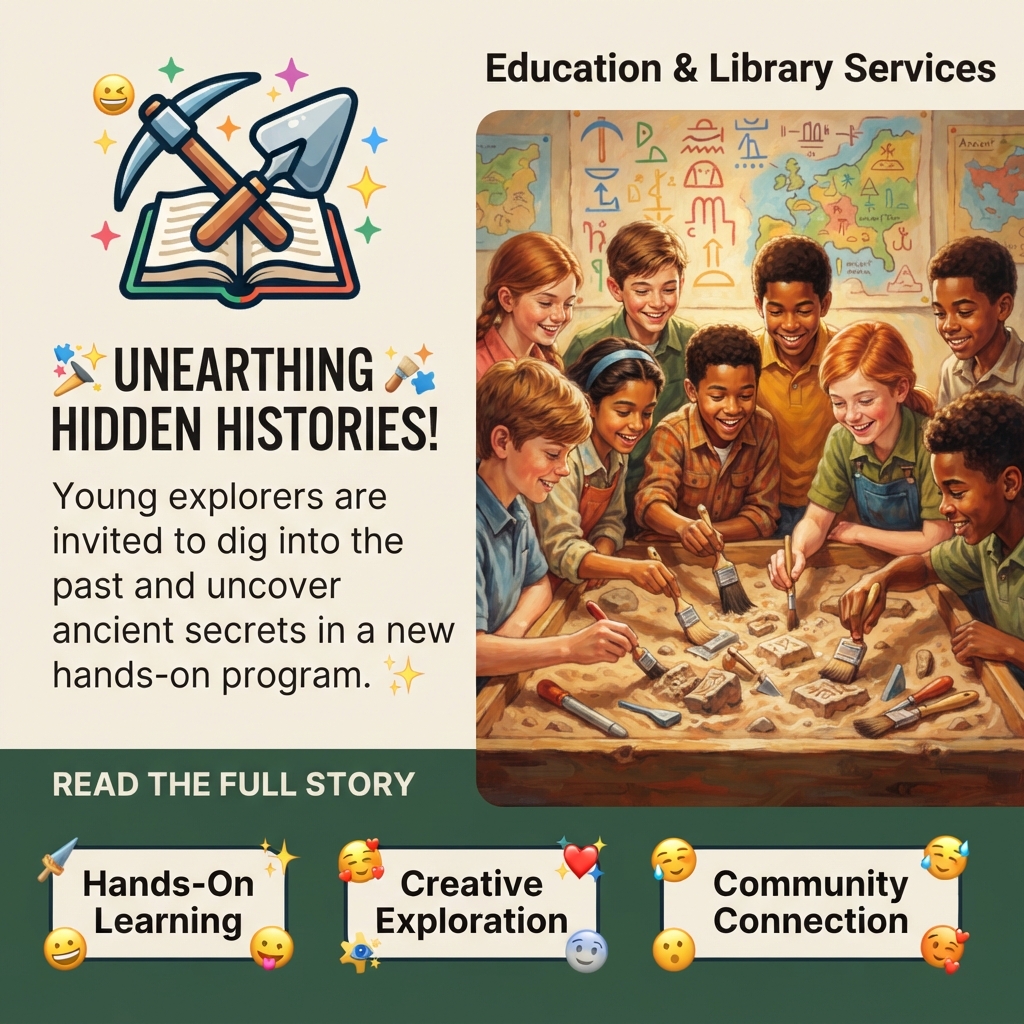
The Sequatchie Valley’s rich history isn’t just for textbooks—it’s also a playground for young minds. This summer, the Sequatchie County Public Library is inviting curious fifth- to eighth-graders to roll up their sleeves and become junior archaeologists in its new six-week DIG program. With hands-on lessons exploring lost cultures, artifact creation, and mystery-solving, this isn’t just an after-school activity—it’s a chance for kids to connect with local heritage while sparking creativity.
📅 When: Tuesdays, August 18 – September 22
⏰ Time: 10:00 AM
📍 Where: Sequatchie County Public Library
👩🏫 Led by: Instructor Pam Kiper
🔍 WHY THIS MATTERS
For many kids in the Sequatchie Valley, history often feels distant—until they hold an artifact in their hands. The DIG program bridges that gap by turning abstract lessons into interactive adventures. By investigating real artifacts from a “mysterious lost culture” (a creative twist on local archaeology), participants learn critical thinking while also crafting their own cultural symbols and clues—skills that build confidence, collaboration, and an appreciation for Sequatchie County’s unique past.
Beyond academics, the program fosters community ties. Local families often share stories of their ancestors’ connections to the valley’s history, from early settlers to logging-era traditions. For kids who might not otherwise explore these topics, DIG offers a tangible way to engage with their own heritage—while making new friends along the way.
🤝 COMMUNITY CONNECTIONS
The library’s programming aligns with broader efforts in Sequatchie County to preserve cultural identity and encourage youth participation. Organizations like the Sequatchie Valley Historical Society and local schools (including Sequatchie Middle School) often collaborate on heritage projects, and this program could inspire similar partnerships. By introducing kids to hands-on history early, the library helps nurture future stewards of the valley’s stories—whether through archaeology, storytelling, or even future careers in preservation.
For families already involved in 4-H clubs, Scouts, or summer camps, DIG offers a low-cost alternative that still delivers hands-on learning. The program also connects to Sequatchie’s outdoor culture: many local kids explore caves, bluffs, and old homesteads on family outings—this class gives them a structured way to interpret what they discover.
👧🏫 HUMAN IMPACT
Who benefits most? The answer is simple: the kids themselves. Grades 5–8 are a pivotal age for developing curiosity about the world, and this program meets them where they are—through creativity, teamwork, and problem-solving. For students who might struggle with traditional history lessons, crafting artifacts or solving mysteries could make learning feel like play.
Parents may also appreciate the structured, enriching activity during summer months when many families seek engaging alternatives to screen time. The library’s free registration (with a suggested supply fee) ensures accessibility for all income levels—a key factor in Sequatchie County, where community resources often stretch family budgets.
🌄 LOCAL PERSPECTIVE
Sequatchie County’s geography and history make it the perfect backdrop for an archaeology-themed program. Nestled between Walden Ridge and the Cumberland Plateau, the valley has long been a crossroads of cultures—from Cherokee pathways to early European settlers. Programs like DIG help kids visualize these layers of history in their own backyard.
This isn’t Sequatchie’s first foray into youth archaeology either. Local schools occasionally incorporate field trips to nearby sites like the Sequatchie Valley Heritage Center, and community events often highlight artifacts from the region. By offering a recurring class, the library ensures that curiosity about local history doesn’t fade after one visit.
✨ OPPORTUNITIES FOR CONNECTION
Families have multiple ways to get involved:
- 📝 Register now! Spots are limited to 20 students, so early sign-ups ensure materials and activities are ready. Registration is open online here, or in person at the library.
- 👨👩👧👦 Bring a friend! Encourage your child to invite classmates—teamwork is a core part of the program’s design.
- 🏠 Share the excitement! Parents who work remotely or have flexible schedules could volunteer as chaperones (contact the library for details).
📅 WHAT RESIDENTS SHOULD KNOW
Key details:
- Dates: Six Tuesdays, August 18 – September 22 (no class on September 1).
- Time: 10:00 AM sharp—arrive early for setup.
- Location: Sequatchie County Public Library, 227 Cherry Street, Dunlap, Tennessee 37327.
- Cost: Free registration; minimal supply fee may apply after sign-up.
- Instructor: Pam Kiper, a local educator with experience in hands-on learning.
🔮 WHAT HAPPENS NEXT
The library will confirm registration numbers by August 15 and notify participants of any material adjustments. After the final class on September 22, kids can share their discoveries with family or even create a “museum exhibit” at home using their new artifacts. The program’s creative focus means there are no wrong answers—just endless possibilities for imagination.
Looking ahead, the library may expand DIG to other age groups or themes based on interest. For now, the goal is simple: spark a love of history that lasts beyond the classroom walls.
💬 COMMUNITY QUESTIONS
As you consider whether your child should join:
- How might this program help kids see their community’s history as something they can explore—rather than just learn about?
- What other local resources (museums, landmarks, or organizations) could partner with the library to expand hands-on learning opportunities?
- For families who can’t attend this session, what alternative ways could Sequatchie County offer youth archaeology experiences?
- How might a program like DIG inspire teachers or homeschoolers to incorporate more creative history lessons?
- What “lost cultures” or local stories do you wish kids today could discover through hands-on activities?
🌱 LONG-TERM COMMUNITY IMPACT
The ripple effects of this program could extend far beyond September. By fostering a sense of place among young people, DIG helps build:
- Cultural pride: Kids who understand their county’s history are more likely to preserve its landmarks and traditions.
- STEM/arts connections: The blend of science (artifacts), creativity (designing cultures), and teamwork aligns with modern education goals.
- A pipeline for local engagement: Future volunteers, docents, or even historians might start here—inspired by a class that made history feel alive.
For Sequatchie County, where community identity is as much about the land as it is about people, programs like this remind us that heritage isn’t just something we read about—it’s something we dig into together.
🧵 COMMUNITY THREADS
The DIG program weaves together several invisible but vital threads in Sequatchie County:
- 🏫 Education & Libraries: The library’s role as a hub for learning extends beyond books—it’s where kids discover passions that shape their futures. This aligns with the county’s push to modernize public spaces as community anchors.
- 👨👩👧👦 Family Culture: Parents who value hands-on learning (whether through 4-H, gardening clubs, or outdoor adventures) will see this as a natural extension of their values. It also offers a rare summer activity that doesn’t revolve around screens.
- 🏔️ Local Geography: The valley’s unique topography—from river valleys to plateau edges—provides endless inspiration for “lost culture” stories. Kids might later connect the artifacts they create to real sites like the Sequatchie River or Walden Ridge bluffs.
- 🤝 Civic Engagement: Programs like this often lead to youth involvement in local events, such as the Sequatchie County Fair or heritage festivals. The skills kids learn here—research, collaboration, presentation—translate directly to volunteering.
- 🎨 Creativity & Identity: By inventing their own cultures, participants explore identity in a safe, imaginative space. For many rural youth, this could be their first chance to see themselves as creators of history—not just consumers of it.
Understanding these threads helps residents see how small programs like DIG strengthen the county’s fabric—one artifact, one story, and one curious mind at a time.

0 Comments