
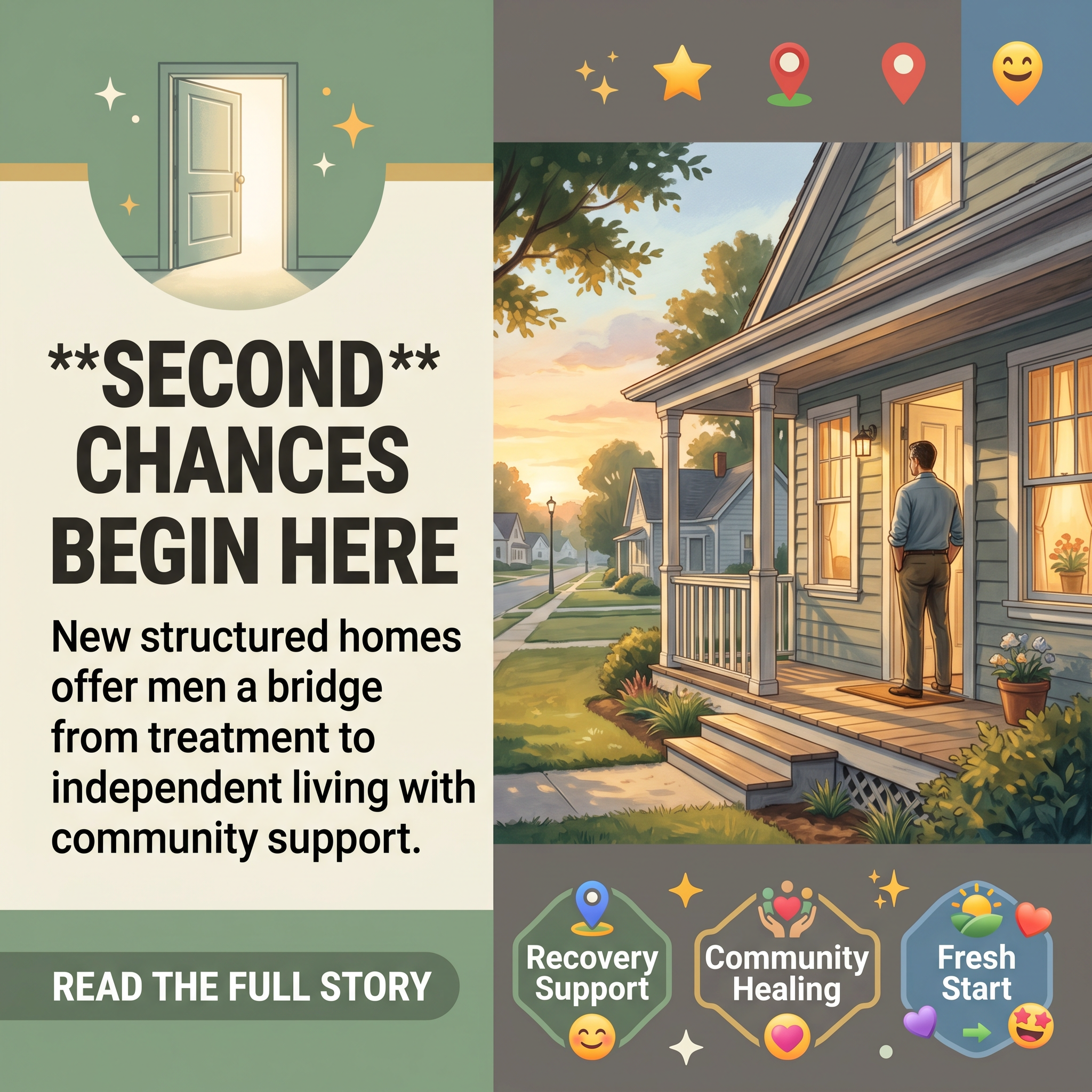
🏠 New Sober Living Homes for Men Opening in Sequatchie Valley Area
Recovery and second chances are taking on new shape in the Sequatchie Valley region. Travis Barnett has announced the opening of brand new sober living homes specifically designed for men seeking structured support during their recovery journey—a resource that addresses a growing need for transitional housing and community-based recovery options in the area.
❤️ Why This Matters
Sober living homes serve a critical role in the recovery landscape. They provide a bridge between intensive treatment programs and independent living, offering residents a stable environment, peer support, and accountability during one of life’s most challenging transitions. For men in the Sequatchie Valley working toward recovery, having accessible options closer to home can mean the difference between sustained progress and relapse. These homes also reduce the need for individuals to travel long distances or relocate entirely, allowing them to maintain connections to their local support networks—family, churches, employers, and community organizations that often play vital roles in long-term recovery.
🤝 Community Connections and Support Systems
Recovery doesn’t happen in isolation. Sober living homes typically connect residents with local resources: employment services, mental health providers, peer support groups, faith communities, and civic organizations. The announcement specifically mentions assistance with obtaining identification, birth certificates, and employment—practical barriers that often prevent people from moving forward. This suggests the homes are designed not just as housing, but as gateways to reintegration. Local employers, workforce development agencies, churches, and community organizations in Dunlap and surrounding areas may find themselves as natural partners in this recovery ecosystem.
👥 Human Impact: Who This Serves
Men entering recovery often face multiple challenges simultaneously: housing instability, employment gaps, legal or administrative barriers, and the psychological weight of rebuilding trust and identity. The availability of structured sober living homes can help address these layers. For families in the Sequatchie Valley with loved ones in recovery, knowing that local, supportive housing exists may reduce anxiety and create hope. For employers considering hiring individuals in recovery, these homes provide evidence of commitment and structure. For faith communities and volunteer organizations, they represent an opportunity to support neighbors during vulnerable transitions.
📍 Local Perspective: Recovery Resources in Sequatchie Valley
The Sequatchie Valley region, like many rural and semi-rural areas, has faced the challenges of substance use and addiction. The emergence of recovery-focused housing reflects both the need and the growing recognition that recovery is possible and worth supporting. Dunlap and the surrounding communities have a history of neighbors helping neighbors—a cultural foundation that can strengthen recovery outcomes when paired with professional support and structured environments.
💡 What Residents Should Know
For anyone interested in learning more about the sober living homes, the contact number is 423-567-0146. The homes are described as brand new, suggesting they are either recently opened or in the final stages of opening. Prospective residents or those seeking information about the program can reach out directly. The homes specifically serve men and include support for obtaining essential documentation and employment assistance—practical services that extend beyond housing alone.
🔄 What Happens Next
As these homes become operational, several developments may unfold: residents will begin moving in and establishing community; partnerships with local employers, social services, and support organizations will likely develop; and the homes may become known as a resource within recovery networks across the region. Community members—whether in social services, faith communities, business, or volunteer sectors—may be approached about collaboration or support opportunities. Local awareness of this resource will likely grow through word-of-mouth, social services referrals, and community networks.
🌱 Long-Term Community Impact
The availability of sober living homes can have ripple effects across a community. When individuals successfully recover and reintegrate, they often become employed, contribute to local economies, strengthen family relationships, and sometimes become advocates or mentors for others in recovery. Over time, this can reduce pressure on emergency services, improve workforce stability, and strengthen the social fabric of neighborhoods. For Dunlap and the Sequatchie Valley, these homes represent an investment in human potential and community resilience.
🧵 Community Threads: Invisible Connections
The Recovery-to-Employment Pipeline: These homes explicitly mention employment assistance, connecting recovery directly to economic participation. Local employers, workforce development agencies, and business owners are now part of a larger recovery ecosystem, whether they realize it or not.
Faith and Recovery: Many recovery journeys are strengthened by spiritual community. Churches and faith organizations in Dunlap may find themselves as natural allies and support systems for residents of these homes.
Family Reconnection: Sober living homes often facilitate healing in family relationships. Local families separated by addiction now have a structured pathway toward reunion and trust-building.
Peer Support Networks: As residents move through these homes, they form peer relationships that often last beyond their stay, creating informal support networks woven throughout the community.
❓ Questions Worth Considering
- How can local employers, faith communities, and civic organizations learn about and support residents of these homes?
- What partnerships between these sober living homes and existing Sequatchie Valley services (mental health, job training, mentorship) might strengthen outcomes?
- How can the broader community welcome and support men in recovery without judgment or stigma?
- What role might volunteer mentors, peer sponsors, or community members play in supporting residents’ long-term success?
For more information, contact Travis Barnett at 423-567-0146. 📞
Source
Travis Barnett – Advertisement for brand new sober living homes for men with contact number 423-567-0146
Other Stories
- 💰 Cash America Pawn Opens in Dunlap — Budget-Friendly TVs Starting at $7
- 🚜 Collins Dump Trailers Launches Rental Service in Sequatchie Valley
- Prime Treasures Saturday $5 Sale in Dayton, TN — Bins Restocked with Mystery Boxes & Phone Cases 🛍️
- Rolling Oak Distillery Updates Kitchen Line in Dunlap , TN — New Phone Number for Plate Lunch Orders 📞
- 🎵 Country Rap Concert in Whitwell, TN — July 3rd with Jesse Howard & Nu Breed
- Catfish Special at Cafe on 28 in Whitwell, TN — $8.99 Today 🍽️
- Youth Axe Throwing Clinics in Dunlap 🪓 — Small Town Hatchet Launches Summer Program Starting July 14th


0 Comments