
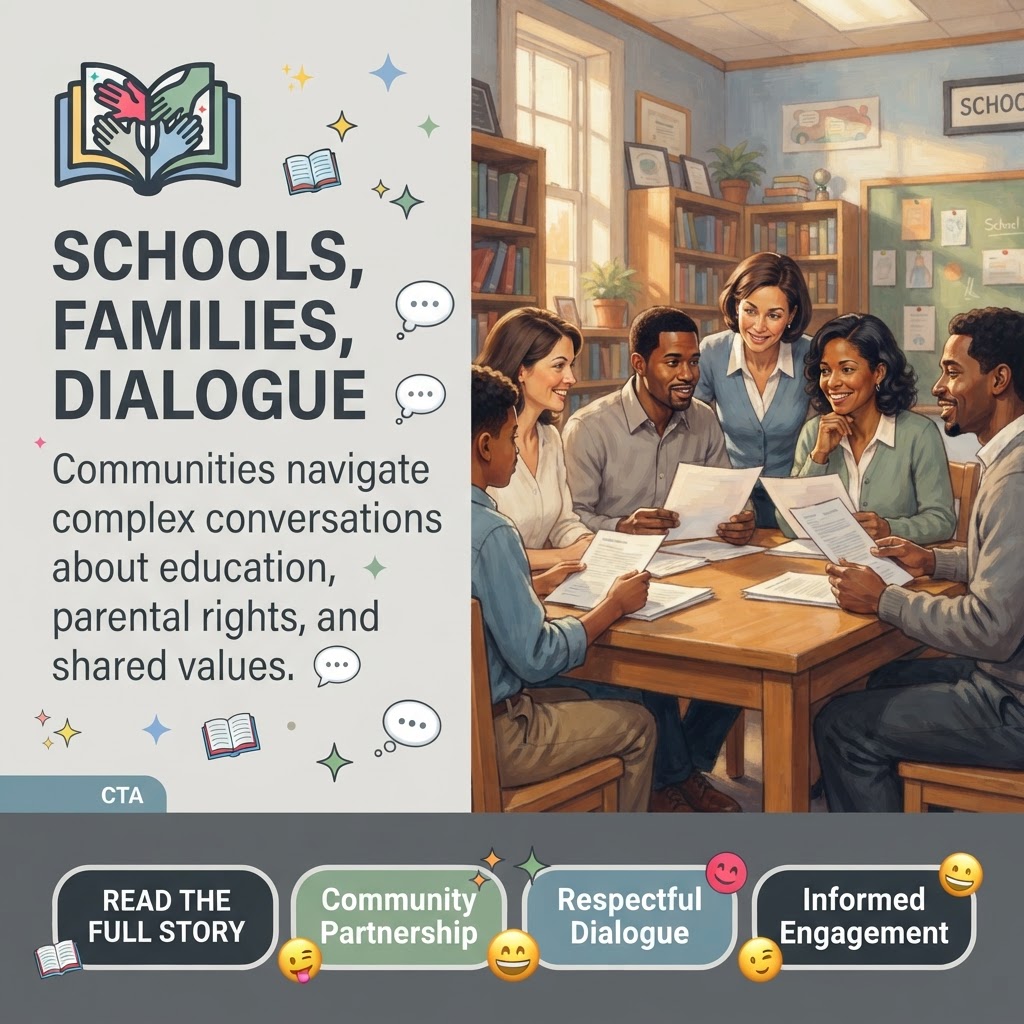
🎓 Community Weighs In on Parental Rights and School Education Policies
A discussion emerging in local community groups reflects a broader national conversation about how schools should handle sensitive topics—and who should have the final say. The question of parental involvement in education decisions has sparked thoughtful debate among residents, touching on values that matter deeply to families across the region.
📍 What’s Being Discussed
The conversation centers on a fundamental tension in American education: the balance between parental authority and school responsibility. One perspective emphasizes that parents should have primary control over how their children learn about gender and identity—arguing that transparency and age-appropriate instruction should be non-negotiable. Another perspective holds that schools have a responsibility to provide inclusive support for all students, including transgender youth, as part of their educational mission. 🤔
The debate isn’t new, but it’s intensifying as policies shift at state and federal levels. For families in the region, these discussions have real implications for how local schools operate, what curriculum looks like, and how educators approach sensitive conversations with students.
❤️ Why This Matters Locally
Parents, educators, and community members across the Sequatchie Valley and surrounding areas rely on local schools to educate their children in ways that reflect both academic standards and community values. When policies change—whether at the federal, state, or local level—they affect classroom practice, teacher training, student support services, and the trust between families and schools. 📚
This isn’t an abstract policy debate. It touches real questions that parents ask: What will my child learn? When will they learn it? Will I know about it? How will my child’s needs be supported? These concerns cross political lines—most parents, regardless of their views on specific policies, want to be informed and involved in their children’s education.
🗣️ Community Connections
Schools in the region—including Sequatchie County School System, Bledsoe County Schools, Van Buren County Schools, Tennessee, and others—are where these policies become real. Teachers, administrators, counselors, and support staff navigate these conversations every day. Parents and guardians are the first educators in their children’s lives. Churches and community organizations often reflect and reinforce family values. Local civic groups and parent-teacher organizations provide forums where these discussions can happen. 🏫
When education policies shift, they ripple through all these connections. Teachers may need new training. Parents may have questions. Students may experience changes in how they’re supported. Community organizations may find themselves fielding concerns from members. Understanding how these pieces fit together helps residents see the full picture.
💡 What Residents Should Know
If you’re a parent or guardian in the region, here are some practical steps worth considering:
- Know your school’s policies: Contact your local school district to understand their current curriculum, support services, and communication practices around sensitive topics.
- Attend school board meetings: These are public forums where policies are discussed and decided. Your presence and voice matter.
- Ask questions: Teachers and administrators can explain what’s being taught, why, and how parents can stay informed.
- Connect with other parents: Parent-teacher organizations and community groups provide opportunities to discuss concerns and learn from others.
- Stay informed about policy changes: State and federal policies do affect local schools. Following education news helps you understand what’s coming.
🤝 Opportunities for Connection
This conversation, while sometimes contentious, is also an opportunity for community members to engage more deeply with local schools and each other. Consider:
- Attending a school board meeting to learn how decisions are made and where you can participate.
- Volunteering with local schools or education-focused organizations to understand challenges educators face.
- Joining or starting a parent group focused on education issues that matter to you.
- Having respectful conversations with neighbors, friends, and family members who may hold different views—understanding why people care about these issues strengthens community bonds.
- Supporting teachers and school staff who are navigating complex expectations from multiple directions.
🔄 What Happens Next
Federal and state policies will continue to evolve, and local schools will implement changes as required. What matters now is how communities respond. Will parents engage with schools? Will educators feel supported in their work? Will communities find common ground on shared values, even when disagreeing on specifics? 📋
Residents should watch for:
- Updates from your local school district about any policy changes or new guidance.
- Announcements of school board meetings where education topics are discussed.
- Opportunities to provide feedback to schools and district leaders.
- News about how state or federal policy changes affect local schools.
❓ Questions Worth Asking
As this conversation continues, consider these questions:
- How can parents and schools build stronger partnerships around education, even when they disagree on specific policies?
- What role should community organizations—churches, civic groups, nonprofits—play in supporting both families and schools during times of policy change?
- How can educators be supported in navigating complex expectations from parents, administrators, policymakers, and students?
- What does “age-appropriate” education mean in your community, and who should decide?
- How can communities maintain respect and civility when discussing deeply held values?
🌱 Long-Term Community Impact
How communities handle this conversation now will shape trust between families and schools for years to come. If parents feel heard and informed, they’re more likely to support schools and educators. If schools feel supported by their communities, they can focus on teaching. If community members can disagree respectfully, the entire region benefits from stronger relationships and shared problem-solving. 🌄
Conversely, if these conversations become purely adversarial, schools may struggle to recruit and retain good teachers, parents may lose confidence in public education, and community cohesion may suffer. The stakes are real—not because of any single policy, but because education is foundational to how communities thrive.
🔗 Community Threads: The Relationships Underneath
The Parent-School Partnership: Strong schools depend on parents who are engaged and informed. When parents understand what schools are doing and why, and when schools listen to parent concerns, education improves. This conversation is really about whether that partnership is working—and how to strengthen it.
The Educator’s Position: Teachers and administrators are caught between multiple expectations: federal and state policies, parent concerns, student needs, and their own professional judgment. Supporting educators means acknowledging this complexity and recognizing that they’re doing their best in a difficult position.
The Community Values Network: Families, churches, civic organizations, and schools all shape how young people understand the world. When these institutions communicate and work together, young people benefit. When they’re in conflict, young people feel the tension. This conversation is partly about how these institutions relate to each other.
local organizations All of this rests on trust—between parents and schools, between communities and educators, between neighbors with different views. Trust takes time to build and can be damaged quickly. How communities handle disagreement now will affect whether trust can be rebuilt or strengthened.
🤔Source
Gary Williams – Discussion post asking for opinions on parental rights regarding gender and identity education in schools.

0 Comments