
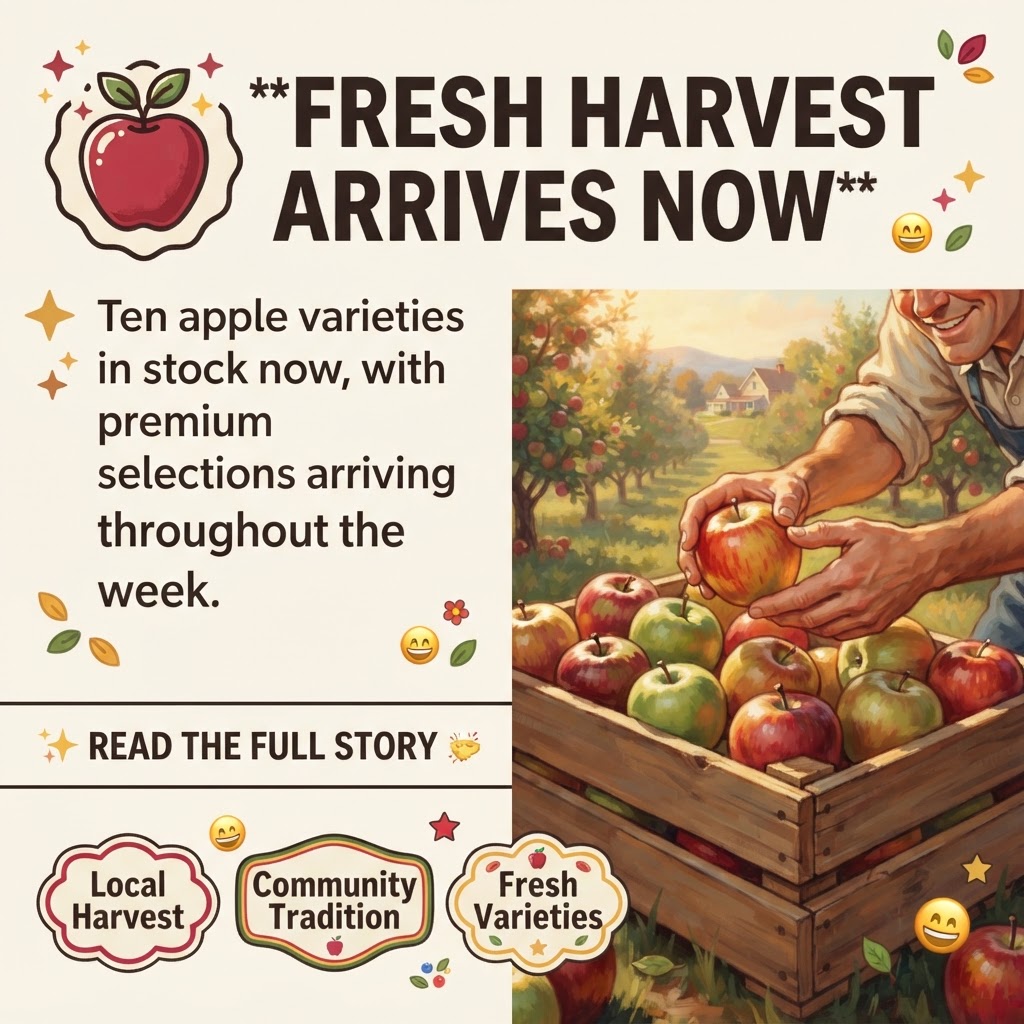
🍎 Mid-Season Apple Varieties Now in Stock – Fresh Harvest Underway
As early September arrives, local orchards are hitting their stride with a robust selection of mid-season apple varieties. For residents across the region who value fresh, locally-grown produce, this is prime time to stock up on everything from Honeycrisp to Gala, with several new varieties arriving within days.
📍 What’s Available Now
Rowell’s Apple House is currently stocked with a diverse selection of apples ready for harvest. Available varieties include Ambrosia, Fuji, Crimson Crisp, Shizuka, Early Stayman Winesap, Cortland, Macintosh, Gala, and Jonathan. Honeycrisp remains in good supply ❤️, and Ginger Gold is still available for the next day or two. The orchard notes that mid-season apples are “a plenty” as the harvest season accelerates.
🗓️ Coming Soon – New Varieties This Week
Several premium varieties are expected to arrive imminently. Crimson Gold and Mutsu are scheduled for Wednesday, while Jonagold, Red Delicious, Golden Delicious, and Scarlet Crush are expected within a couple of days. For those planning ahead, this rolling availability means repeat visits may yield new options throughout the season.
💰 Pricing and Quantities
Standard apple varieties are priced at $7 for a half peck, $13 for a peck, and $22 for a half bushel. Honeycrisp, a premium variety, carries higher pricing: $9 for a half peck, $18 for a peck, and $30 for a half bushel. These bulk options make it practical for families, food preservation projects, or community gatherings.
⏰ Hours and Access
The orchard is open Monday through Saturday, 8 a.m. to 4 p.m. CST. This schedule accommodates both weekday shoppers and weekend visitors looking to pick up fresh produce.
❤️ Why This Matters
Fresh, locally-grown apples support regional agriculture and reduce the distance food travels to reach tables. For families in the area, mid-season apple availability means access to varieties suited for fresh eating, baking, canning, and storage. The range of cultivars-from crisp Honeycrisp to tart Winesap-allows cooks and bakers to choose apples matched to their intended use. Supporting local orchards also strengthens the regional food system and preserves agricultural heritage in communities where farming remains part of the cultural identity.
🤝 Community Connections
Apple orchards have long been gathering places and seasonal traditions in rural and semi-rural communities. Families often visit together, children learn where food comes from, and the harvest becomes a shared rhythm of the year. Local schools, churches, and community organizations frequently incorporate fresh apples into fall events, baking projects, and food drives. When orchards maintain consistent availability and communicate their harvest schedule, they enable these community traditions to continue and strengthen.
🍎 What Residents Should Know
- Current availability: Ten varieties in stock as of early September, with more arriving within days.
- Hours: Monday-Saturday, 8 a.m.-4 p.m. CST.
- Bulk pricing: Half peck, peck, and half bushel quantities available at standard and premium prices.
- Honeycrisp premium: This popular variety carries a higher price point but remains well-stocked.
- Rolling harvest: Check back soon for Crimson Gold, Mutsu, Jonagold, Red Delicious, Golden Delicious, and Scarlet Crush.
🌱 What Happens Next
As the season progresses, the orchard will continue to update availability as new varieties ripen and reach the shelves. Residents interested in specific apple types-whether for fresh eating, baking, or preservation-may want to check back mid-week or follow the orchard’s updates to catch varieties as they arrive. The rolling schedule suggests that late September and early October will bring even greater variety and volume.
💡 Opportunities for Connection
Families looking for a seasonal outing can visit the orchard during operating hours to select apples in person and support local agriculture. Those interested in food preservation-canning, freezing, or making applesauce-may find bulk quantities and variety selection ideal for their projects. Community organizations planning fall events or fundraisers might consider sourcing apples locally, strengthening both their event and the regional food network.
🏡 Long-Term Community Impact
Consistent availability of locally-grown apples supports the viability of regional orchards and agricultural operations. When residents choose local produce, they help sustain farming families and preserve land use patterns that define the character of rural and semi-rural communities. Over time, strong local food systems can reduce dependence on distant supply chains, support food security, and create economic opportunity for growers and their families. The visibility and accessibility of fresh apples also educates younger generations about where food originates and builds appreciation for agricultural work.
🔗 Community Threads: The Orchard-to-Table Relationship
Seasonal Rhythm and Family Tradition: Apple orchards anchor the fall season in many communities. When families visit year after year, the orchard becomes part of their seasonal calendar-a place where children learn to identify varieties, where bakers source ingredients for pies and preserves, and where the turning of the year is marked by harvest. This thread connects individual families to the broader agricultural cycle and to each other through shared experience.
Local Food System Resilience: Each purchase from a local orchard strengthens the regional food network. Orchards that maintain consistent communication with customers-updating them on availability and variety-build trust and repeat business. This relationship between grower and buyer creates economic stability for farming operations and reduces community dependence on distant supply chains. Over generations, this thread can mean the difference between a thriving agricultural landscape and one that disappears.
Culinary and Cultural Heritage: Apple varieties carry history. Early Stayman Winesap, Cortland, and Jonathan are heirloom or heritage varieties with deep roots in American agriculture. When orchards continue to grow and sell these varieties, they preserve culinary traditions and cultural knowledge. Cooks who use these apples for specific purposes-tart varieties for pies, crisp ones for eating fresh-maintain food traditions that connect families to their past and to each other.
📢 Questions for Reflection
- How might supporting local apple orchards strengthen food security and agricultural resilience in your community?
- What role do seasonal food traditions-like apple picking or baking-play in your family or community gatherings?
- How can awareness of apple variety and origin change the way you think about the food you purchase and prepare?
- What opportunities exist for schools, churches, or community organizations to partner with local orchards on educational or charitable projects?


0 Comments