
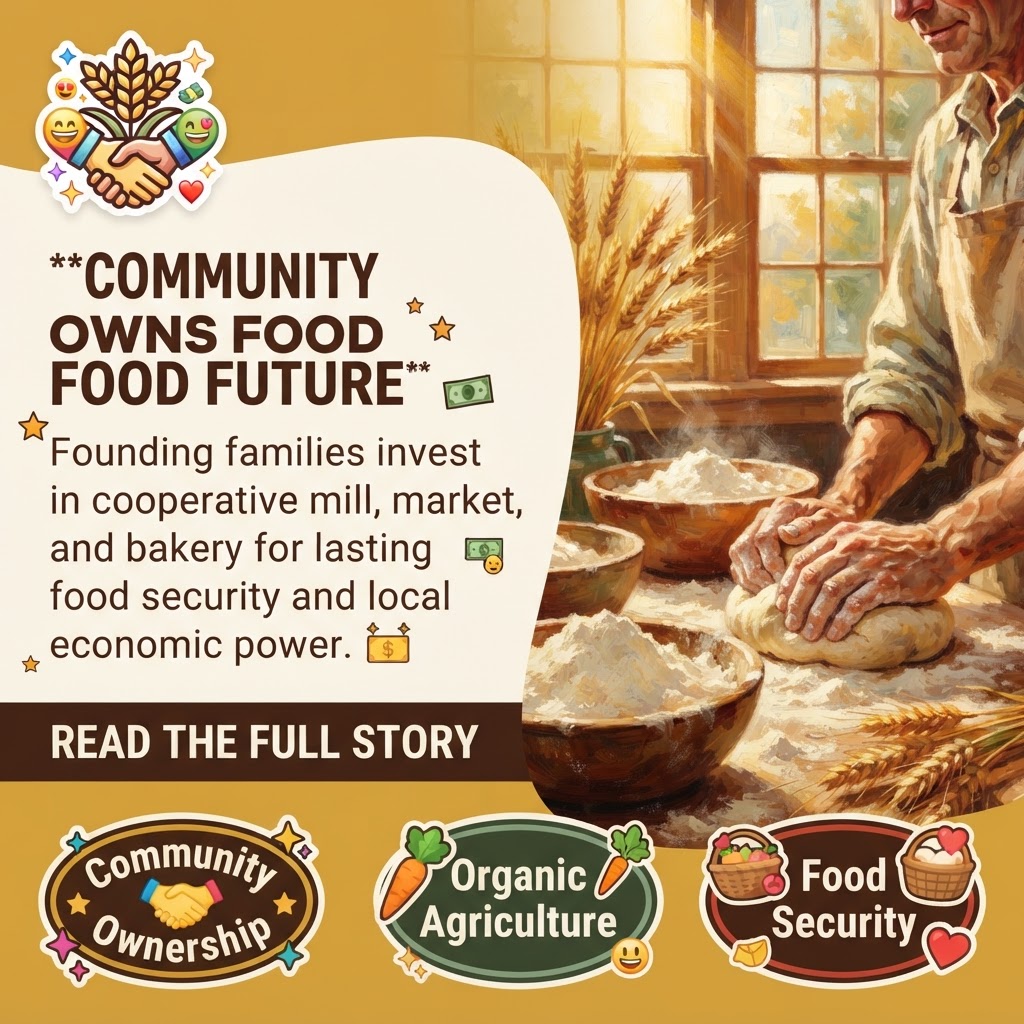
🌾 Cooperative Organic Flour Mill, Market & Bakery Coming to Nashville
Construction has begun on a new venture that reflects a growing movement across rural Tennessee toward locally owned, farmer-centered food systems. The Nashville Cooperative Organic Flour Mill, Market & Bakery represents a shift in how some communities are thinking about food production, ownership, and economic resilience in the region.
❤️ Why This Matters
This project signals something significant about how local residents are choosing to invest their resources and trust. Rather than supporting distant corporate food systems, founding families are building equity in a business designed to keep agricultural wealth and decision-making power within the community. For residents concerned about food security, agricultural sustainability, or local economic independence, this represents a tangible alternative to conventional retail food models.
The cooperative structure means that owners—not shareholders in distant cities—will benefit directly from the mill’s success. Founding families receive lifetime dividends, owner discounts on all products, and a stake in the long-term food security of their families. This model creates incentives for owners to support the business and each other, rather than extracting profit for external investors.
🤝 Community Connections
The project explicitly thanks “founding families who invested in agriculture and the local community.” This language suggests the cooperative has already built relationships with local farmers, millers, and families willing to take financial risk on a shared vision. The cooperative model itself is rooted in a long American tradition of community-owned businesses—grain mills, co-ops, and mutual aid societies that have historically strengthened rural economies and social bonds.
By combining a flour mill, market, and bakery under one roof, the business creates multiple connection points: farmers bringing grain to mill, bakers sourcing flour locally, customers shopping for organic products, and community members gathering around food. Each of these touchpoints strengthens relationships between producers and consumers in ways that typical retail cannot.
👥 Human Impact
For local farmers, this mill offers a direct market for their grain and a processing facility that keeps value in the community. Rather than selling commodity crops to distant buyers, farmers can see their grain milled and sold locally, with profits returning to the cooperative and its owners.
For families, the cooperative promises food security—a practical benefit in uncertain times. Owners gain discounts on organic flour, baked goods, and market products, reducing household food costs while supporting local agriculture. For bakers and food entrepreneurs, the mill provides access to locally milled organic flour, a competitive advantage and a story that resonates with customers.
For residents seeking employment, the mill, market, and bakery will require millers, bakers, market staff, and management—jobs rooted in the community rather than managed by distant corporate offices.
🏗️ What Residents Should Know
Construction is underway, and the window to become a founding family owner is closing. Fewer than 100 shares remain available. Interested residents can request information about ownership by calling 931-738-3838 or visiting farmersstorehouse.com.
Founding family benefits include lifetime dividends (ongoing income from the cooperative’s profits), owner discounts on everything the business sells, and family food security through access to affordable organic products. Owners also gain what the cooperative describes as “the legacy of helping generations escape the corrupt food system together”—a statement that reflects the cooperative’s values around food independence and community self-determination.
⏭️ What Happens Next
Construction continues on the Nashville location. The cooperative will likely announce an opening date once the building is ready and operations are prepared. Residents watching this project should expect announcements about hiring, grand opening events, and the official launch of the mill, market, and bakery.
For those interested in ownership, the closing window for founding family shares suggests decisions should be made soon. The cooperative may transition to a different membership or investment structure once construction is complete and operations begin.
💭 Questions Worth Considering
- How might a locally owned cooperative flour mill change where your family sources bread, flour, and baked goods?
- What would it mean for local farmers to have a processing facility and direct market for their grain within the community?
- How could cooperative ownership create different economic outcomes than traditional retail businesses in your area?
- What role might food cooperatives play in building resilience and self-determination in rural communities?
🌱 Long-Term Community Impact
If successful, this cooperative could reshape how food moves through the local economy. Rather than dollars flowing to distant corporations, revenue stays within the community, circulating among farmers, millers, bakers, employees, and owner families. Over time, this can strengthen local economic independence and create a model that other communities might replicate.
The cooperative also represents a shift in values—a public statement that some residents prioritize local agriculture, organic practices, and community ownership over convenience and low prices. As more residents engage with the mill, market, and bakery, they may develop deeper relationships with farmers and food producers, changing how they think about where food comes from and who benefits from their purchases.
🔗 Community Threads
The farmer-to-table connection: This cooperative directly links local farmers to consumers, creating visibility and accountability that typical supply chains obscure. Residents will know whose grain they’re eating and how it was grown.
Economic self-determination: By pooling resources as owners rather than customers, founding families are choosing collective economic power over individual consumer choice. This reflects a broader thread in rural communities seeking alternatives to corporate consolidation.
Food security as community asset: The cooperative frames affordable organic food as a shared family benefit, not a luxury good. This reframes food security from an individual responsibility to a collective one—a thread that strengthens mutual aid and interdependence.
Craft and skill preservation: Milling, baking, and farming are skilled trades. By creating local demand for these skills, the cooperative helps preserve knowledge and create pathways for younger generations to learn and earn within their communities.



0 Comments