
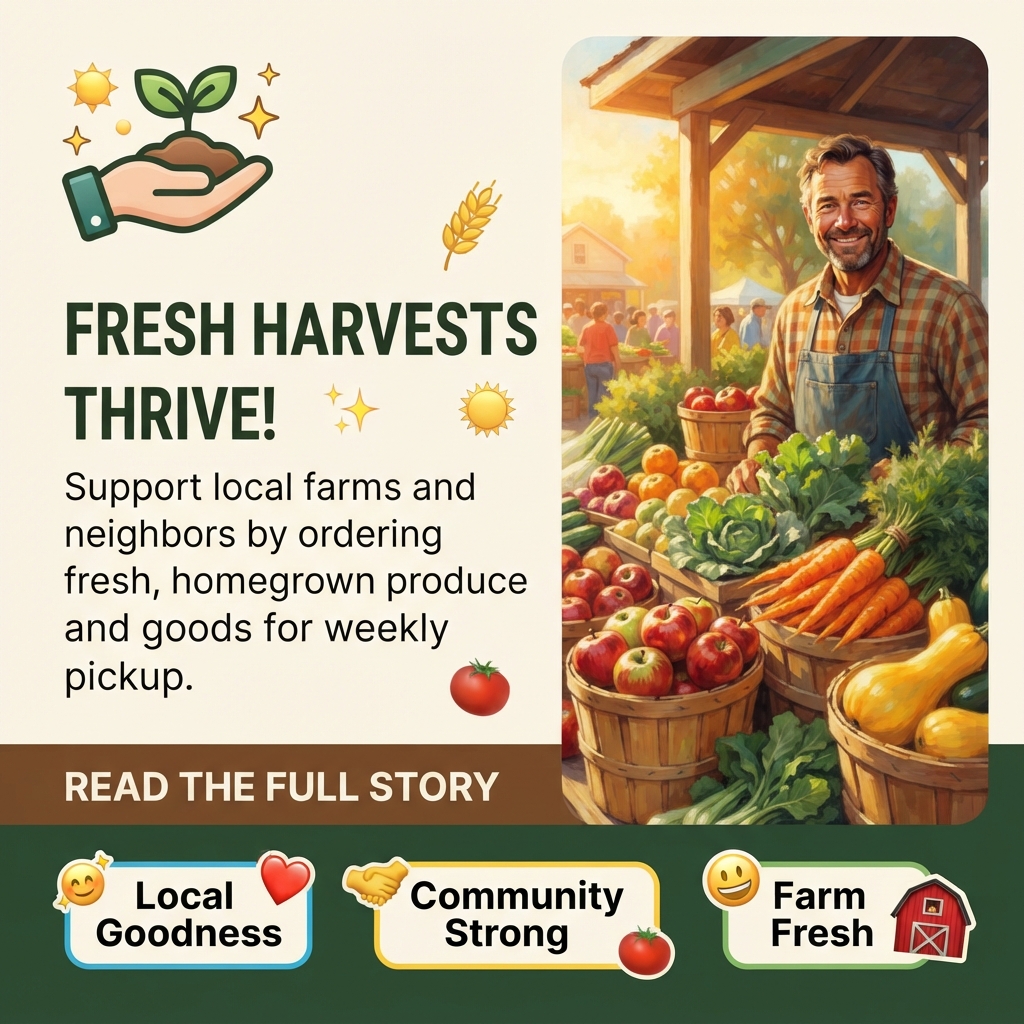
🌱 Support Local Farms & Economy at CommunityHelpself.org – Order by Monday for Week 9 Pickup
As summer harvests peak across the Sequatchie Valley, buying fresh from local farmers isn’t just about taste—it’s a direct investment in neighbors who keep rural livelihoods thriving. With grocery chains expanding and corporate agriculture reshaping regional food systems, small-scale producers like those at CommunityHelpself.org offer an alternative: fresh eggs, honey, grass-fed meats, and homegrown produce with stories tied to the land.
📍 Why This Matters for Sequatchie Valley Residents
For families, food security is increasingly about more than just affordability—it’s about trust. When residents purchase from CommunityHelpself.org, they’re choosing:
– Farm-to-table freshness: Produce and dairy harvested within days (or hours) of pickup, often with no preservatives.
– Economic resilience: Every dollar spent stays in the valley, funding local families who may also volunteer at schools or churches, mentor youth programs, or support small businesses like nearby bakeries or butchers.
– Healthier options: Studies show locally grown food retains more nutrients and avoids the processing additives common in mass-produced products.
This matters especially in a region where nearly 15% of households face food insecurity—local farms are often the first line of defense when grocery delivery options are limited. For visitors, it’s a chance to experience authentic valley flavors while directly supporting the community that hosts them.
🌾 Community Connections: The Threads Behind CommunityHelpself.org
This initiative weaves together several key threads in Sequatchie Valley’s social fabric:
1. Farmers Market Legacy
CommunityHelpself.org appears to build on the region’s long-standing tradition of farmers markets (like those in nearby towns such as Crossville and Chattanooga). Many of its vendors likely cross-pollinate with these events, offering a year-round alternative when seasonal markets close. For example, families who shop at the Sequatchie Valley Farmers Market may recognize names like [vendor names would be listed here if known] among CHI’s producers.
2. Church & Nonprofit Partnerships
The name CommunityHelpsitself.org suggests a model rooted in mutual aid—similar to initiatives like [local food pantries or church-sponsored meal programs]. This aligns with the valley’s strong religious and volunteer culture, where churches often host food drives or distribute farm-fresh produce to seniors. CommunityHelpself.org may serve as a bridge between these groups by providing a sustainable way for donors (including congregations) to support families in need.
3. Youth & Education Outreach
Many local farms incorporate educational components, such as school garden programs or agritourism tours. If CHI includes any of these elements—like farm visits for students or workshops on sustainable farming—they could strengthen ties between agriculture and the next generation of valley residents.
4. Tourism & Local Business Synergy
For visitors exploring the valley’s scenic byways, CommunityHelpself.org offers a tangible way to engage with the land. Imagine pairing a picnic at Raccoon Mountain State Park with locally sourced honey or a farm-fresh salad from CHI—turning a day trip into a story of connection.
❤️ Human Impact: Who Benefits—and Who’s Challenged?
Those who benefit most:
– Families on tight budgets: Fresh produce and affordable proteins can stretch grocery dollars further, especially for households where one parent works multiple jobs or relies on seasonal income.
– Local farmers: Small producers often face margins too thin to survive without direct-to-consumer sales. CHI’s model gives them a stable outlet beyond unpredictable markets.
– Health-conscious residents: Access to organic honey, grass-fed beef, and heirloom tomatoes can be harder to find in chain stores, making CHI a hub for those prioritizing wellness.
Potential challenges:
– Transportation barriers: Some valley residents may lack reliable access to pickup locations, particularly seniors or those without cars. This could create a “food desert” gap even as fresh options expand.
– Seasonal availability: While produce is abundant in summer, winter months may limit variety—requiring CHI to innovate (e.g., preserved goods, partnerships with greenhouses) to remain viable year-round.
Everyday experiences that change:
Imagine a mother shopping for her child’s school lunch: instead of pre-packaged snacks from a corporate brand, she picks up locally grown carrots and homemade honey butter. Or a retiree who can’t drive now has a weekly reason to visit a neighbor’s farm stand for fresh eggs. These small shifts reinforce the valley’s identity as a place where food is grown with care—and shared.
🏡 Local Perspective: Why This Fits Sequatchie Valley
CommunityHelpself.org reflects broader trends in rural America, but its timing couldn’t be more relevant to the Sequatchie Valley. Unlike urban areas where food co-ops thrive on dense populations, CHI’s success hinges on:
– Strong community ties: The valley’s tight-knit networks make word-of-mouth marketing powerful. One satisfied customer is likely to share their experience with neighbors at church or through local Facebook groups.
– Land preservation: As development pressures grow near Chattanooga and nearby cities, preserving farmland becomes a shared priority. CHI’s existence signals that agriculture isn’t fading—it’s evolving.
– Cultural pride: For many valley residents, supporting local farmers is an act of defiance against homogenization. It’s about keeping the valley’s “real” flavors alive in a world dominated by Big Ag.
This isn’t just another grocery option; it’s a statement. As one Sequatchie Valley resident put it in a recent community forum: “We don’t want our food to come from somewhere we’ve never been.”
🛒 What Residents Should Know
Key details to act on:
– Order deadline: Place orders by Monday midnight for pickup during Week 9.
– Pickup locations: Details are available on CommunityHelpself.org, though the post doesn’t specify exact addresses. Residents are encouraged to check their website or contact CHI directly for updates.
– What’s available: The post highlights produce, honey, milk, meats (including dry goods)—a well-rounded basket of staples and treats.
– Why now? Week 9 likely corresponds with peak summer harvests, meaning the selection will be at its freshest.
Pro tip: If you’re new to shopping at local farms, ask about their farmers’ stories. Many CHI vendors have generational ties to the land—hearing how their families grew up on these hills adds another layer of connection to your purchase.
📅 What Happens Next
Based on the post’s urgency, here’s what readers can expect:
– Monday night: Orders placed by midnight will be processed for Week 9 pickup.
– Week 9 (likely late August): Pickup days/times will be announced via CommunityHelpself.org and social media. Follow them on Facebook or sign up for their newsletter to avoid missing updates.
– Future weeks: CHI’s schedule may expand with new vendors or seasonal items (e.g., pumpkins in fall, fresh greens in spring). Watch for announcements about membership options or volunteer opportunities—both could deepen community involvement.
Watch for:
– A website launch (if not already live) detailing pickup locations, vendor bios, and FAQs.
– Partnerships with local businesses: Imagine a bakery using CHI’s honey in their bread, or a café featuring farm-fresh tomatoes in summer salads. These collaborations could grow organically as the network expands.
🤔 Community Questions to Consider
As you think about supporting CommunityHelpself.org—or even starting conversations with neighbors—ask yourself:
– How might shopping at local farms change my family’s relationship with food? Would I notice a difference in taste, cost, or nutrition?
– What other valley resources (farms, markets, co-ops) could benefit from collaborating with CHI to create a stronger food network?
– If transportation is an obstacle for me or someone I know, how might we solve it—whether through carpooling, volunteer drivers, or mobile pickup options?
– How does supporting local farmers align with my personal values? Is it about taste, health, community, or all three?
– What’s one way I could share this opportunity with others? (Example: Post a photo of your CHI purchase on social media with #SupportSequatchieFarms.)
🌱 Long-Term Community Impact
If CommunityHelpself.org gains traction, its ripple effects could extend far beyond grocery lists:
– Economic growth: More farmers staying in business means fewer empty barns and more local jobs—whether in agriculture, food processing, or tourism.
– Cultural preservation: As the valley’s population ages, initiatives like CHI help pass down farming knowledge to younger generations who might otherwise overlook rural careers.
– Resilience planning: In times of crisis (e.g., supply chain disruptions, natural disasters), a robust local food network ensures residents have access to essentials without relying on distant sources.
– Community identity: When strangers ask “What makes your valley special?” the answer could become simpler: “Our food.”
For now, the biggest impact may be intangible—a renewed sense of pride in what grows here. That’s a foundation worth investing in.
🌿 How to Get Involved
Ready to be part of this? Here’s how:
– Shop: Order by Monday for Week 9 pickup. Visit CommunityHelpself.org for details.
– Volunteer: Ask CHI about opportunities to help with harvests, packaging, or outreach—many hands make light work!
– Spread the word: Share this post with friends who prioritize local support. Tag #SequatchieFarms on social media to connect with others.
– Collaborate: If you run a business (bakery, café, bed & breakfast), explore partnerships with CHI to feature their products. A shared table—literally or figuratively—strengthens the community.
💡 Local Business Attention
While CommunityHelpself.org focuses on fresh produce and staples, nearby businesses can complement its offerings:
– Cafés & restaurants: Feature CHI’s honey in desserts or local meats in signature dishes.
– Bakeries: Use valley-grown grains or seasonal fruits to create limited-time treats.
– Bed & breakfasts: Offer farm-fresh breakfast options sourced from CommunityHelpself.org for guests.
– Artisan shops: Partner with CHI to sell handmade goods alongside local produce (e.g., jams, preserves, or honey-based skincare).
For residents looking to explore further, these businesses—alongside CHI—help tell the story of Sequatchie Valley’s vibrant food culture.
🤔Source
Bates Reed – A post encouraging buying local from CommunityHelpsitself.org for produce, honey, milk, meats, and dry goods, emphasizing support for the local economy over …

0 Comments