
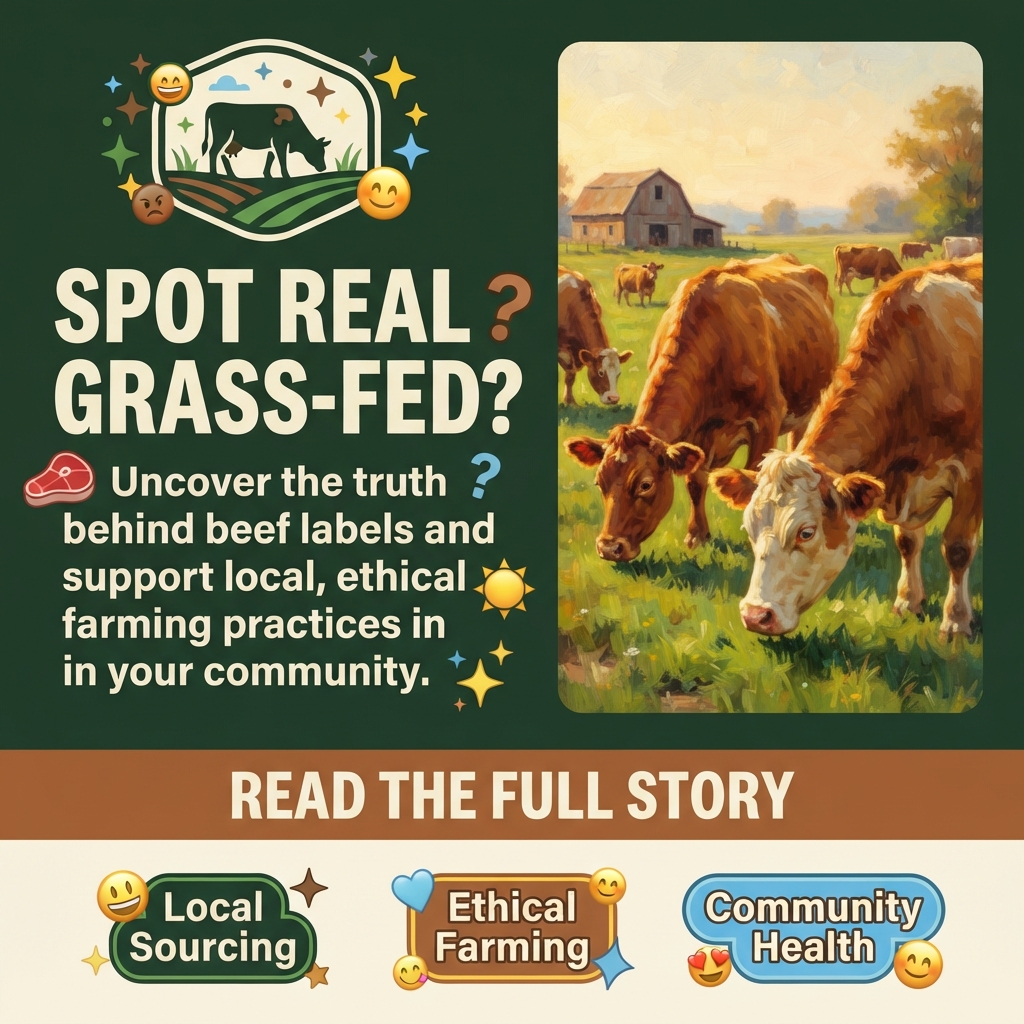
🌱 How to Spot Real Grass-Fed Beef in Sequatchie Valley: A Farmer’s Guide
As local food systems gain momentum across Tennessee’s rural landscapes, understanding what we eat—and where it comes from—has become a growing priority for many residents. With pasture-raised and regenerative agriculture practices taking root in the Sequatchie Valley, Heartwood Farm is helping neighbors navigate the complexities of beef labels to make more informed choices.
📍 Why This Matters
The average shopper may assume that a “grass-fed” label on beef means humane treatment and local sourcing—but the reality is far more complicated. The video from Heartwood Farm reveals a critical disconnect: 99% of grocery store beef comes from confined animal feedlot operations (CAFOs), where cattle are often raised in crowded conditions and fed processed feeds. Even “grass-fed” labels can be misleading, with 80–90% of those products imported from countries like Uruguay or Australia, only packaged in the U.S.
For residents who prioritize supporting local agriculture, transparency is key. The video highlights how even locally labeled beef may not reflect the ethical or environmental values many Sequatchie Valley families seek—raising questions about food security, animal welfare, and the true cost of convenience.
🌍 Community Connections
The conversation around grass-fed beef isn’t new to this region. Local farmers’ markets, CSAs (Community Supported Agriculture), and farm-to-table initiatives have long been staples in Sequatchie Valley’s food culture. Heartwood Farm’s message connects directly to these established threads:
- Farmers’ Markets: Many local markets already feature pasture-raised beef from nearby farms, but shoppers often lack clear guidance on what truly distinguishes “grass-fed” from factory-farmed products.
- Regenerative Agriculture Groups: Organizations like the Tennessee Sustainable Agriculture Network (TSAN) promote soil health and animal welfare, aligning with Heartwood Farm’s call for pasture-based systems.
- Schools & Community Gardens: Programs teaching children about food origins—such as those in Sequatchie County Schools—could incorporate lessons on ethical livestock practices inspired by this conversation.
- Note: While specific local groups weren’t named in the source, similar initiatives are active across Tennessee’s rural counties.
👨🌾 Human Impact
The video doesn’t just target shoppers—it speaks to everyone who cares about where their food comes from. Here’s how different groups may be affected:
- Families: Parents feeding children may want to avoid antibiotics or synthetic inputs linked to CAFO beef. Heartwood Farm’s message offers a pathway to healthier, more traceable options.
- Budget-conscious shoppers: While pasture-raised meat often carries a premium, the long-term health and environmental benefits (like reduced water pollution from CAFOs) could justify the cost for some households.
- Local farmers: Small-scale producers who prioritize rotational grazing or regenerative practices may see increased demand if consumers understand their advantages over industrial labels.
- Visitors & tourists: Travelers seeking authentic Tennessee farm experiences could explore farms like Heartwood as an alternative to chain grocery stores.
🌿 Local Perspective: Why This Reflects Sequatchie Valley Values
The Sequatchie Valley has long been a hub for sustainable agriculture, blending tradition with modern practices. Unlike urban areas where industrial farming dominates, this region’s landscape—rolling hills, diverse soil types, and scattered homesteads—is naturally suited to pasture-based livestock systems. Heartwood Farm’s video taps into a deeply rooted local ethos: the belief that food should nourish people, land, and community.
This conversation also mirrors broader trends in Tennessee’s rural counties, where grass-fed beef has become a point of pride for farmers. In neighboring regions like the Cumberland Plateau or the Ridge-and-Valley Appalachians, similar debates about labeling transparency have sparked collaborations between producers and consumers—proving that demand for ethical meat isn’t just niche, but regional.
💡 Opportunities for Connection
For residents who want to take action or learn more, Heartwood Farm’s message opens several doors:
- Visit a local farm: Many Sequatchie Valley producers offer tours or sell direct-to-consumer. Ask about their grazing practices—do they rotate pastures? How do they handle feed?
- Join a CSA: Community Supported Agriculture programs often include grass-fed beef as part of their offerings, providing a convenient way to support local farmers.
- Attend farm workshops: Events hosted by TSAN or the Tennessee Farm Bureau frequently cover topics like regenerative agriculture—check their calendars for upcoming sessions.
- Support farmers’ markets: Markets like those in Dunlap, Pikeville, or Crossville often feature pasture-raised beef with clear sourcing stories. Talk to vendors about their practices!
📅 What Residents Should Know
The video itself doesn’t include specific calls-to-action, but here’s how to apply its lessons:
- Look beyond labels: If a product claims “grass-fed” or “Product of USA,” verify the farm’s website or ask for details about their grazing system.
- Prioritize direct relationships: Buying directly from farmers (at markets, online, or via farm stands) ensures transparency and often supports local economies more effectively than grocery store purchases.
- Ask questions: At restaurants or stores, inquire about beef suppliers. Many establishments are happy to share sourcing stories if they align with ethical practices.
🔮 What Happens Next
The conversation around grass-fed beef is unlikely to fade—especially as consumer demand for transparency grows. Here’s what may unfold in the coming months:
- More farmer education initiatives: Organizations like TSAN could expand resources helping producers navigate labeling laws and marketing their practices.
- Increased demand for local alternatives: As awareness rises, Sequatchie Valley’s pasture-raised beef may see higher interest from both residents and visitors seeking authentic Tennessee products.
- Policy conversations: State-level debates about farm subsidies or labeling regulations could impact how “grass-fed” is defined—stay tuned for updates on legislative changes.
❓ Community Questions
What does this video make you think about your own food choices? Here are a few questions to consider:
- If you’re unsure where your beef comes from, what’s one small step you could take this week to learn more?
- How might supporting local farms impact Sequatchie Valley’s economy differently than buying from national grocery chains?
- What questions would you ask a farmer if they offered you grass-fed beef? (Example: “Do your cattle have access to pasture year-round?” or “Are any antibiotics used?”)
- Could this conversation inspire a community potluck or workshop focused on local food systems?
- How might schools or churches in the Valley incorporate lessons about ethical farming into their programs?
🌱 Long-Term Community Impact
The ripple effects of this conversation extend far beyond grocery shelves. Over time, greater demand for transparent, pasture-raised beef could:
- Strengthen local food sovereignty: By reducing reliance on industrial supply chains, Sequatchie Valley residents might gain more control over their food sources.
- Improve soil health: Regenerative grazing practices (like those promoted by Heartwood Farm) sequester carbon and reduce erosion—benefiting both farms and the broader ecosystem.
- Elevate Tennessee’s agricultural reputation: As more consumers seek out authentic, ethically raised products, locally sourced beef could become a signature of the Valley’s identity.
- Create economic opportunities: Small-scale farmers who adopt pasture-based systems may find new markets through direct sales, CSAs, or farm-to-restaurant programs.
🧵 Community Threads: The Hidden Networks Behind the Story
This video isn’t just about beef—it’s a thread in a larger tapestry of Sequatchie Valley’s food culture. Here are some of the invisible connections it reveals:
- The Farmer-Consumer Relationship 🤝
- Heartwood Farm’s message bridges the gap between producers and shoppers, reinforcing that food is a shared responsibility. In rural Tennessee, this relationship has historically been stronger than in urban areas—but modern supply chains have weakened it. The video calls for rebuilding trust through transparency.
- Regenerative Agriculture as a Cultural Identity 🌿
- The Valley’s history of small-scale farming aligns with regenerative practices like rotational grazing. By promoting these methods, Heartwood Farm connects to a legacy of land stewardship that dates back generations—one that contrasts with industrial agriculture’s short-term profits.
- Farmers’ Markets as Community Hubs 🛒
- Markets aren’t just places to buy food; they’re spaces where neighbors meet, learn, and collaborate. The video implicitly encourages shoppers to engage with vendors, ask questions, and deepen their connection to the land that produces their meals.
- The Role of Education in Food Systems 📚
- Schools and community groups can amplify this conversation by teaching students about where food comes from. Heartwood Farm’s message offers a teachable moment—one that could inspire future farmers or simply more informed consumers.
- Tourism as a Tool for Change 🌄
- The Valley’s scenic beauty is already a draw for visitors. By highlighting farms like Heartwood, this video suggests that agricultural tourism—where guests learn about ethical farming firsthand—could become another way to support local economies while educating newcomers.
🤔Source
📰Other Stories
- 🚗 Back-to-School Vehicle Checkup: Why Goforth’s Mobile Mechanic Wants Your Car Ready Before the Bell Rings
- 🍖 Morgan Brothers BBQ Refreshes Menu with New Specials and Dining Options
- 🔧 Patriot Automotive Repair Offers Full-Service Vehicle Care in Dayton, TN
- 🥎 Custom 3D-Printed Softball Ring Holders Celebrate Local Sports Memories
- 🐷 Weakley Hog Farm Opens Whole and Half Hog Orders for Summer Harvest
- 🎆 Four Decades of Family Tradition: Fall Creek Falls State Park Celebrates 4th of July
- 🏡 Understanding Barndominiums: A Modern Take on Rural Home Building

0 Comments