
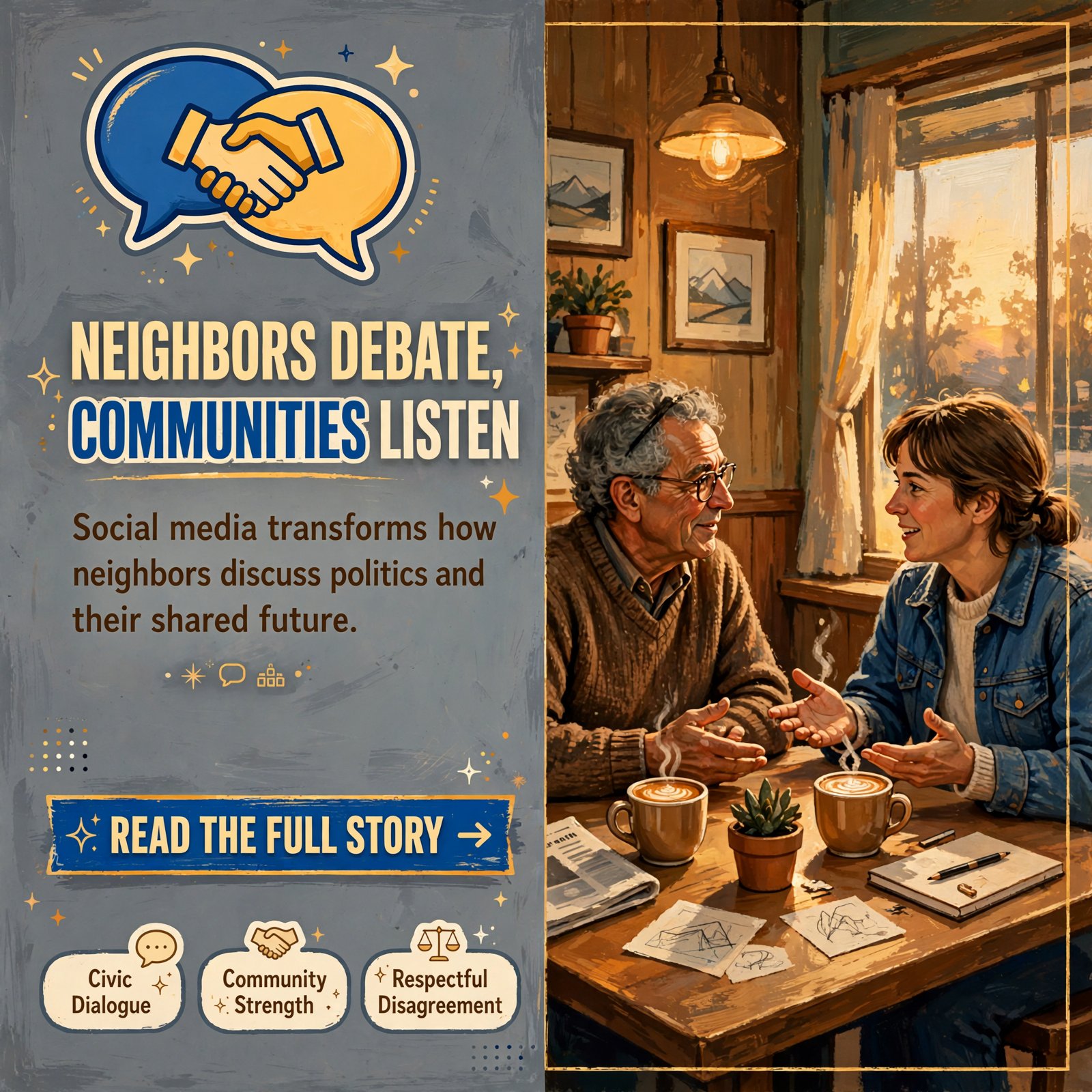
🗳️ Political Debate Sparks Conversation in Local Community Groups
Community members across the region continue to engage in spirited political discussions on local social media platforms, reflecting broader national conversations about taxation, immigration, and government policy. These exchanges reveal how residents process complex policy questions and seek to understand differing perspectives within their own communities.
💬 What’s Being Discussed
A recent post in a local community group sparked commentary around political and fiscal policy, drawing responses from residents who questioned the framing of the discussion and offered their own perspectives. The exchange illustrates how social media has become a space where neighbors engage-sometimes directly, sometimes obliquely-with issues that affect their daily lives and their vision for the future.
❓ Why This Matters
Local political discourse shapes how communities understand shared challenges and opportunities. When residents engage in these conversations-even when they disagree-they’re participating in the democratic process and building (or sometimes testing) relationships across different viewpoints. Understanding how neighbors think about taxes, immigration, and government spending helps communities make informed decisions about local priorities, from school funding to infrastructure to economic development.
🤝 Community Connections
These discussions often happen within established community groups and networks where residents already know one another or share common interests. The tone and substance of these exchanges can strengthen or strain the social fabric that holds neighborhoods together. When people engage respectfully across disagreement, they model civic participation for others. When conversations become heated or dismissive, they can deepen divides.
👥 Human Impact
For residents who care deeply about policy questions, these forums offer a chance to be heard and to understand how neighbors think. For those who feel frustrated by political polarization, local conversations can feel either refreshing (a chance to connect with real people) or exhausting (another round of the same arguments). For newer residents or those less engaged in politics, observing these exchanges can help them understand what matters to their community.
🌱 Local Perspective
Communities across Tennessee and the broader region are experiencing similar patterns of political engagement on social media. Local groups-whether focused on a specific town, valley, or county-have become informal town halls where residents raise concerns, share opinions, and sometimes find common ground. The quality and tone of these conversations often reflects the health of local relationships and the degree to which residents feel heard by one another and by local leaders.
💡 What Residents Should Know
Social media discussions about national policy issues are often shaped by limited context, strong emotions, and the medium itself-which rewards quick reactions over nuanced thinking. When engaging in these conversations, residents may find it helpful to ask clarifying questions (as one commenter did in this thread), seek out multiple sources of information, and remember that people on the other side of an argument often have genuine concerns, even if you disagree with their conclusions.
🔮 What Happens Next
These conversations will likely continue as long as residents use social media to discuss politics and policy. The real question for communities is whether these exchanges strengthen relationships and shared understanding, or whether they deepen divisions. That outcome depends partly on how individual residents choose to engage-whether they ask questions, listen, and assume good faith, or whether they dismiss and attack.
📍 Community Questions Worth Considering
- How do local political discussions on social media compare to conversations that happen in person-at churches, schools, town meetings, or local businesses?
- What role do local leaders, organizations, and community groups play in shaping the tone and substance of political discourse in their area?
- How can residents engage with people who hold different political views in ways that strengthen rather than damage community relationships?
- What local issues-schools, roads, economic development, public safety-deserve more attention than national political debates in community forums?
🌍 Long-Term Community Impact
The way communities engage with political disagreement has lasting effects. When residents practice respectful disagreement and genuine listening, they build social capital and resilience. When political divisions harden and people retreat into separate information bubbles, communities become more fragmented and less able to solve shared problems. Over time, the quality of local political discourse influences whether residents feel connected to their neighbors, whether they trust local institutions, and whether they believe their community can work together toward common goals.
🔗 Community Threads: The Social Fabric of Disagreement
The Neighbor-to-Neighbor Relationship: Social media has made neighbors’ political views visible in ways they weren’t before. People who might have avoided discussing politics at the grocery store now see each other’s opinions online. This visibility can either deepen understanding or create awkwardness. Strong communities find ways to maintain respect and connection even when neighbors disagree on policy.
The Role of Local Groups and Platforms: Community Facebook groups and similar forums have become informal public squares. The moderators, active participants, and culture of these groups shape whether they become spaces for genuine dialogue or echo chambers for particular viewpoints. Communities that value diverse perspectives and civil engagement tend to have healthier local discourse.
The Connection Between National and Local: While this conversation focused on national policy issues, the health of local relationships ultimately depends on how residents treat one another on all topics. When people practice listening and respect in local discussions, those habits carry over to how they engage with schools, local government, and community organizations. Conversely, when political polarization damages local relationships, it becomes harder for communities to work together on shared challenges.
🤔Source
Mila Gofren – Opinionated political post and image regarding taxes and immigration with user comments.

0 Comments