
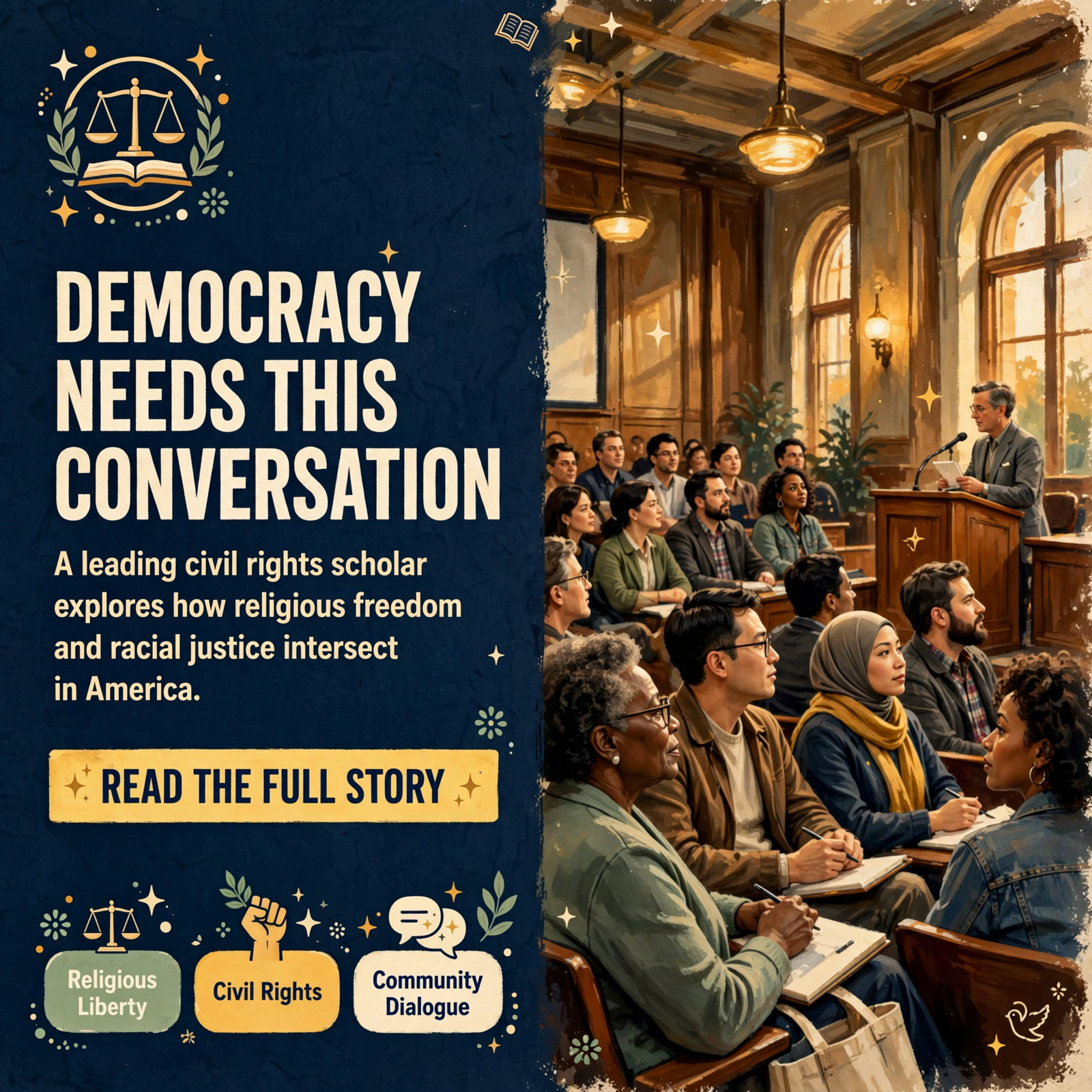
🏛️ Maya Wiley to Deliver 2026 Shurden Lectures on Religious Liberty and Civil Rights
The Sequatchie County Democrats is sharing news of a significant academic event examining the intersection of religious freedom, civil rights law, and American democracy-a conversation with deep roots in the nation’s founding principles and ongoing relevance to communities across the country.
📍 What’s Happening
Maya Wiley, president and CEO of the Leadership Conference on Civil and Human Rights, will deliver the 2026 Walter B. and Kay W. Shurden Lectures on Religious Liberty and Separation of Church and State at Wake Forest University in Winston-Salem, North Carolina, on October 21-22. The lectures examine a critical gap: the disconnect between church-state law and civil rights law, and what that separation has meant for religious freedom and racial justice in America. 🎓
🗓️ Event Details
October 21, 5 p.m.: Wiley delivers the opening lecture, “Religious Liberty, Justice, and the Unfinished Work of Democracy,” at the Porter Byrum Welcome Center.
October 22, 11 a.m.: A moderated conversation with Wiley, Audra Savage, and Amanda Tyler, led by Corey D. B. Walker, takes place at the Worrell Professional Center.
Registration and full details are available through the Baptist Joint Committee for Religious Liberty at BJConline.org/ShurdenLectures 📋
💡 Why This Matters
Religious liberty is woven into American identity-from the First Amendment to the lived experiences of faith communities across the country. Yet the relationship between church-state separation and civil rights protection remains contested and often misunderstood. Wiley’s lectures address a fundamental question: How do laws protecting religious freedom also protect-or fail to protect-the rights of marginalized communities? This conversation matters to anyone interested in how constitutional principles shape real lives and community relationships. ✨
❤️ Community Connections
Faith communities throughout the Sequatchie Valley and surrounding regions-from Dunlap Seventh-Day Adventist Church to Spencer Church of Christ to Whitwell Church of God-are rooted in the principle of religious freedom. These congregations, along with civic organizations and community members who value both faith and democratic participation, benefit from deeper understanding of how religious liberty law intersects with civil rights protection. The Shurden Lectures offer an opportunity for people across the region to engage with scholarship and dialogue on a topic that touches every faith tradition and every community. 🤝
🎯 Who Should Pay Attention
This event is relevant to faith leaders, civil rights advocates, educators, students, and anyone interested in the constitutional and moral foundations of American democracy. People in the Sequatchie Valley and nearby communities who care about religious freedom, racial justice, or the role of faith in civic life may find the lectures and conversation particularly valuable. The event is open to the public, and registration is available online.
📚 What Residents Should Know
- Speaker: Maya Wiley, president and CEO of the Leadership Conference on Civil and Human Rights, a coalition of civil rights organizations
- Dates: October 21-22, 2026
- Location: Wake Forest University, Winston-Salem, North Carolina
- Times: October 21 at 5 p.m. (lecture); October 22 at 11 a.m. (conversation)
- Registration: BJConline.org/ShurdenLectures
- Cost: Not specified in the announcement; check the registration page for details
🔗 Community Threads: Faith, Law, and Local Identity
The Faith-Civic Participation Connection: Sequatchie County Democrats, by sharing this event, reflects a broader community thread connecting religious faith with civic engagement. In a region where churches are central to community life and identity, understanding how religious liberty law shapes both individual conscience and collective rights strengthens the conversation between faith communities and democratic participation. Residents who engage with these lectures gain language and framework for discussing how their own faith traditions relate to broader questions of justice and freedom.
The Civil Rights and Religious Freedom Thread: Wiley’s focus on the intersection of church-state law and civil rights law reveals an often-overlooked connection: religious freedom protections can either strengthen or weaken civil rights protections depending on how they are interpreted and applied. For communities with diverse faith traditions-including historically marginalized religious groups-this distinction matters deeply. Understanding this relationship helps residents and faith leaders advocate more effectively for both religious liberty and equal protection under law.
❓ Questions Worth Considering
- How does the separation of church and state affect religious minorities differently than religious majorities?
- What role should faith communities play in advocating for civil rights and social justice?
- How can local congregations and civic organizations use this scholarship to strengthen their own communities?
- What does religious freedom mean when it conflicts with other civil rights protections?
🌱 Long-Term Community Impact
Events like the Shurden Lectures contribute to a broader cultural conversation about the foundations of American democracy and the role of faith in civic life. When community members-whether faith leaders, educators, or engaged citizens-deepen their understanding of how religious liberty law intersects with civil rights, they return to their local communities with sharper tools for dialogue, advocacy, and bridge-building. Over time, this kind of informed engagement strengthens community resilience, reduces polarization, and helps neighbors across different faith traditions and political perspectives find common ground on shared values. 🌟
📢 What Happens Next
Interested residents should visit BJConline.org/ShurdenLectures to register for one or both sessions. The event will take place in October 2026, giving community members time to plan attendance or to follow up on the lectures through published materials or recordings if available. After the event, local faith leaders and civic organizations may choose to host discussions or study groups exploring the themes Wiley and her conversation partners raise-creating opportunities for deeper community learning and dialogue.



0 Comments