
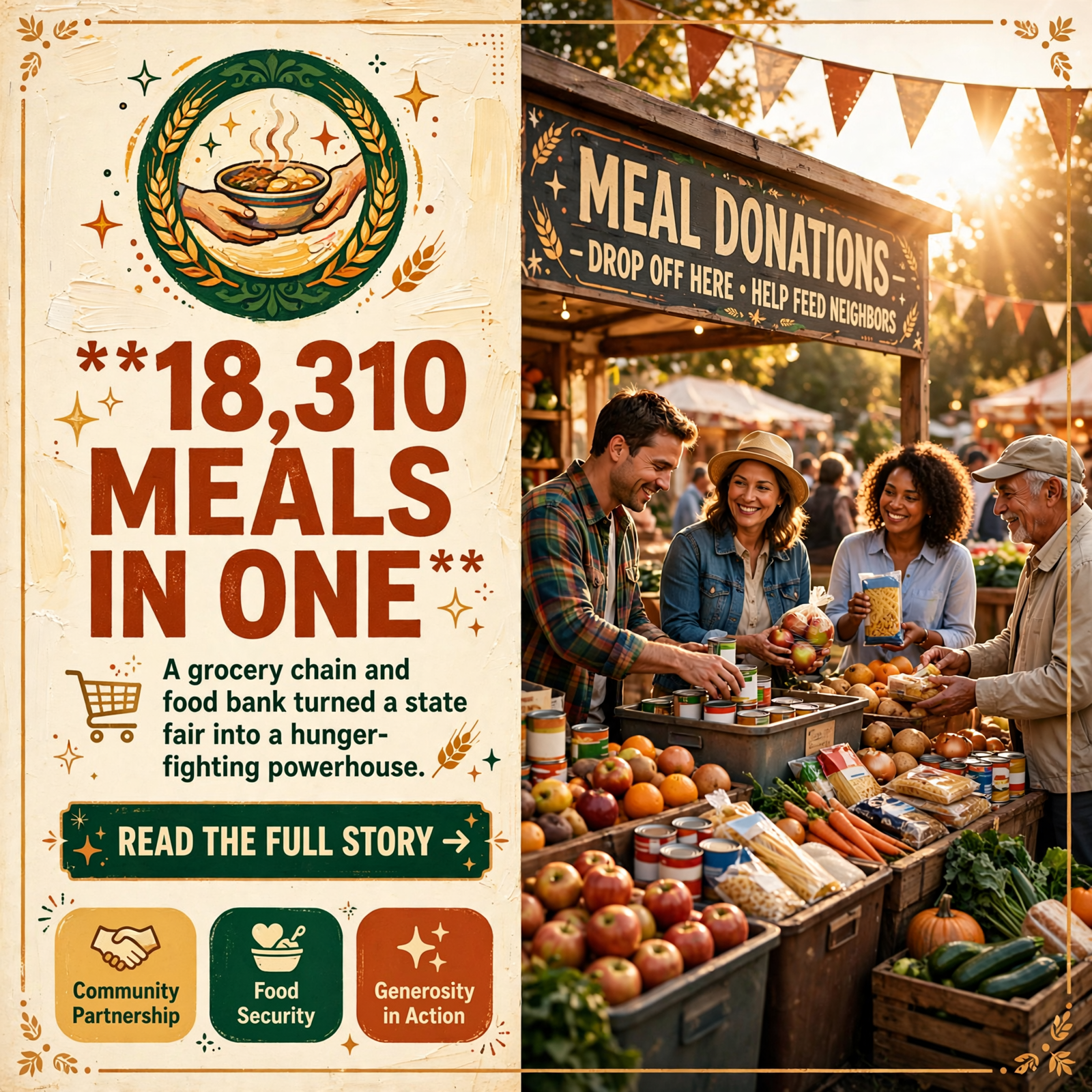
🍽️ Ingles Markets and MANNA FoodBank Raise 18,310 Meals at N.C. Mountain State Fair
A partnership between Ingles Markets and MANNA FoodBank (Asheville, NC) turned a day at the state fair into a significant food drive, demonstrating how regional retailers and community nonprofits can work together to address hunger in Western North Carolina. The effort reflects a growing trend of businesses using public events as platforms for charitable giving.
📊 What Happened
On Wednesday during the N.C. Mountain State Fair, Ingles Markets and MANNA FoodBank collaborated on a food collection day that resulted in donations equivalent to 18,310 meals. Fair attendees stopped by the collection point to contribute, turning a day of entertainment into an opportunity to support food security in the region. The scale of the effort-nearly 18,000 meals-underscores both the generosity of fair-goers and the capacity of organized community partnerships to mobilize resources quickly.
💡 Why This Matters
Food insecurity remains a persistent challenge across Western North Carolina and the surrounding region. MANNA FoodBank serves Buncombe County and surrounding areas, working to ensure that families, seniors, and individuals have access to nutritious food. A single day’s collection of 18,310 meals represents a meaningful contribution to that mission-enough to stock shelves, support emergency distributions, and help the organization meet demand during seasonal peaks.
For Ingles Markets, the partnership reflects a commitment to community investment that extends beyond typical retail operations. When businesses use their platforms and customer relationships to support food banks, they amplify the reach of nonprofit work and normalize charitable giving among shoppers and fair attendees.
❤️ Community Connections
This collaboration illustrates how regional institutions-a grocery chain with stores across Appalachia and a food bank serving Western North Carolina-can align their missions to address shared challenges. MANNA FoodBank’s work touches schools, churches, senior centers, and community organizations throughout the region. By partnering with Ingles Markets at a high-traffic public event, the food bank reached potential donors who might not otherwise encounter their mission directly.
The N.C. Mountain State Fair itself serves as a gathering place for families and communities across the region, making it an ideal venue for this kind of outreach. Fair attendees-many of whom travel from surrounding counties-became part of a larger effort to support neighbors facing food insecurity.
🤝 Human Impact
Behind the 18,310 meals are real people: families stretching grocery budgets, seniors on fixed incomes, individuals between jobs, and children who depend on food assistance programs. Each meal collected represents a direct reduction in the burden on households already managing tight finances. For MANNA FoodBank, a single day’s collection can mean the difference between meeting demand and having to turn people away.
Fair attendees who participated in the collection also experienced the direct impact of their generosity-a tangible reminder that individual contributions, multiplied across a community, create meaningful change. For some, it may have been their first direct interaction with food bank work.
🌱 Long-Term Community Impact
Partnerships like this one can establish patterns of collaboration that extend beyond a single event. When businesses and nonprofits work together successfully, they often build relationships that lead to ongoing support-whether through regular donations, employee volunteer programs, or future joint initiatives. The visibility of this effort at a public event also raises awareness about food insecurity and the role that community organizations play in addressing it.
For the region’s food security landscape, sustained partnerships between retailers and food banks help stabilize supply chains and ensure that nonprofit organizations can plan and expand their services with confidence.
📢 Community Threads: The Retailer-Nonprofit Partnership
This story reveals an important connection between commercial enterprises and community safety nets. Grocery retailers like Ingles Markets operate at the intersection of food access and community life-they employ local people, serve families across the region, and have the logistical capacity to mobilize resources quickly. Food banks like MANNA FoodBank, meanwhile, have deep relationships with the people and organizations that need support most. When these two networks align, they create a multiplier effect that neither could achieve alone. Understanding this thread helps residents see how everyday businesses can become partners in addressing community challenges.
✨ What Residents Should Know
MANNA FoodBank serves Buncombe County and surrounding areas, providing food assistance to individuals and families facing hunger. The organization works through a network of partner agencies-schools, churches, senior centers, and community organizations-to distribute food where it’s needed most. If you or someone you know needs food assistance, or if you’re interested in supporting MANNA FoodBank’s work, the organization welcomes inquiries and donations.
Events like the food collection day at the state fair are one way to contribute, but year-round support-whether through donations, volunteering, or advocacy-helps sustain the organization’s mission during all seasons.
🔮 What Happens Next
The meals collected during this event will be distributed through MANNA FoodBank’s network of partner agencies across the region. The success of this partnership may also encourage similar collaborations at future events or inspire other retailers to develop their own food drive initiatives. For Ingles Markets and MANNA FoodBank, the relationship established through this event creates a foundation for ongoing conversation about how to address food insecurity together.
💭 Questions for the Community
- How can residents in surrounding counties learn more about MANNA FoodBank’s work and find ways to support it year-round?
- What other public events or gathering places in the region could serve as platforms for food drives or community fundraising?
- How do partnerships between businesses and nonprofits strengthen community resilience compared to nonprofit work alone?
- What barriers might prevent people from accessing food assistance, and how can community awareness help address them?

0 Comments