
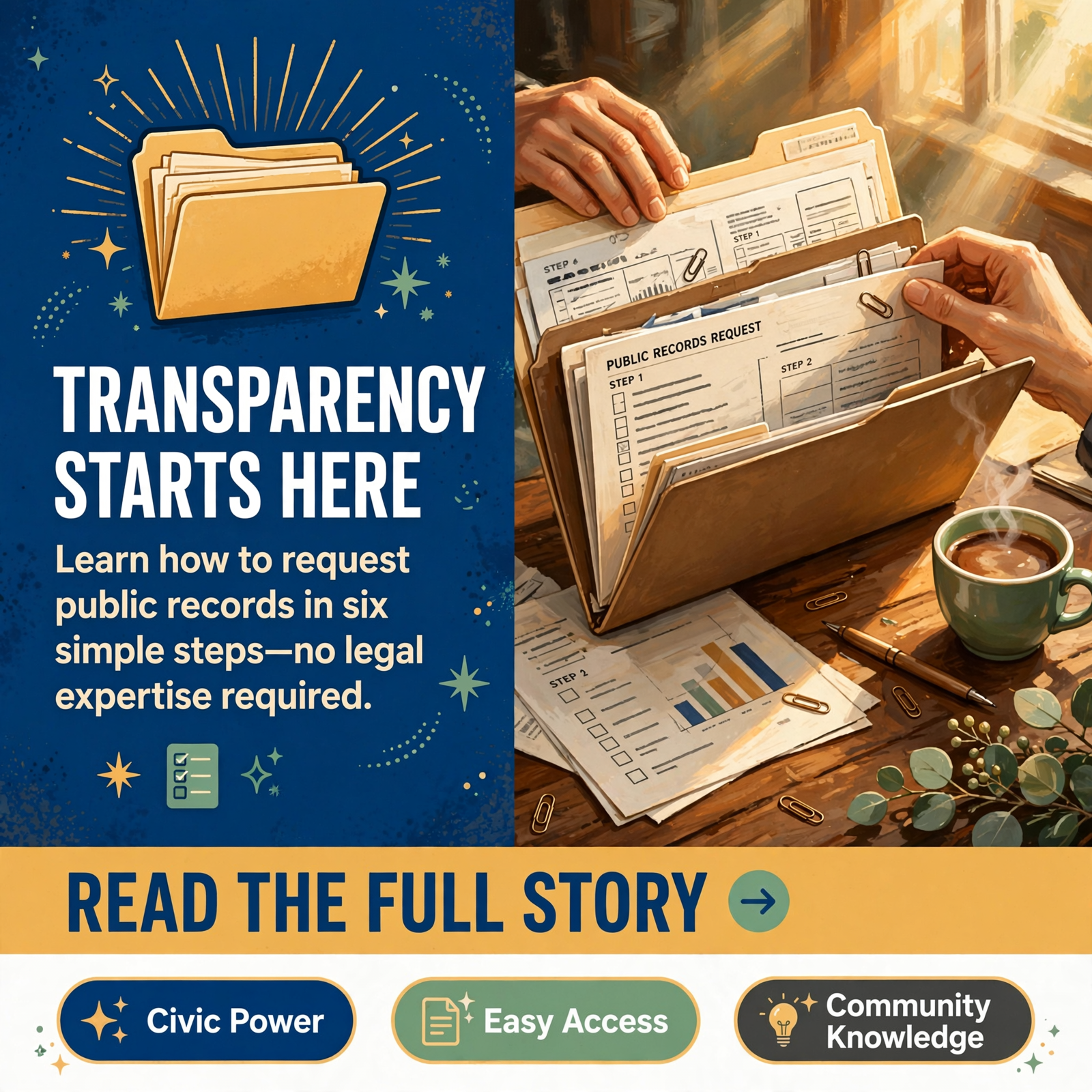
🗂️ How to File a Public Records Request – A Simple Guide for Community Members
Transparency in local government starts with knowing how to ask for it. A straightforward guide to filing Freedom of Information Act (FOIA) requests is helping residents across the region understand that accessing public records doesn’t require legal expertise-just an email and a clear request.
📋 Why This Matters
Public records belong to the public. Budgets, meeting minutes, planning documents, emails, and project files are created with taxpayer money and are yours to review. Yet many residents hesitate to request them because the process feels complicated or intimidating. When citizens can easily access government records, they gain the information needed to understand local decisions, track how public money is spent, and participate more fully in their communities. This matters whether you’re curious about a specific project, want to understand how a decision was made, or simply believe transparency strengthens trust between residents and their elected officials.
💡 The Simple Process
The guide breaks down filing a public records request into six straightforward steps: open your email, address it to the appropriate government office (county, city, or chamber), use “Public Records Request” as the subject line, and paste a simple template that names what records you’re seeking and the date range. Then send it. That’s the entire process. No legal language required. No forms to navigate. No appointment needed.
The template itself is plain English: “I am requesting public records concerning [your topic], including emails, letters, meeting records, maps, plans, applications, and other documents.” Specificity helps, but the guide emphasizes starting simple-you don’t need to know exactly what exists or how government files things. Just ask.
⏳ What to Expect After You Send It
Government offices have seven business days to respond. Their answer will be one of four things: they provide the records, they deny the request with a legal reason, they need more time and tell you why, or they don’t have what you’re asking for. If there’s a fee, you can ask for an estimate before proceeding. If they withhold or redact information, they must explain the legal reason. This framework removes the mystery-you’ll know where you stand and what comes next.
🤝 Community Connections
This guide reflects a broader civic movement: residents taking an active role in understanding local decisions. Whether it’s tracking infrastructure projects, reviewing budget allocations, monitoring development plans, or simply staying informed about how local government operates, public records requests are a tool available to anyone. The guide explicitly invites residents to share what they discover-suggesting that records can be reviewed together and used to inform future requests and community conversations. This transforms individual curiosity into collective knowledge.
❤️ Human Impact
For residents who’ve wondered “How do I find out what happened?” or “Where can I see the details?”-this removes a barrier. A parent curious about school decisions, a property owner concerned about a neighboring project, a business owner tracking regulatory changes, or a community member simply wanting to stay informed now has a clear path forward. The guide also acknowledges that some people have already wanted to file requests but didn’t know how-removing that friction point strengthens civic participation across the board.
🔍 What Residents Should Know
Start with the basics: Find the public records contact for your county, city, or local organization on their website. Most government offices list this information clearly.
Be specific but not perfect: Name the topic, project, or decision you’re curious about. Include a date range if you have one. You don’t need to know the exact file name or department-just describe what you’re looking for.
Keep it simple: The guide emphasizes not writing a complicated legal request. Simple, clear language works better and is more likely to be understood quickly.
Expect a response within seven business days: If you don’t hear anything, you can send the request again. Persistence is part of the process.
If they ask for a fee: Request an estimate before you agree to pay. You have the right to know the cost upfront.
If they deny your request: They must give you a legal reason. You can ask follow-up questions or seek clarification.
🌱 Opportunities for Connection
This guide opens doors for residents to collaborate. The source explicitly invites people to share records they receive and to work together analyzing them. This creates an opportunity for community members to pool knowledge, compare findings, and build a shared understanding of local decisions. For those interested in civic engagement, transparency, or simply understanding their community better, this is an accessible entry point-no prior experience required.
📈 What Happens Next
Once you file a request, the waiting period begins. Most offices respond within the seven-business-day window. If they provide records, you can review them and decide whether to file follow-up requests for related documents. If they deny the request, you’ll have a legal reason to consider-and potentially to discuss with others or seek clarification. The guide frames this as an ongoing conversation, not a one-time transaction. Each request teaches you something about how government works and what information is available.
💭 Community Questions Worth Considering
- What local decisions or projects would you like to understand better? What records might help you understand them?
- How might regular residents using public records requests change the relationship between community members and local government?
- If more people had access to and understood public records, how might that affect local conversations about budgets, planning, or development?
- Are there specific topics in your community where transparency would help residents make better decisions or feel more informed?
🏛️ Long-Term Community Impact
When residents regularly access and review public records, it shifts the culture of local governance. Transparency becomes normal. Questions are easier to ask. Decisions are easier to understand. Over time, this can strengthen trust between residents and elected officials, improve the quality of public conversations, and help communities make more informed choices about their future. It also creates a record-a shared knowledge base that residents can reference, compare, and build upon. This guide is a small tool, but it’s one that can help build a more informed, engaged, and connected community.
🔗 Community Threads: The Transparency-Trust Connection
The Civic Engagement Thread: When residents understand how to access information, they’re more likely to participate in local decisions. This guide connects individual curiosity to broader civic participation-strengthening the relationship between community members and the institutions that serve them.
The Shared Knowledge Thread: The guide explicitly invites residents to share what they discover. This transforms individual records into collective knowledge, creating opportunities for neighbors to learn from each other and build a shared understanding of local issues.
The Accountability Thread: Public records requests are a form of accountability. When residents can ask questions and receive answers, it reinforces that government serves the public and is answerable to it. This strengthens the foundation of trust that healthy communities depend on.



0 Comments