
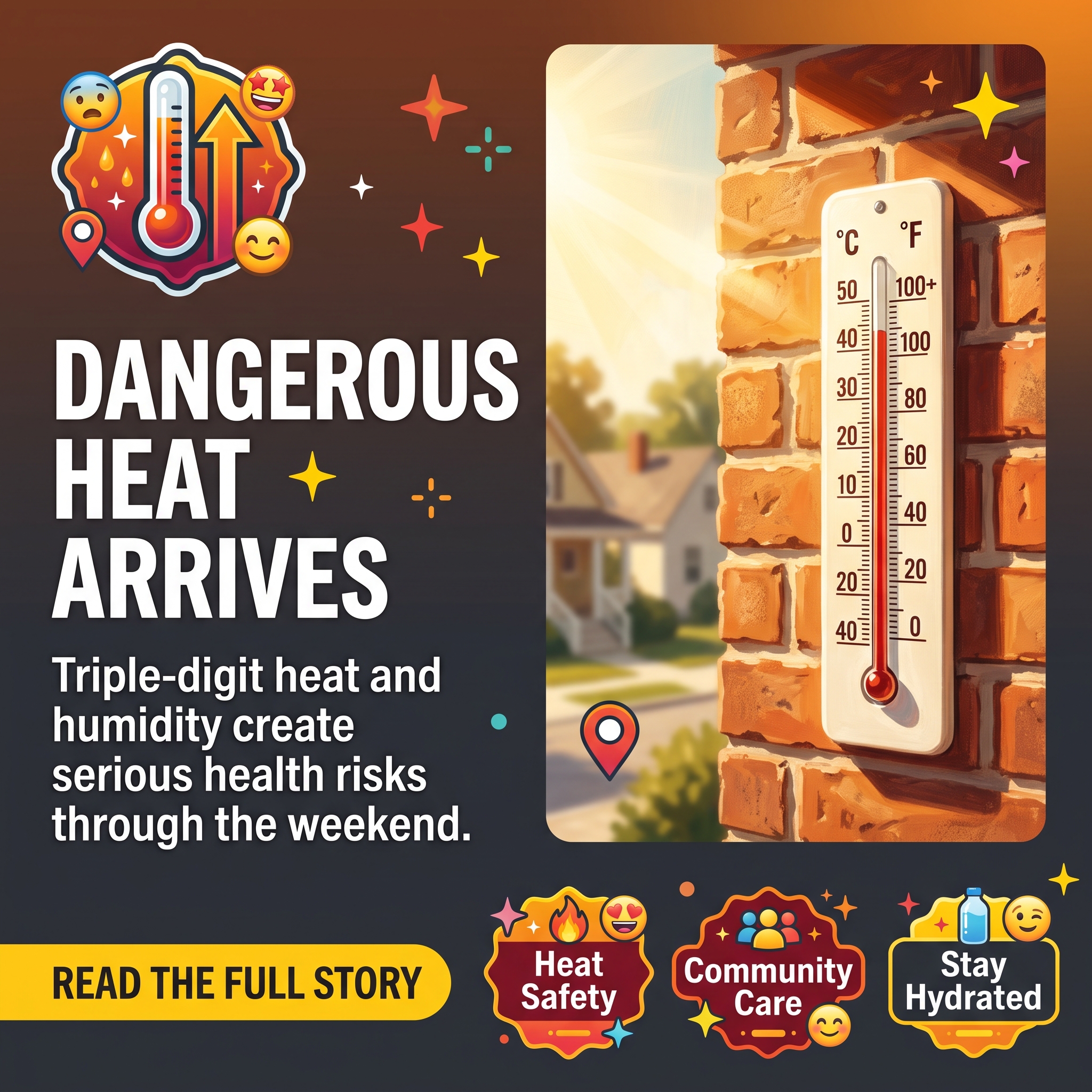
☀️ Heat Advisory in Effect for Sequatchie Valley Through July 4th Weekend
As July arrives in the Sequatchie Valley, Chase Bryant Weather is warning residents across the region to prepare for dangerous heat conditions through the end of the week. With temperatures expected to reach the mid-to-upper 90s—and potentially 100 degrees in valley areas—the combination of heat and humidity is creating a significant public health concern for the community.
🌡️ What to Expect This Week
According to Chase Bryant‘s Wednesday weather update, highs will remain in the mid to upper 90s through Thursday, Friday, and into Saturday, July 4th. Mountain areas will see slightly cooler conditions in the low 90s, but the real danger lies in the “feels like” temperature—which could reach 100 to 110 degrees when humidity is factored in. This combination has prompted heat advisories and warnings across the region through the end of the week. 🥵
The forecast also includes a daily chance of afternoon and evening storms, though coverage will be scattered and unpredictable. Those storms that do develop could be strong or severe, bringing locally heavy rainfall, lightning, and gusty winds as the abundant heat and moisture collide in the atmosphere.
❤️ Who Needs to Take Extra Precautions
Chase Bryant‘s update specifically calls attention to vulnerable populations who may face greater risk during extreme heat: elderly residents, people without air conditioning, and pets or animals. These groups require active check-ins and support from neighbors and community members during heat waves. Symptoms of heat exhaustion—weakness, fatigue, and confusion—should never be ignored; anyone experiencing these signs should move indoors immediately to cool off and hydrate. 🏥
Families with outdoor work, children in summer activities, or elderly relatives living alone should develop a heat safety plan now, before temperatures peak.
💧 Practical Steps for Community Safety
Chase Bryant emphasizes three core safety measures: stay hydrated by drinking plenty of water, take regular breaks when outside, and check on neighbors, especially those who live alone or lack reliable cooling. For residents working outdoors—whether in agriculture, construction, landscaping, or other valley industries—the heat advisory means adjusting work schedules, increasing water intake, and recognizing when it’s time to move to shade or air conditioning. 🚜
🗓️ Looking Ahead
Relief is coming, but not immediately. As the high-pressure ridge breaks down this weekend, temperatures will gradually decline. By Sunday through Tuesday, highs will drop to the low 90s, and by the second half of next week, the Sequatchie Valley should see upper 80s—a significant shift from the dangerous heat of early July. Scattered rain and storm chances will continue through the weekend and into next week as the pattern transitions. 📉
🤝 Community Connections
Heat waves test community bonds. Neighbors checking on neighbors, churches organizing wellness calls to homebound members, local businesses offering cooling stations, and community organizations coordinating support for vulnerable residents all strengthen the social fabric during public health emergencies. In a valley community like Dunlap, where many residents have deep roots and know their neighbors, these informal networks often make the difference between a difficult week and a crisis. 🏘️
❓ Questions Worth Considering
- Do you know which neighbors—elderly, living alone, or without air conditioning—might need a check-in during this heat wave?
- Does your workplace or community organization have a heat safety plan in place for outdoor activities?
- Are local schools, parks, and recreation programs adjusting summer schedules to account for the heat advisory?
- What cooling resources (libraries, community centers, cooling stations) are available to residents without reliable air conditioning?
📍 Why This Matters Locally
The Sequatchie Valley’s geography—nestled between ridges with limited air circulation in some areas—can intensify heat and humidity, making valley communities particularly vulnerable during heat waves. Agricultural workers, outdoor laborers, and residents in older homes without modern cooling systems face compounded risk. Chase Bryant‘s detailed forecast and safety guidance reflect the real, localized nature of extreme weather in this region. 🏔️
This is not a generic weather alert; it’s a specific warning tailored to valley conditions and valley residents’ needs.
✨ What Happens Next
Residents should monitor updates through the weekend as storms develop and the high-pressure system gradually weakens. By early next week, the acute heat danger should ease, but summer heat will remain part of the forecast. Community members are encouraged to check on vulnerable neighbors now, before the peak heat days arrive, and to establish communication plans with family members who work or spend time outdoors. 📱
Source
Chase Bryant Weather – Wednesday Weather Update



0 Comments