
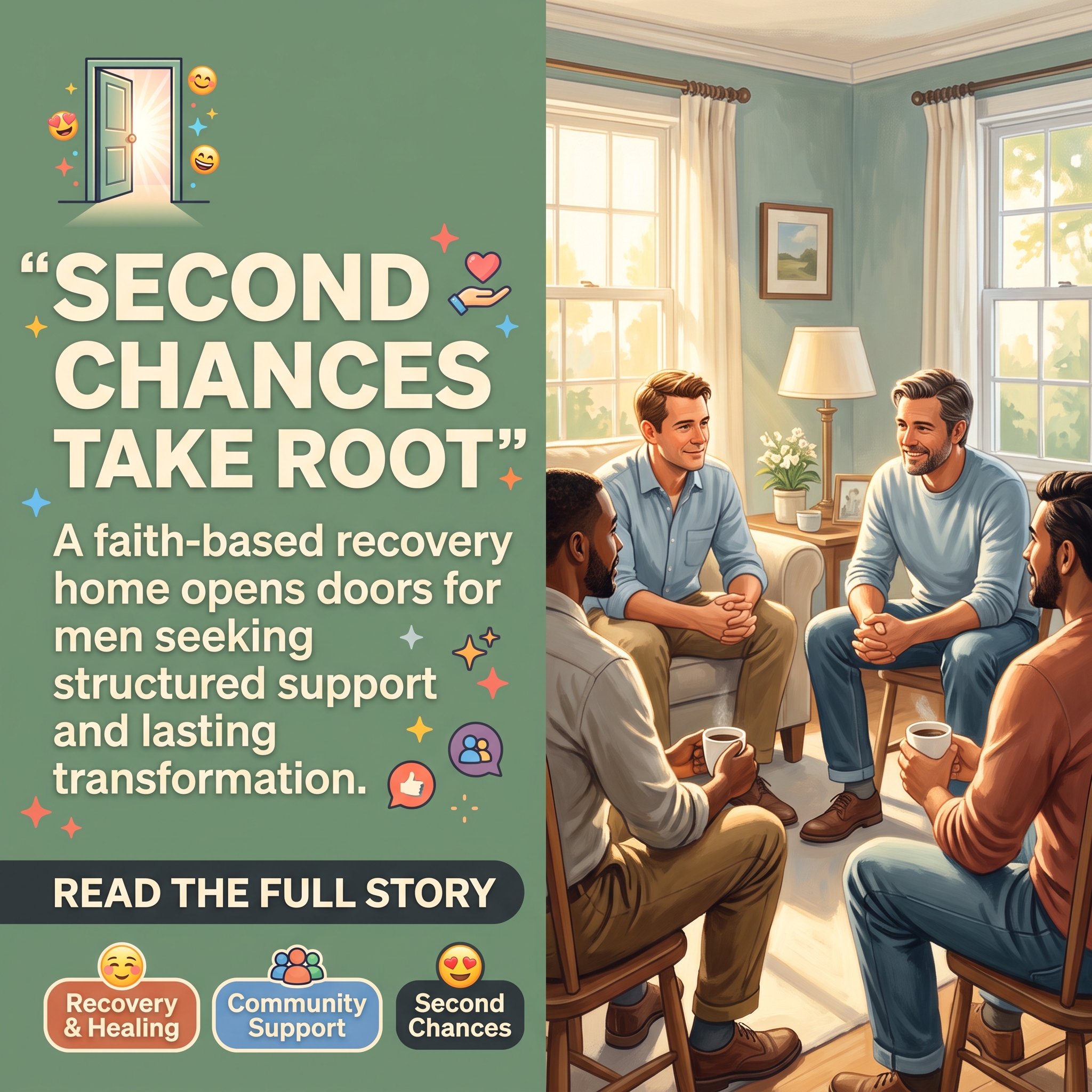
🏠 New Faith-Based Sober Living Home for Men Opens in Spring City, Tennessee
❤️ Why This Matters
Addiction affects families, workplaces, and entire communities. A sober living home—a residential facility where residents support one another while maintaining sobriety—addresses a critical gap in recovery services. For men in the Sequatchie Valley and surrounding areas struggling with substance use, proximity to structured support can mean the difference between relapse and sustained recovery. This facility offers not just housing, but accountability, peer support, and practical help navigating the systems that often feel overwhelming during early recovery.
🤝 Community Connections
Recovery doesn’t happen in isolation. Sober living homes typically connect residents to local churches, community organizations, employment services, and civic groups—the very networks that strengthen community fabric. By helping residents obtain identification, birth certificates, and employment, this facility bridges residents back into the broader Sequatchie Valley community. Churches, nonprofits, employers, and civic organizations may find natural partnership opportunities with this new resource, whether through volunteer mentorship, job placement, or spiritual support.
👥 Human Impact
The residents who move into this home are neighbors, family members, and community members seeking a fresh start. 🌱 For them, structured housing with in-house classes, accountability partners, and practical assistance with documentation and employment represents hope. For their families—parents, spouses, children—this facility offers the possibility of restored relationships and healing. For employers in Spring City and the broader valley, residents completing the program represent potential employees committed to rebuilding their work lives. For the broader community, successful recovery stories strengthen social bonds and demonstrate that second chances are possible.
📍 Local Perspective
Spring City sits at the heart of Sequatchie Valley, making this facility accessible to residents across the region. Recovery services have historically been concentrated in larger urban centers; a faith-based sober living home in Spring City reflects both growing recognition of addiction as a community health issue and the valley’s commitment to supporting residents where they live. Whether this represents the first such facility in the immediate area or part of a broader expansion of recovery services is worth understanding as the community considers its health and wellness infrastructure.
💡 What Residents Should Know
The facility is located in Spring City, Tennessee, and is described as faith-based with in-house classes and accountability structures. The program includes practical support: helping residents obtain identification, birth certificates, and employment assistance. 📞 For inquiries or to learn more about admission, the contact number for Mountain Side Recovery is 423-567-0146. Prospective residents or family members seeking information about the program’s structure, cost, capacity, or specific recovery approaches may want to reach out directly.
🔄 What Happens Next
As this new facility establishes itself, several developments are worth watching: How many residents does it serve in its first months? What partnerships emerge with local employers, churches, and community organizations? How do residents transition from the sober living home back into independent living in the community? Do other recovery-focused services expand in response? Updates from Travis Barnett or community partners may provide insight into the program’s early impact and any opportunities for community involvement or support.
❓ Community Questions Worth Considering
- How can local employers, churches, and civic organizations support residents as they rebuild their lives and reintegrate into the community?
- What role might volunteer mentors, job coaches, or spiritual advisors play in strengthening residents’ recovery journeys?
- Are there other recovery-related services or resources the Sequatchie Valley community should consider developing or expanding?
- How can families of residents stay connected and involved in the recovery process?
🌱 Long-Term Community Impact
Sober living homes, when successful, create ripple effects across communities. Residents who achieve sustained recovery often become employed, reconnect with families, volunteer, and contribute to civic life. Over time, this facility could strengthen the valley’s workforce, reduce the social costs of untreated addiction, and demonstrate that recovery is achievable. It may also inspire conversations about mental health, addiction as a health issue rather than a moral failing, and the importance of community-based support systems. For Sequatchie Valley, a thriving recovery program becomes part of the community’s identity—a place where people get second chances and rebuild their lives.
🧵 Community Threads
Faith and Recovery: The program’s faith-based approach connects to the valley’s strong church traditions. Local congregations may find natural ways to support residents through spiritual mentorship, volunteer service, or employment connections—strengthening both recovery outcomes and church community engagement.
Employment and Economic Participation: By helping residents obtain documentation and employment, this facility threads residents back into the local economy. Employers, workforce development organizations, and business owners may discover motivated employees and partnership opportunities that benefit both residents and local businesses.
Family Healing: Addiction affects entire families. As residents stabilize and reconnect with loved ones, family relationships—and the broader social fabric they represent—begin to heal. Schools, youth organizations, and community groups may see indirect benefits as children and families affected by addiction find stability.
Practical Support Systems: The facility’s assistance with identification, birth certificates, and employment reflects a deeper community thread: the importance of practical, accessible support. This model may inspire similar initiatives addressing other barriers residents face when rebuilding their lives.
Source
Travis Barnett – Sober living home for men in Spring City, Tennessee advertising faith-based recovery program
Related Businesses


0 Comments