
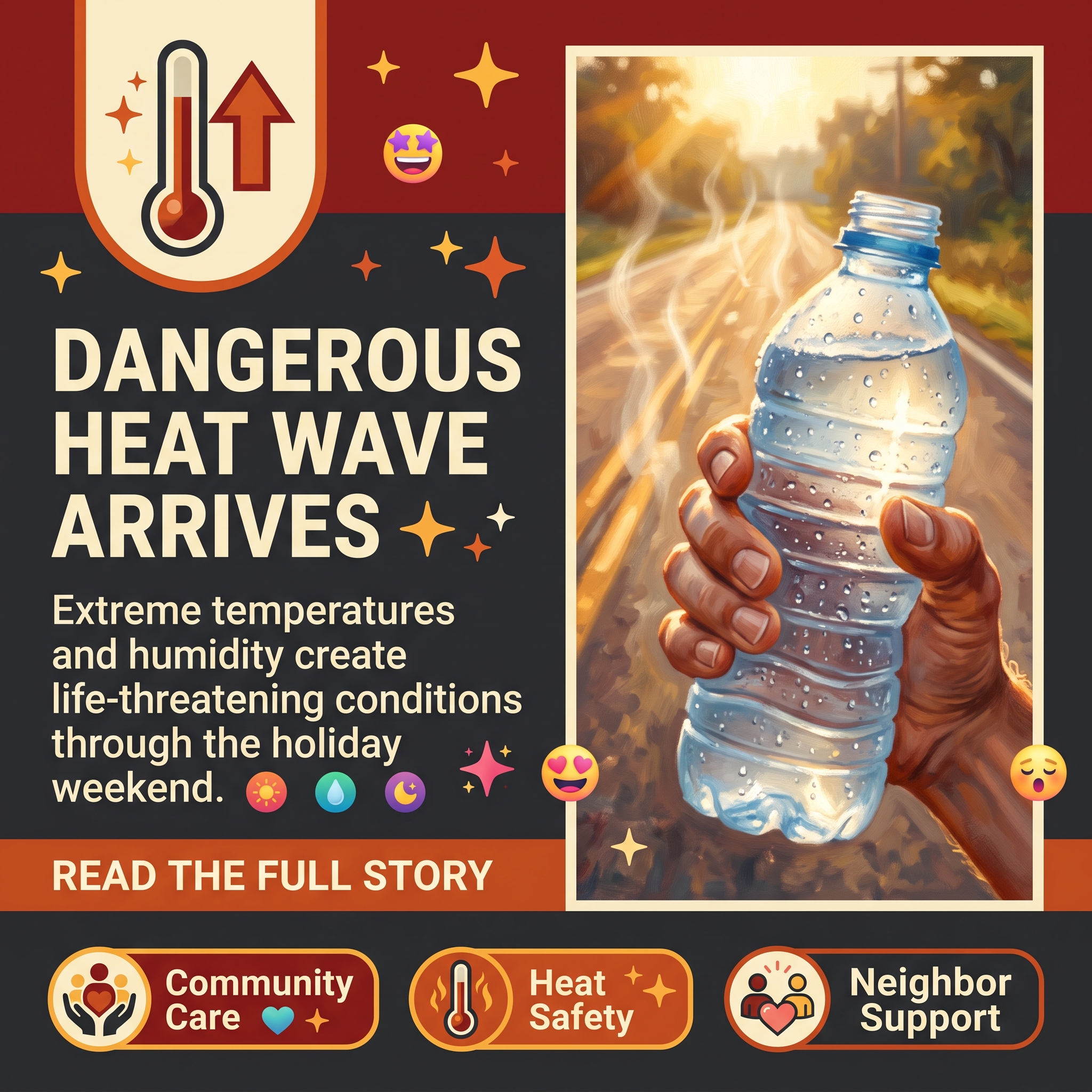
🌡️ First Major Heat Wave Arrives in Sequatchie Valley — Highs Near 100°F Through July 4th
As summer officially settles into the Sequatchie Valley, the region is bracing for its first significant heat wave of the season. With temperatures expected to feel like 100–110°F due to humidity, local residents and community leaders are being urged to prepare now for a week-long stretch of dangerous heat that will peak from Tuesday through the July 4th weekend.
❤️ Why This Matters for Your Community
Heat waves are more than just uncomfortable weather—they pose real health risks to vulnerable populations in Dunlap and across the Sequatchie Valley. 🏥 Elderly residents, young children, people without air conditioning, outdoor workers, and those with chronic health conditions face the greatest danger during extended periods of extreme heat. The combination of middle-to-upper 90s temperatures with humidity that makes it “feel like” 100–110°F creates conditions where heat exhaustion and heat stroke can develop quickly, sometimes without warning.
For families, businesses, and community organizations, the heat wave also affects daily routines: outdoor activities may need to be rescheduled, utility bills may spike, and vulnerable neighbors may need extra support. Schools, churches, nonprofits, and local employers all play a role in helping residents stay safe during this period. 💧
🗓️ What Residents Should Know
Timeline: The heat wave begins today (Monday, June 29) with highs in the low-to-middle 90s. The most intense period runs Tuesday, June 30 through Saturday, July 4, when highs will reach the middle-to-upper 90s daily. According to Chase Bryant Weather, a pattern change is expected to bring relief starting Sunday, July 6, with highs returning to the upper 80s to low 90s—more typical for early July. 📅
Rain prospects: Tuesday appears dry. Wednesday through the July 4th weekend may see scattered afternoon and evening showers or storms, but coverage will be spotty, and most areas should expect to stay dry. The main weather story will be the heat, not relief from rain.
🤝 Community Connections & Mutual Care
Heat waves reveal the importance of community networks in Dunlap and the Sequatchie Valley. 👥 Neighbors checking on neighbors, churches organizing cooling centers, local organizations reaching out to isolated residents, and community members looking after those without reliable air conditioning—these connections can literally save lives during extreme heat.
The forecast specifically calls attention to several groups who may need support: elderly residents living alone, pets and livestock, people experiencing homelessness, outdoor workers, and anyone without air conditioning. This is an opportunity for families, faith communities, civic organizations, and neighbors to strengthen relationships by reaching out proactively. 🏘️
💡 Practical Steps for Heat Safety
According to the forecast guidance, residents should:
- Stay hydrated: Drink water regularly, even if you don’t feel thirsty. Heat-related illness can develop without obvious warning signs.
- Take breaks from outdoor activity: Limit strenuous work or exercise during peak heat hours (typically 2–6 PM). Shift outdoor tasks to early morning or evening when possible.
- Check on vulnerable people: Elderly neighbors, those with health conditions, and people without air conditioning should be contacted regularly to ensure they have access to cool spaces and water.
- Protect pets and animals: Provide shade, fresh water, and indoor shelter. Never leave pets in vehicles—cars reach dangerous temperatures in just minutes.
- Never leave anyone in a vehicle: This applies to children, elderly relatives, pets, and anyone else. Even a few minutes can be life-threatening in extreme heat.
🌡️ What Happens Next
The immediate forecast shows the heat peaking mid-week through the July 4th holiday. Residents should monitor updates from local weather sources for any changes to the forecast, particularly regarding the scattered storm chances Wednesday through Saturday. The significant shift comes Sunday, July 6, when a pattern change is expected to break up the high-pressure system driving the heat wave and bring cooler, more typical early-July conditions. 📊
🧵 Community Threads: Why This Matters Beyond the Forecast
Neighbor-to-neighbor networks: Heat waves test and strengthen the informal networks that hold communities together. Residents who check on elderly neighbors, share cooling space with those without air conditioning, or help coordinate community cooling centers are building relationships that matter year-round. These connections—often invisible until a crisis—are the backbone of community resilience. 🤲
Faith communities as cooling centers: Churches and faith organizations across the Sequatchie Valley often serve as natural gathering places during emergencies. During a heat wave, these spaces—typically air-conditioned and open to the community—become literal lifelines. Whether formally organized or informally available, these connections between faith communities and vulnerable residents matter.
Workplace and employer responsibility: Outdoor workers, construction crews, agricultural workers, and others who labor in the heat face particular risk. Employers and coworkers who prioritize hydration breaks, shade, and monitoring for heat illness are protecting not just individual workers but the economic and social fabric of local businesses and families. 🛠️
Intergenerational care: Heat waves often highlight the interdependence between generations. Younger residents checking on elderly relatives, middle-aged adults caring for both children and aging parents, and community members of all ages looking out for vulnerable neighbors—these relationships strengthen community bonds and ensure no one is left behind.
❓ Questions for Your Community
As Dunlap and the Sequatchie Valley prepare for this heat wave, consider:
- Do you know an elderly neighbor, friend, or family member who may need extra support during extreme heat? How could you check in with them this week?
- Does your workplace, school, or organization have a plan to keep outdoor workers, students, or participants safe during peak heat hours?
- Are there community spaces (libraries, community centers, churches) in your area that could serve as cooling centers if needed? Do residents know where they are?
- What informal networks exist in your neighborhood or faith community that could help vulnerable residents stay safe during this heat wave?
- How might this heat wave affect local outdoor events, summer programs, or community traditions planned for the next week?
🌄 Long-Term Community Impact
While this particular heat wave is expected to break by early July, it signals the beginning of summer’s most intense weather season in the Sequatchie Valley. How communities respond to this first major heat event—whether they organize cooling resources, strengthen neighbor networks, and prioritize vulnerable residents—often sets the tone for how they’ll handle future heat waves, storms, and other emergencies. 🌞
Additionally, heat waves are becoming more frequent and intense across the Southeast. Communities that use events like this to build lasting heat-safety infrastructure, community relationships, and emergency preparedness are investing in long-term resilience. The connections made this week—between neighbors, between organizations, between generations—can strengthen the community’s ability to handle future challenges.
For real-time weather updates and heat safety information, follow local weather forecasters and check official emergency management resources for your area. 📱
Source

Other Stories
- 💇♀️ Last-Minute Beauty Services in Putnam County — Get Ready for 4th of July Celebrations
- Story Time & Modified Hours at Stone Creek Farm U-Pick in Dunlap — Heat Wave Week Schedule 🫐
- 💝 Sequatchie Valley Community Rallies to Find Toy Cars for Young Girl’s Birthday
- Redi-Fest Liquidation Expands Nationwide Shipping from Chattanooga Area 📦
- 🏈 Diamond Elite Members Selling Alumni Shirts in Dunlap — Order Deadline July 31
- 📸 School Days Photography Offers Online Picture Ordering for Van Buren County Families
- 🎠 Day at the Saddle Club in Dunlap , TN — July 25th with Pony Rides, Water Slides & Family Fun



0 Comments