
🏢 The Hidden Cost of Floor Maintenance: Why “More Product” Doesn’t Mean Better Results
Commercial floor care in the region often follows a familiar pattern: big-box retailers and facility managers supply the chemicals, crews apply them, and nobody asks whether the approach actually works long-term. A local flooring professional is raising hard questions about how that model fails both property owners and the crews doing the work.
📍 The Problem: Buildup Nobody Plans For
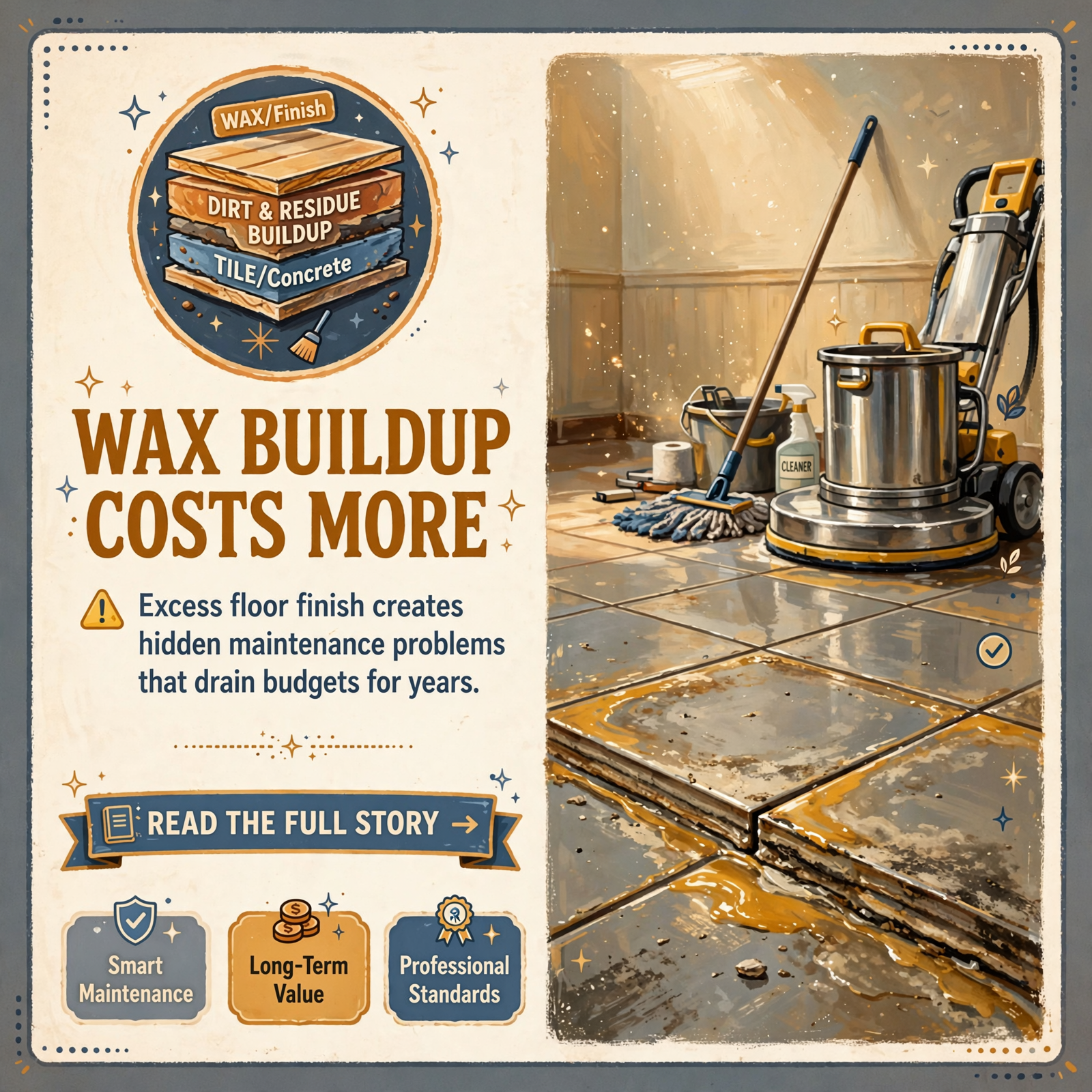
ProShine Floors, a Chattanooga-based flooring contractor with over 20 years of experience, recently shared a cautionary case study: a commercial floor that required four complete stripping cycles just to return to bare tile. 🧹 The culprit wasn’t poor maintenance-it was overuse of finish products supplied by a retail contract.
The scenario is common. Facility managers negotiate lower labor rates with cleaning crews in exchange for supplying the stripper and wax. Cases of finish arrive at the property. Inexperienced crews, seeing full supplies in the closet, assume they’re meant to use them. Nobody questions the application rate. The result: layers of wax and finish that were never needed accumulate on the floor.
💡 Why This Matters to Property Owners
The cost of that buildup doesn’t disappear-it shifts. The next crew inherits a floor that’s harder to maintain, requires more aggressive stripping, and demands extra labor hours to restore. ⏱️ Someone pays for that extra work. Often, it’s the property owner who discovers the problem too late.
“More wax does NOT automatically mean a better floor,” ProShine Floors noted in their analysis. Shiny floors tonight don’t account for what it takes to maintain them tomorrow. The real cost of floor care isn’t just the product supplied-it’s the skilled labor required to apply it correctly and the long-term maintenance burden created by poor decisions.
🤝 Shared Responsibility
ProShine Floors also acknowledged that crews bear responsibility in this dynamic. “Just because it’s in the supply closet doesn’t mean it all belongs on the floor.” Professional judgment and restraint matter as much as the products themselves. Crews who understand floor chemistry and maintenance cycles can prevent problems before they start.
The broader lesson: sending product to a store isn’t a floor maintenance program. A real program requires experienced crews, clear application standards, and accountability for long-term results-not just what looks good tonight. 🎯
For property managers and facility directors in the region, the takeaway is clear: when negotiating floor care contracts, ask about application standards, crew experience, and how the contractor plans to prevent buildup. The cheapest labor rate often creates the most expensive problems down the road.




0 Comments