
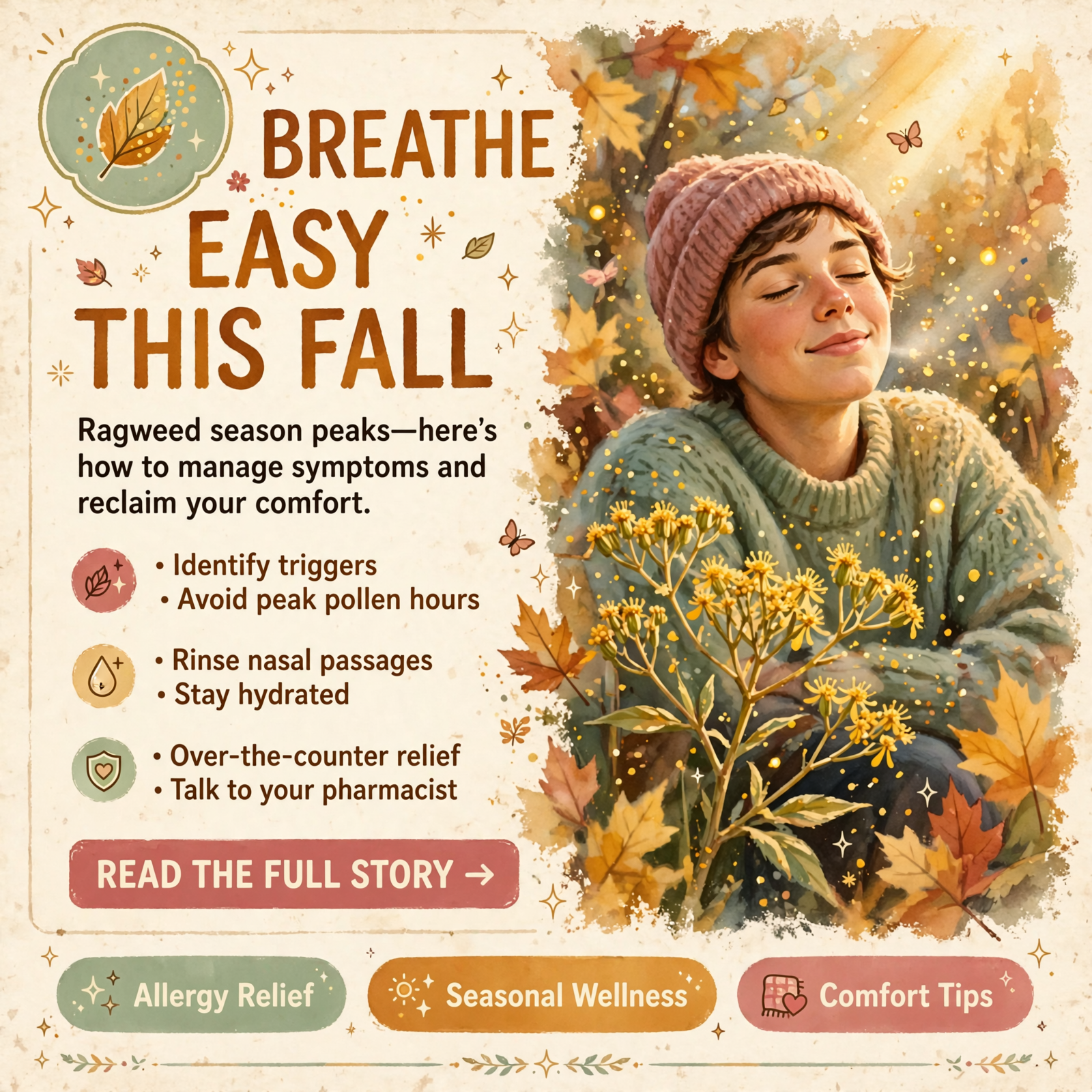
🍂 Managing Fall Allergies: What to Know as Ragweed Season Peaks
As autumn settles across the region, seasonal allergies are ramping up for many residents. Ragweed pollen, mold spores, and other outdoor allergens thrive in fall weather, triggering symptoms that can linger through the season-and knowing how to manage them can make a real difference in your daily comfort.
🤧 Common Fall Allergy Symptoms
Fall allergies often bring a familiar mix of discomforts. Residents may experience sneezing and runny nose, congestion or itchy nasal passages, watery or itchy eyes, and coughing or throat irritation. These symptoms can feel similar to a cold, but they typically persist as long as allergen levels remain high outdoors.
✔️ Practical Steps to Reduce Allergy Impact
Several straightforward habits can help minimize exposure to fall allergens:
- Check pollen counts before spending extended time outdoors-this helps you plan your day around lower allergen periods
- Keep windows closed when pollen counts are high, especially during peak morning hours
- Shower and change clothes after spending time outside to remove pollen from your body and hair
- Keep indoor spaces clean and reduce exposure to mold, which thrives in damp fall conditions
💙 When to Seek Professional Guidance
If allergy symptoms persist or interfere with your daily life-work, sleep, or outdoor activities-talking with a healthcare provider can help. A medical professional can assess your specific symptoms, recommend appropriate treatments, and rule out other conditions that might feel similar to seasonal allergies. Many people find that a personalized approach works better than over-the-counter solutions alone.
🍁 Fall doesn’t have to mean suffering through allergy season. With awareness, prevention, and professional support when needed, you can enjoy the cooler weather and changing landscape while keeping symptoms in check.
🤔Source
Know about an upcoming event or story in the Sequatchie Valley? Submit it here.




0 Comments