
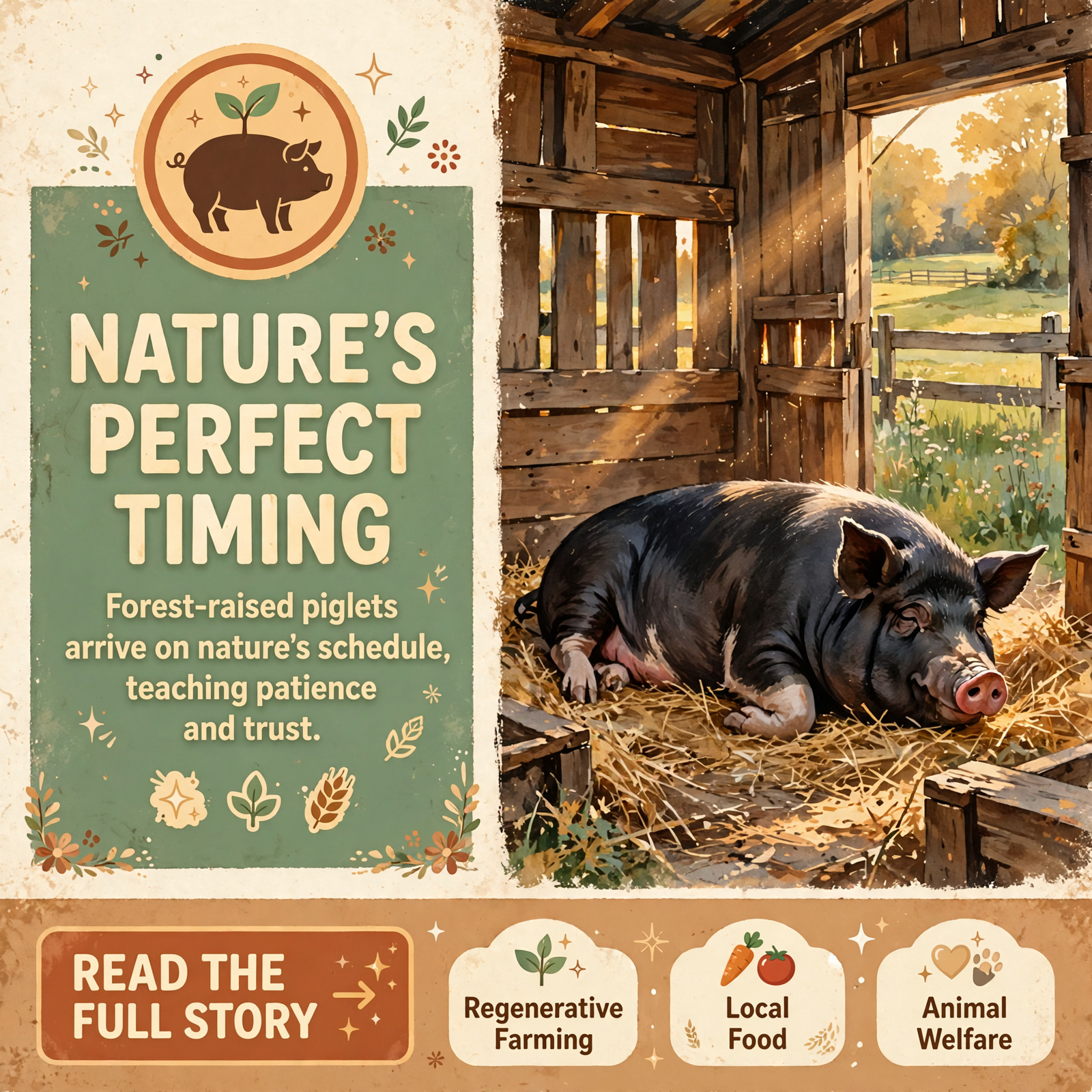
🐷 Waiting for Piglets at Heartwood Farm – A Lesson in Regenerative Farming Patience
On a regenerative farm, timing is everything-and sometimes nature takes its own schedule. Heartwood Farm in Dunlap is currently in the waiting game as their Berkshire pigs approach farrowing, offering a glimpse into the rhythms of small-scale, sustainable agriculture that many local residents may never witness firsthand.
📍 The Story Behind the Wait
Heartwood Farm posted a video on October 7th showing their expectant Berkshire sows, with piglets originally due on October 8th and 10th. But as of mid-October, the farm is still waiting. 🎥 Rather than worry, the team is embracing what experienced farmers know: Berkshire pigs are known for taking their time, sometimes going beyond their expected due dates. The farm’s approach-trusting the animals and the natural process-reflects a deeper philosophy about regenerative agriculture and working with nature rather than against it.
💡 Why This Matters to the Community
For readers in the Sequatchie Valley and surrounding areas, this moment illustrates something important about local food production. Regenerative farms like Heartwood Farm are not industrial operations running on strict schedules; they are living systems where animals, soil, and seasons interact in real time. When piglets arrive-whenever that may be-they will represent forest-raised pork grown on principles of soil health, animal welfare, and sustainable land stewardship. Understanding these rhythms helps community members appreciate the work behind the food they may purchase locally. ✨
🌾 Community Connections
Heartwood Farm is part of a growing network of regenerative and small-scale farms across the region. Neighbors and customers who follow the farm on social media are invited into the daily reality of farming-the waiting, the uncertainty, the trust in natural processes. This kind of transparency builds relationships between producers and eaters, strengthening the local food community. For families interested in understanding where their food comes from, or for young people curious about sustainable agriculture, farms like Heartwood offer real-world education that goes beyond textbooks.
❤️ The Human Side of Farming
Behind every post about waiting piglets is a farmer or farming family monitoring animals, preparing facilities, and managing the emotional and practical weight of caring for livestock. The lighthearted tone of Heartwood Farm‘s update-“we are just gonna trust that they will come when they are ready”-masks the attentiveness required. Farmers are often up at odd hours, watching for signs of labor, ready to assist if complications arise. This is the reality of small-scale animal husbandry that consumers rarely see. 🌄
🗓️ What Happens Next
Piglets will arrive when they arrive. Once they do, Heartwood Farm will likely share updates on their growth and development-a common practice for farms building direct relationships with their community. For those interested in forest-raised pork or learning more about regenerative farming practices, following the farm’s social media accounts offers a window into the seasonal cycles and decision-making that shape local food production.
🤔 Questions Worth Considering
- How does understanding the natural timeline of animal farming change the way we think about food production and pricing?
- What role can regenerative farms play in building food security and community resilience in the region?
- How might younger generations benefit from witnessing and learning about sustainable farming practices firsthand?
- What opportunities exist for local residents to connect with farms like Heartwood Farm-whether through purchasing, volunteering, or education?
🌱 Long-Term Community Impact
Farms practicing regenerative agriculture contribute to soil health, water quality, and biodiversity-benefits that extend far beyond the farm gate. When Heartwood Farm‘s piglets arrive and eventually become pork sold to local customers, they represent a choice to support farming methods that build rather than deplete the land. Over time, as more community members engage with local regenerative producers, the region strengthens its food system, reduces dependence on distant supply chains, and preserves agricultural knowledge and land use for future generations.
🔗 Community Threads: The Producer-Consumer Relationship
Social media posts like this one weave an invisible thread between farmers and eaters. When Heartwood Farm shares the waiting, the uncertainty, and the trust in natural processes, they invite their audience into partnership. Customers are no longer anonymous buyers; they become stakeholders in the farm’s success and witnesses to its values. This thread strengthens community identity around local food, builds loyalty, and creates accountability-farmers know their neighbors are watching and caring about their work. For a region with deep agricultural roots, this reconnection between land, animals, and people represents a return to values that shaped the community for generations.

0 Comments