
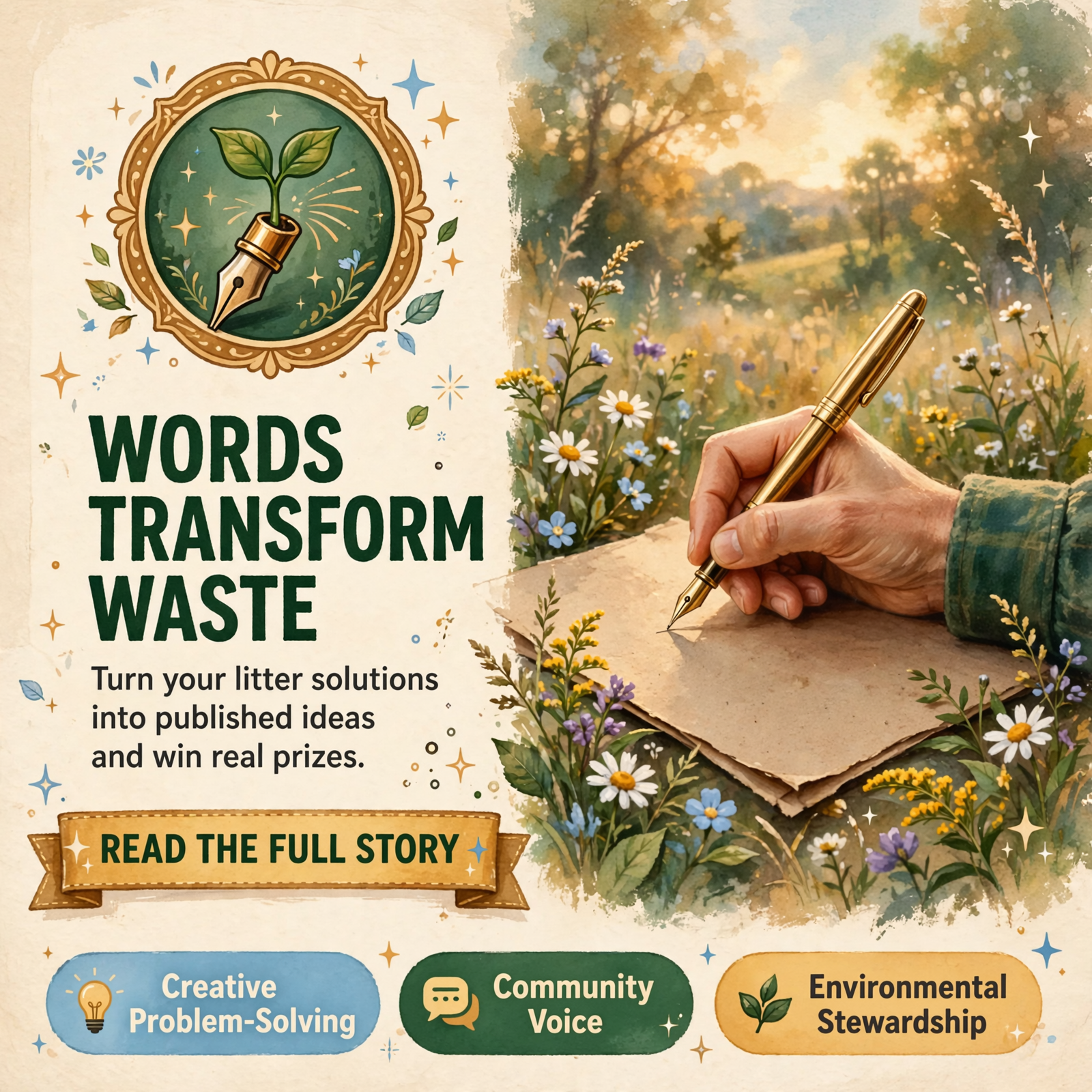
📝 Marion County Writing Contest Invites Residents to “Write the End to Litter”
Marion County residents of all ages now have a chance to turn their ideas about litter solutions into words-and potentially into print. The Marion Tribune, in partnership with Lewis Appliance, Heat & Air, is launching a community writing contest that asks neighbors to propose real answers to a problem that affects the county’s natural beauty and quality of life.
🎯 What This Contest Asks
The “Write the End to Litter” contest invites Marion County residents to submit either a poem (up to 20 lines) or a short story (up to 500 words) that proposes genuine solutions to the county’s litter problem. ✨ The first-place winner receives a $150 prize and will see their work published in the Marion Tribune-giving their voice and ideas a platform that reaches the broader community.
The deadline is October 15. Entries should be emailed to johnchristof@live.com with the writer’s name and phone number included.
💡 Why This Matters
Litter affects more than just appearance. It impacts wildlife, water quality, property values, and how residents feel about their community. By framing this as a writing contest rather than a complaint session, the Marion Tribune and Lewis Appliance, Heat & Air are inviting residents to move from frustration to problem-solving. 🌍 The contest recognizes that real solutions often come from people who live in the community and understand its specific challenges-whether that’s roadside debris, illegal dumping, or lack of accessible disposal options.
Publishing the winning entry also signals that Marion County values resident input and is willing to amplify voices that contribute to community improvement.
👥 Community Connections
This contest reflects a broader commitment by local businesses and media to strengthen Marion County’s civic culture. Lewis Appliance, Heat & Air’s sponsorship shows how local enterprises can support community initiatives beyond their core business. The Marion Tribune‘s role as organizer and publisher underscores the importance of local journalism in creating spaces where residents can engage with shared challenges.
For families, schools, and community organizations, the contest offers an accessible entry point for discussing environmental stewardship and creative problem-solving. Young writers, established authors, and anyone with an idea now have a reason to think deeply about litter and its solutions.
🎨 Who Should Consider Entering
The contest is open to all Marion County residents, any age. This inclusivity matters: it means students can participate alongside retirees, newcomers alongside longtime residents. A teenager might propose a youth cleanup initiative. A parent might write about making disposal more convenient. A business owner might describe how litter affects their property. Each perspective adds value to the community conversation.
📍 What Residents Should Know
- Deadline: October 15
- Format: Poem (up to 20 lines) or short story (up to 500 words)
- Eligibility: All Marion County residents, any age
- Prize: $150 for first place; winning entry published in the Marion Tribune
- How to Enter: Email your submission with your name and phone number to johnchristof@live.com
🔮 What Happens Next
After the October 15 deadline, the Marion Tribune will review submissions and select a winner. The winning entry will be published, giving that resident’s ideas visibility across Marion County. The contest may also spark broader community conversation about litter solutions-whether through local government action, business initiatives, or neighborhood cleanup efforts inspired by the published work.
💭 Questions Worth Considering
As Marion County residents think about entering, a few questions may help shape their ideas:
- What specific litter problem do you see most often in your neighborhood or along your daily routes?
- What barriers prevent people from disposing of trash properly-and how could those barriers be removed?
- Have you seen a community, business, or organization successfully reduce litter? What did they do?
- What role could residents, local government, schools, or businesses play in keeping Marion County cleaner?
- How does litter affect your sense of community pride or belonging?
🌱 Long-Term Community Impact
Contests like this can shift how communities think about shared problems. By asking residents to propose solutions rather than simply complain, the Marion Tribune and Lewis Appliance, Heat & Air are building a culture of civic engagement. If winning ideas are practical and actionable, they may inspire real change-a new cleanup program, improved signage, or partnerships between residents and local government.
Over time, this kind of dialogue strengthens community bonds. Residents see their neighbors as problem-solvers, not just fellow commuters. Local media becomes a platform for solutions, not just news. And businesses demonstrate that they care about Marion County’s future, not just their bottom line.
🤝 Community Threads: Local Business and Civic Leadership
The Business-Community Partnership: Lewis Appliance, Heat & Air’s sponsorship illustrates how local businesses can amplify civic initiatives. By funding the prize and lending their name to the contest, they signal that Marion County’s quality of life matters to them-and that they’re willing to invest in resident engagement. This kind of partnership often leads to deeper community involvement over time.
The Media-Resident Connection: The Marion Tribune‘s role as organizer and publisher creates a direct link between resident voices and community awareness. By committing to publish the winning entry, the Tribune ensures that the contest isn’t just a one-time event-it becomes part of the ongoing conversation about Marion County’s future. Residents see that their words can reach neighbors and decision-makers.
The Civic Participation Thread: Contests that invite creative problem-solving often inspire residents to think beyond their immediate household. A person who writes about litter solutions may become more engaged in other community issues. They may attend local meetings, volunteer for cleanup efforts, or support environmental initiatives. One contest can be the beginning of deeper civic involvement.




0 Comments