
🐙 World Octopus Day Celebration Highlights the Brilliance of Giant Pacific Octopuses
The Tennessee Aquarium in Chattanooga is marking World Octopus Day by sharing fascinating insights into one of the ocean’s most intelligent and enigmatic creatures-the Giant Pacific Octopus. For visitors and marine enthusiasts across the region, this celebration offers a window into why these animals captivate scientists, educators, and curious minds alike.
🧠 A Brain Like No Other
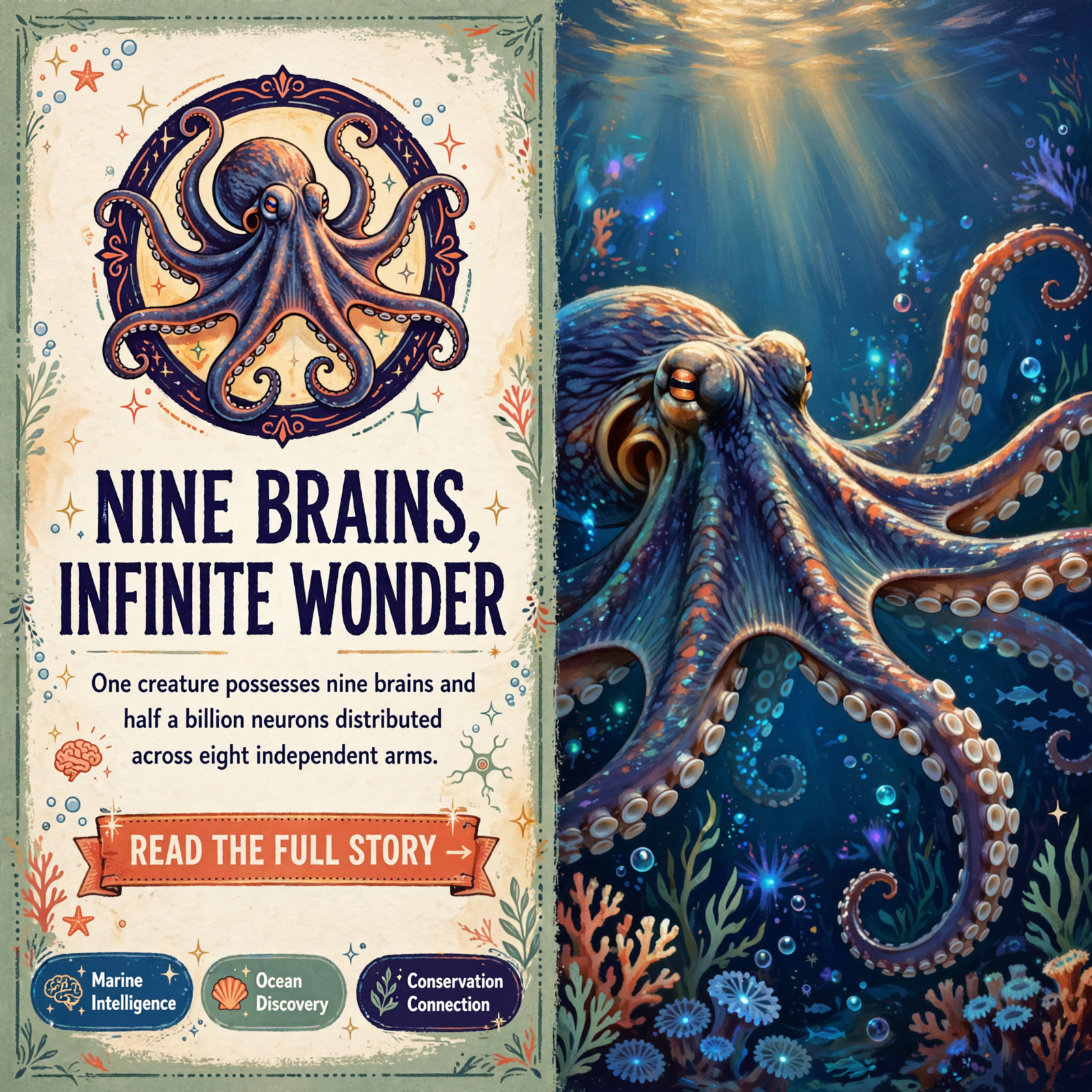
The Giant Pacific Octopus resident at the Tennessee Aquarium is the star of this year’s World Octopus Day spotlight, and for good reason. These remarkable animals possess what researchers call “nine brains”-one central brain plus a neural cluster in each of their eight arms. With approximately 500 million neurons distributed throughout their bodies, more than half of those neurons are located in their arms rather than their central brain. This distributed intelligence means each arm can independently taste, touch, and make decisions while exploring its environment, giving the octopus an almost alien-like cognitive ability that sets it apart from most other marine animals.
💡 Why This Matters for Local Learners
For families and students across the Sequatchie Valley and nearby communities, the Tennessee Aquarium‘s celebration of World Octopus Day offers more than entertainment-it’s an opportunity to encounter real marine science in action. Understanding how octopuses think and behave challenges visitors to expand their own understanding of intelligence and consciousness. When a young person learns that an octopus arm can taste and decide independently, it opens doors to questions about how brains work, how evolution shapes behavior, and what intelligence really means.
❤️ The Care Team Connection
The post notes that the Giant Pacific Octopus resident keeps the aquarium’s care team “on their toes,” a phrase that hints at the dynamic relationship between caretakers and this notoriously clever animal. Octopuses are known for their problem-solving abilities, curiosity, and sometimes mischievous behavior-they can open jars, navigate mazes, and even recognize individual humans. For the professionals who work with these animals daily, that intelligence demands respect, creativity, and constant engagement. The celebration underscores the dedication of aquarium staff who provide specialized care for one of the ocean’s most demanding and rewarding residents.
🌊 Community Connections to Ocean Conservation
The Tennessee Aquarium‘s mission centers on connecting people with nature and inspiring conservation action. By celebrating World Octopus Day and sharing scientific facts about Giant Pacific Octopuses, the aquarium strengthens community awareness of marine ecosystems and the creatures that depend on healthy oceans. For residents interested in learning more about ocean life, conservation efforts, or simply experiencing the wonder of marine biology, the aquarium serves as a regional hub for education and discovery.
🎓 Opportunities to Learn and Explore
Visitors to the Tennessee Aquarium can encounter the Giant Pacific Octopus and explore the freshwater and ocean ecosystems on display. For school groups, families, and individuals curious about marine science, the aquarium offers interactive exhibits and educational programming that bring ocean biology to life. World Octopus Day celebrations like this one highlight the kinds of learning experiences available year-round at the facility.
📍 What Residents Should Know
The Tennessee Aquarium is located at 1 Broad Street in Chattanooga, Tennessee. For information about hours, admission, special programs, or educational opportunities, visitors can contact the aquarium or visit its website. The facility welcomes guests from across the region who want to deepen their connection to marine life and conservation.
✨ A Broader Look at Octopus Intelligence
The celebration of World Octopus Day reflects a growing recognition in science and popular culture that octopuses are among the most intelligent invertebrates on Earth. Their distributed neural system, problem-solving abilities, and individual personalities make them subjects of ongoing research and fascination. By sharing these facts with the community, the Tennessee Aquarium helps residents understand that intelligence takes many forms and that the natural world contains wonders we are still learning to appreciate.
🔮 Long-Term Community Impact
Celebrations like World Octopus Day contribute to a broader cultural shift toward ocean awareness and marine conservation. When residents-especially young people-encounter these intelligent creatures and learn about their remarkable abilities, they develop a personal connection to ocean health. That connection often translates into lifelong interest in science, conservation, and environmental stewardship. For a region with strong agricultural traditions and outdoor heritage, fostering curiosity about marine ecosystems expands the community’s understanding of interconnected natural systems and humanity’s role in protecting them.
💭 Questions Worth Considering
- How might understanding octopus intelligence change the way we think about animal consciousness and what it means to be “smart”?
- What role can aquariums and educational institutions play in building community support for ocean conservation?
- How can families and schools use visits to the aquarium to spark curiosity about marine science and environmental careers?
- What other remarkable creatures or ecosystems might benefit from similar community celebration and awareness-building?




0 Comments