
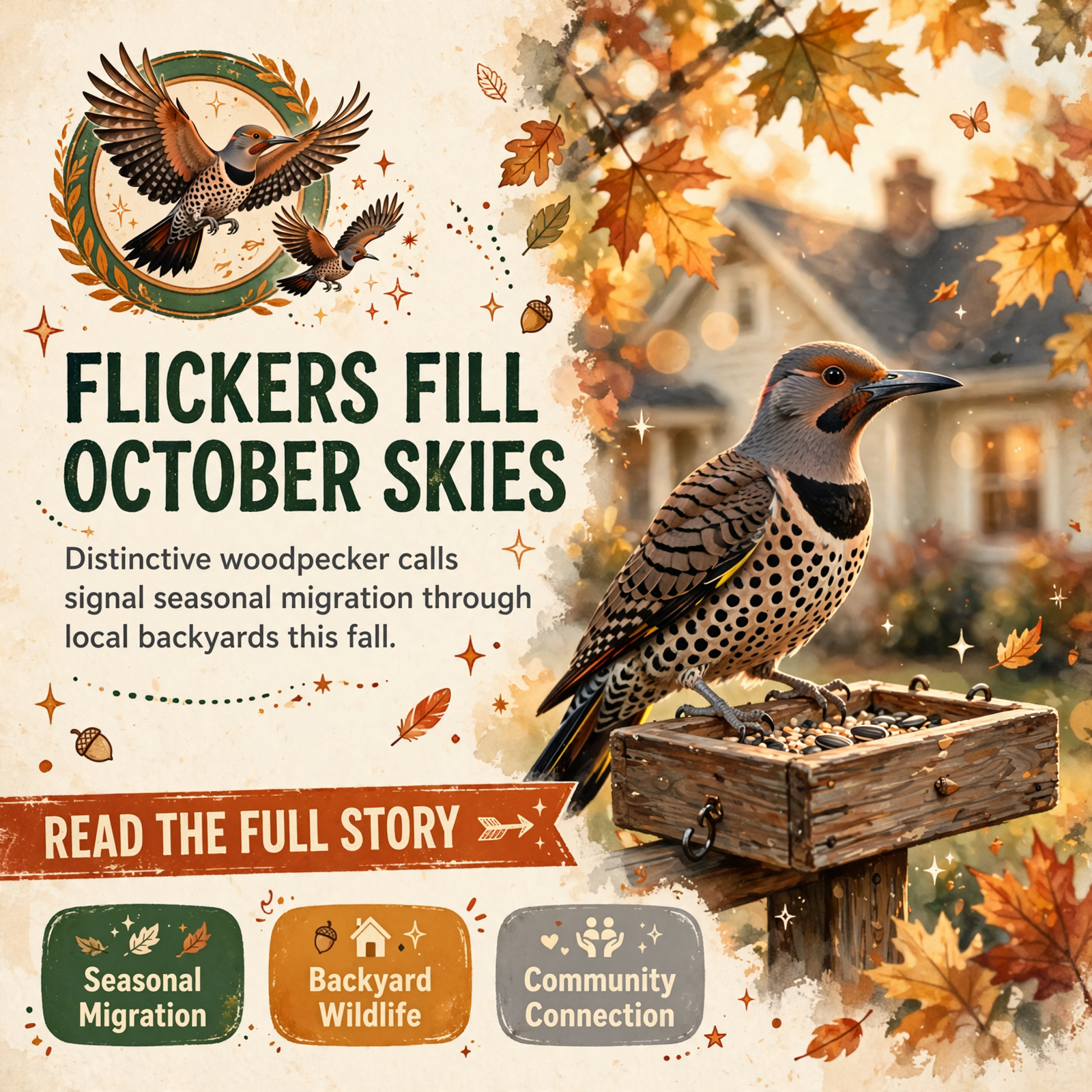
🐦 Northern Flickers Fill October Skies – and Backyards – Across the Region
As fall settles into the Sequatchie Valley and surrounding communities, one of nature’s most vocal visitors is making itself heard. The northern flicker, a woodpecker species known for its distinctive “kyeer” call, is appearing with notable frequency in local backyards this October-a seasonal pattern that reminds residents of the rhythms of migration and the wildlife that shares our outdoor spaces.
🎵 Why This Matters
For many residents, October brings more than cooler temperatures and changing leaves. It brings a shift in the birds visiting our yards-and with them, a chance to reconnect with the natural world. The northern flicker’s arrival is a visible reminder that our backyards are part of a larger ecosystem. Whether you’re a longtime birdwatcher or someone who simply enjoys the sounds of nature, understanding what birds are visiting and why they’re here deepens your connection to the seasons and the land around you.
Recognizing seasonal bird activity also matters for those who maintain bird feeders and sanctuaries. Knowing which species are present in October helps residents choose the right food, maintain feeders appropriately, and create welcoming habitats during migration periods when birds need energy for their journeys.
🌳 Community Connections
Birdwatching is a quiet but growing thread in many local communities. From casual observers who enjoy watching feeders from their porches to dedicated enthusiasts who track species and migration patterns, the practice connects neighbors to shared natural experiences. Local businesses like The Happy Birdwatcher Company in Dunlap serve as gathering points for this community-places where residents can learn about birds, find quality supplies, and share observations with others who notice the same seasonal visitors.
The northern flicker’s October appearance is part of a larger conversation happening across the region about habitat, migration, and how our choices-from the plants we grow to the feeders we maintain-affect the wildlife around us.
👥 Human Impact
For residents who step outside regularly, the northern flicker becomes a familiar presence-a reliable companion during the transition from summer to winter. Its call becomes part of the soundscape of October, something you learn to recognize and anticipate. For families with children, these birds offer a natural teaching moment about migration, adaptation, and the diversity of species that live alongside us. For those managing bird feeders, the flicker’s presence signals that it’s time to check supplies and ensure feeders are well-stocked for the season ahead.
🔍 Local Perspective
The Sequatchie Valley and surrounding Cumberland Plateau communities sit along important migration corridors. The region’s mix of forests, open spaces, and residential areas creates ideal habitat for transient species like the northern flicker. October is peak migration season in Tennessee, and the appearance of these birds in local yards reflects broader patterns happening across the state and beyond. For residents who have lived in the area for years, the return of familiar species each fall reinforces the predictability and comfort of seasonal rhythms-a grounding force in an often unpredictable world.
💡 What Residents Should Know
The northern flicker’s distinctive call-that sharp “kyeer” sound-is one of the easiest ways to identify the species, even if you don’t see the bird itself. The call is particularly noticeable in fall, when flickers are more active and vocal during migration. If you’re hearing this sound repeatedly in your yard, you’re likely hosting a visitor on its way to or from breeding grounds. The bird is attracted to areas with natural food sources and, in some cases, well-maintained feeders stocked with appropriate seed.
For those interested in supporting flickers and other migratory birds, maintaining native plants, avoiding pesticides, and providing clean water sources are simple steps that make a difference. Local resources and businesses can offer guidance on creating bird-friendly yards tailored to the region’s specific species and seasons.
🗓️ What Happens Next
As October progresses, the northern flicker’s presence may continue or shift depending on weather patterns and food availability. By November, migration patterns typically change, and the species composition of local yards evolves. Residents who are curious about what birds will appear next can track seasonal changes and prepare accordingly-adjusting feeders, planting native species, or simply staying alert to the sounds and sights of the changing season.
❓ Community Questions
- Have you noticed an increase in northern flickers or other migratory birds in your yard this fall? What species have you observed?
- How do seasonal bird visitors influence your connection to your property and the natural world around you?
- What role do local businesses and community knowledge play in helping residents create welcoming habitats for wildlife?
- How might understanding migration patterns change the way we think about our yards and outdoor spaces?
🌍 Long-Term Community Impact
The presence of healthy bird populations-including seasonal visitors like the northern flicker-reflects the overall health of local ecosystems. Communities that pay attention to and support wildlife often develop stronger environmental awareness and stewardship practices. Over time, this can lead to more native plantings, reduced pesticide use, and greater appreciation for the natural systems that sustain us. For the Sequatchie Valley and surrounding areas, fostering this awareness strengthens not just individual yards but the broader landscape’s resilience and biodiversity.
🔗 Community Threads: The Backyard Naturalist Network
Behind every observation of a northern flicker in a local yard lies an invisible network of people paying attention-residents, local business owners, and nature enthusiasts who notice, learn, and share. The Happy Birdwatcher Company in Dunlap serves as a hub for this network, connecting people who might otherwise experience nature in isolation. When a resident notices a flicker’s call and seeks out information, or when they decide to improve their yard’s habitat, they’re joining a community conversation that spans seasons, neighborhoods, and generations. This thread-the shared attention to and care for the natural world-strengthens community bonds and creates a sense of collective stewardship over the land we share.

0 Comments