
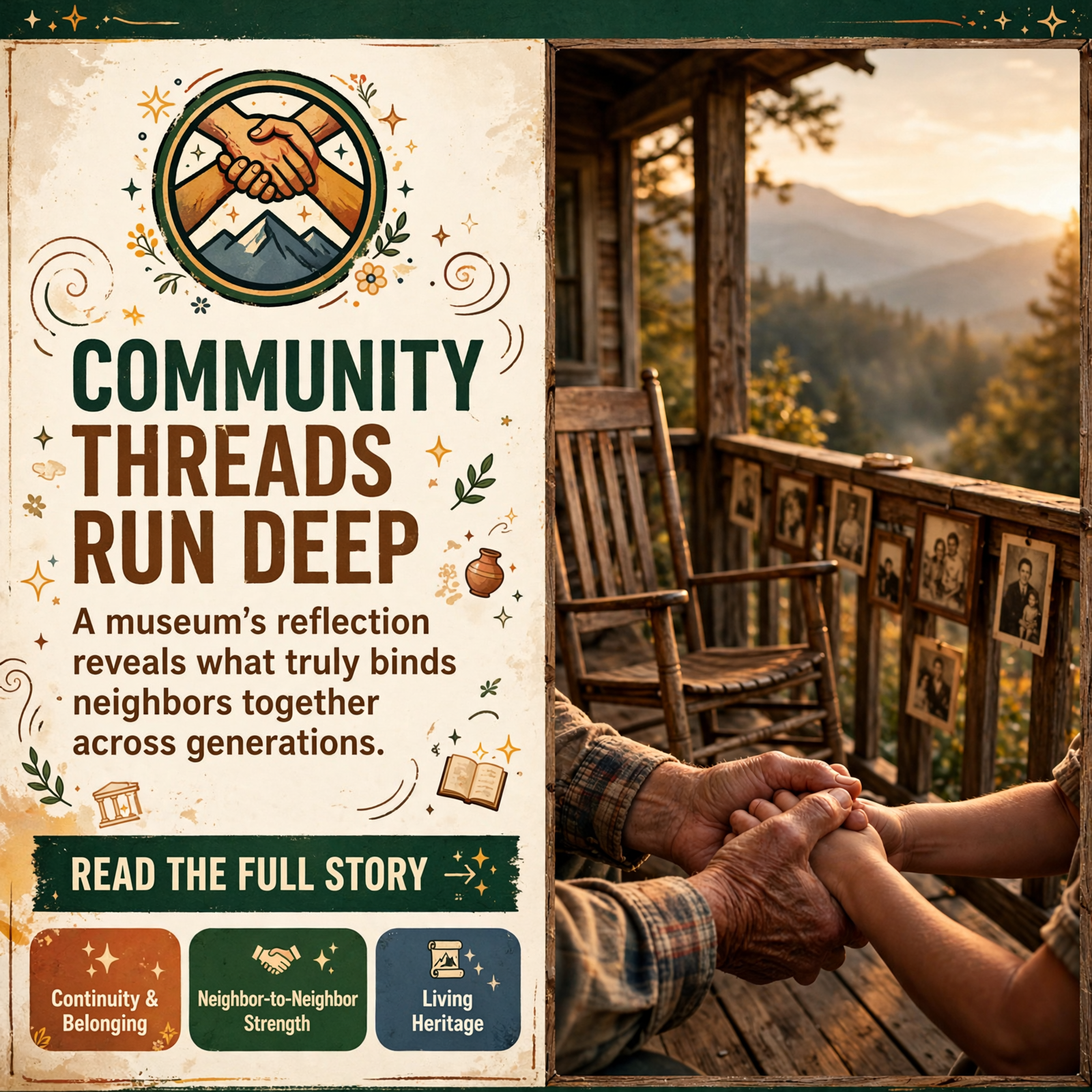
🏔️ What Makes Van Buren County Special – A Community Reflection
The Van Buren County Historical and Heritage Museum recently shared a meditation on what binds this Cumberland Plateau community together – not as a list of attractions, but as a living reflection of how neighbors, history, and shared identity shape daily life in Van Buren County.
📍 A Sense of Place That Runs Deep
The post captures something many longtime residents and newcomers alike recognize: Van Buren County is defined less by what’s on a map than by what’s in the relationships between people. The mountains, the roads that lead home, the front porches and farms – these are the physical anchors of a community where generations have built lives, raised families, and created traditions that still matter today. 🏡
For residents on the Cumberland Plateau, this kind of reflection matters. It acknowledges that community isn’t just about location – it’s about continuity, recognition, and the feeling of belonging to something larger than yourself.
❤️ Why This Matters
In an era when many rural communities struggle with outmigration and economic uncertainty, Van Buren County’s identity as a place where “everybody seems to know somebody” is both a strength and a story worth telling. The museum’s message suggests that local institutions recognize their role in preserving not just artifacts, but the living culture of the county – the ways neighbors show up, businesses open their doors, and children grow up surrounded by people who know their names. ✨
This matters because it frames community preservation as an active, ongoing process, not a museum piece. It’s about keeping history alive while building new stories.
🧵 Community Threads
The Continuity Thread: Van Buren County’s identity rests on the connection between past and present. Families who have lived here for generations, businesses that serve neighbors they’ve known for years, and institutions like the museum that hold collective memory – these threads weave together to create a sense of stability and belonging. When the post says “it’s history, but it’s not stuck in the past,” it’s acknowledging that this continuity is dynamic, not static.
The Neighbor-to-Neighbor Thread: The emphasis on neighbors showing up and businesses opening their doors reflects a practical interdependence that defines rural community life. In Van Buren County, that interdependence isn’t just economic – it’s social and emotional. People know each other’s stories, show up for each other, and understand that community strength depends on participation.
The Gathering Thread: The post mentions “new reasons to gather, new things to celebrate” – suggesting that Van Buren County’s identity is reinforced through shared events, celebrations, and public moments. These gatherings (whether seasonal festivals, church events, school functions, or community meetings) are where the abstract idea of “community” becomes concrete and personal.
👥 Human Impact
For families living in Van Buren County, this kind of institutional recognition matters. When the museum – a keeper of local history – publicly affirms what residents already know about their community, it validates their experience and strengthens their sense of belonging. 🏘️
For young people growing up here, the message is clear: you’re not just living in a place; you’re part of a story that people care about preserving and continuing. For newcomers or visitors, the invitation is equally direct: “come wander a little closer” – suggesting that Van Buren County’s identity is open to those willing to engage with it.
For business owners and civic leaders, the reflection suggests that community strength depends on staying visible, staying engaged, and continuing to show up for each other.
🌄 Local Perspective
Van Buren County sits on the Cumberland Plateau, a landscape shaped by mountains, hollers, and rural traditions that have endured for generations. The county’s identity is inseparable from this geography – the mountains that “have watched generations come and go” aren’t just scenery; they’re witnesses to continuity. 🏔️
In the context of the broader Sequatchie Valley region and nearby Cumberland Plateau communities, Van Buren County’s emphasis on knowing neighbors and maintaining traditions reflects a shared rural culture. Yet the museum’s message also suggests something distinctive: a deliberate effort to frame community identity as something worth celebrating and inviting others to understand.
This kind of reflection is particularly relevant in a region where many communities are working to balance economic change, population shifts, and the preservation of local character. Van Buren County’s approach – honoring history while actively building new stories – offers a model for how rural communities can stay vital without losing their roots.
💡 Opportunities for Connection
The museum’s message opens several pathways for residents and visitors to engage more deeply with Van Buren County:
- Visit the museum: The Van Buren County Historical and Heritage Museum preserves the rich history and heritage of Van Buren County through curated collections and artifacts. It’s located at 179 College Street in Spencer and offers a tangible way to explore the stories and history that shape the community.
- Attend community gatherings: The post’s emphasis on “new reasons to gather” suggests that Van Buren County continues to create public moments where neighbors can connect. Watching for local events, festivals, and celebrations is a way to participate in the ongoing story.
- Support local businesses: The message highlights businesses as key to community identity. Choosing to shop, dine, and work with local enterprises reinforces the interdependence that holds the community together.
- Share your story: The museum and community institutions are interested in the stories residents carry. Contributing family histories, photographs, or memories to local preservation efforts helps ensure that new stories are documented alongside historical ones.
📞 What Residents Should Know
The Van Buren County Historical and Heritage Museum is open to visitors and serves as a community hub for understanding local history and heritage. You can reach them at (931) 254-1326 or visit their website at https://sites.google.com/view/the-vbchh-museum/home to learn about current exhibits, hours, and ways to get involved. 📍
The museum’s social presence on Facebook also offers updates on community events and historical features – a way to stay connected to the ongoing conversation about what makes Van Buren County special.
🔮 What Happens Next
The museum’s reflection suggests an ongoing commitment to celebrating and preserving Van Buren County’s identity. Watch for:
- New exhibits or programs that highlight local stories and heritage
- Community events and gatherings that bring neighbors together
- Opportunities to contribute family histories or local knowledge to the museum’s collections
- Continued efforts to invite newcomers and visitors to understand what makes the county distinctive
🤔 Community Questions Worth Considering
- What stories from your own family or neighborhood deserve to be preserved and shared with the next generation?
- How can residents and businesses continue to strengthen the neighbor-to-neighbor connections that define Van Buren County?
- What new traditions or gatherings might help Van Buren County stay vital while honoring its history?
- How can the county welcome newcomers and visitors while maintaining the sense of belonging that longtime residents value?
⏳ Long-Term Community Impact
The museum’s message reflects a deliberate choice: to frame Van Buren County’s future not as a departure from its past, but as a continuation of it. This approach has real implications for the county’s long-term health and identity. 🌱
Communities that actively celebrate and preserve their character – while remaining open to change and new people – tend to build stronger social cohesion, attract residents who value those qualities, and create economic opportunities tied to heritage tourism and cultural preservation. Van Buren County’s emphasis on knowing neighbors, supporting local businesses, and gathering together suggests a community that understands this connection.
Over time, this kind of intentional community identity can influence everything from how young people view their future in the county, to how businesses market themselves, to how the county positions itself for sustainable growth. It’s not just about nostalgia – it’s about building a future where history, relationships, and economic vitality reinforce each other.

0 Comments