
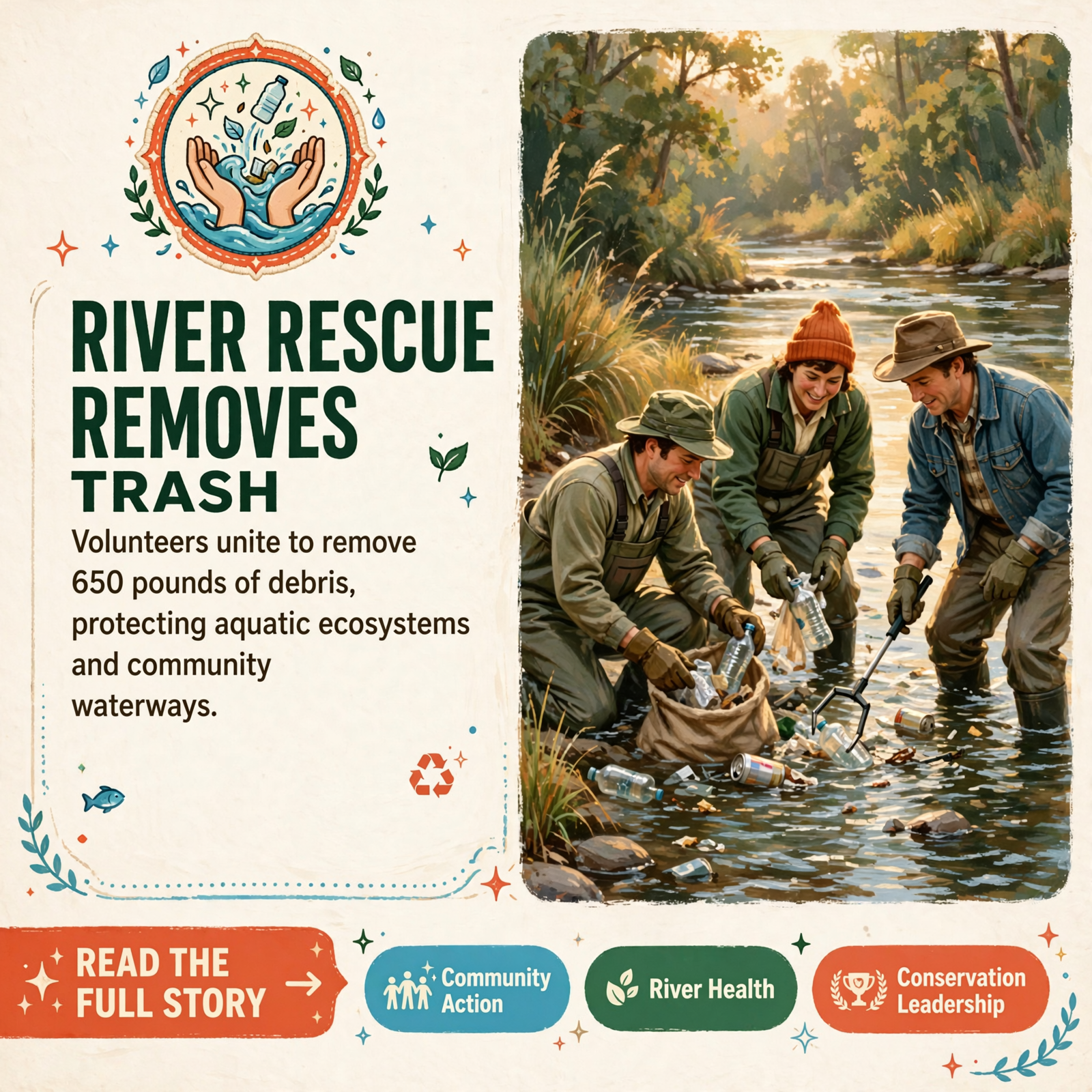
🌊 Tennessee Aquarium Team Removes 650 Pounds of Trash in 38th Annual River Rescue Cleanup
The Tennessee Aquarium‘s commitment to river conservation extends far beyond its exhibits. This year, staff and volunteers joined forces with community partners to tackle pollution along the Tennessee River, demonstrating how local institutions can lead environmental stewardship efforts that benefit the entire region.
📍 What Happened
The Tennessee Aquarium team participated in the 38th annual Tennessee River Rescue cleanup, working alongside 65 volunteers and a zone leader to remove debris from the riverbanks. The aquarium’s crew focused their efforts on Renaissance Park and Coolidge Park in Chattanooga, collecting more than 650 pounds of trash during the event. The cleanup was coordinated in partnership with WaterWays, an organization dedicated to river conservation and community engagement.
💡 Why This Matters
River cleanups like this one address a critical environmental challenge: pollution that threatens aquatic ecosystems, wildlife, and water quality. For residents across the Sequatchie Valley and surrounding areas who rely on the Tennessee River for recreation, fishing, and natural beauty, these efforts directly protect the resources that define the region’s character. The 650 pounds of trash removed represents debris that could have harmed fish populations, contaminated water, or degraded habitats that the Tennessee Aquarium works to educate visitors about year-round.
Beyond the immediate environmental impact, the cleanup reflects a broader commitment to conservation education. The Tennessee Aquarium‘s participation signals to the community that environmental responsibility is not just a museum mission-it’s a hands-on practice that staff members actively champion.
❤️ Community Connections
The Tennessee River Rescue cleanup represents a powerful example of how local institutions, nonprofits, and individual volunteers can unite around a shared environmental goal. The partnership between the Tennessee Aquarium, WaterWays, and 65 community volunteers demonstrates the strength of collaborative conservation work. For residents interested in environmental stewardship, this event shows how organizations in Chattanooga are actively working to protect the natural systems that connect the metro area to the broader region.
The cleanup also highlights the role of public spaces like Coolidge Park and Renaissance Park as gathering points for community action. These parks serve not only as recreation destinations but as venues where residents can engage in meaningful environmental work.
🌱 Human Impact
The 65 volunteers who participated in the cleanup represent neighbors, families, and community members who chose to invest their time in river conservation. For many, participation in events like this builds personal connection to the Tennessee River and reinforces the importance of environmental stewardship. The aquarium team members who led the effort model professional commitment to conservation-showing that environmental responsibility is integrated into their daily work.
Visitors to the Tennessee Aquarium may not realize that the staff members they encounter are also active conservationists working to protect the very ecosystems featured in the museum’s exhibits. This cleanup effort bridges the gap between education and action, demonstrating that learning about freshwater and ocean ecosystems can inspire real-world environmental engagement.
🔄 Long-Term Community Impact
The 38th annual Tennessee River Rescue cleanup reflects nearly four decades of sustained community commitment to river health. This consistency matters: year after year of cleanup efforts compounds, removing accumulated debris and preventing pollution from accumulating to dangerous levels. For residents who fish, boat, or simply enjoy the river’s natural beauty, these recurring efforts contribute to a cleaner, healthier waterway.
The Tennessee Aquarium‘s participation also reinforces a cultural norm in the Chattanooga area: that environmental institutions have a responsibility to lead by example. As the aquarium continues to educate visitors about freshwater and ocean conservation, its staff’s hands-on cleanup work strengthens the credibility and authenticity of that mission. Over time, this kind of institutional leadership can inspire broader community adoption of conservation practices.
🤝 Community Threads: The Conservation-Education Connection
How Museums Translate Learning Into Action: The Tennessee Aquarium‘s participation in the river cleanup reveals an important community thread-the relationship between environmental education and environmental action. Museums and educational institutions often inspire visitors to care about nature, but the aquarium goes further by demonstrating that staff members themselves are committed conservationists. This thread strengthens community trust and shows that conservation education is not abstract; it’s grounded in real work to protect local ecosystems.
Volunteer Networks and Civic Participation: The 65 volunteers who participated represent a community thread of civic engagement. These individuals chose to spend time on environmental work, suggesting that the Chattanooga area has a strong culture of volunteerism and environmental awareness. For residents interested in similar work, this cleanup demonstrates that pathways exist to participate in meaningful conservation efforts alongside established organizations.
Public Spaces as Community Assets: Coolidge Park and Renaissance Park serve as venues for both recreation and community action. This thread highlights how public parks function as more than leisure destinations-they are spaces where residents can gather for shared civic purposes, including environmental stewardship. Understanding this connection may encourage residents to view local parks as community resources worth protecting and supporting.
💭 Questions for Community Reflection
- How can residents in the Sequatchie Valley and surrounding areas participate in river conservation efforts, and what local organizations coordinate similar cleanups?
- What role can schools, churches, and civic groups play in supporting river cleanup initiatives and environmental education?
- How might increased awareness of river pollution affect community decisions about recreation, fishing, and water use?
- What long-term changes in river health could result from sustained annual cleanup efforts, and how might residents measure progress?
📢 What Residents Should Know
The Tennessee River Rescue cleanup is an annual event that welcomes community participation. Residents interested in environmental stewardship can watch for announcements about future cleanup dates and volunteer opportunities. The Tennessee Aquarium, located at 1 Broad Street in Chattanooga, serves as both an educational resource and an active conservation partner in the region. Visitors to the aquarium can learn more about freshwater and ocean ecosystems while supporting an institution that practices environmental responsibility beyond its walls.
For those interested in river conservation, WaterWays and similar organizations in the region provide ongoing opportunities to engage in environmental work. The success of this year’s cleanup-removing 650 pounds of trash-demonstrates the tangible impact that organized community effort can achieve.
🔮 What Happens Next
The 39th annual Tennessee River Rescue cleanup will likely take place next year, continuing a nearly four-decade tradition of community environmental action. The Tennessee Aquarium will continue its role as both an educational institution and an active conservation partner. Residents and visitors can expect the aquarium to highlight its conservation work through exhibits, educational programs, and ongoing participation in community cleanup efforts.
For the river itself, the removal of 650 pounds of trash this year represents progress toward cleaner water and healthier ecosystems. Sustained annual efforts like this contribute to long-term improvements in river health, though ongoing vigilance and community participation remain essential to address pollution comprehensively.




0 Comments