
From Pasture to Plate: How Sequatchie Valley Farmers Help Feed Our Communities
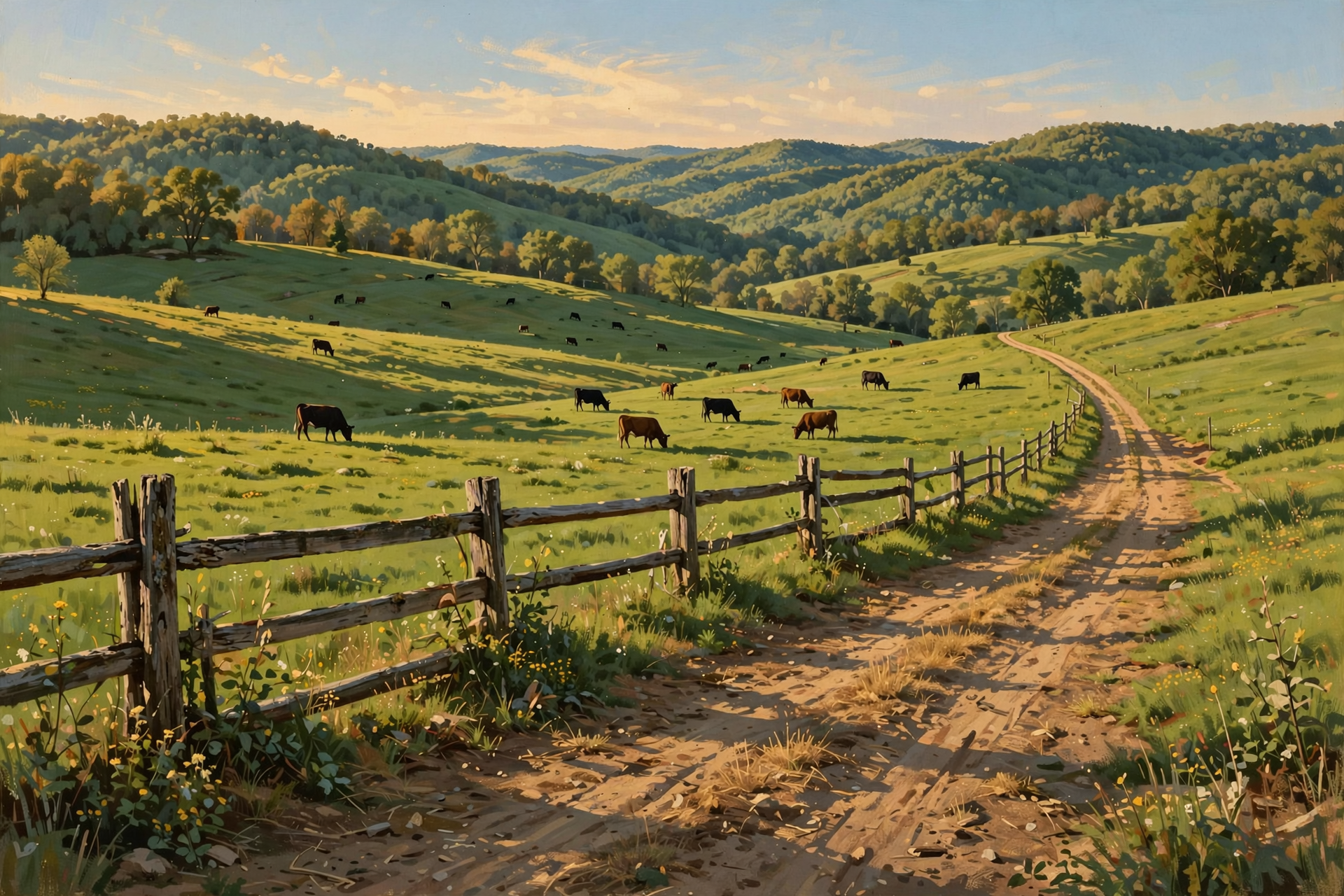
Most of us have a pretty good understanding of where supper comes from. We drive to the grocery store, find something that looks good, pay for it, and take it home.
If the price is right and the meat looks fresh, we might even call that a successful hunting trip.
But long before a steak reaches the meat counter or a roast finds its way into the family freezer, somebody has been doing considerably more work than pushing a shopping cart.
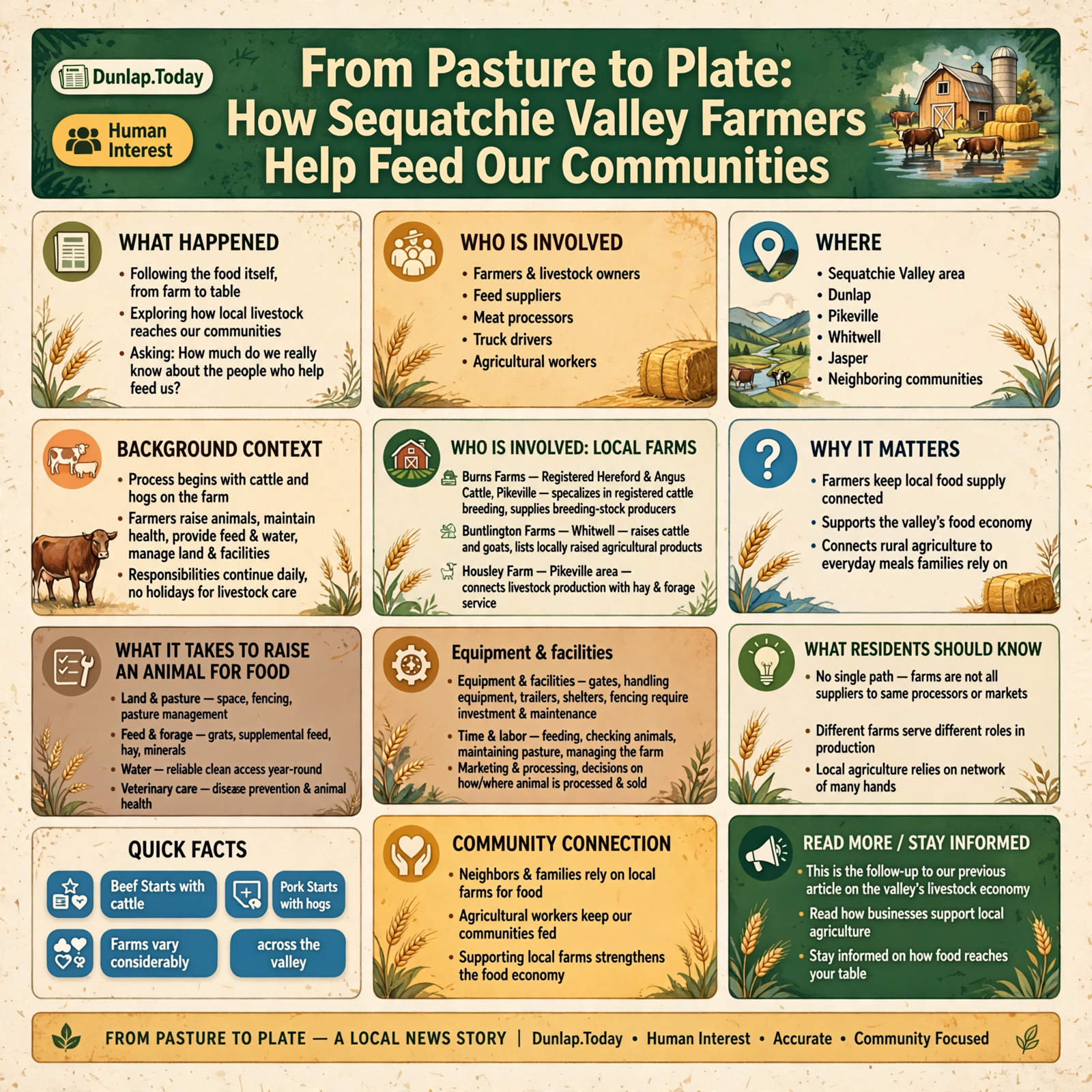
Throughout the Sequatchie Valley, farmers, livestock owners, feed suppliers, meat processors, truck drivers, and other agricultural workers contribute to the food economy.
Their work connects pastures around Dunlap, Pikeville, Whitwell, Jasper, and neighboring communities to something we all have in common: the need to eat.
In our previous article about the valley’s livestock economy, we looked at the businesses that support local agriculture. This time, we’re following the food itself and asking a question worth considering:
How much do we really know about the people who help feed us?
It Starts With a Farmer, Not a Grocery Store
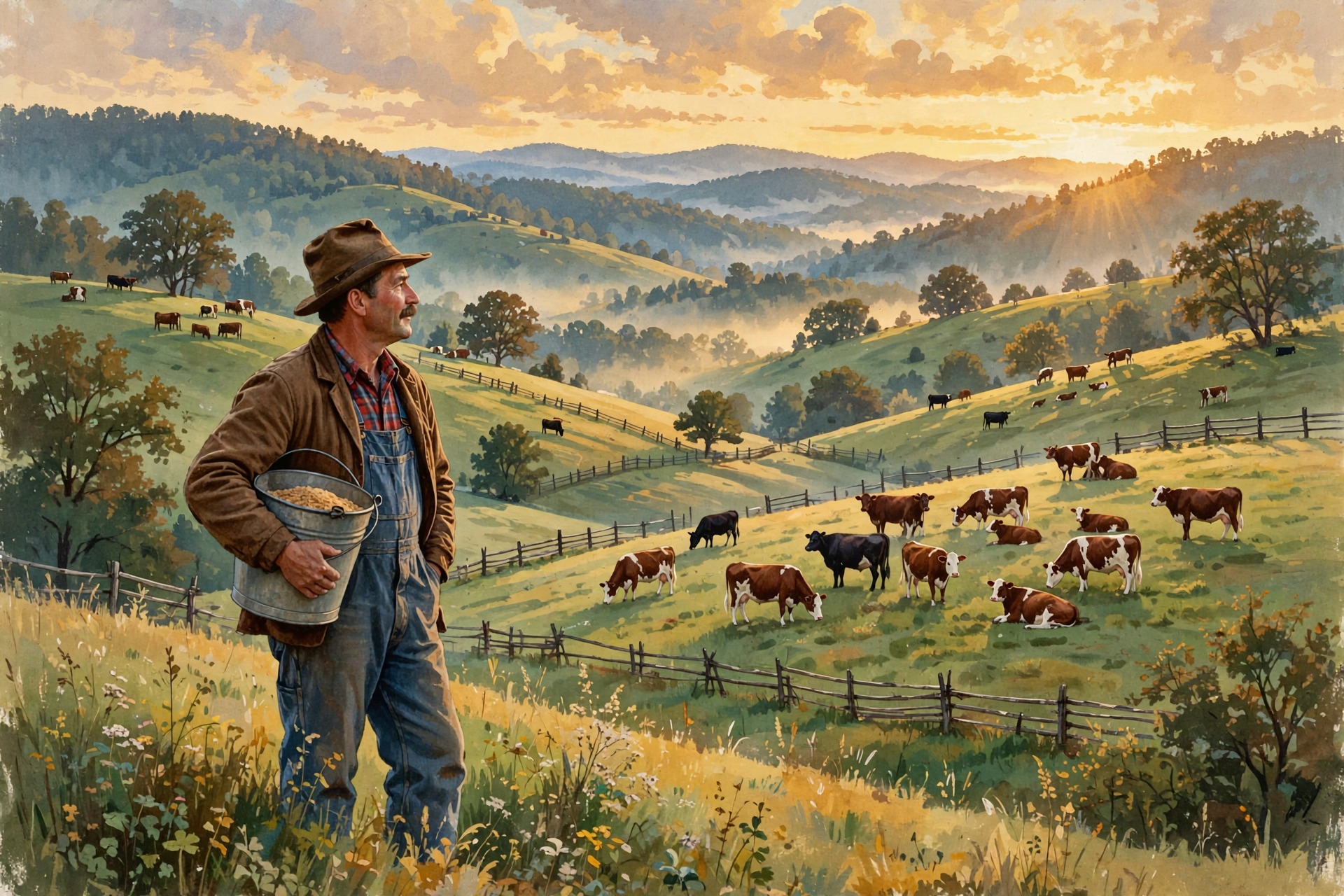
A grocery store may be where we buy our meat, but the process begins much earlier.
For beef, it starts with cattle. For pork, it starts with hogs. And for either one, it starts with somebody willing to raise animals, maintain their health, provide feed and water, and manage the land and facilities needed to care for them.
Those responsibilities don’t disappear when the weather turns bad, when equipment breaks down, or when the farmer would rather spend Saturday morning doing something else.
Cattle do not recognize holidays, and a hungry hog has never been particularly impressed by a farmer’s vacation plans.
In the Sequatchie Valley, livestock operations vary considerably.
Burns Farms Registered Hereford and Angus Cattle in Pikeville specializes in registered cattle breeding. Breeding-stock producers supply animals that other farmers may use to develop and improve their herds.
Buntlington Farms in Whitwell raises several types of livestock, including cattle and goats, and lists locally raised agricultural products.
Other operations, such as Housley Farm in the Pikeville area, connect livestock production with hay and forage services.
These farms illustrate different roles in agricultural production. They are not necessarily suppliers to the same processors, markets, or retail businesses.
And that distinction is important. There is no single path that every locally raised animal follows.
What Does It Actually Take to Raise an Animal for Food?
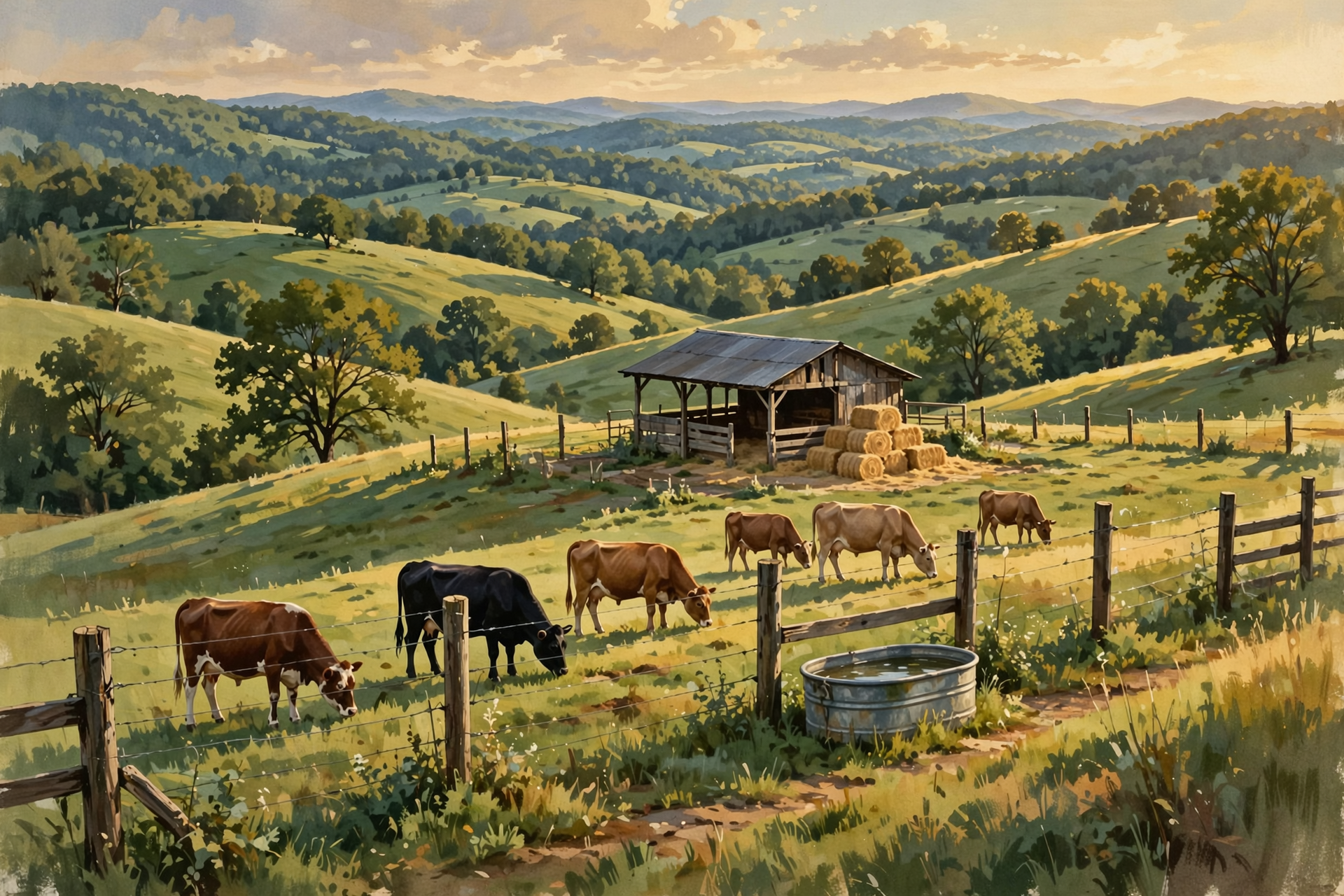
Imagine buying a young calf with the intention of raising it for beef.
Before the family sees a single package of hamburger, the farmer has expenses to manage.
- Land and pasture: Grazing animals need appropriate space, fencing, and pasture management.
- Feed and forage: Grass may provide much of an animal’s diet, but supplemental feed, hay, and minerals may be needed.
- Water: Animals need reliable access to clean water throughout the year.
- Veterinary care: Disease prevention, treatment, and other animal-health needs are part of responsible livestock management.
- Equipment and facilities: Gates, handling equipment, trailers, shelters, and fencing require investment and maintenance.
- Time and labor: Feeding, checking animals, maintaining pasture, and managing the farm all take work.
- Marketing and processing: Eventually, the farmer must decide how and where the animal will be sold or processed.
Local agricultural suppliers play a part in making this work possible.
For example, Sequatchie Farmers Co-op in Dunlap supplies products used by agricultural operations, including livestock feed and other farm necessities.
And hay producers provide an essential resource when pasture growth slows or animals need additional forage.
So when someone asks why locally raised beef costs what it does, the answer isn’t simply what the farmer paid for the animal.
The price must be considered alongside months of work, operating expenses, processing charges, and the amount of usable meat ultimately produced.
Farmers can make or lose money depending on those costs, market conditions, and how successfully they manage their operations.
The Sale Barn: One Way Livestock Changes Hands
Not every farmer sells meat directly to a family.
Some sell live animals to other livestock owners, breeding operations, dealers, or buyers through various marketing channels.
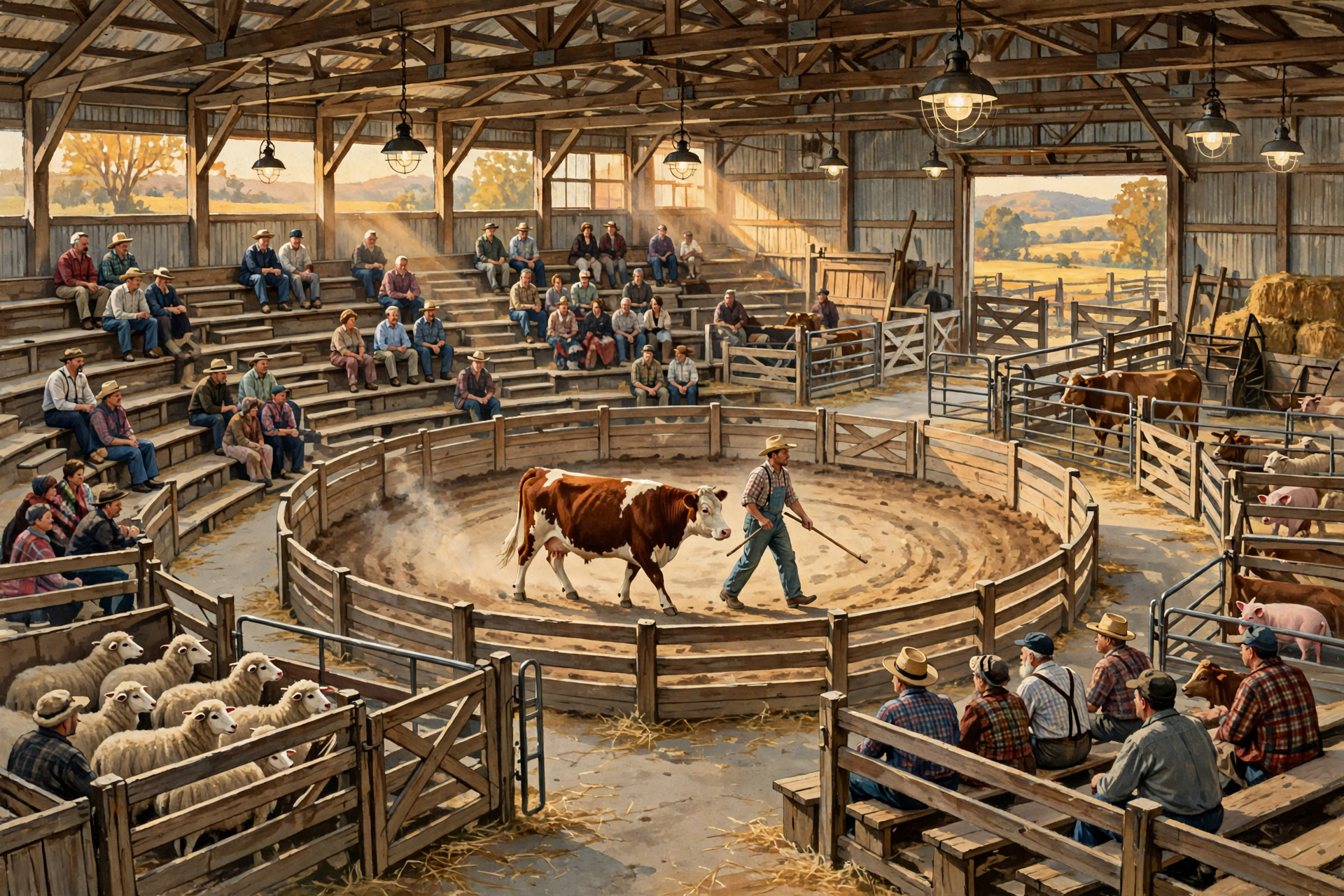
A livestock market provides one place where buyers and sellers can come together.
In Dunlap, American Made Livestock Market, located at 172 State Route 111 N, offers scheduled livestock-related sales, including horses, goats, and poultry.
The market illustrates the role auctions can play in the local agricultural economy. It should not be assumed, however, that every animal raised for meat in the valley passes through that facility.
Some livestock is sold privately. Some goes through other livestock markets. Some may be retained for breeding, while other animals are raised for direct sale or processing.
The important point is that selling a live animal and selling finished meat are two different business activities.
And that brings us to a part of the food supply that many consumers rarely see.
The Meat Processor: Where Another Kind of Work Begins
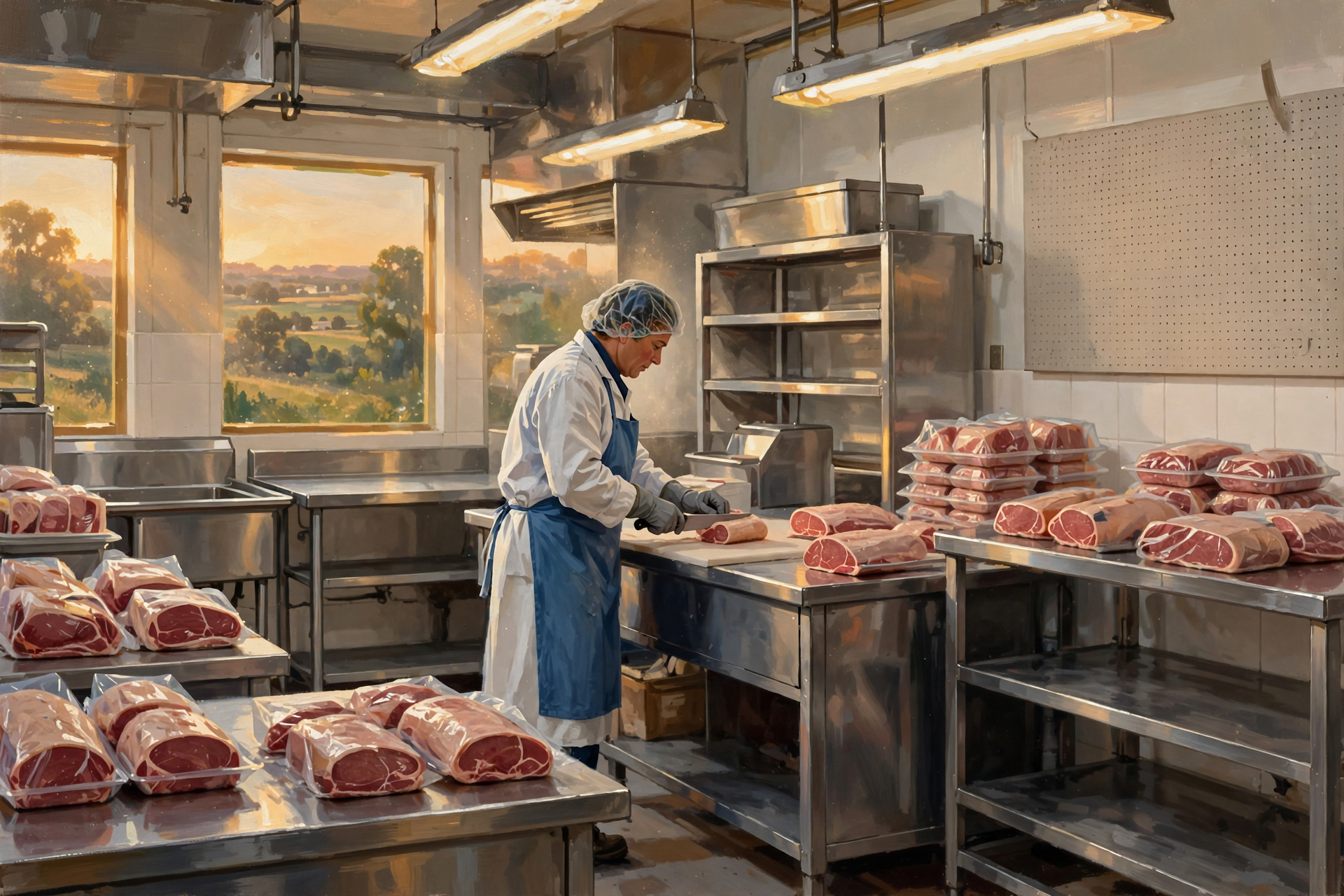
Raising an animal and turning it into properly processed meat require very different equipment and skills.
That is why independent meat processors are an important part of the agricultural economy.
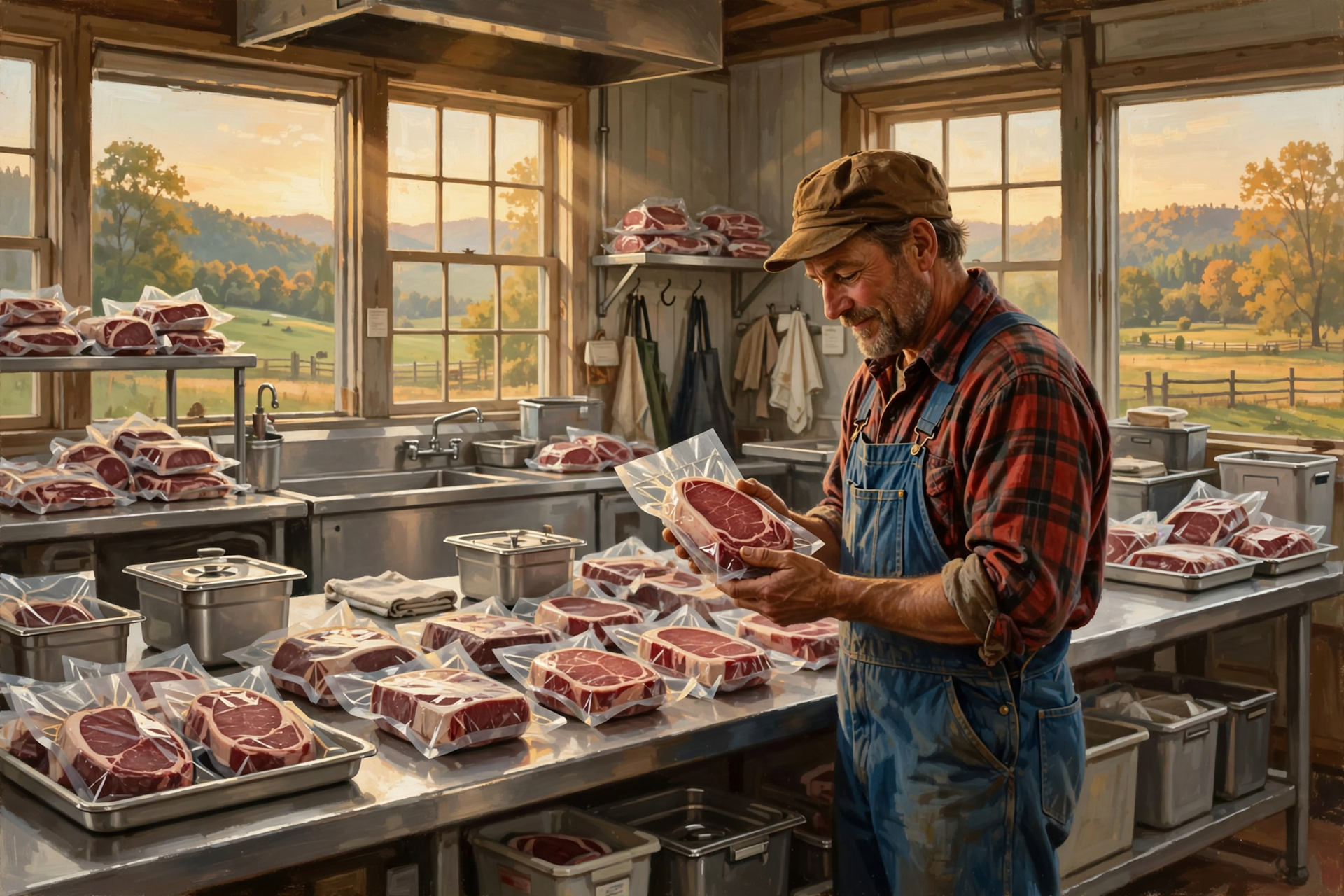
In the Dunlap area, P3 Custom Meats, located at 27015 US Highway 127, provides USDA-inspected and custom meat processing services. The business handles several types of animals, including cattle, hogs, sheep, goats, and bison, and operates an on-site retail storefront.
For farmers and livestock owners, a processor provides services that would be difficult or impractical to perform independently.
Those services may include slaughter, cutting, wrapping, labeling, and packaging, depending on the facility and the services requested.
And the customer’s decisions matter.
A family purchasing beef for its freezer might prefer plenty of ground beef, several roasts, and steaks cut to a particular thickness.
Another family may make different choices.
One household wants hamburger for spaghetti, chili, and meatloaf. Another wants steaks thick enough to make the neighborhood wonder whether a special occasion has been declared.
Neither preference is wrong.
But understanding what a processor does can help customers ask better questions and make more useful purchasing decisions.
Custom Processing and USDA-Inspected Meat: What’s the Difference?
This is one of the most useful distinctions for anyone considering buying meat directly from a farmer.
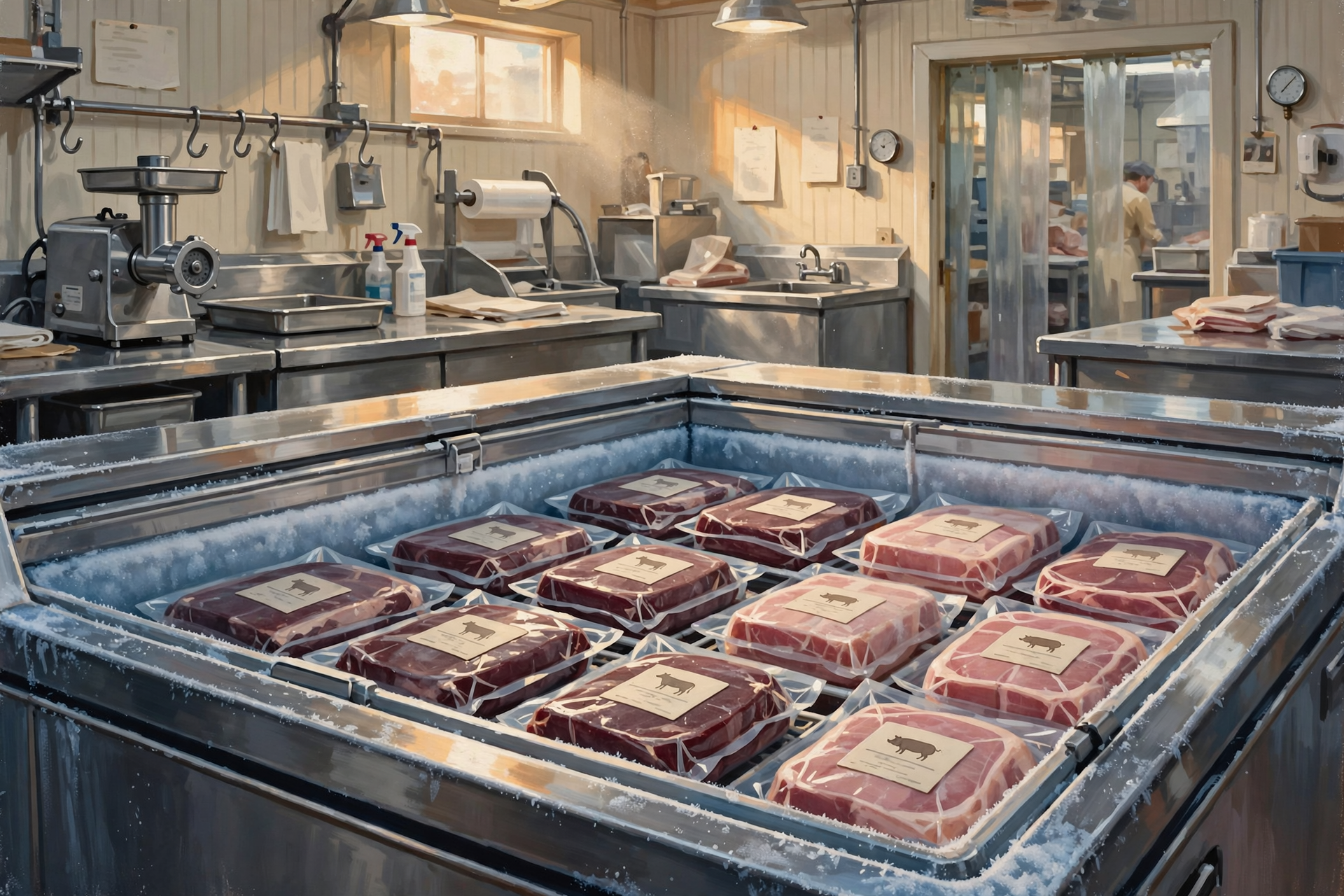
Under the rules explained by the Tennessee Department of Agriculture, custom processing generally involves animals processed for the owner’s personal use.
The resulting meat is labeled “Not for Sale” and cannot simply be placed into a retail meat case.
Customers sometimes purchase a live animal, or an ownership share of one, and arrange for custom processing for their own household use.
By contrast, farmers who want to sell individual cuts of beef or pork commercially must use processing and packaging that meet applicable inspection requirements.
In Tennessee, a farm selling meat at retail also needs to meet applicable permitting and inspection requirements.
Why does this matter to the customer?
Because purchasing half a live animal for custom processing is not necessarily the same transaction as buying packages of steaks from a farm’s retail freezer.
The ownership arrangements, processing requirements, labeling, and sale restrictions may differ.
A simple conversation with the farmer and processor before making a purchase can prevent confusion later.
Does Buying Local Meat Mean Better Meat?
Here’s where the discussion gets interesting.
We often hear that local food is automatically fresher, healthier, more humane, better for the environment, and better for everyone involved.
Sometimes local purchasing offers meaningful advantages.
But geography alone doesn’t establish any of those qualities.
A farm five miles away and a farm five hundred miles away may use very different feeding programs, animal-care practices, processing arrangements, and handling procedures.
One nearby farmer may raise grass-finished beef. Another may raise grain-finished beef. Both approaches involve choices that influence production, cost, and the finished product.
Some customers prefer one approach. Others prefer the other.
Those are useful subjects for a conversation, not reasons to assume one farm deserves praise and another deserves criticism.
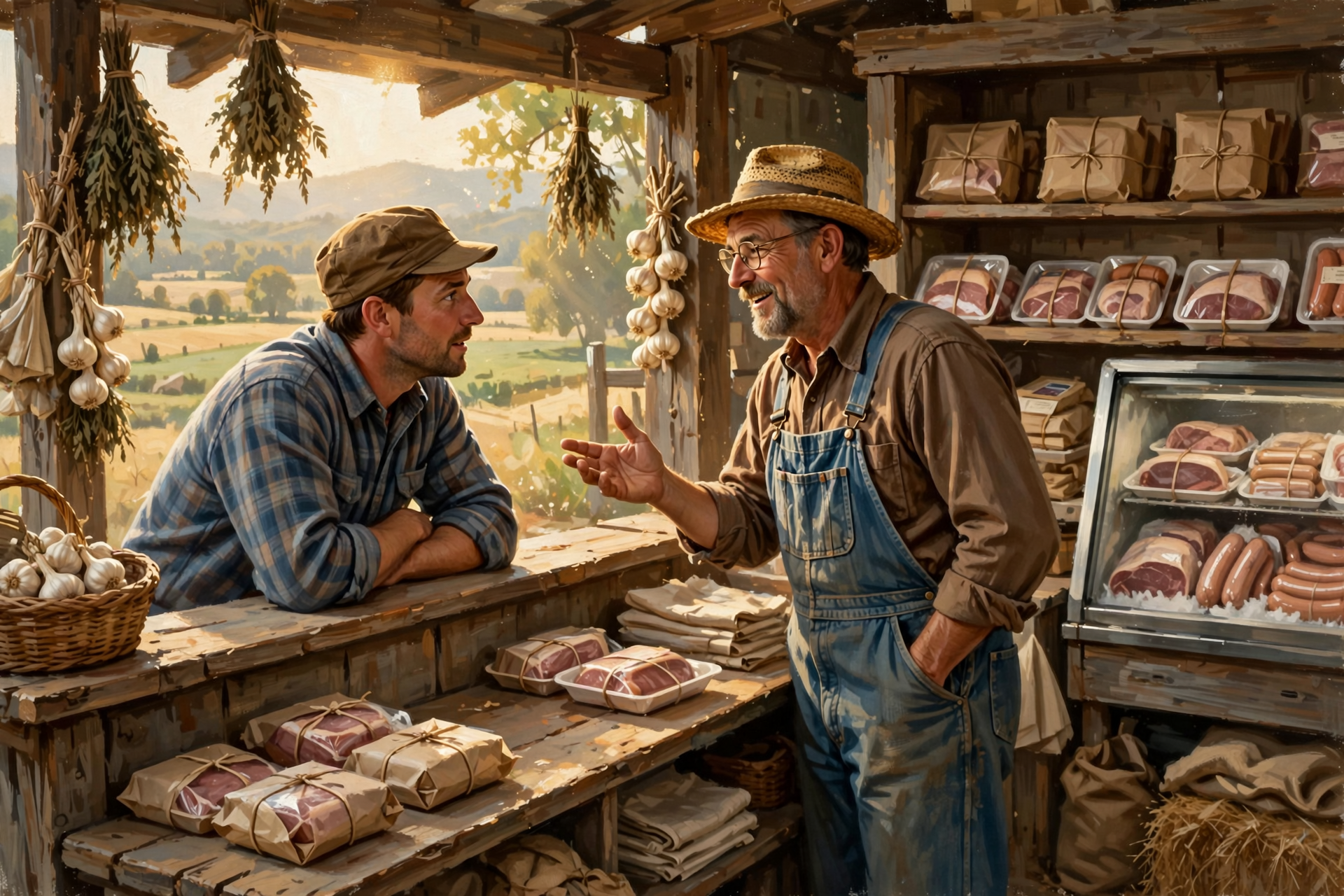
The strongest advantage of buying directly from a local farmer may be the opportunity to ask questions and learn about the actual operation.
Instead of relying entirely on packaging claims, customers can ask how animals are raised, what they are fed, how processing is arranged, and what is included in the purchase.
That information helps customers evaluate the food according to their own priorities.
Why the Price Per Pound Can Be Confusing
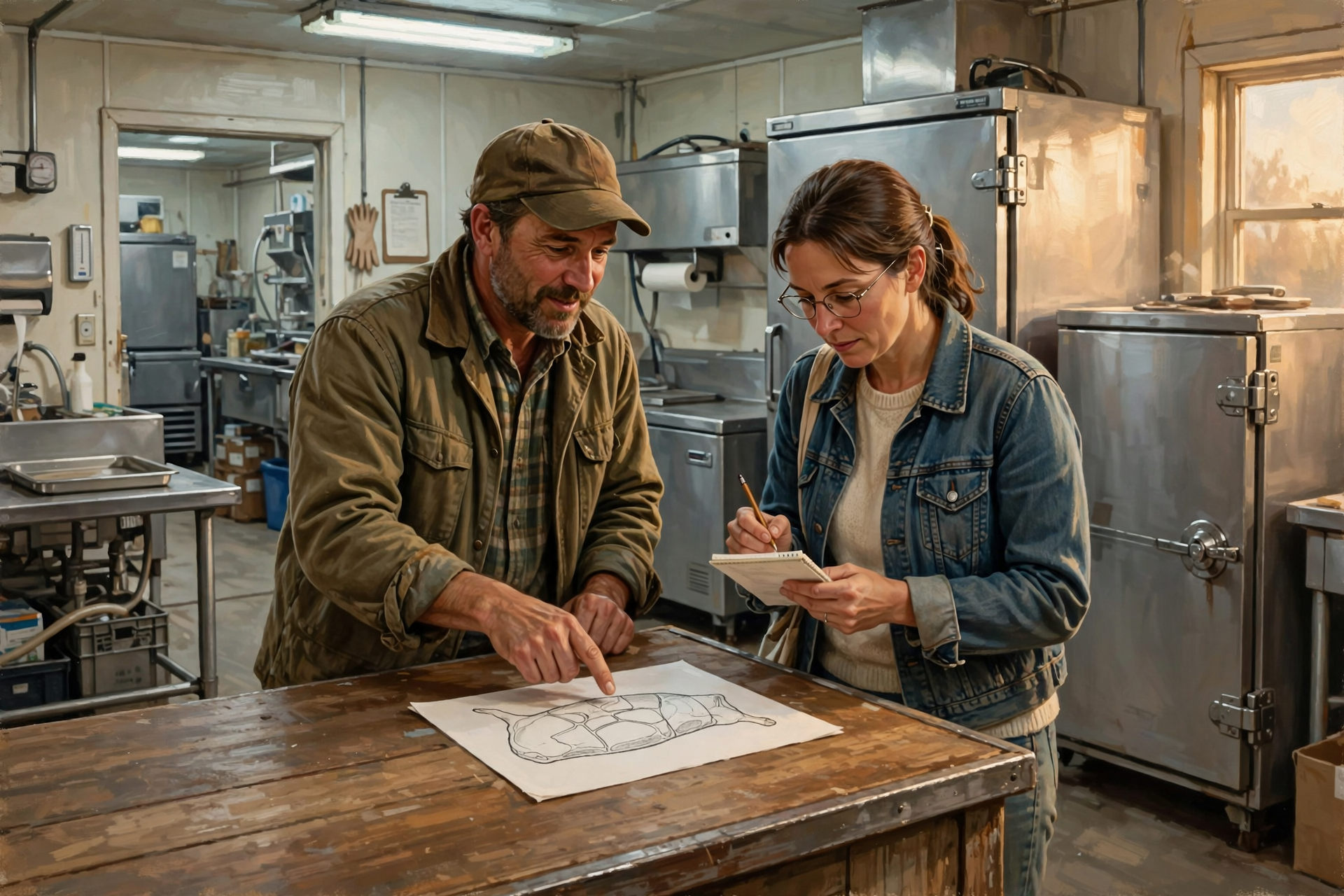
Suppose one seller offers a beef animal at a price per pound of hanging weight, while another sells individually packaged cuts by the pound.
Those prices are not directly comparable.
Live weight is the weight of the animal before slaughter.
Hanging weight refers to the carcass after certain parts have been removed, before the full cutting and trimming process is finished.
Take-home weight is the actual packaged meat that ends up in the customer’s freezer.
Because bones, fat, moisture, and trimming affect the yield, the weight of finished meat is less than the live weight and generally less than the hanging weight.
Processing fees may also be charged separately.
Before buying a half or quarter animal, ask the farmer or processor:
- Is the quoted price based on live weight, hanging weight, or packaged meat?
- Are processing and packaging included?
- Approximately how much meat should I expect to take home?
- Can I choose my cuts and package sizes?
- Will I need to arrange pickup at the processing facility?
- How much freezer space should I have available?
These are ordinary questions, and a knowledgeable seller should be able to explain the arrangements.
After all, discovering that your freezer is too small after purchasing half a beef animal is a poor time to begin shopping for another freezer.
Why Local Food Connections Matter to the Valley
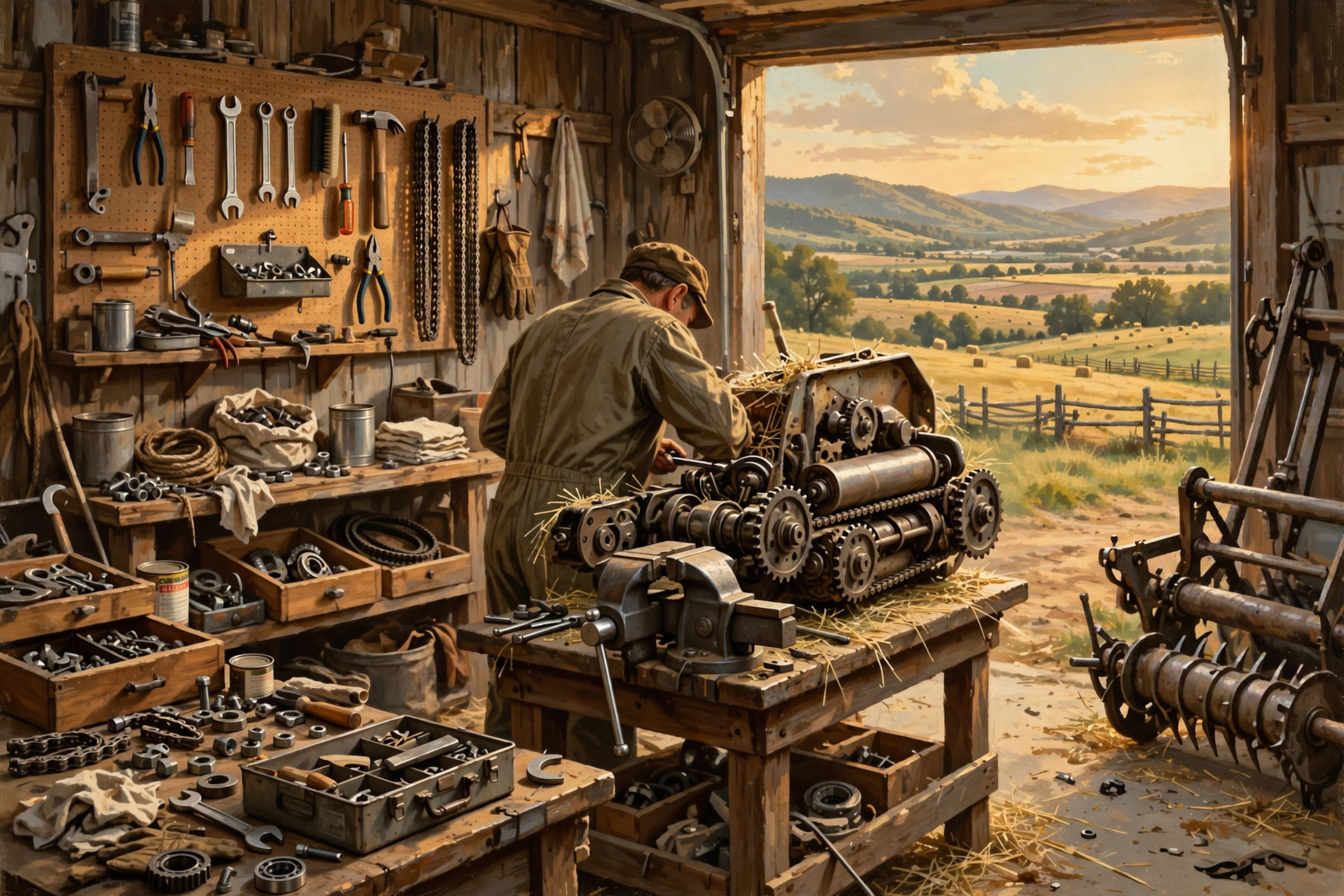
The Sequatchie Valley’s agricultural economy extends well beyond the farmer and the person buying meat.
Consider the businesses and workers involved in a typical livestock operation.
A farm may purchase feed locally, buy hay from a neighboring producer, hire someone to repair equipment, pay a veterinarian, and contract with a meat processor.
Each transaction supports another activity in the economy.
Local processing options may reduce transportation distances for some producers. Direct purchases can help farmers establish relationships with customers. Agricultural suppliers can benefit when local farms remain economically viable.
There are limits, too.
A local producer may not have enough animals to meet every customer’s needs. A processor may have limited appointment availability. Local products may cost more than comparable supermarket items, and not every business can source all its supplies locally.
And purchasing locally does not mean every dollar remains in the county.
Nevertheless, a region with working farms, available processing services, and agricultural suppliers has more ways to participate in its own food economy.
That matters not only because food is being produced, but because residents can better understand the people, businesses, and resources involved in producing it.
Talk to the People Who Help Feed the Valley
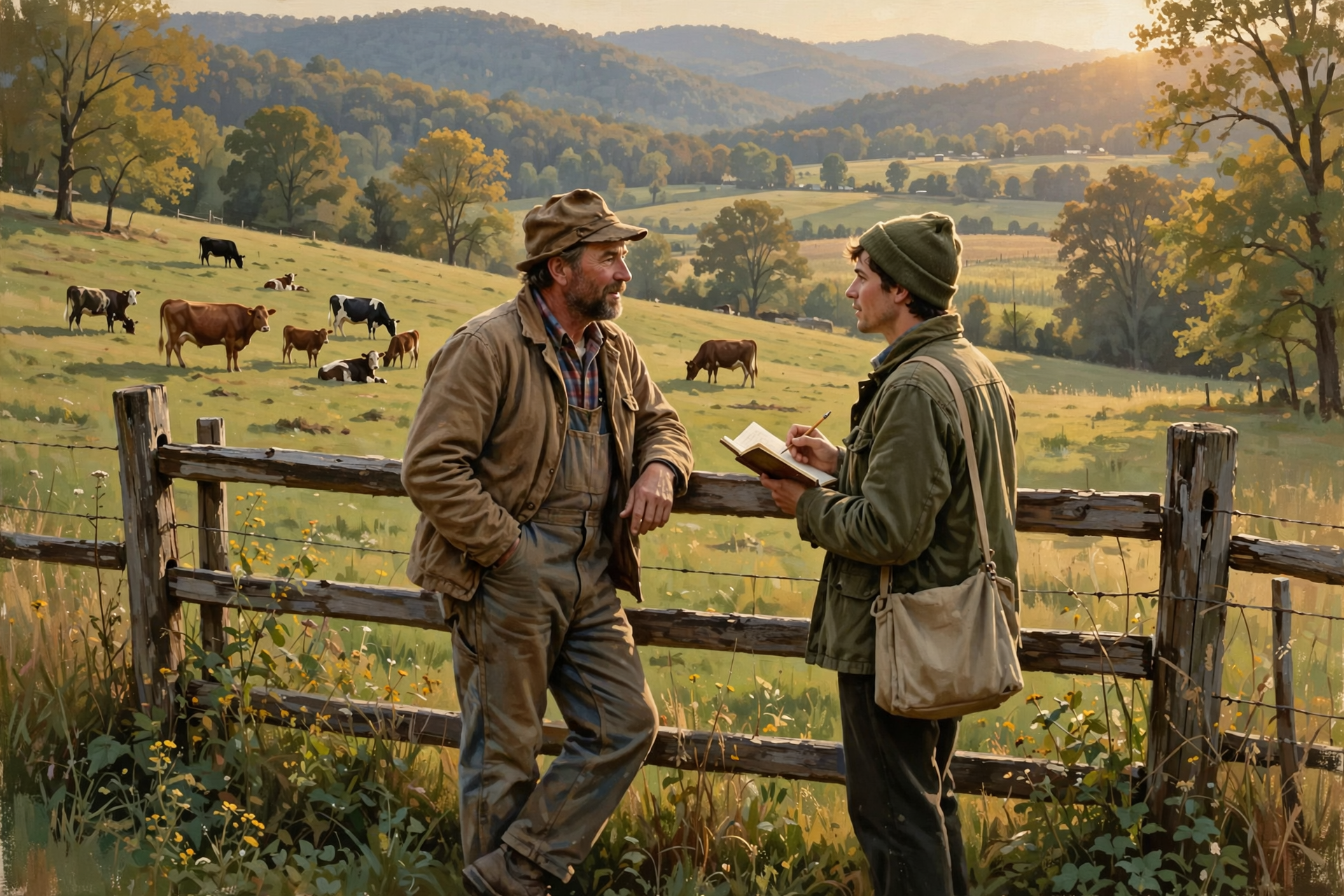
One of the simplest ways to learn about our local food supply is also one of the most overlooked: have a conversation with the people doing the work.
If you know a farmer raising cattle, hogs, goats, sheep, or poultry, ask how the operation works. Find out what the animals eat, how seasonal weather affects the farm, what challenges the farmer faces, and how the animals or finished products reach customers.
Talk to a local meat processor about what happens after an animal leaves the farm. Ask about inspections, processing choices, scheduling, packaging, and the differences between meat intended for a family’s freezer and products approved for retail sale.
And don’t overlook the feed suppliers, hay producers, livestock transporters, veterinarians, and others who keep agricultural operations functioning.
Most people involved in agriculture have practical knowledge that never makes it onto a supermarket label.
Not everyone has time to explain their business in the middle of a busy workday, of course. Ask when it would be convenient, respect farm biosecurity rules, and never assume that a working farm is open for unannounced visits.
The goal isn’t to interrogate the farmer or persuade anyone to change what they eat. It’s to understand where our food comes from, the work involved, and the role these local businesses play in the Sequatchie Valley.
Wisdom From the Front Porch
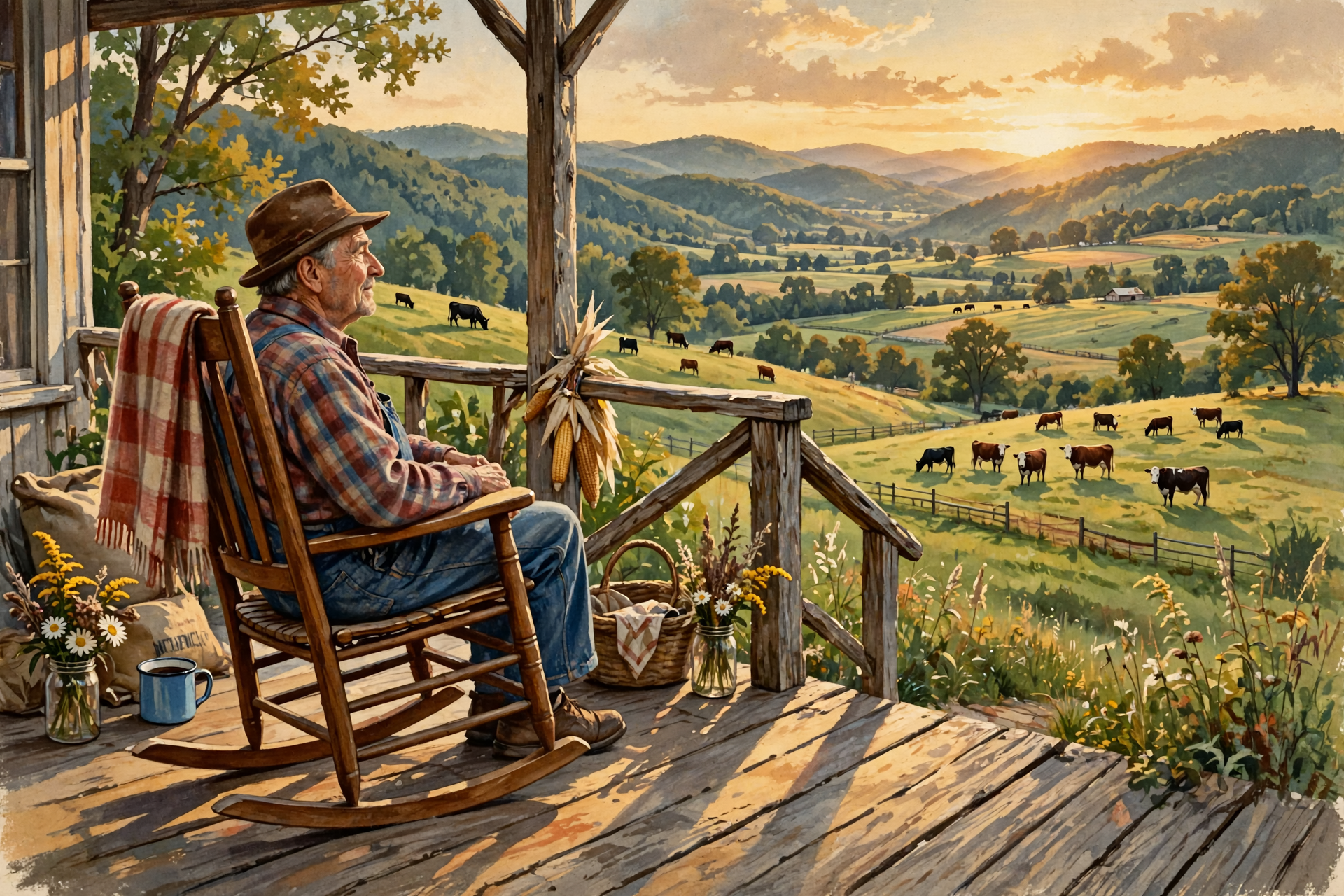
“It’s a curious thing that we can tell you which store has hamburger on sale this week, but we may not know the name of a single person who raises cattle five miles down the road.”
There’s nothing wrong with shopping at a grocery store. Modern food distribution systems provide enormous convenience, variety, and access.
But convenience can create distance between the customer and the people doing the work.
Learning about local agriculture doesn’t require abandoning modern supermarkets, buying an entire cow, or developing a sudden enthusiasm for mucking out a barn.
It begins with curiosity.
And curiosity is considerably less expensive than buying a tractor.
A Plain-English Guide to Local Meat Purchasing
- Livestock producer: A farmer or rancher who raises animals, including animals intended for breeding or food production.
- Livestock auction: A market where live animals are offered for sale to buyers through competitive bidding.
- Custom processing: Meat processing arranged for the owner’s personal use, subject to restrictions that prevent the resulting meat from being sold at retail.
- USDA-inspected processing: Meat processing under federal inspection requirements, allowing qualifying products to enter commercial sales channels.
- Hanging weight: The weight of a carcass after slaughter and initial dressing, before final cutting and packaging.
- Take-home weight: The amount of packaged meat received after cutting and trimming.
- Farm-direct purchasing: Buying agricultural products directly from the producer rather than through a conventional retail intermediary.
Frequently Asked Questions About Buying Local Meat
Can I buy half a cow directly from a local farmer?
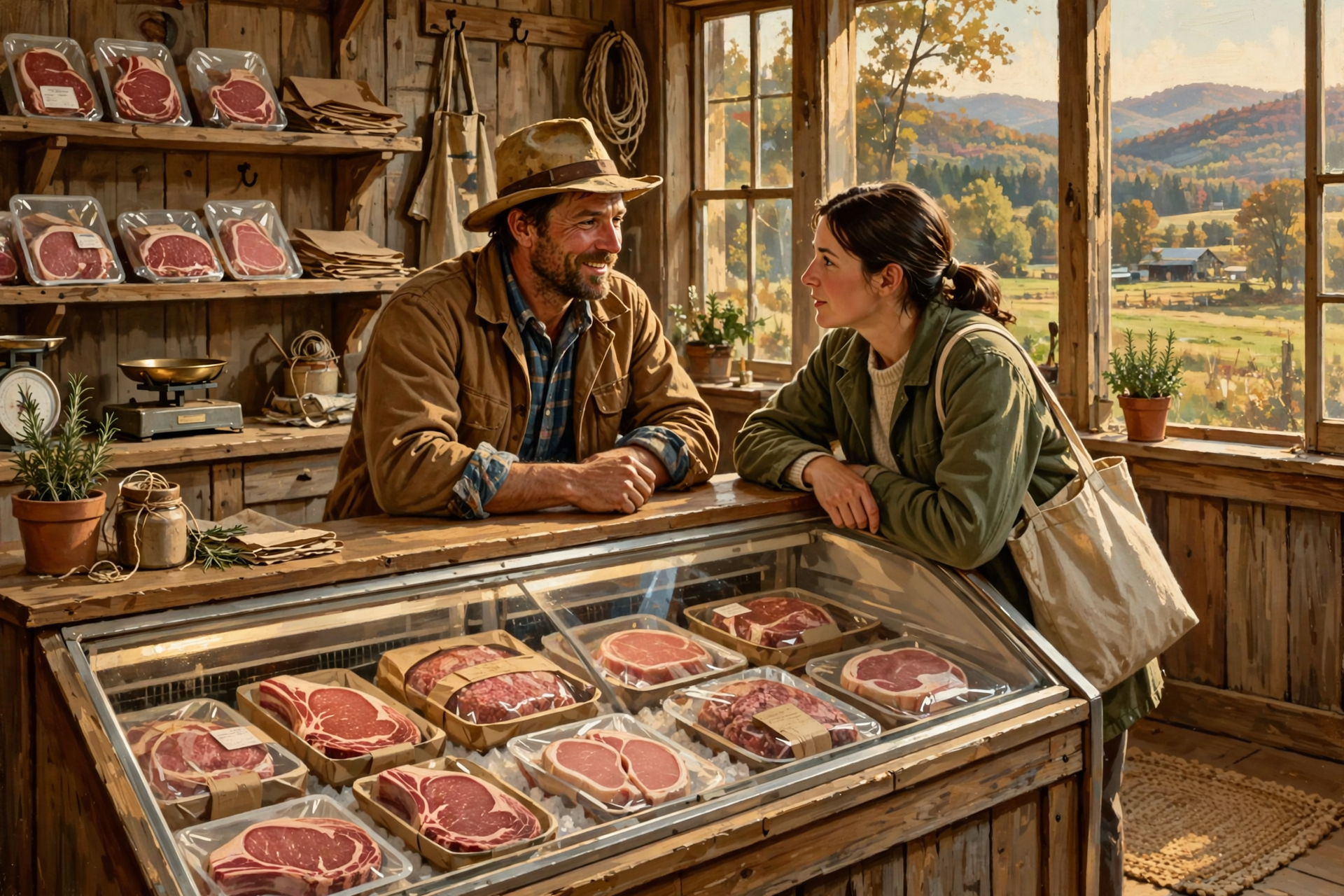
Some farmers offer whole, half, or quarter-animal purchasing arrangements. The details depend on the producer, ownership arrangement, processing facility, and applicable rules. Ask about total pricing, processing fees, pickup, and expected packaged weight before agreeing to a purchase.
Do I have to buy an entire animal to support a local farm?
No. Some producers offer individual retail cuts of properly inspected meat. Others offer live animals, bulk purchasing arrangements, or different agricultural products. Contact individual farms to learn what they currently sell.
Is all meat raised in the Sequatchie Valley processed here?
No. Farmers use different marketing and processing arrangements. Some may use regional facilities, while others sell livestock to buyers whose subsequent activities occur outside the valley. A local farm’s location does not establish where its animals are processed.
Is locally raised meat necessarily cheaper?
Not necessarily. Prices depend on production expenses, processing costs, the type and quantity of meat purchased, and market conditions. A bulk purchase may offer value for some households, but comparing prices requires understanding the amount of packaged meat received and all applicable fees.
Where can I find local livestock farmers and meat processors?
Dunlap.Directory provides business listings across Dunlap and the surrounding Sequatchie Valley. Start with local farms, agricultural suppliers, and meat-processing businesses, then contact them directly to confirm current products and services.
Five Things You Can Do to Better Understand Your Local Food Supply
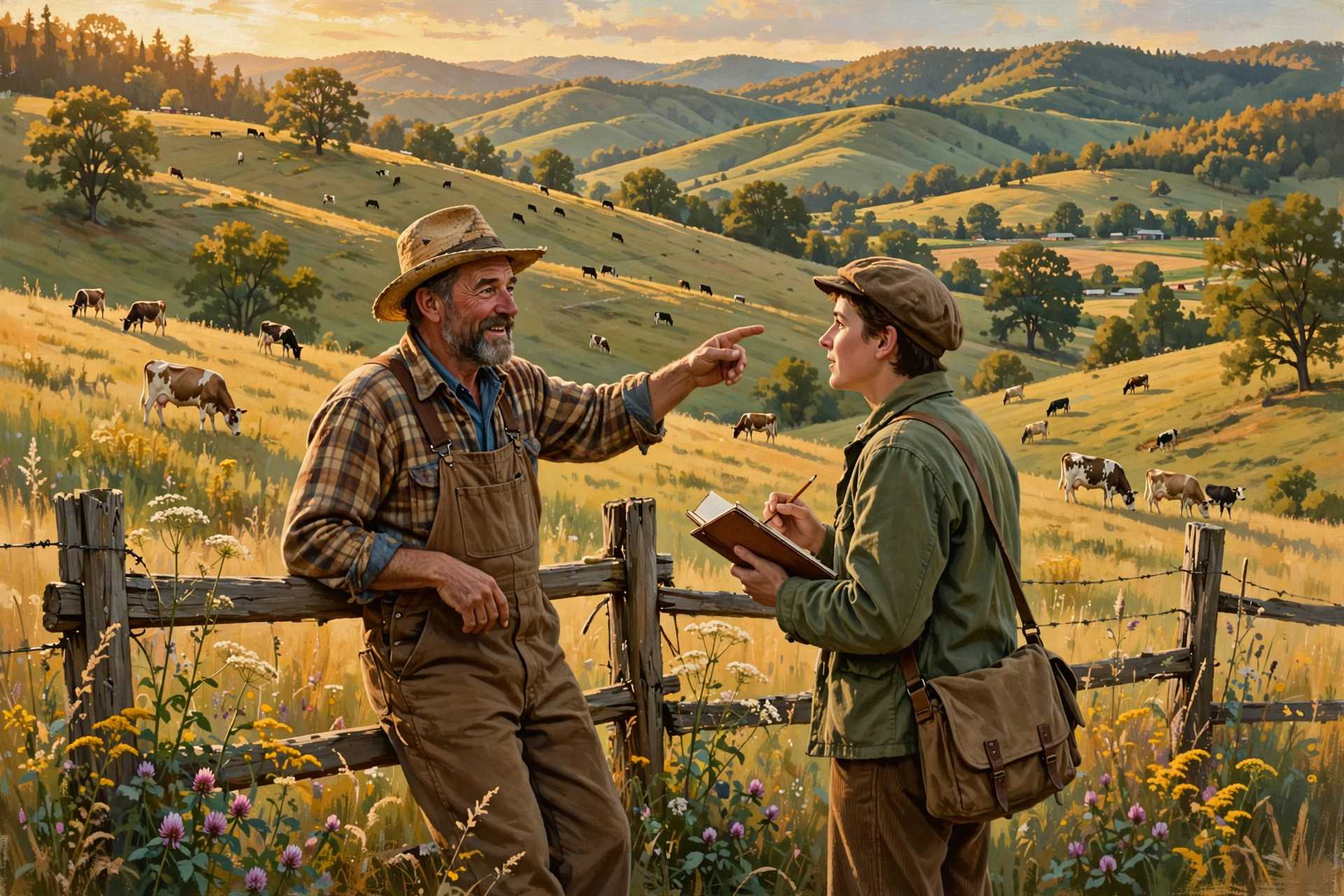
- Meet a farmer. Ask someone raising livestock what a typical day involves and what challenges affect the operation.
- Learn about meat processing. Contact a processor and ask how appointments, inspections, cutting choices, and packaging work.
- Understand the costs. Ask about feed, hay, transportation, equipment, and other expenses that affect livestock production.
- Compare purchasing options. Learn the difference between buying packaged meat, a freezer bundle, and an ownership share of a live animal.
- Share what you learn. Help friends and neighbors discover local agricultural businesses and the services they provide.
Help Us Tell the Stories Behind the Valley’s Food
At Dunlap.Today, we believe the people growing, raising, transporting, processing, and supplying our food deserve to be understood as part of the community’s working economy.
We would like to hear from local farmers, livestock owners, meat processors, hay producers, feed suppliers, large-animal veterinarians, and other people involved in agriculture throughout the Sequatchie Valley.
How does your work contribute to the region’s food supply? What does a typical day look like? What expenses and challenges do customers rarely see? How has agriculture changed, and what would you like your neighbors to better understand about your business?
We’re interested in the practical details, the challenges, the lessons learned, and the people behind the work. You don’t need a large operation or an impressive marketing story to contribute. Small family farms and independent agricultural businesses are equally important to understanding the valley.
If you’re a local resident, consider introducing yourself to a farmer or processor and asking a few thoughtful questions. If you operate an agricultural business, make sure your information is available through Dunlap.Directory so residents can find and contact you.
And if this article helped you understand something new about where your food comes from, share it with a friend, a family member, or a neighbor who might enjoy learning more about the people helping feed our valley.
Because the more we understand about the people who produce our food, the better informed our choices can become.
And the next time somebody asks where supper came from, perhaps we’ll have a more interesting answer than “the grocery store.”

0 Comments