
Don’t Wait Until Someone Falls: The Worst Time to Make an Aging Plan Is During a Crisis

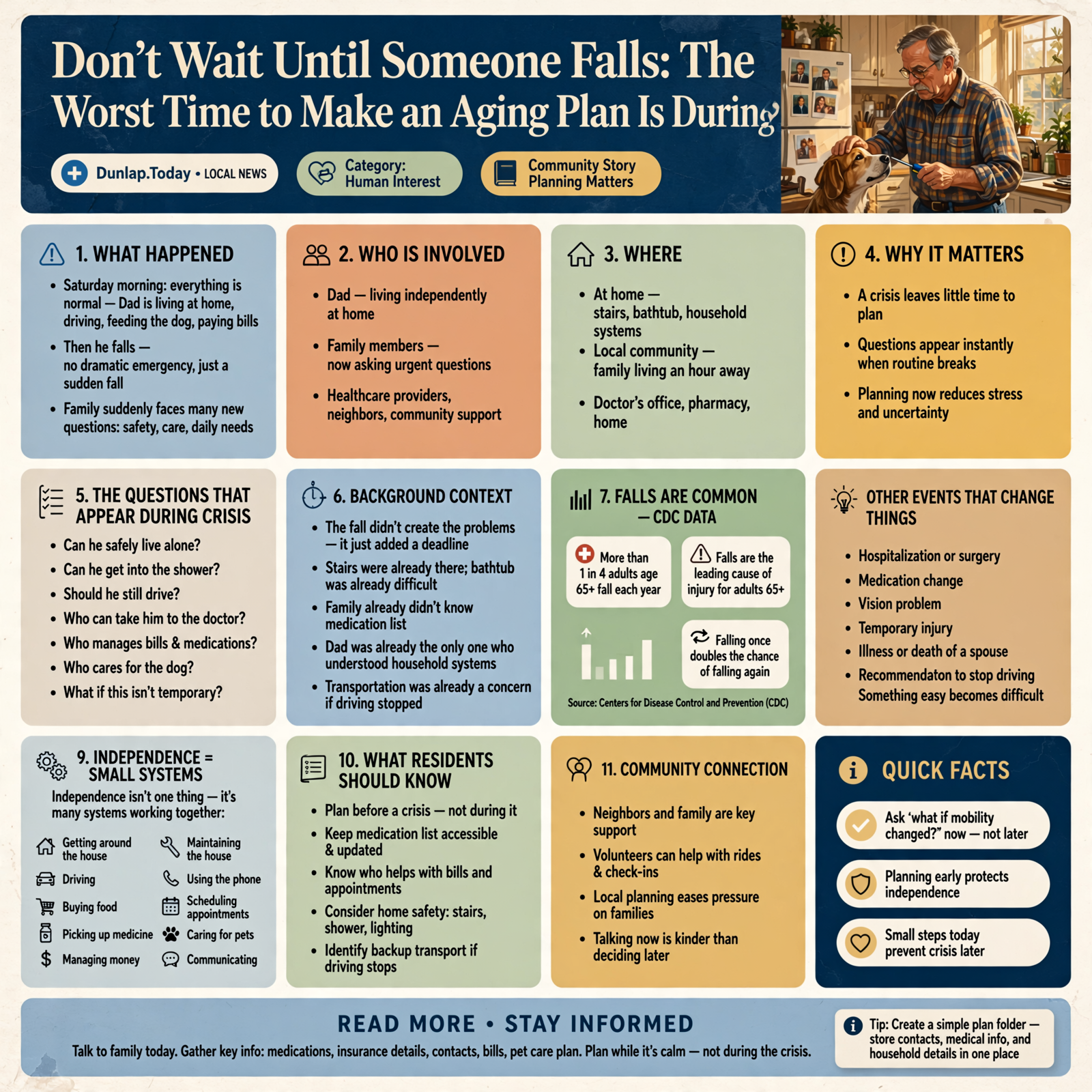
Saturday morning, everything is normal.
Dad is living at home.
He’s driving.
He’s feeding the dog.
He’s paying the bills.
He’s taking care of the house, making his own appointments, and probably still insisting that the perfectly good thing everyone else wants to replace can be fixed with a screwdriver, two washers, and something he’s been saving in the garage since 1997.
Then he falls.
Maybe it isn’t catastrophic.
No helicopter.
No dramatic television music.
No doctor walking slowly down a hospital hallway carrying a clipboard.
Just a fall.
But suddenly the family is asking questions nobody was asking Friday.
Can he safely live alone?
Can he get into the shower?
Should he still drive?
Who can take him to the doctor?
What medications does he take?
Where is his insurance information?
Who knows how the bills get paid?
Who takes care of the dog?
What happens if this isn’t temporary?
And eventually somebody asks the question families all over America find themselves asking:
What are we supposed to do now?
That’s the question I want to move earlier.
Not because we should spend our lives worrying about what might go wrong.
Because the worst possible time to design a plan is often the moment when everybody suddenly needs one.
The Crisis Usually Doesn’t Create All the Problems

Here’s something worth noticing.
The fall didn’t create most of those questions.
The stairs were already there.
The bathtub was already difficult to step into.
The family already didn’t know where the medication list was.
Dad was already the only person who understood several household systems.
The nearest relative already lived an hour away.
The transportation problem already existed if he ever stopped driving.
The questions existed Thursday.
They existed six months ago.
Probably some of them existed several years ago.
The only thing that changed was the deadline.
A crisis has a way of taking questions we’ve successfully ignored and attaching the word “today” to them.
Falls Are Common Enough That This Isn’t a Far-Fetched Exercise

The Centers for Disease Control and Prevention reports that more than one in four adults age 65 and older falls each year.
Falls are also the leading cause of injury among adults 65 and older, and the CDC says falling once doubles the chance of falling again.
That doesn’t mean everyone over 65 is walking around waiting to tumble into the shrubbery.
It means a fall is common enough that asking, “What would happen if mobility suddenly changed?” isn’t pessimism.
It’s planning.
A fall also isn’t the only event that can change things quickly.
It could be:
- a hospitalization,
- surgery,
- a medication change,
- a vision problem,
- a temporary injury,
- the illness or death of a spouse,
- a recommendation to stop driving,
- or simply reaching the point where something that was easy becomes difficult.
The important point isn’t predicting which event will happen.
It’s understanding what parts of normal life depend on everything continuing to work exactly the way it works today.
Independence Is Really a Collection of Small Systems

We tend to talk about independence as though it’s one thing.
Either you’re independent or you’re not.
Real life doesn’t work that way.
Independence is built from a collection of smaller systems.
You can:
- get around the house,
- drive,
- buy food,
- pick up medicine,
- manage money,
- maintain the house,
- use the phone,
- schedule appointments,
- care for pets,
- communicate with family,
- and call someone when something breaks.
As long as all those systems work, life feels normal.
But if one of them fails, it can place enormous pressure on everything else.
That’s why one of the most useful questions we can ask isn’t:
Will I still be independent when I’m 80?
It’s:
Which part of my current independence would fail first if something changed?
That’s a question we can actually investigate.
Rural Independence Has Some Special Weak Points

Here in the Sequatchie Valley, that question deserves extra attention.
Rural living has a lot going for it.
Space.
Quiet.
Land.
Familiar neighbors.
Homes people genuinely love.
A little distance between you and whatever foolishness is taking place down the road.
But the same geography that makes rural Tennessee attractive can also create vulnerabilities as we get older.
A person living comfortably at home may depend heavily on:
- being able to drive,
- maintaining a larger property,
- traveling farther for specialists,
- climbing steps or navigating uneven ground,
- having reliable power and communications,
- and having family, friends, or neighbors available when needed.
In a large city, losing the ability to drive might be inconvenient.
In some parts of rural Tennessee, losing the ability to drive can change almost every part of daily life.
That doesn’t automatically mean someone has to move.
It means transportation becomes a system worth planning for.
Try the “What If Monday?” Test

Here’s a simple exercise.
You don’t need a consultant.
You don’t need a spreadsheet.
You don’t need to install a ramp before supper.
Just pick one person in your household and imagine that one thing changes Monday morning.
What if driving stopped Monday?
How would groceries get to the house?
What about prescriptions?
How would that person reach a doctor’s appointment?
Church?
Friends?
A specialist in Chattanooga?
What if stairs became difficult Monday?
Could daily life happen primarily on one floor?
Where is the bedroom?
Where is the bathroom?
Could someone enter the house safely?
What if somebody came home from the hospital Monday?
Does the family know the current medications?
Doctors?
Insurance?
Upcoming appointments?
Who is available to help for a few days?
What if the person who handles the money couldn’t do it Monday?
Does anyone else know which bills exist?
Not necessarily passwords or private financial details.
Just the basic map of the system.
What if somebody couldn’t maintain the property Monday?
Who handles mowing?
Heat?
Water?
Repairs?
Trash?
Animals?
If the answer to half of these questions is:
We’ll figure it out.
That’s not necessarily bad.
You’ve simply discovered your planning list.
The National Institute on Aging Says the Same Thing in Less Colorful Language

The National Institute on Aging recommends thinking about aging in place before a person needs substantial care.
The reason is straightforward.
Planning ahead gives people time to understand what help is available, what it costs, what changes might be needed at home, and what they personally want.
Most importantly, it lets the person who will actually live with the decision participate in making it.
That’s a very different situation from:
“The hospital says Mom is being discharged tomorrow. Where can she go?”
Time creates options.
Urgency removes them.
AI Can Help Us Find the Questions We Forgot to Ask

This is also where artificial intelligence becomes genuinely useful.
Not as the authority deciding where Grandma should live.
Please don’t outsource Grandma to a chatbot.
Use AI as an interviewer.
For example, you could ask:
I want to test how prepared our household is for a sudden temporary loss of independence. Assume an older family member has had a nonfatal fall and is coming home tomorrow with reduced mobility. Interview me one question at a time about the house, transportation, food, medications, pets, bills, appointments, technology, emergency contacts, and family support. At the end, identify information or resources we haven’t figured out yet.
Notice what that does.
The AI isn’t choosing anything.
It’s helping you conduct a drill.
It’s asking:
What haven’t you thought about?
That’s one of the areas where AI can be remarkably useful.
Look for the Single Points of Failure

If you’ve ever worked with machinery, computers, farms, businesses, or pretty much anything else that can break at an inconvenient time, you probably understand the idea of a single point of failure.
That’s the one component the whole system depends on.
If it fails, everything stops.
Families have these too.
Maybe:
- only Dad drives,
- only Mom knows the medications,
- only one child lives nearby,
- only one person understands the banking,
- the house only has a bathroom upstairs,
- one spouse does all the cooking,
- one person knows every password,
- or one person knows which local people to call when something breaks.
You don’t have to eliminate every single point of failure.
That may not even be realistic.
But knowing where they are gives you the chance to create alternatives.
Create a 72-Hour Family File

One practical place to start is creating enough organized information to get a family through the first few days of an unexpected transition.
Don’t begin by building a 400-page binder that requires its own librarian.
Start small.
The first version might identify:
- emergency contacts,
- current medications,
- doctors and medical providers,
- basic insurance information,
- important upcoming appointments,
- who can care for pets,
- who can help with transportation,
- important household service providers,
- and where legal or financial documents can be found by the appropriate authorized person.
This does not mean leaving sensitive passwords taped to the refrigerator beside the grocery list.
It means creating an organized map.
What exists?
Where is it?
Who should have access?
Then We Need to Ask the Local Question

Planning can expose another problem.
Sometimes you know exactly what help is needed.
You just don’t know whether it exists nearby.
If somebody in the Sequatchie Valley needs:
- transportation,
- home modifications,
- home health assistance,
- meal delivery,
- housekeeping,
- yard maintenance,
- medical equipment,
- technology help,
- estate or legal planning,
- downsizing assistance,
- or temporary help following a hospitalization,
who provides it?
Where?
At what cost?
What geographic area do they actually serve?
Do they come up the mountain?
Do they require advance scheduling?
Does insurance cover any part of it?
Those are exactly the kinds of questions we want to explore through this series.
And when appropriate, Dunlap.Directory can help connect information to actual local resources.
Sometimes the Most Important Discovery Is That Something Is Missing
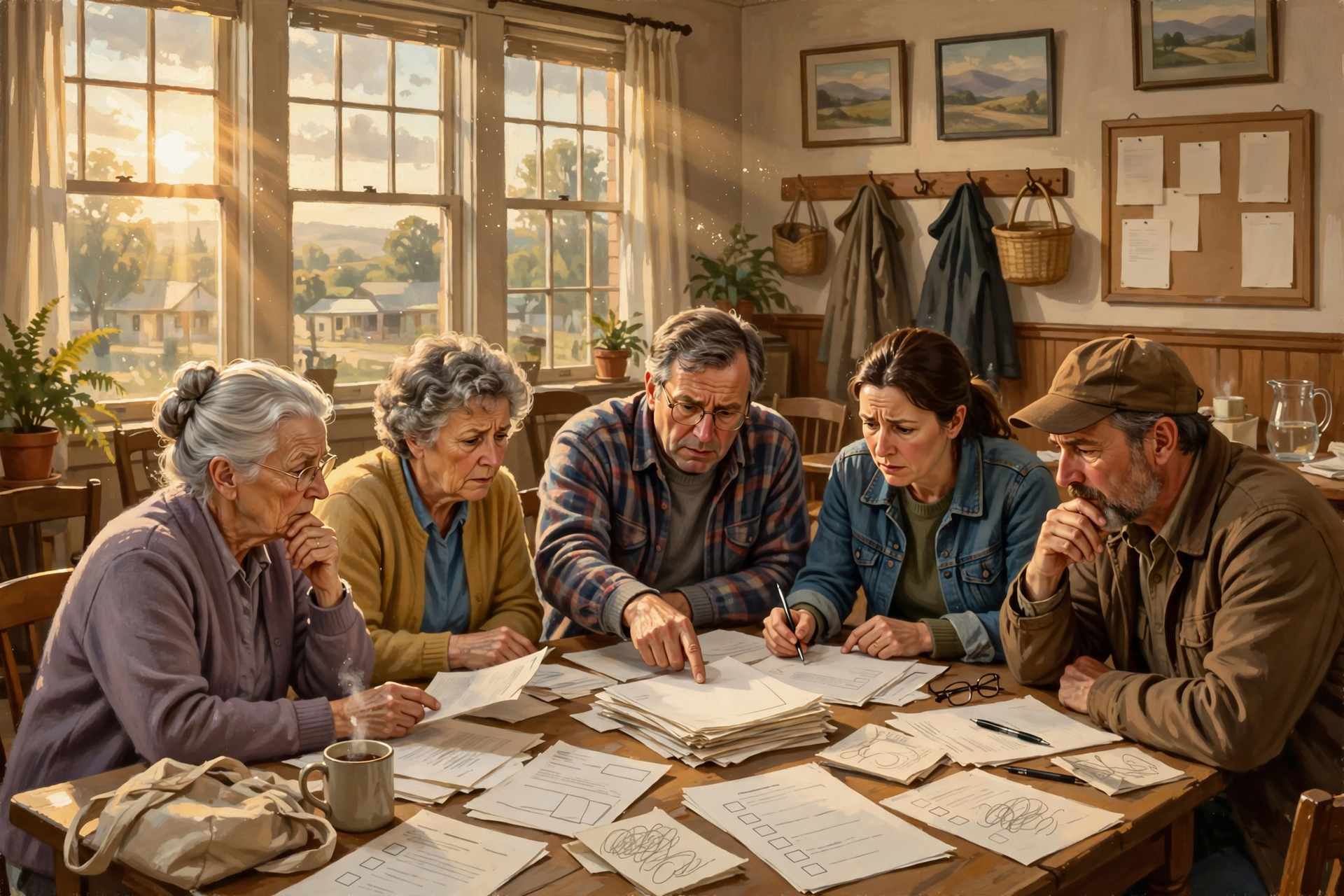
Suppose we investigate senior transportation and discover a large gap.
That’s useful information.
Suppose people can find home health assistance but nobody provides occasional nonmedical household help.
Useful information.
Suppose we discover that one particular service is available but almost nobody knows about it.
Also useful.
A community cannot improve what it cannot see.
And an unmet need isn’t always just a problem.
Sometimes it’s also an opportunity for a local business, nonprofit, church, family network, or entrepreneur to create a solution.
This Isn’t About Expecting Something Bad to Happen
There is a big difference between planning and worrying.
Planning says:
If this ever happens, we know where to begin.
Worrying says:
This will probably happen Tuesday and ruin everything.
I’m interested in the first one.
We insure our houses without spending every evening expecting them to burn down.
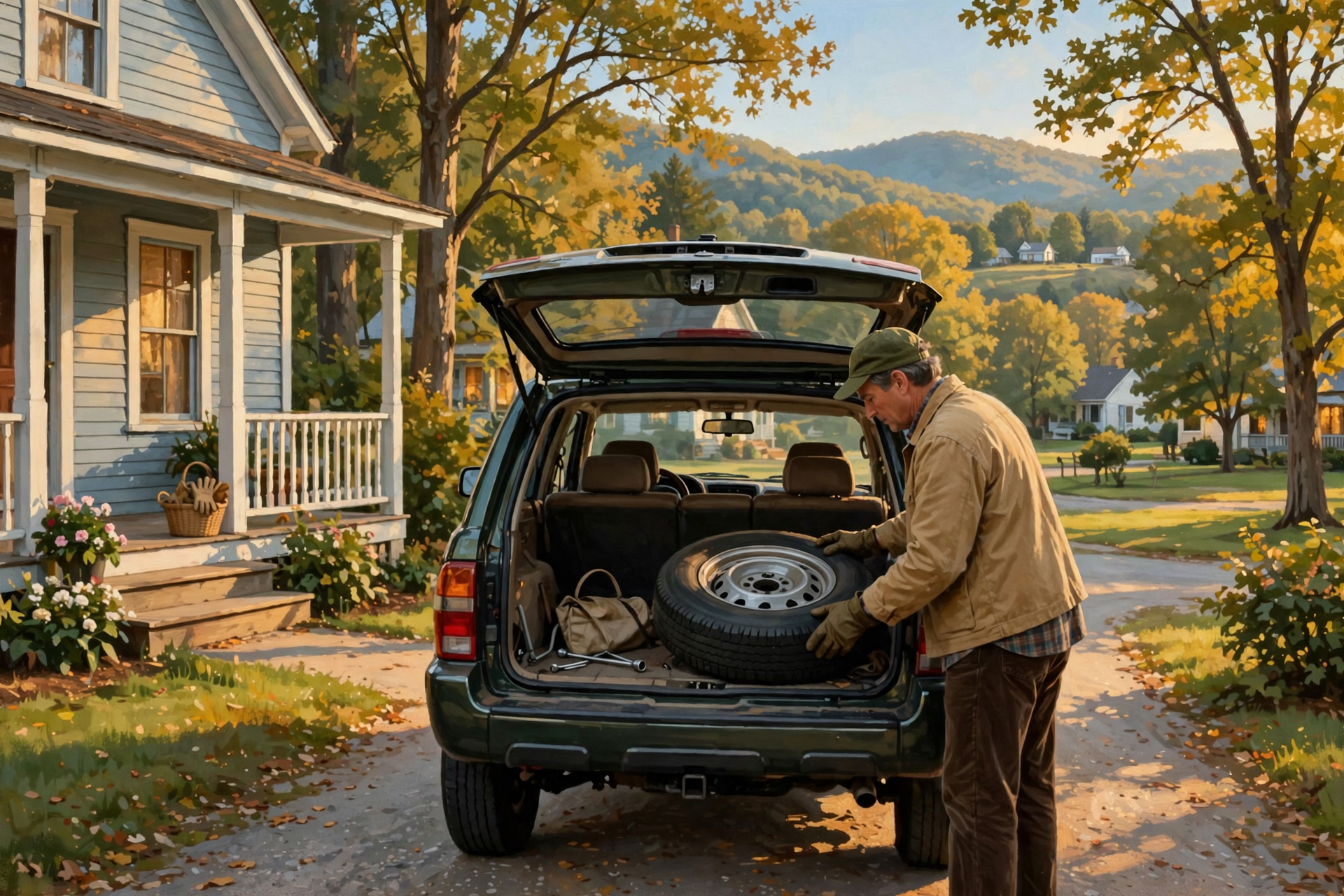
We keep spare tires without assuming every trip ends beside the interstate.
We back up computers without expecting the hard drive to fail before lunch.
Preparing for changes that commonly occur as we age works the same way.
Planning isn’t predicting disaster.
Planning is preserving options.
The Best Plan May Be the One We Never Need

Maybe you build the family file and nobody opens it for twenty years.
Wonderful.
Maybe you investigate transportation alternatives and continue driving safely for decades.
Excellent.
Maybe you examine the house and discover it already works pretty well.
Great.
The objective isn’t to manufacture problems.
It’s to stop avoidable problems from becoming emergencies simply because nobody had thought about them.
That brings me back to the question for this article:
If something changed Monday, what would we wish we’d figured out Sunday?
That’s a question worth asking at 61.
It’s probably worth asking at 51.
And if you have parents in their 70s, 80s, or 90s, it may be worth asking with them this weekend.
Not because anything is wrong.
Because nothing has to be wrong for planning to be useful.
Try This With AI: The Monday-Morning Preparedness Interview

If you use ChatGPT or another conversational AI system, try this prompt:
I want to prepare for unexpected changes without assuming the worst. Interview me one question at a time about an older adult’s current independence. Cover transportation, mobility, the home, food, medications, medical providers, finances, pets, technology, communication, emergency contacts, household maintenance, and nearby family support. After the interview, identify the areas where one change could create the biggest disruption and give me a list of questions to research. Do not make medical, legal, or financial decisions for us; help us organize the issues we should investigate.
Then take the results and verify the important factual pieces using reliable sources, family records, local providers, and the people actually involved.
Questions for Your Family
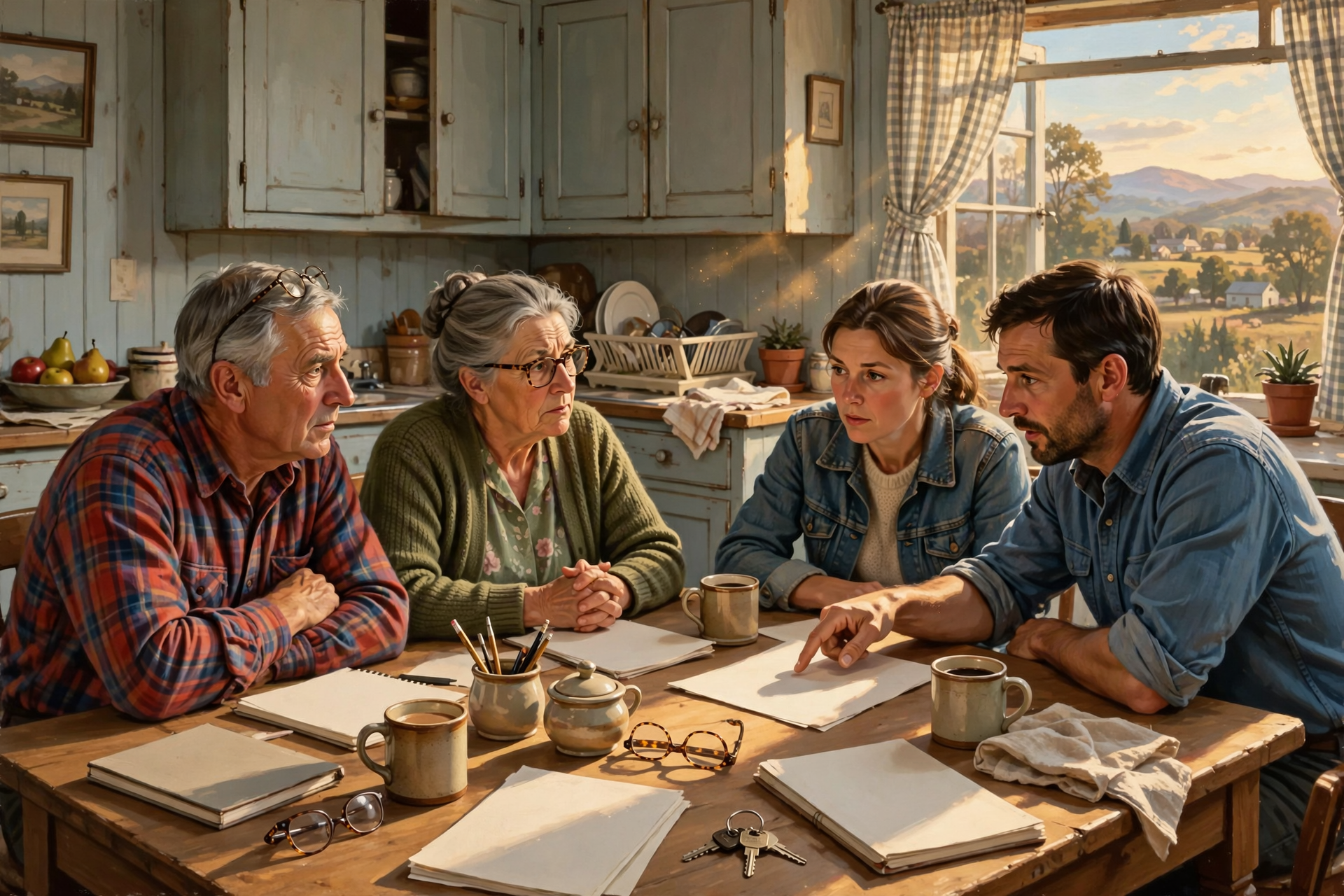
- If driving stopped tomorrow, what would change first?
- If someone came home from the hospital tomorrow, could the house handle it?
- Who knows the current medication list?
- Who knows where important documents are?
- Which household responsibility depends entirely on one person?
- Who could help for three days if needed?
- Which local services do we know exist?
- Which services have we simply assumed exist?
- What would we be scrambling to figure out if something changed Monday morning?
Wisdom From the Front Porch

There are decisions we should make when life gives us plenty of time and decisions we have to make when life doesn’t.
Whenever possible, let’s move a few from the second pile into the first.
The goal isn’t to spend our later years preparing for trouble.
The goal is to spend less time dealing with avoidable trouble when we’d rather be living them.
One bad afternoon shouldn’t get to decide the next ten years simply because nobody made a Plan B.
Next in The Next Chapter, we’ll take this one step further and ask a very practical question:
Could I actually stay in this house as I get older?
We’ll look at how to conduct an AI-assisted aging-in-place audit—not to turn a home into a hospital, but to find the small things that might preserve independence for years to come.



0 Comments