
🦨 Neighbor’s Live Trap Catches Unexpected Guest: How to Safely Release a Baby Skunk
When wildlife control plans go sideways, community members often turn to each other for practical advice. A recent question from a local resident about safely releasing a baby skunk-accidentally caught in a live trap meant for a groundhog-sparked helpful responses from neighbors who understand the challenges of coexisting with wildlife in rural and semi-rural areas.
📍 What Happened
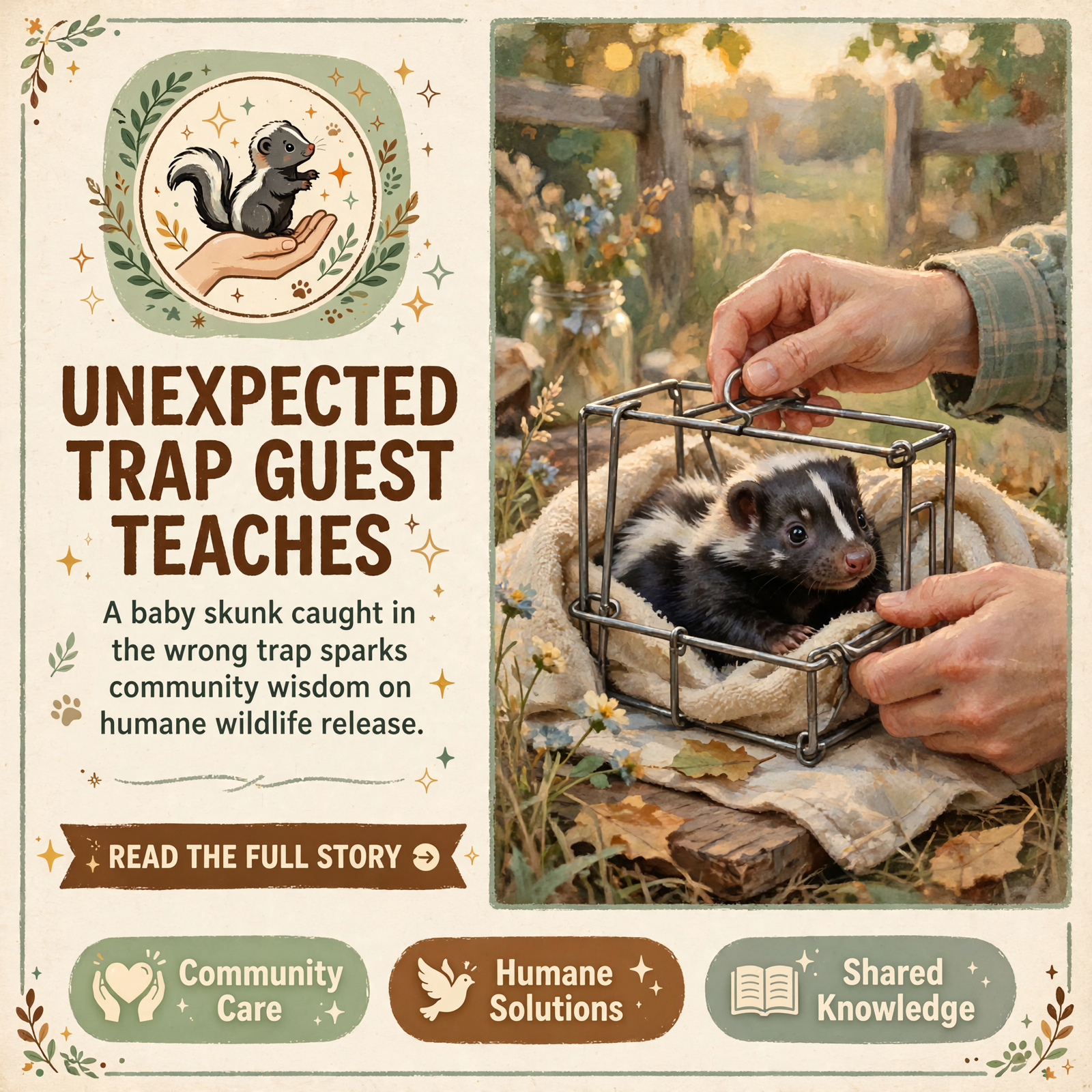
A neighbor set up a live trap to address a groundhog problem damaging his yard, but the trap caught an unexpected visitor: a baby skunk. 🦡 The resident reached out to the community seeking gentle, humane advice on how to release the animal safely-both for the skunk and for anyone handling the trap.
💡 Community Wisdom on Safe Release
Responses from experienced neighbors offered practical, straightforward guidance. One suggestion emphasized keeping the animal calm: place a towel or blanket over the trap to reduce stress, allow the skunk time to settle, then carefully open the trap and let it leave on its own. This approach minimizes the risk of defensive spraying-a natural response when skunks feel threatened or cornered.
Another neighbor offered a critical follow-up: if relocation becomes necessary, distance matters. Skunks are persistent and resourceful; if released too close to the original location, they may find their way back to the same area, potentially creating a recurring problem. 📏
❓ Why This Matters
Wildlife encounters are common in areas where human development borders natural habitat. Live traps are a humane alternative to lethal control, but they require knowledge and care to use responsibly. When a trap catches an unintended animal-especially a young one-the stakes shift from pest control to animal welfare and human safety. A startled skunk can spray, causing discomfort and potential health concerns for anyone nearby.
This situation also reflects a broader community reality: neighbors often rely on each other’s experience and practical knowledge when facing unexpected challenges. The willingness to ask and the community’s quick response demonstrate how local networks solve problems together.
🤝 Community Connections
Wildlife management is a shared concern in rural and semi-rural communities where yards, gardens, and property borders intersect with animal habitats. Groundhogs, skunks, raccoons, and other wildlife can cause real damage-destroyed gardens, undermined foundations, and property destruction. At the same time, most residents prefer humane solutions that don’t harm animals unnecessarily.
This exchange reflects a community value: practical problem-solving rooted in respect for both property and animal life. Neighbors sharing advice on live traps, release techniques, and relocation strategies strengthen the collective knowledge that helps everyone coexist more peacefully with wildlife.
👥 Human Impact
For the neighbor who set the trap, the discovery of a baby skunk created an unexpected ethical moment. Rather than simply removing the animal, he sought advice on how to do it humanely-a choice that speaks to community values. For the person asking the question, the quick, helpful responses likely reduced stress and provided confidence that the situation could be handled safely and kindly.
For the baby skunk, the difference between a panicked release and a calm, thoughtful one could mean the difference between a successful return to the wild and a traumatized or injured animal. 💙
🌄 Local Perspective
In areas where rural property and wildlife habitat coexist-common throughout the Sequatchie Valley region and surrounding communities-these situations arise regularly. Groundhogs, skunks, raccoons, and other animals are part of the landscape, and residents develop practical strategies for managing conflicts. The community’s quick, knowledgeable response suggests this is not an isolated incident but part of an ongoing conversation about coexistence.
Many residents in the area have experience with live traps, wildlife relocation, and animal behavior. This collective knowledge, shared freely in community groups, becomes a resource that helps newer residents or those facing wildlife challenges for the first time.
📋 What Residents Should Know
If you find yourself in a similar situation, key takeaways from this community exchange include:
- Stay calm and keep the animal calm: Cover the trap with a towel or blanket to reduce stress and the likelihood of defensive behavior.
- Let it leave on its own: Open the trap and allow the animal to exit at its own pace rather than forcing it out.
- Distance matters for relocation: If you must relocate the animal, take it far enough away that it cannot easily return to the original location.
- Know your local regulations: Some areas have specific rules about wildlife relocation. Check with local wildlife authorities or animal control before relocating any animal.
- Ask the community: Local Facebook groups and community networks often have experienced residents willing to share practical advice.
🔮 What Happens Next
In this case, the neighbor now has clear guidance on how to safely release the baby skunk. The next steps are straightforward: calm the animal, open the trap, and let it go. After that, the neighbor may want to address the original groundhog problem using different strategies-perhaps modifying the trap placement, using different bait, or consulting with a professional wildlife control service.
For the broader community, this exchange reinforces the value of shared knowledge and neighborly problem-solving. Each time someone asks and receives helpful advice, the community’s collective wisdom grows stronger.
💭 Community Questions Worth Considering
- How can residents balance the need to protect property from wildlife damage with the desire to treat animals humanely?
- What role should community knowledge and experience play in wildlife management decisions?
- Are there local resources or professionals residents should know about when facing wildlife conflicts?
- How might prevention strategies-like securing garbage, removing food sources, or modifying habitat-reduce the need for traps in the first place?
🌱 Long-Term Community Impact
Moments like this-when a community comes together to solve a problem humanely-strengthen social bonds and reinforce shared values. Over time, this culture of practical, compassionate problem-solving builds resilience. Residents learn from each other, develop trust, and create informal networks of knowledge that help everyone navigate challenges more effectively.
Additionally, when wildlife management is handled with care and respect, it can reduce unnecessary animal suffering and create a community culture that values coexistence. This approach often leads to better long-term outcomes: fewer animals are harmed, residents feel good about their choices, and the community’s relationship with the natural world becomes more balanced and thoughtful.
🔗 Community Threads: The Neighbor-to-Neighbor Knowledge Network
The Practical Advice Thread: This exchange reveals an invisible but vital community thread-the network of experienced neighbors who share practical knowledge freely. When someone faces an unfamiliar problem, they can tap into years of collective experience. This thread strengthens community resilience and reduces the sense of isolation that can come with unexpected challenges.
The Humane Problem-Solving Thread: Beneath the surface of this wildlife question lies a deeper community value: the preference for solutions that respect both human needs and animal welfare. This thread connects residents who care about doing the right thing, even when it’s more complicated than the quickest alternative.
The Shared Habitat Thread: Rural and semi-rural communities exist within a landscape shared with wildlife. This thread connects residents through their common experience of living at the boundary between human property and animal habitat. Understanding this shared reality helps residents see themselves as part of a larger ecosystem, not separate from it.
🤔Source
Susan Twitty – A user asks for advice on how to gently release a baby skunk accidentally caught in a live trap.

0 Comments