
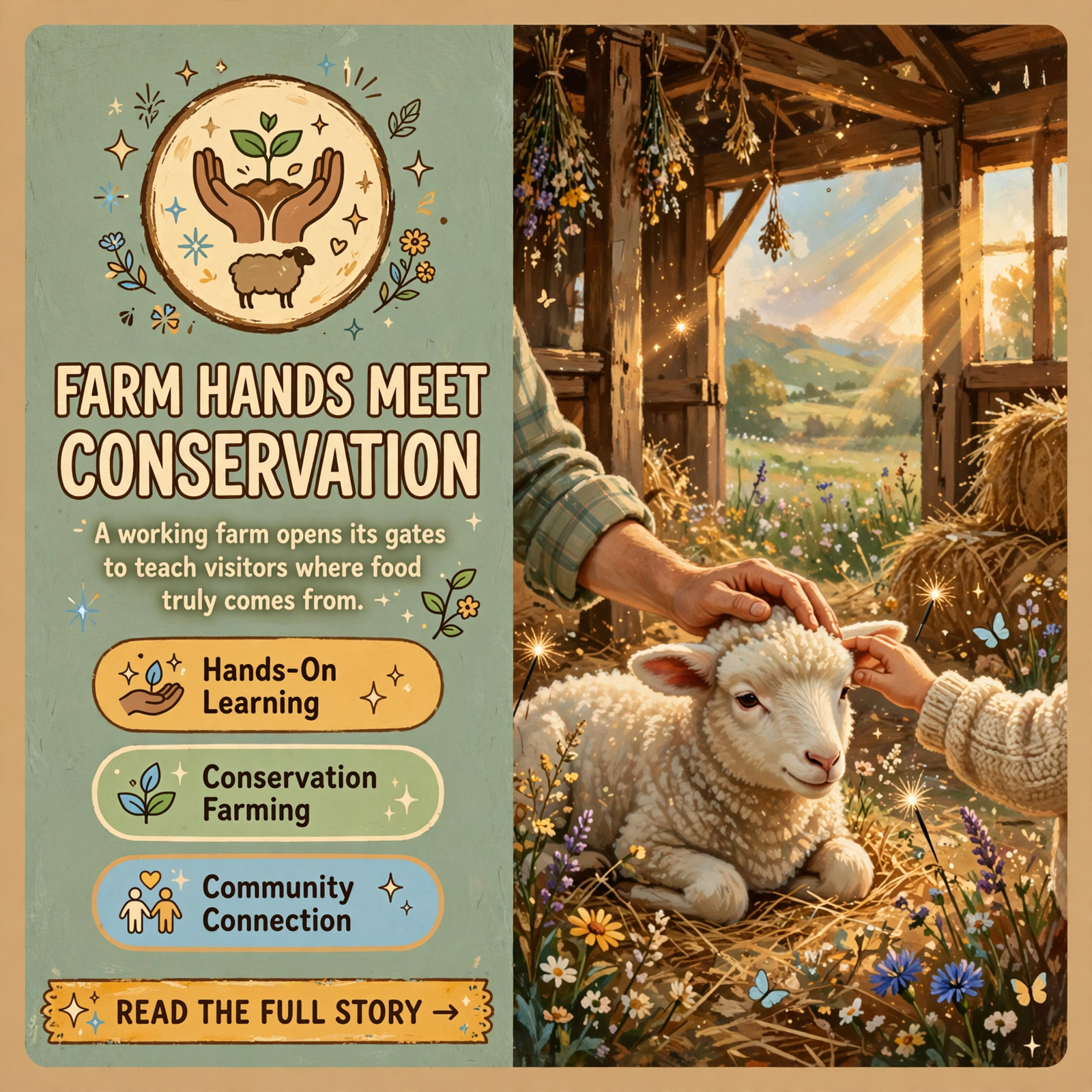
🐮 Hands-On Farm Experiences Meet Conservation at Little Tail Farms in Dunlap
Little Tail Farms in Dunlap combines working farm operations with immersive animal encounters and conservation education-a model that reflects a growing regional interest in agritourism and direct farm-to-community connection. Owners Laurie and David Bizzell have built a destination where visitors don’t just observe farming; they participate in it.
🌾 What Makes This Farm Different
Little Tail Farms blends two often-separate worlds: the practical work of running a working farm and the educational, recreational value of animal encounters. Rather than treating visitors as passive observers, the farm emphasizes hands-on experiences where guests can engage directly with animals and learn how modern farming operates. This approach reflects a broader shift in how rural communities share their work and values with neighbors and visitors.
The integration of conservation efforts into farm operations signals something important about the farm’s identity. Conservation-minded farming-protecting soil, water, wildlife habitat, and biodiversity while producing food-has become central to how many family farms in the region think about their long-term viability and community role. By making conservation visible and educational during visits, Little Tail Farms helps guests understand the connection between farming practices and environmental stewardship.
💡 Why This Matters Locally
For residents and visitors in the Sequatchie Valley and surrounding areas, Little Tail Farms represents an opportunity to deepen understanding of where food comes from and how local farms operate. Agritourism-farm-based tourism and recreation-has become an economic engine for rural communities nationwide, and it strengthens the relationship between farming families and their broader community.
When visitors spend time on a working farm, they often develop greater appreciation for the challenges farmers face, the knowledge required to run a successful operation, and the value of supporting local agriculture. This kind of direct connection can translate into stronger community support for local farms, whether through purchasing decisions, advocacy for agricultural policies, or simply recognizing farming as a valued profession and way of life.
👨🌾 The Human Story Behind the Farm
Laurie and David Bizzell are first-generation farmers who chose to build a business model that opens their farm to the public. This decision reflects both entrepreneurial thinking and a commitment to education and community engagement. First-generation farmers often bring fresh perspectives to traditional work-in this case, the vision of making farming accessible and immersive rather than distant or mysterious.
The emphasis on ensuring “every visit is hands-on and immersive” suggests the Bizzells understand that people learn and connect best through direct experience. This philosophy shapes not just what visitors do on the farm, but how they leave-with memories, knowledge, and a personal relationship to the people and animals they’ve met.
🤝 Community Connections and Opportunities
Little Tail Farms operates within a regional farming community that includes other working farms and agricultural operations throughout Sequatchie County and nearby areas. While each farm has its own focus-some specializing in cattle, others in produce, mushrooms, or agritourism-they collectively represent the agricultural heritage and economic foundation of the region.
For families, school groups, and visitors seeking educational experiences, Little Tail Farms offers a direct way to engage with farming and conservation. For local residents interested in supporting regional agriculture, visiting the farm is one way to learn about and invest in local food systems. For other farmers and agricultural entrepreneurs, the farm’s model may offer ideas about diversifying income and deepening community relationships.
📍 What Residents Should Know
Little Tail Farms is located at 280 Leilani Lane in Dunlap, Tennessee. The farm operates as both a working agricultural operation and a vacation rental and agritourism destination. For current information about visiting hours, available experiences, pricing, and booking details, the farm’s website and social media channels provide the most up-to-date information. Visitors can also call or visit in person to learn about what the farm offers and plan their visit.
🌱 Long-Term Community Impact
As agritourism grows in rural Tennessee, farms like Little Tail Farms help shape how the broader community understands and values agriculture. When visitors-especially children and families from nearby towns-spend time on a working farm, they develop a more realistic and respectful view of farming work. This can influence future career choices, consumer habits, and community support for agricultural preservation and policy.
The farm’s emphasis on conservation also models an approach to farming that prioritizes long-term environmental health alongside production. As climate change and soil health become more pressing concerns, farms that integrate conservation into their operations and make those practices visible to the public help shift community expectations about what responsible farming looks like.
🧵 Community Threads: The Farm-to-Visitor Relationship
The Direct Connection Thread: Little Tail Farms strengthens the often-invisible thread between farming families and the broader community. Most people have limited direct contact with farmers or farm work. By opening their farm to visitors, the Bizzells create opportunities for neighbors and visitors to see farming as skilled, important work-and to develop personal relationships with the people who do it. This thread matters because it builds mutual respect and understanding across different ways of life within the same region.
The Conservation-Community Thread: By making conservation efforts visible during farm visits, Little Tail Farms connects environmental stewardship to everyday farming decisions. Visitors learn that conservation isn’t separate from agriculture-it’s part of how responsible farms operate. This thread strengthens community awareness that environmental health and food production are linked, and that supporting local farms can mean supporting conservation.
The Education-Experience Thread: Little Tail Farms connects formal and informal learning. While schools may bring students for educational experiences, families visit for recreation and connection. Both types of visits create learning opportunities-about animals, farming, food systems, and land stewardship. This thread matters because it shows how rural communities can be educators and cultural resources, not just producers of goods.
❓ Questions Worth Considering
- How might regular visits to working farms change how young people in the region think about agriculture as a career or way of life?
- What role can agritourism play in helping family farms remain economically viable across generations?
- How does direct contact with farmers and farm animals affect community attitudes toward food, land, and environmental responsibility?
- What other local farms might benefit from opening their operations to visitors, and what would that require?
📢 What Happens Next
Little Tail Farms continues to operate as a working farm and agritourism destination. Interested visitors can learn more through the farm’s website, social media, or by contacting them directly. The farm’s story-shared recently through regional media coverage-may inspire other farming families to consider similar models, or help visitors and community members better understand the value and complexity of local agriculture.

0 Comments