
🏈 A Piece of Van Buren County School History: The 1943 Presidents Football Team and Their Mascot
The Van Buren County Historical and Heritage Museum recently acquired a remarkable photograph that captures a moment frozen in time-a 1943 football team, complete with a live goat mascot, whose names and story have been preserved through decades. For residents of Van Buren County and the surrounding Cumberland Plateau communities, this discovery offers a tangible connection to local school traditions and the people who shaped the county’s past.
📸 A Photograph with Names and a Mystery
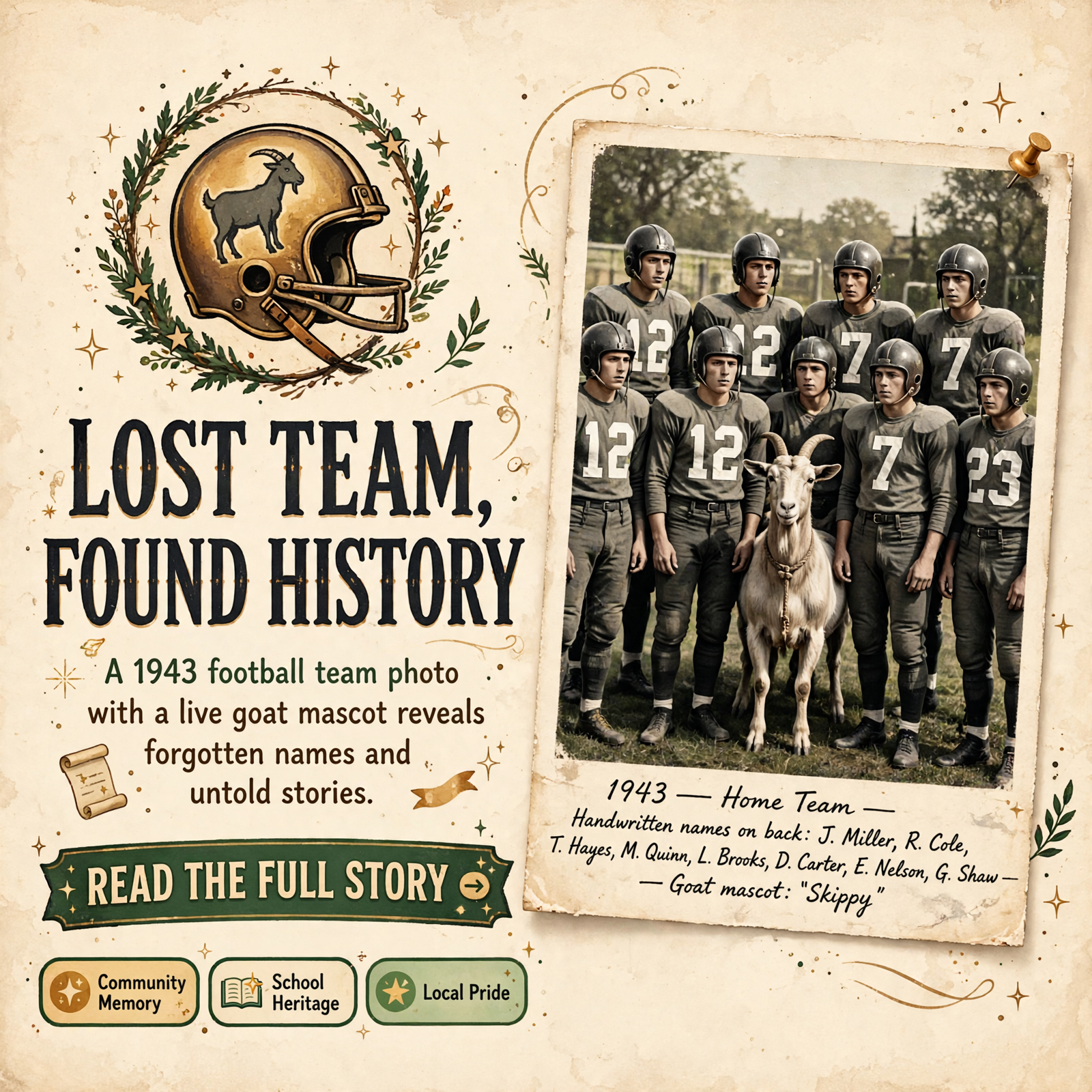
The photograph, captioned “Tennessee Billy Goats,” shows the Presidents football team posed with an actual goat standing prominently in the middle of the lineup. A handwritten note accompanying the image identifies each player by name and dates the photograph to 1943. The team members listed are Edward Clark, Johnny Passons, Hubert Bumbalough, Willis Joe Brock, Ralph Hutchinson, Lane Cunningham, Johnny Hillis, Joe Sparkman, Carl Miller, and Glenn Grissom. The goat itself earned a place on the roster as “Billy Goat”-a detail that speaks to the playful spirit of the era and the bond between the team and its mascot. ✨
What makes this discovery particularly intriguing is the incomplete historical record. The handwritten note indicates that the team was called the Presidents in honor of President Martin Van Buren, and that “the girls” were called the First Ladies. However, the note does not specify whether the First Ladies were cheerleaders, a pep squad, or another school organization entirely-a gap in the story that the museum is actively working to fill.
💡 Why This Matters
School sports and traditions form the backbone of community identity, especially in smaller towns where athletic teams often represent the pride and unity of an entire county. The Presidents football team and their goat mascot represent more than just a game-they embody the creativity, humor, and local pride that defined Van Buren County in the 1940s. The fact that someone carefully preserved this photograph with handwritten identification shows how deeply these memories matter to families and how they pass through generations. 🏘️
For current and former students, teachers, and families in Van Buren County, this photograph is a window into school life during World War II, a time when many young men were enlisting or being drafted into military service. The presence of the goat mascot also hints at the resourcefulness and creativity of rural Tennessee communities-using what was available to create memorable traditions.
🤝 Community Connections
The museum’s acquisition of this photograph demonstrates how local institutions serve as keepers of community memory. The Van Buren County Historical and Heritage Museum preserves the rich history and heritage of Van Buren County through curated collections and artifacts, and this 1943 team photograph is a perfect example of why that work matters. When families and community members bring historical items to the museum, they are not just donating objects-they are contributing to a shared understanding of who we are and where we come from. 📚
The names on the roster may resonate with families still living in Van Buren County. Descendants of the players, classmates, or neighbors may recognize these names and have stories to share. The museum’s call for community input reflects a deeper truth: local history is not something that belongs only to institutions-it belongs to the people who lived it and remember it.
❓ A Call for Community Memory
The Van Buren County Historical and Heritage Museum is actively seeking information from residents who may recognize the team members, have family connections to the 1943 Presidents, or know stories about the football team and their goat mascot. Do you recognize any of the names? Do you have a grandfather, uncle, or family friend who played on the team? Do you know what happened to Billy Goat after that season? Do you have photographs, newspaper clippings, or other memorabilia from that era? 🗣️
These questions are not merely academic-they are invitations for community members to participate in preserving and understanding local history. When someone shares a story or a photograph, they are helping to fill in the gaps and bring the past to life for future generations.
🔍 What Residents Should Know
If you have information about the 1943 Presidents football team, the First Ladies, or any of the team members listed, the museum welcomes your input. You can reach out through the Van Buren County Historical and Heritage Museum’s social media channels or contact them directly at (931) 254-1326. The museum is located at 179 College Street, Spencer, Tennessee 38585. Whether you have a story, a photograph, or simply a memory to share, your contribution helps preserve Van Buren County’s heritage. 📞
🌟 Long-Term Community Impact
Discoveries like this photograph have ripple effects that extend far beyond the initial moment of acquisition. When the museum shares this image and asks for community input, it strengthens the bonds between residents-old and new, longtime families and newcomers. It creates opportunities for intergenerational conversations, where grandparents can tell their grandchildren about the way things were, and younger people can develop a deeper appreciation for the community’s roots. 🌱
Over time, as more information is gathered about the Presidents and the First Ladies, the museum’s collection becomes richer and more complete. Other residents may be inspired to bring their own family photographs and memorabilia to the museum, knowing that their contributions will be valued and preserved. This creates a virtuous cycle of community engagement and historical preservation.
🧵 Community Threads: The School Tradition and Local Pride
The School Team as Community Symbol: In rural Tennessee, school sports teams often serve as focal points for community identity and pride. The Presidents football team, named in honor of President Martin Van Buren (the county’s namesake), represents how local schools weave regional history and civic pride into their traditions. When a team adopts a name or mascot tied to local heritage, it reinforces the connection between students, families, and place. The goat mascot-whether practical, whimsical, or both-became part of that identity, memorable enough that someone preserved the photograph for more than 80 years. 🏆
The Preservation Chain: This photograph survived because someone cared enough to keep it and label it with names and a date. That person then entrusted it to the museum, recognizing that institutions exist to preserve what individuals cannot hold alone. This chain of care-from the original photographer, to the person who identified the players, to the family member who kept it safe, to the museum that now shares it-represents a community commitment to remembering its own story. When residents understand this chain, they may be more likely to bring their own historical items forward, knowing they will be valued and shared responsibly. 🔗
The Naming Tradition and Civic Connection: The choice to name the team the Presidents and the girls’ group the First Ladies shows how Van Buren County schools deliberately tied their athletic traditions to the county’s namesake. This practice strengthens the sense that local history is not distant or abstract-it is woven into everyday school life. Students wearing the Presidents uniform were, in a sense, wearing their county’s identity. Understanding this connection helps current residents see how schools can be vessels for local pride and historical awareness. 🎓
💭 Questions Worth Asking
As this photograph circulates through the community, several questions may spark conversation and further discovery:
- Do you recognize any of the names on the roster, and do you have family or personal connections to the 1943 Presidents team?
- What was the story behind the goat mascot-was it a practical choice, a humorous tradition, or something unique to that particular season?
- What happened to the First Ladies group, and how did their role in school traditions evolve over the years?
- Are there other photographs, newspaper clippings, or memorabilia from Van Buren County schools in the 1940s that families have kept but never shared?
- How did World War II affect the school and its athletic programs during this period?
📍 What Happens Next
The Van Buren County Historical and Heritage Museum will continue to seek information from community members about the 1943 Presidents and the First Ladies. As stories and additional materials come in, the museum may add context and details to the photograph’s record, creating a richer historical narrative. The museum may also feature this photograph in exhibits, social media posts, or community events, giving it wider visibility and inviting more people to contribute their memories. 🎯
For residents interested in local history, this is an opportunity to engage with the museum and to think about what historical items your own family may have preserved. Whether it is a photograph, a yearbook, a letter, or a newspaper clipping, these materials help institutions like the museum tell the complete story of Van Buren County’s past.

0 Comments