
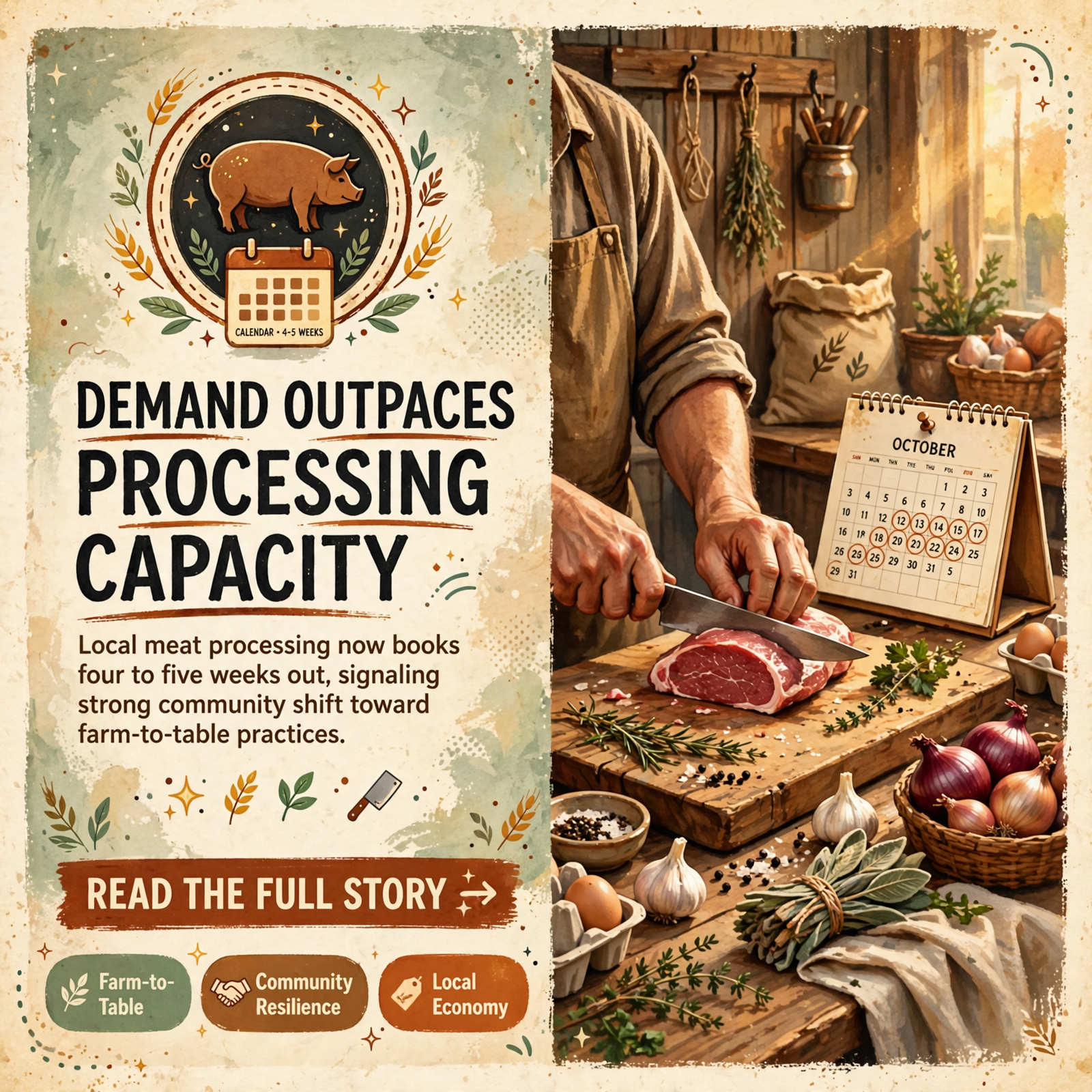
🐄 Local Meat Processing Faces Growing Demand – Scheduling Now 4-5 Weeks Out
A custom meat processing business serving the region is experiencing a surge in demand, a sign that more local families and farmers are choosing to process their livestock closer to home. The extended booking window reflects a broader shift toward farm-to-table practices and locally sourced food in the area.
📅 What’s Changing
P3 Custom Meats has announced a significant scheduling update: what once took a week to arrange now requires planning four to five weeks in advance. 🔄 The business, which serves customers throughout the region, is no longer able to accommodate same-week processing requests as it once did. This change signals strong and sustained community interest in local meat processing services.
The team behind P3 emphasizes gratitude for the trust customers place in them with their animals. “It truly means more than you know,” the business shared in their announcement, framing the longer wait times as evidence of growing confidence in their work rather than a limitation.
💡 Why This Matters
For families who raise livestock, hunt seasonally, or source meat locally, processing timelines directly affect planning and food security. 🏡 A four- to five-week lead time means residents need to think ahead about when they’ll need processing services-a shift from the flexibility many may have grown accustomed to. This matters for homesteaders, small-scale farmers, hunters preparing for seasons, and anyone committed to knowing where their food comes from.
The extended wait also reflects a real economic story: local processing capacity is being stretched by demand. When a regional business reaches capacity, it often signals a healthy local food economy-but it also creates practical challenges for customers who need timely service.
🤝 Community Connections
Custom meat processing sits at the intersection of several community values: local agriculture, food self-sufficiency, and direct relationships between producers and processors. Families who raise animals, local farmers, hunters, and homesteaders all depend on accessible processing services to complete their food production cycle. When a processor thrives, it strengthens the entire local food network-from the pasture to the freezer.
The business also serves as a gathering point for conversations about farming practices, animal husbandry, and food quality. These relationships often extend beyond transactions into shared values about land stewardship and community resilience.
📍 What Residents Should Know
If you anticipate needing processing services, the message is clear: call ahead now. 📞 Waiting until you’re ready to process means a month-long delay. The business encourages customers to contact them as soon as they know they’ll need a slot, allowing them to secure preferred timing.
P3 Custom Meats maintains emergency availability for urgent situations. If an unexpected need arises, customers can call or message to request emergency assistance. The contact number is (423) 222-8225.
⏭️ What Happens Next
The business has not announced plans to expand capacity, so the four- to five-week scheduling window appears to be the new normal for the foreseeable future. 🔮 Residents should adjust their planning accordingly. For those who process animals seasonally (hunters in fall, farmers at year-end), booking early in the season becomes essential to avoid being pushed into the following year.
Watch for any future announcements about capacity changes, additional staff, or expanded hours-developments that could shift the timeline. In the meantime, the message to the community is: plan ahead, call early, and trust the process.
❓ Community Questions Worth Considering
- How does the availability of local processing services affect your family’s food choices and planning?
- Are there other local services or businesses in your area experiencing similar capacity constraints due to growing demand?
- What would it take to support additional processing capacity in the region-and who might benefit most from that expansion?
- How does knowing your meat processor personally change your relationship with the food you eat?
🌱 Long-Term Community Impact
Extended processing timelines, while inconvenient in the short term, reflect a positive long-term trend: more people are choosing local, known sources for their meat. This strengthens the local food economy, supports regional farmers and processors, and builds resilience into the community’s food system. However, if demand continues to outpace capacity, the region may face a genuine bottleneck-an opportunity for new processors to enter the market or for existing businesses to expand.
The shift also reinforces a cultural value in the region: the importance of knowing where food comes from and maintaining direct relationships with the people who produce it. That’s a thread worth preserving, even if it means planning a little further ahead.



0 Comments