
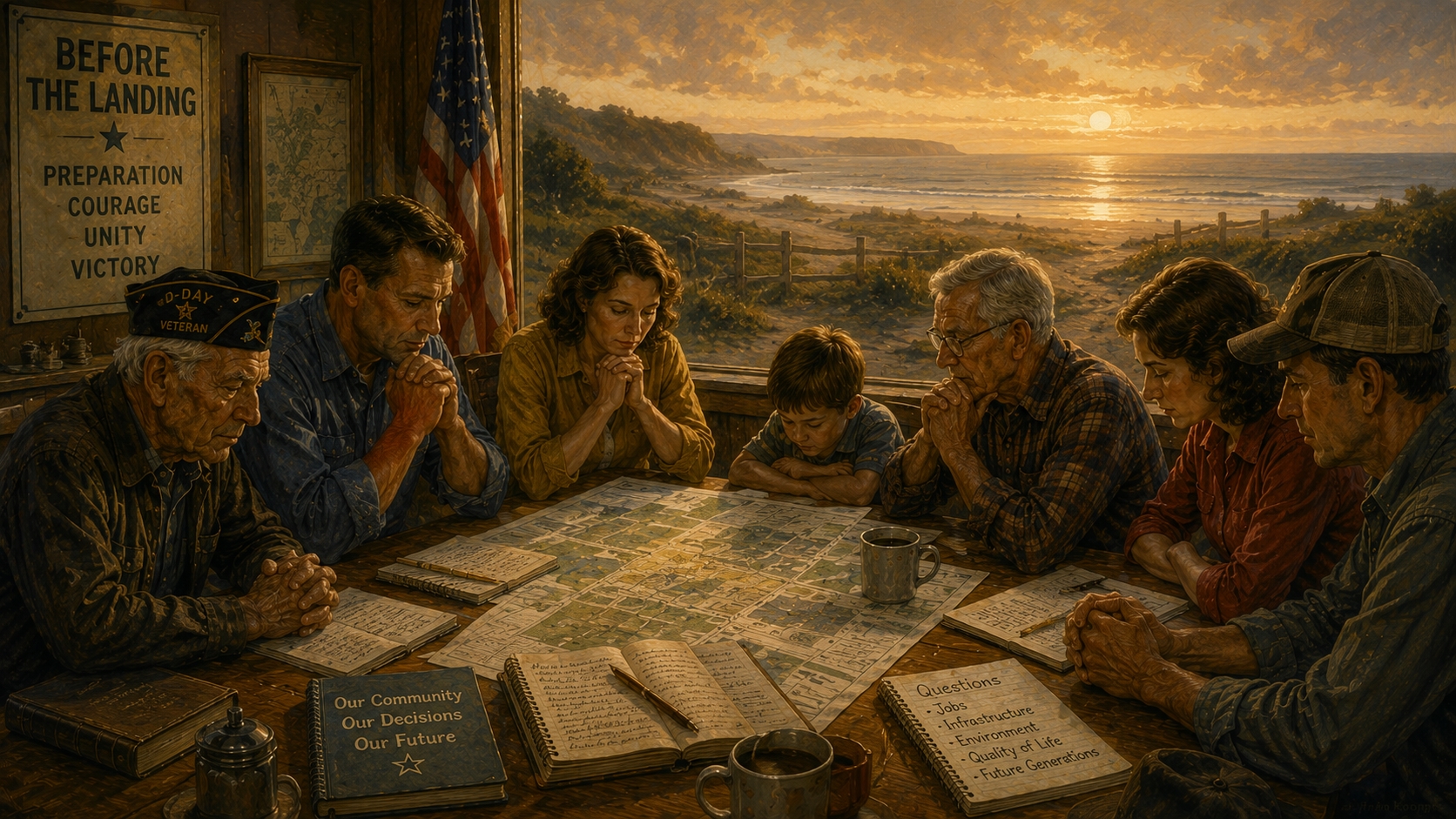
Before the Landing: What D-Day Can Teach Us About Local Decisions
A respectful reflection on history, preparation, uncertainty, and the way communities discuss major projects.
Tomorrow marks the anniversary of D-Day, one of the most important landings in modern history.On June 6, 1944, Allied forces landed on the beaches of Normandy in an operation that helped change the course of World War II. It was a moment of courage, sacrifice, planning, uncertainty, and consequence.
Long before soldiers reached the beaches, there were years of preparation. Leaders studied maps. Engineers planned logistics. Weather reports were examined. Supply chains were organized. Risks were debated. Alternatives were considered. Questions were asked again and again.
The lesson is not that local civic debates are comparable to war. They are not.
The lesson is that important decisions rarely begin at the moment everyone sees them. They begin earlier, in the quieter work of preparation, discussion, study, and public understanding.
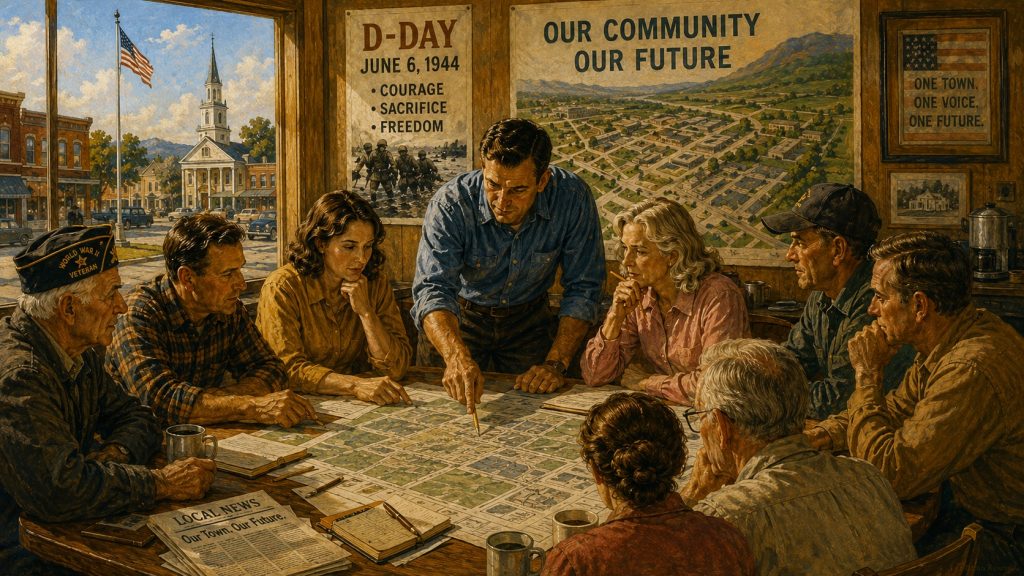
Before The Landing
Looking Forward Is Harder Than Looking Back
Looking backward, history can seem obvious. We know what happened. We know how events unfolded. We can see the consequences.
But on June 5, 1944, the outcome was not yet known.
Decisions had to be made with incomplete information, competing opinions, and serious uncertainty.
Communities face a much smaller but still meaningful version of this challenge whenever a major project is proposed. Whether the subject is a new road, a factory, a housing development, a utility expansion, a solar farm, or a data center, residents naturally want to know what it means for them.
What will it cost?
What will it bring?
Who benefits?
Who carries the burden?
What happens five, ten, or twenty years from now?
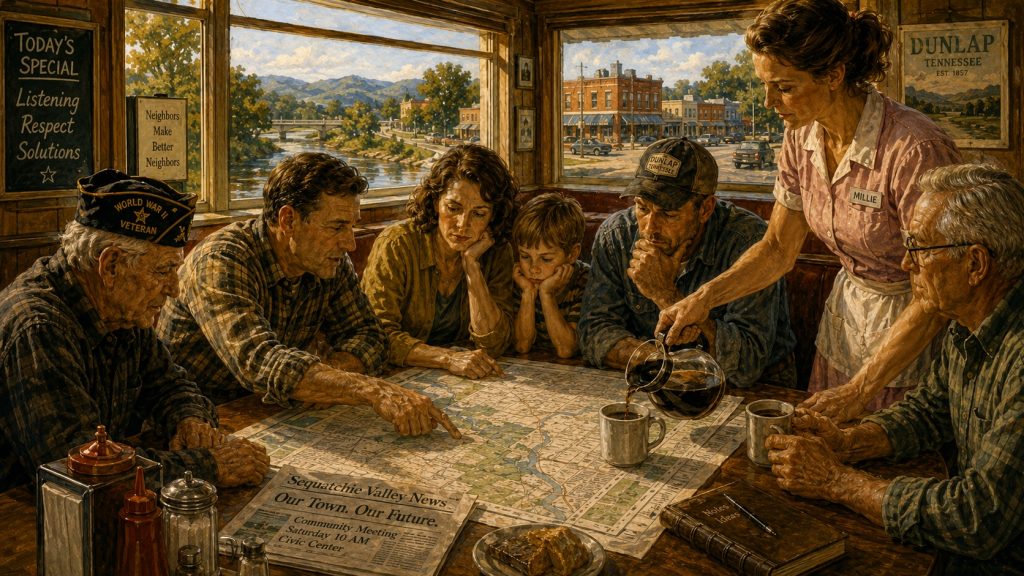
Questions Are Not the Enemy
In any healthy community, questions should not be treated as attacks.
Asking about water use is not automatically opposition.
Asking about tax revenue is not automatically support.
Asking about jobs, land use, electricity, noise, roads, environmental impact, emergency services, and long-term planning is not obstruction.
It is citizenship.
Supporters of a project may see opportunity: investment, infrastructure, tax revenue, construction jobs, technology, and growth.
Opponents may see risk: resource demands, land-use changes, noise, strain on utilities, environmental concerns, or the possibility that promised benefits may not match reality.
Both sides may be asking legitimate questions from different directions.
A useful local conversation should not begin by deciding which neighbors are heroes and which are villains. It should begin by separating facts from assumptions, promises from guarantees, and fears from evidence.
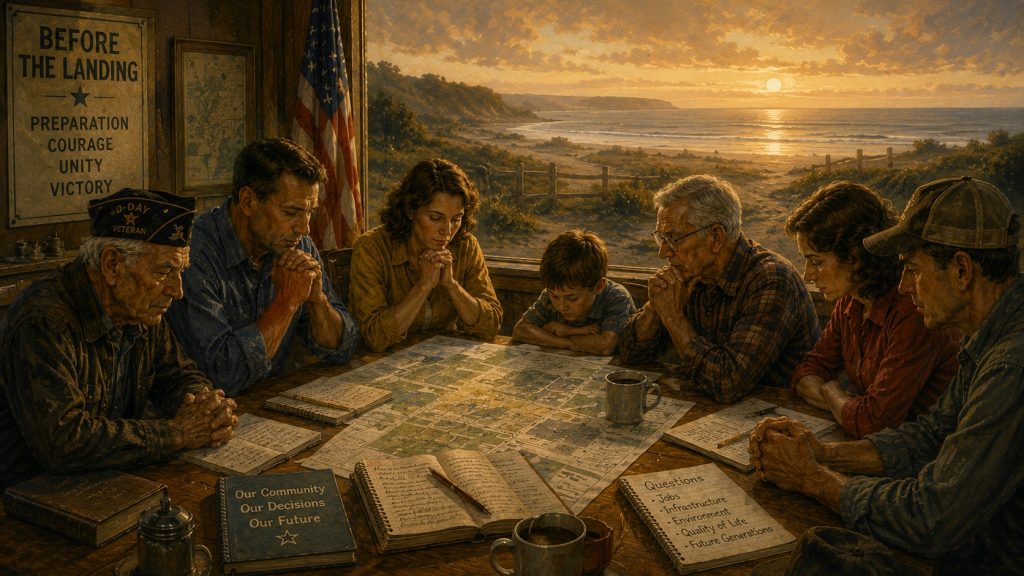
The Data Center Question
Data centers have become a frequent topic across Tennessee and the country because modern life now depends on enormous amounts of digital infrastructure.
Banking, healthcare, cloud storage, streaming video, online shopping, artificial intelligence, government records, mapping systems, business software, schools, emergency systems, and everyday websites all depend on data centers somewhere.
That does not mean every proposed data center is automatically good for every community.
It also does not mean every proposed data center is automatically bad.
The useful question is not, “Are data centers good or evil?”
The useful question is, “What exactly is being proposed, what are the tradeoffs, and what should citizens know before decisions are made?”
What Residents Deserve to Know
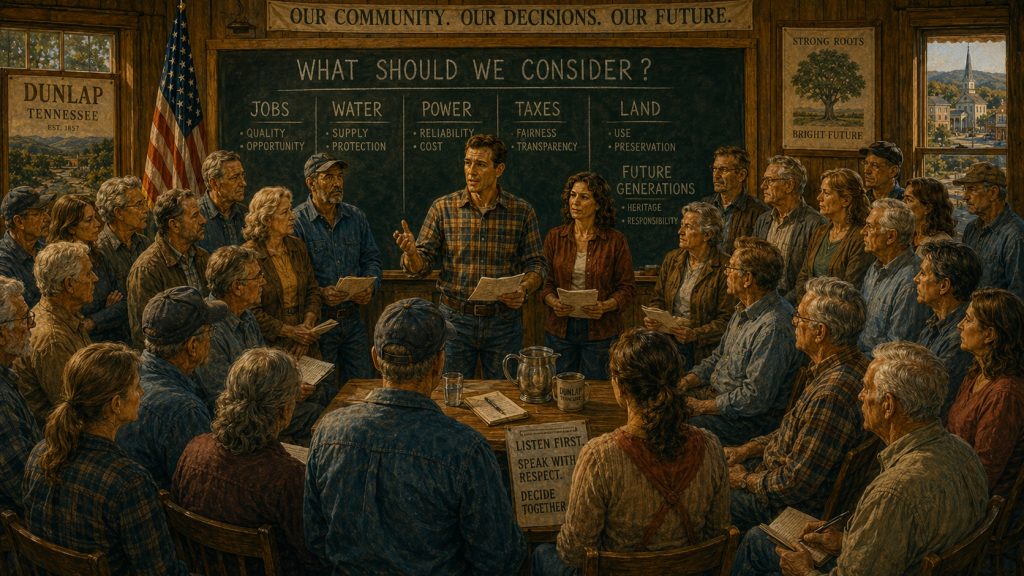
A serious local discussion should make room for practical questions, including:
- How much land would the project require?
- How much electricity would it use?
- Would it require new transmission lines or substations?
- Would local electric rates be affected?
- How much water would be used, and for what purpose?
- How many construction jobs would be created?
- How many permanent local jobs would remain?
- What tax revenue would the community receive?
- Would there be tax incentives, abatements, or special agreements?
- What would the noise levels be near the property line?
- How would stormwater, roads, and emergency services be handled?
- What protections would be written into binding agreements?
These questions do not belong to one political side.
They belong to the public.
The Landing Is Only the Beginning
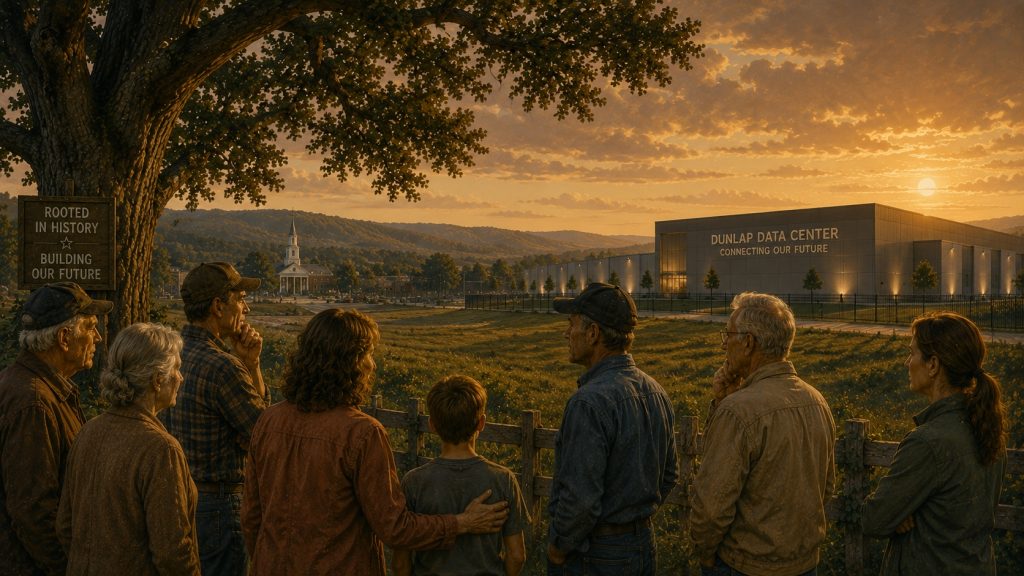
D-Day is remembered as a landing, but the landing was not the final objective. It was the beginning of a larger effort that required follow-through, coordination, supply lines, communication, and continued sacrifice.
The same principle applies to local development decisions.
A project announcement is not the end of the story.
A public meeting is not the end of the story.
A vote is not the end of the story.
What matters is what happens afterward: whether promises are kept, whether impacts are measured, whether benefits reach the community, and whether leaders remain accountable after the headlines fade.

A Better Local Conversation
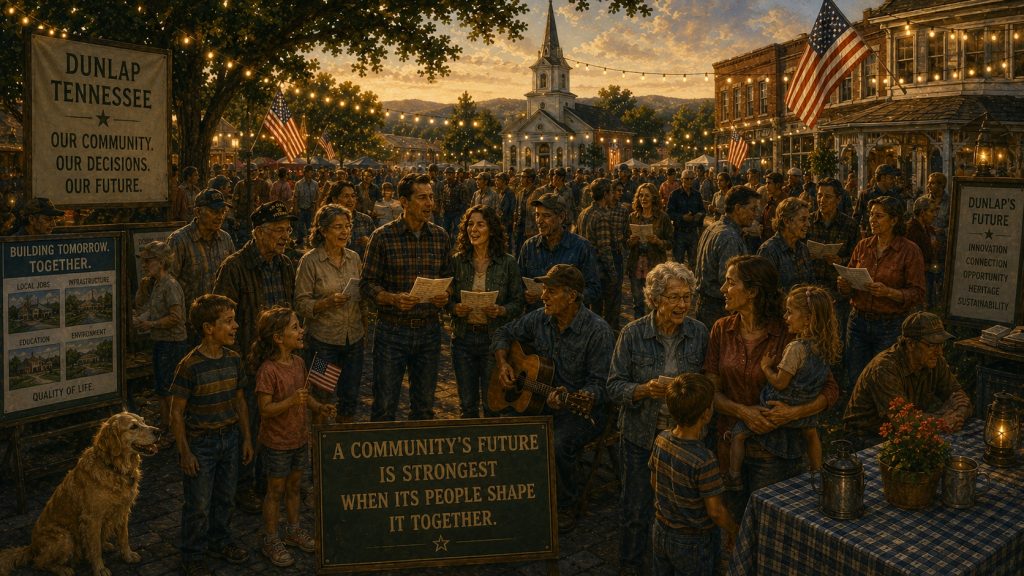
A community does not have to agree on everything to discuss something well.
We can honor people who see opportunity.
We can honor people who see risk.
We can ask hard questions without assuming bad motives.
We can demand facts without mocking concerns.
We can remember that the future of a place is not shaped only by what is built, but by how decisions are made before anything is built.
Before the Moment Arrives
The anniversary of D-Day reminds us that history often turns on moments of action.
But those moments are shaped by what happens before them.
Preparation matters.
Questions matter.
Courage matters.
So does humility.
In local decisions, the goal should not be to silence debate. The goal should be to make the debate useful.
Because when a community finally reaches its own moment of decision, it should not arrive confused, divided by rumors, or forced to choose between slogans.
It should arrive informed.




0 Comments