
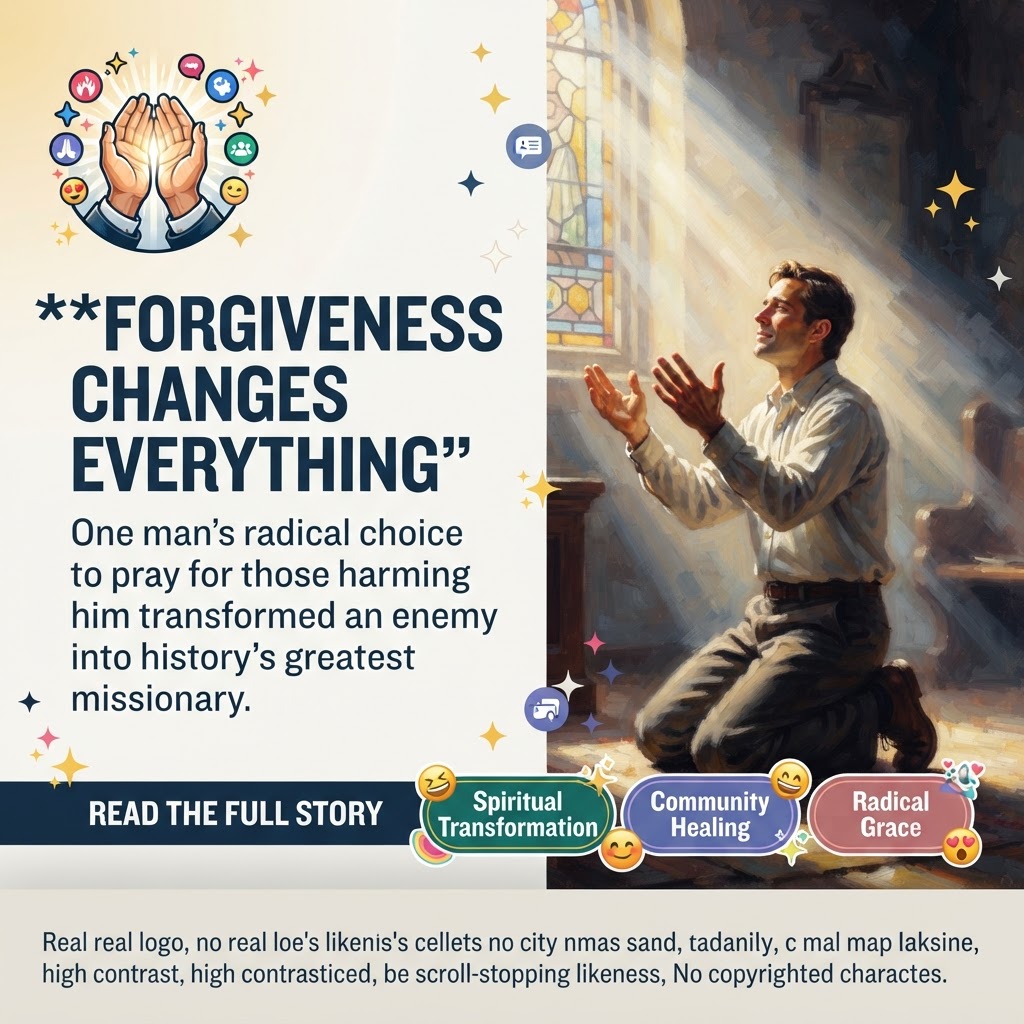
🙏 Finding Strength in Forgiveness: A Reflection on Stephen’s Witness and What It Means for Our Community
A local faith leader is sharing a reflection on one of Scripture’s most challenging stories-the martyrdom of Stephen-and what his example of radical forgiveness might teach us about responding to hurt, conflict, and division in our own lives and communities.
📖 The Story That Challenges Everything
The account comes from Acts 7:54-60, a passage that describes Stephen’s final moments as he faces a crowd determined to stone him. But this is not a story about victimhood or despair. Instead, it centers on a remarkable choice: while stones are falling, Stephen looks upward-not at his attackers-and prays for them. “Lord, do not charge them with this sin,” he cries out, echoing Jesus’s own words from the cross. ✨
For many who encounter this story, Stephen’s response seems almost impossible. How does someone forgive those actively harming them? How does compassion emerge in the moment of greatest suffering?
💡 Why This Matters to Our Community
In a region where neighbors know neighbors, where families have deep roots and long histories, conflict-whether personal, relational, or communal-cuts deeper than in anonymous urban centers. The question Stephen’s life raises is not abstract theology; it is profoundly practical: How do we live together when we have been hurt? How do we move forward when trust has been broken?
The reflection emphasizes that forgiveness is not about pretending harm didn’t happen or removing healthy boundaries. Rather, it is about refusing to let another person’s sin produce hatred in your own heart. In a close-knit community, that distinction matters enormously. Holding grudges poisons not just individual relationships but the entire fabric of shared life. ❤️
🔗 Community Connections and Spiritual Life
The message speaks directly to people of faith across the region-those who gather in local churches and faith communities to worship, study Scripture, and support one another. The reflection suggests that being “filled with the Holy Spirit” is not limited to moments of worship or spiritual experience; it fundamentally changes how we live, love, forgive, and respond to those who hurt us.
For faith communities throughout the area, this raises an important question: Are we equipping people not just to believe the right things, but to live them out in the hardest moments? Stephen’s example suggests that spiritual maturity is measured not by what we say in church, but by what comes out of us when we are squeezed by suffering.
👥 The Human Impact of Radical Forgiveness
One of the most striking details in Stephen’s story is that a young man named Saul stood nearby, watching-even holding the cloaks of those who stoned Stephen. Saul would later become Paul, one of Christianity’s greatest figures. But that transformation began with witnessing Stephen’s forgiveness. The reflection notes: “The stones stopped Stephen’s voice, but they did not stop his witness.”
This suggests something profound about community: we never fully know the impact of our choices, especially our choices to forgive. Someone watching us respond to hurt-with grace instead of retaliation, with prayer instead of anger-may be changed in ways we never see. In a community where people are watching each other, where reputation and relationships matter, that reality carries weight. 🌟
🤔 What Residents Should Consider
The reflection poses several questions worth sitting with:
- What are you looking at when life hurts you? Stephen looked toward heaven and toward Jesus. Do we look toward our pain, our anger, our desire for revenge-or do we look toward something larger?
- Is there someone in your life you need to forgive? The reflection acknowledges that forgiveness is hard and often feels impossible in our own strength. But it suggests that spiritual transformation-being filled with the Holy Spirit-makes it possible.
- Who might be watching how you respond to conflict? In a community, our choices ripple outward in ways we may never fully understand.
- What does it mean to love your enemies in your specific context? Jesus’s command to “love your enemies, bless those who curse you, do good to those who hate you, and pray for those who spitefully use you” is not abstract. It applies to real people in real situations-neighbors, family members, people we encounter regularly.
✝️ A Spiritual Invitation
The reflection concludes with an invitation that extends beyond those already rooted in faith. It acknowledges that Stephen’s Savior-Jesus-is still saving sinners, still transforming enemies into disciples. For anyone who has never surrendered their life to Jesus, the message is clear: the same Jesus who changed Saul into Paul can change you. Repent. Believe the gospel. Follow Christ.
For those already on that journey, the challenge is equally direct: “May God fill us so completely with His Spirit that even when life hurts us, what comes out of us still looks like Jesus.” 🙏
🌱 Long-Term Community Impact
Communities are built on trust, forgiveness, and the willingness to move forward together after conflict. If more people embraced Stephen’s approach-looking upward instead of inward, praying for those who hurt them, refusing to let bitterness take root-the entire character of local relationships could shift. Families might heal. Neighbors might reconcile. Churches might become places where people learn not just doctrine, but the hard, beautiful practice of forgiveness.
This is not naive optimism. It is a recognition that spiritual transformation, lived out consistently, changes communities from the inside out.
📍 Community Threads: The Witness That Lasts
The Forgiveness-to-Transformation Thread: Stephen’s prayer for his killers did not save him from the stones. But it may have saved Saul’s soul. In a community, acts of forgiveness and grace are seeds planted in soil we cannot see. They grow in ways we may never witness. This thread reminds us that our most powerful witness is often not what we say, but how we respond when we are hurt.
The Spiritual Strength Thread: Stephen’s ability to forgive came not from his own willpower, but from being “full of the Holy Spirit.” This thread connects individual spiritual practice-prayer, worship, surrender-to community resilience. When people are spiritually grounded, they respond to conflict differently. They become anchors of stability and grace in their neighborhoods and families.
The Invitation Thread: The reflection ends not with judgment, but with invitation. Just as Jesus transformed Saul into Paul, the message suggests that transformation is available to anyone willing to repent and believe. In a community, this thread reminds us that people are not fixed in their current state. Change is possible. Redemption is possible. And sometimes it begins when someone witnesses forgiveness in action.
💭 Questions Worth Asking
- When you face conflict or hurt in your community, what do you naturally look toward-your pain, your anger, or something larger?
- Is there a relationship in your life that needs the kind of forgiveness Stephen modeled-not condoning harm, but refusing to let bitterness take root?
- How might your response to conflict change if you believed someone was watching and learning from your example?
- What would it look like for our community if more people chose to pray for those who hurt them, rather than seeking revenge or holding grudges?
The reflection closes with a simple but profound invitation: “Keep Looking Up.” In a community where we live close together, where our choices affect those around us, that direction-upward, toward grace, toward Jesus-may be the most important direction we can face. ✨



0 Comments