
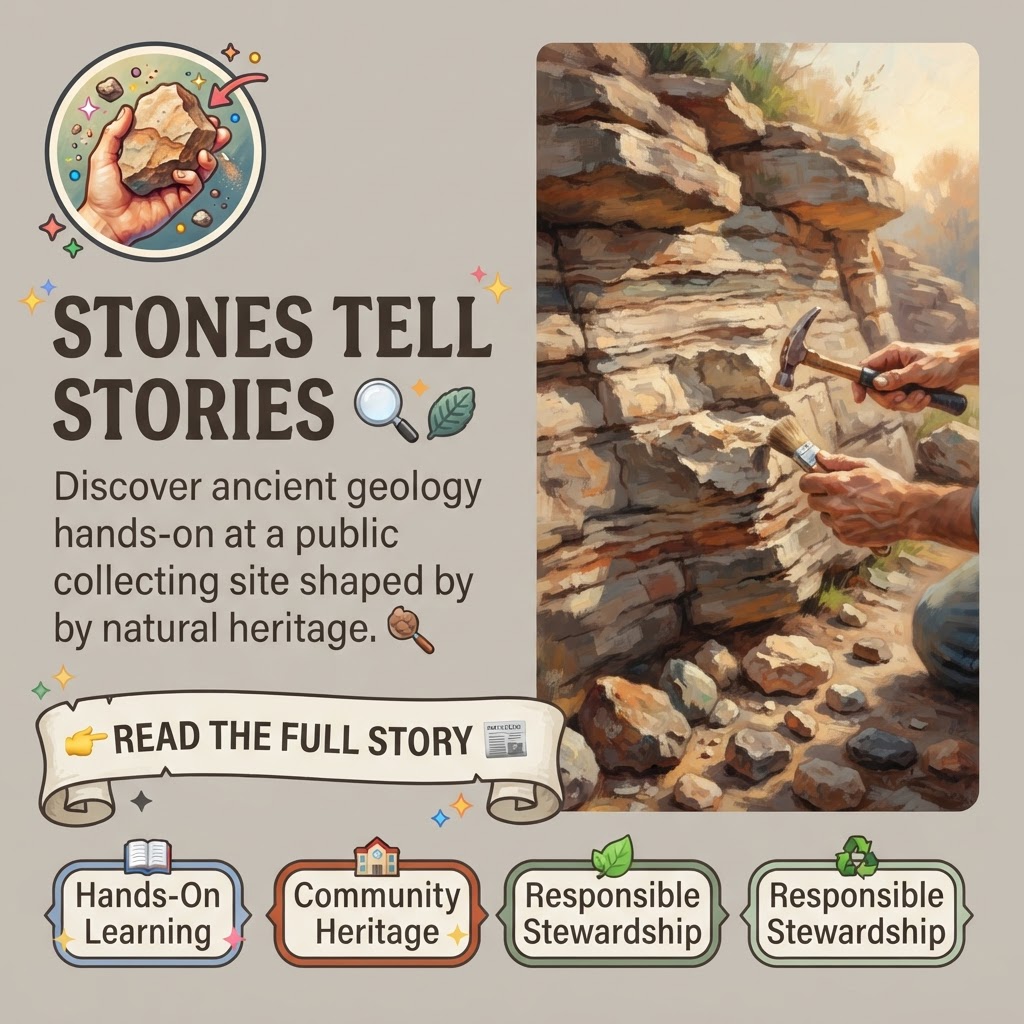
🪨 Crab Orchard Sandstone: A Public Collecting Spot for Rock and Mineral Enthusiasts in Cumberland County
Crab Orchard in Cumberland County sits on terrain rich with geological interest, and one accessible public site has become a draw for rockhounders and casual collectors exploring the region’s natural stone formations. The Crab Orchard sandstone location offers an opportunity for residents and visitors to engage directly with the plateau’s distinctive geology.
📍 What You Should Know About the Site
The Crab Orchard sandstone location is situated on public land in Cumberland County and is generally open to casual collecting. The site provides coordinates and information about nearby collecting spots for those interested in exploring the area’s geological features. This accessibility makes it a practical destination for families, hobbyists, and anyone curious about the natural stone that defines the Cumberland Plateau landscape.
💡 Why This Matters Locally
The Cumberland Plateau’s sandstone formations are central to the region’s identity-they shape the landscape, support local stone businesses, and tell the story of ancient geological processes. Public access to collecting sites like Crab Orchard connects residents to that heritage in a tangible way. For families and educators, it offers a hands-on learning opportunity about the natural world. For hobbyists and collectors, it provides a legitimate outlet for a popular pastime. Understanding where and how to responsibly collect also protects public lands and maintains access for future visitors.
🌄 Local Perspective: Stone and Community Identity
The Cumberland Plateau has long been shaped by its stone-from the quarries and building-stone operations that have supported local economies to the distinctive rocky outcrops that define the region’s visual character. Businesses like Dunlap Building Stone and Real Stone Veneers of Tennessee have built their work around these same geological formations. Public collecting sites like Crab Orchard represent a different but related relationship with the landscape: one that invites residents and visitors to observe, learn, and appreciate the natural resources that make the plateau distinctive. This kind of public engagement with local geology strengthens community awareness of what makes the region unique.
⭐ Opportunities for Connection and Learning
The Crab Orchard site offers several ways for residents to deepen their connection to the community and landscape:
- Family outings: A casual collecting trip can introduce children to geology and outdoor exploration in a familiar, accessible setting.
- Educational partnerships: Local schools and homeschool groups may find value in field trips to public collecting sites as part of earth science or natural history curricula.
- Hobby communities: Rockhounders and mineral enthusiasts can connect with others who share an interest in the region’s natural features.
- Visitor experience: Tourists exploring the Cumberland Plateau can add a hands-on geological experience to their visit, deepening their appreciation for the area.
🗓️ What Residents Should Know
Before visiting the Crab Orchard sandstone site, collectors should understand a few practical points:
- The site is on public land and is generally open to casual collecting-but always verify current access policies and any seasonal restrictions before visiting.
- Casual collecting typically means taking small samples for personal use or study, not commercial extraction or large-scale removal.
- Respect for the site and other visitors helps preserve access for everyone.
- Specific coordinates and information about nearby collecting spots are available through the rockhounding community resources that document the location.
❓ Questions Worth Considering
As residents think about public collecting sites and local geology, a few questions may deepen community conversation:
- How can families and schools in Cumberland County better connect with the natural geology that shapes the region?
- What role do public collecting sites play in fostering environmental stewardship and responsible land use?
- How does public awareness of local stone formations strengthen appreciation for the businesses and industries built around those resources?
- What other public access opportunities exist for residents interested in exploring the Cumberland Plateau’s natural features?
🔗 Community Threads: Stone, Economy, and Shared Landscape
The Stone-to-Community Connection: The sandstone beneath Crab Orchard connects multiple layers of community life-from the quarry workers and stone businesses that have shaped local economies, to the hobbyists and families who explore the landscape for learning and enjoyment, to the educators who use geology to teach about the natural world. Public collecting sites like Crab Orchard make that connection visible and accessible to everyone, not just those in the stone industry.
Stewardship and Access: Maintaining public access to collecting sites requires a shared understanding between residents, land managers, and the broader community about responsible use. When collectors respect the site and follow guidelines, they help preserve the opportunity for others-and they model the kind of environmental stewardship that benefits the entire region.
Learning and Local Pride: When residents engage directly with the geological features that define their landscape, they develop a deeper sense of place and pride in the region. That connection often translates into stronger community investment in protecting and celebrating local natural resources.
📢 What Happens Next
For residents interested in visiting the Crab Orchard sandstone site, the next step is to gather current information about access, coordinates, and nearby collecting opportunities through rockhounding community resources. Those interested in learning more about the region’s geology may also explore educational opportunities through local schools or nature centers. As interest in public collecting sites grows, community conversations about responsible access and land stewardship will likely continue to shape how these resources are managed and shared.



0 Comments