
⚡ When Electricity Came to Sparta – A White County Memory of Progress and Wonder
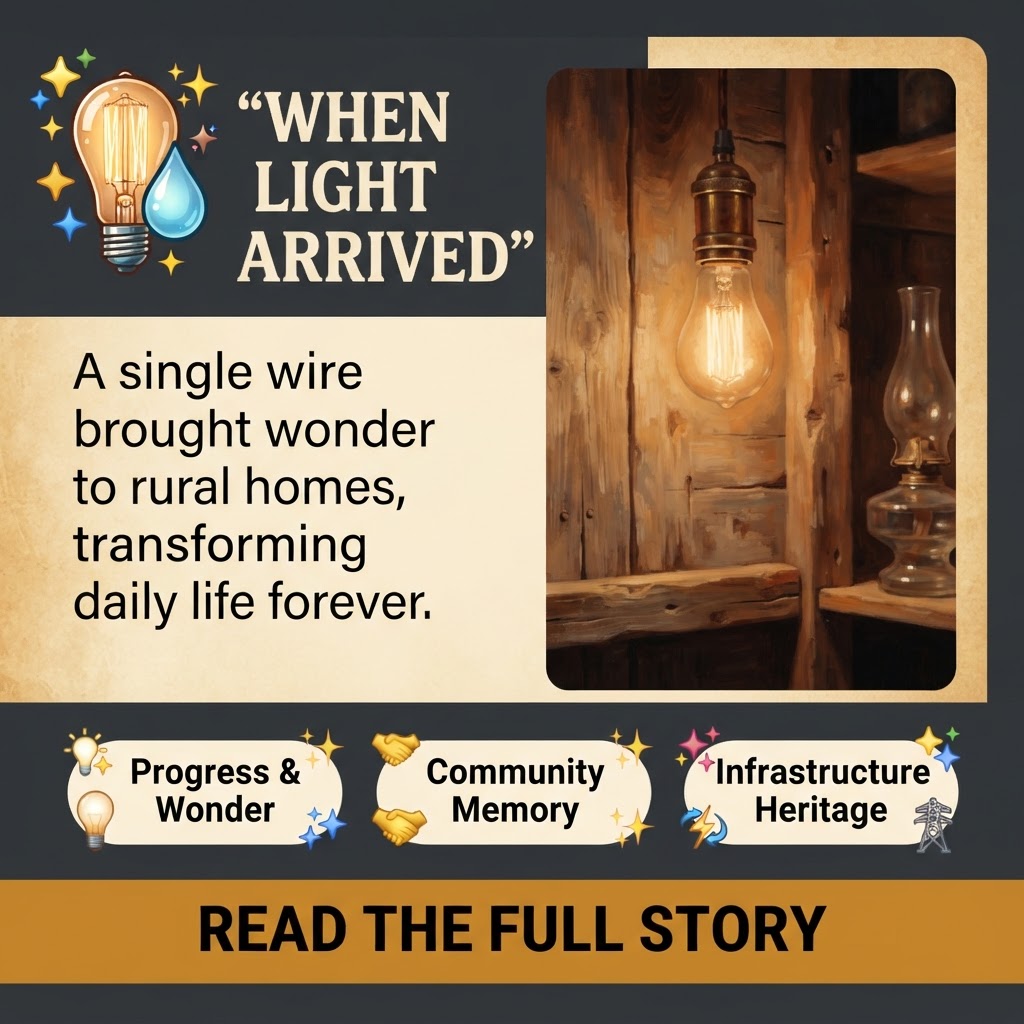
In the early 1900s, electricity arrived in Sparta, White County, not as a given utility but as a marvel-a single wire that could carry light into a home. A local historian’s family memory captures a moment when modern infrastructure transformed daily life in the Upper Cumberland.
📍 A Mill, a River, and the Birth of Electric Power
David Copeland recently shared a historical photograph of an old mill that once stood on the Calfkiller River, just southwest of Sparta, dating to around 1800. The mill represents an era when water power drove the machinery of rural life. But Copeland’s post hints at something equally significant: the possibility that an electric station occupied the same location around the turn of the century-a transition from water-powered industry to electrical generation that reshaped how communities functioned. 🏭
Copeland is still searching for documentation of that early electric station, a quest that reflects a broader effort to preserve the technological and social history of Sparta and White County.
💡 Grandpa Elrod’s Memory of Wonder
The heart of Copeland’s post rests on a family story: his grandfather, Elrod, born in 1909, witnessed electricity become available to Sparta residents during his childhood. According to Elrod’s recollection, the service arrived as “basically one wire that could be attached to a bulb”-a humble beginning that nonetheless felt revolutionary. ✨
For families accustomed to oil lamps, candles, and darkness after sunset, a single electric bulb represented progress, safety, and connection to the wider world. Elrod’s description captures not just the technical reality but the emotional weight of that moment: “it was a really big deal to folks in Sparta.”
🌄 Why This Matters for Local Understanding
Stories like Elrod’s remind residents that modern conveniences-electricity, running water, paved roads-were not always present. They arrived through deliberate investment, engineering, and community adoption. Understanding when and how these systems came to Sparta helps residents appreciate the infrastructure that supports daily life today and recognize that similar transitions (renewable energy, broadband, water systems) are part of an ongoing story. 🔌
For White County, this history also reflects the region’s position on the Cumberland Plateau edge-a place that, while rural, was not isolated from technological progress. Early electric systems in small towns often depended on local water power (like the Calfkiller) or coal-fired generation, connecting Sparta’s infrastructure to regional resources and engineering networks.
👥 Community Connections and Local History
Copeland’s search for the electric station and his willingness to share family memory suggests an active local interest in preserving Sparta’s past. Family stories, old photographs, and community recollections are the foundation of local history-and they often live in private collections, conversations, and social media posts rather than in formal archives. When residents share these memories, they strengthen community identity and create opportunities for others to contribute their own family knowledge. 📸
Local schools, churches, historical societies, and civic organizations often benefit from these grassroots efforts. A photograph of an old mill or a recorded memory of early electricity can become part of a community archive, a school project, or a local history display-strengthening ties between generations and deepening residents’ sense of place.
🔍 What Residents Should Know
If you have family memories, old photographs, or documents related to early electricity in Sparta, water mills on the Calfkiller, or other aspects of White County history, Copeland’s post suggests that local historians are actively seeking this information. Sharing such materials-whether through community groups, local libraries, or historical organizations-helps preserve the story of how Sparta and the Upper Cumberland developed. 📚
For residents interested in local history, this also raises questions worth exploring: Where did Sparta’s early electricity come from? What role did the Calfkiller River play in powering the community? How did the arrival of electricity change daily life, work, and social patterns? These questions can lead to deeper research, interviews with long-time residents, and a richer understanding of community roots.
⏭️ What Happens Next
Copeland’s ongoing search for documentation of the early electric station suggests that the story of Sparta’s electrification is not yet fully told. As he continues to investigate, he may uncover additional photographs, records, or family memories that fill in the gaps. Community members who have information are encouraged to reach out and contribute to this local history effort. 🤝
💭 Questions Worth Asking
- What role did local water power play in bringing electricity to Sparta in the early 1900s?
- How did the arrival of electricity change work, home life, and community gathering in Sparta?
- Are there other family memories or photographs from that era that could help document Sparta’s technological transition?
- How does understanding this history help residents think about infrastructure and progress today?
🧵 Community Threads: Memory as Infrastructure
The Family-to-Community Knowledge Thread: Elrod’s memory, preserved and shared by his grandson, becomes a bridge between private family history and public community understanding. When families share their stories, they create a distributed archive that no single institution could maintain alone. This thread strengthens when residents recognize that their grandparents’ experiences are valuable historical documents and when communities create spaces (social media groups, local history projects, schools) where those stories can be collected and honored. 💬
The Water-to-Wire Thread: The Calfkiller River powered mills for generations; it may have also powered the first electric generators that brought light to Sparta. Understanding this connection reveals how communities adapted existing resources-water, geography, engineering knowledge-to adopt new technologies. This thread matters because it shows that progress in rural areas often builds on local assets rather than arriving from outside. For residents thinking about future infrastructure (renewable energy, water management, broadband), recognizing this pattern offers perspective on how Sparta has historically adapted and innovated. 🌊⚡
🏛️ Long-Term Community Impact
The arrival of electricity in Sparta was not simply a technical upgrade-it was a social and economic turning point. Electric light extended productive hours, enabled new businesses, improved safety, and connected Sparta to regional and national networks. Families could read after dark, businesses could operate longer, and the community’s sense of modernity and progress shifted. 🌟
Today, as Sparta and White County face questions about broadband access, renewable energy, and infrastructure investment, the memory of how electricity transformed the community offers both inspiration and perspective. It reminds residents that infrastructure change takes time, that communities adapt and benefit, and that the stories of how these changes happened are worth preserving and sharing.


0 Comments