
🏛️ Whistlestop Manor : A 165-Year Legacy of Family, Craftsmanship, and Community Roots
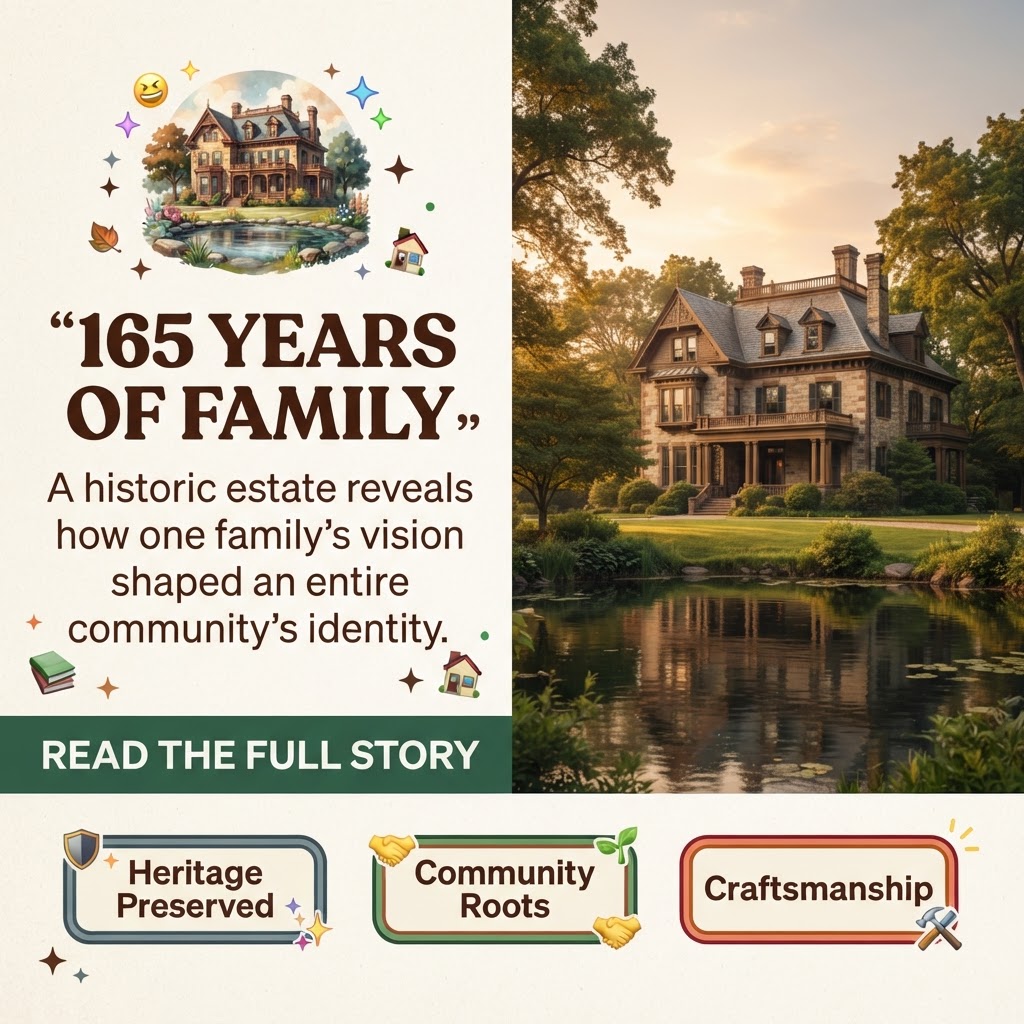
In Sweetwater, a historic estate stands as a living testament to 19th-century ambition and family heritage. Whistlestop Manor, completed in 1859 after nearly two decades of construction, carries within its walls the story of the Browder family and the landscape that shaped their world—a story now being shared with visitors and history enthusiasts who want to understand the deeper roots of the region.
📜 A Home Built Over Time
The manor’s construction began in the early 1840s, when building a substantial home was a multi-year undertaking requiring patience, resources, and skilled labor. While the Browder family waited for their “regal estate” to take shape, they lived in a modest cabin across the street, positioned near a spring-fed pond that served the entire community. That pond was not merely a scenic feature—it was essential infrastructure, providing drinking water to townspeople who relied on its clean flow. The original name, “The Brookside Farm,” reflected this connection to water and land, a legacy still visible today on copper signs adorning the home’s historic pie safe. ✨
🏘️ A Family’s Broader Vision
The Browder family’s influence extended well beyond their own manor. William Browder, the patriarch who built the estate, and his extended family—brothers, sisters, and cousins—constructed another mansion three miles down the road and built what residents describe as “the coolest church,” which still stands today. This pattern of development reveals how a single family’s resources and vision could shape the physical and social landscape of an entire area, creating a network of structures that connected generations and defined community identity. 🏘️
⚰️ A Monument to Legacy
William Browder and his wife Elizabeth raised twelve children in the manor. Today, the family rests in the cemetery near the church they built, where graves date back to the mid-1700s—some predating the manor itself by more than a century. William’s headstone is particularly striking: a massive tree monument constructed in 1862 that still stands as a breathtaking tribute to the patriarch. The fact that such an elaborate monument was crafted and has endured for over 160 years speaks to both the family’s prominence and the craftsmanship of the era. 🌳
💡 Why This Matters
Historic homes like Whistlestop Manor are more than beautiful buildings—they are archives of how communities developed, how families invested in permanence, and how ordinary infrastructure like a spring-fed pond connected people to the land and to each other. For residents and visitors interested in local history, the manor offers a tangible connection to the region’s past. Understanding these stories helps explain why certain communities exist where they do, how families shaped the landscape, and what values—craftsmanship, family continuity, community service—were central to life in the 19th century. 📚
🤝 Community Connections
The Browder family’s story is woven into the broader fabric of Sweetwater and the surrounding area. Their construction projects—the manor, the additional mansion, and the church—created gathering places and landmarks that likely served as reference points for generations of residents. The spring-fed pond, though no longer a primary water source, represents an early form of community infrastructure that bound neighbors together. Today, Whistlestop Manor functions as an entertainment and recreation venue, continuing the family’s legacy of creating spaces where people gather and connect. 🎭
👥 Human Impact
For the Browder family, the manor represented security, status, and a permanent stake in the community. For the townspeople who drew water from the spring-fed pond, it represented a resource freely available. For modern visitors and history enthusiasts, the manor and its associated cemetery offer a way to understand individual lives—William and Elizabeth, their twelve children, and the extended family network—as real people who made decisions, invested resources, and left a physical mark on the landscape. The care taken to preserve the home and share its history suggests that current stewards recognize the value of keeping these human stories alive. ❤️
🔍 Local Perspective
Sweetwater and the surrounding region have a rich history of family-built estates and community landmarks. The Browder family’s approach—constructing multiple significant buildings and maintaining family connections across generations—reflects patterns common in 19th-century Tennessee communities where family networks often drove economic and social development. The fact that the church and cemetery remain standing and accessible suggests that the Browder legacy continues to be valued locally. For residents interested in understanding how their own communities came to be, the manor and its associated sites offer concrete examples of how individual families shaped the landscape. 🏞️
📖 What Residents Should Know
Whistlestop Manor is open to visitors and operates as an entertainment and recreation venue. The property includes not only the manor itself but also connections to the Browder family cemetery and the historic church three miles away, creating a broader historical trail for those interested in exploring the family’s influence. The copper signs on the historic pie safe and other original details preserve the home’s authentic character. For those researching local history, genealogy, or 19th-century architecture and construction practices, the manor offers both visual evidence and a story that illustrates how homes were built, how families lived, and how communities developed around key resources and family enterprises. 🔗
🔮 What Happens Next
As Whistlestop Manor continues to operate and welcome visitors, the ongoing preservation and storytelling around the property will likely remain important to local history efforts. The manor’s social media presence—sharing detailed historical narratives like this one—suggests an active commitment to educating the public about the Browder family and the era in which they lived. Future opportunities may include expanded historical programming, cemetery tours, or collaborative efforts with local schools and historical societies to deepen community understanding of the region’s 19th-century development. 📱
🤔 Community Questions Worth Considering
- How did the spring-fed pond and other natural resources influence where families chose to settle and build in the region?
- What role did extended family networks—like the Browder brothers, sisters, and cousins—play in shaping community development across multiple properties?
- How can modern communities best preserve and share the stories of historic homes and family legacies to strengthen local identity and historical awareness?
- What other 19th-century family estates or community landmarks in the area have similar stories to tell?
- How do visitors and residents currently learn about and connect with local history, and what gaps exist in that knowledge?
🌟 Long-Term Community Impact
Historic properties like Whistlestop Manor serve as anchors for community identity and continuity. They remind residents and visitors that the landscape they inhabit today was shaped by deliberate choices, family investment, and craftsmanship from generations past. As the region continues to develop and change, preserved historic sites become increasingly valuable as touchstones—places where people can understand how their community came to be and what values were important to earlier generations. The manor’s role as an entertainment and recreation venue also means it continues to serve a community function, much as the Browder family’s buildings did in the 19th century: creating spaces where people gather, learn, and connect. Over time, this ongoing stewardship helps ensure that the Browder family’s story—and the broader history of Sweetwater and the surrounding region—remains accessible and relevant to new generations. 🏛️
🧵 Community Threads: The Stewardship Connection
One significant thread running through this story is the relationship between historic property owners and the communities they serve. The Browder family built structures that benefited the public (the spring-fed pond, the church) and created gathering places. Today, Whistlestop Manor‘s current stewards continue that tradition by preserving the property, sharing its history, and welcoming visitors. This thread of stewardship—the idea that those who hold historic properties have a responsibility to maintain them and share their stories—connects the 19th-century Browders to modern property managers and community historians. Understanding this connection helps residents appreciate that historic preservation is not just about maintaining old buildings; it’s about honoring the relationships and responsibilities that bind communities across time. 🤝


0 Comments