
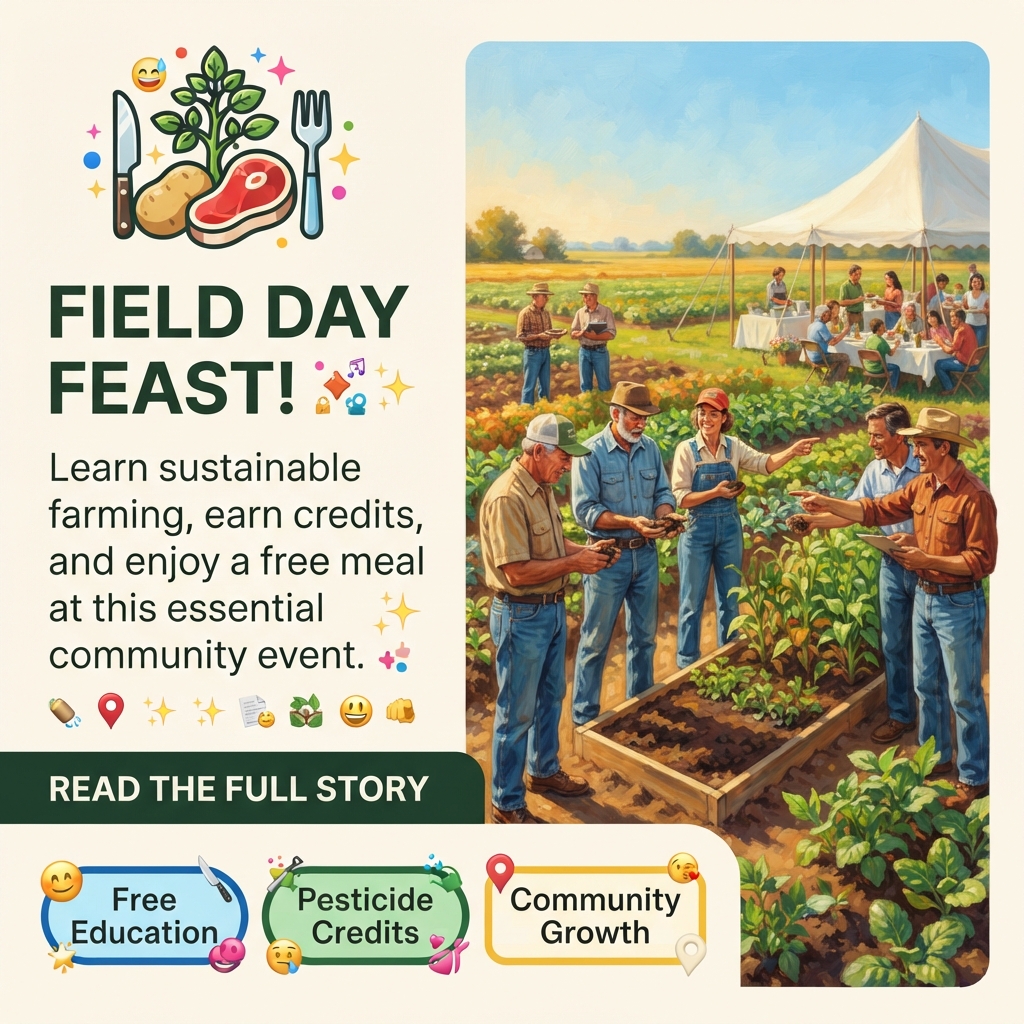
🌾 Free Steak & Potatoes Field Day at UT Plateau Agresearch Center in Crossville – Learn and Earn Pesticide Credits
The rolling hills and fertile farmlands of the Cumberland Plateau are home to some of Tennessee’s most productive agricultural research—including the University of Tennessee Plateau AgResearch and Education Center just outside Crossville. This August, local farmers, landowners, and agriculture enthusiasts have a chance to connect with experts, share knowledge, and even earn pesticide credits at the upcoming Steak and Potatoes Field Day. More than just a meal, this event offers hands-on learning that directly impacts how area producers care for their land.
📍 WHY THIS MATTERS: A Free Lunch with Long-Term Benefits
A free field day might sound like a simple perk, but for many in the Crossville area and beyond, it’s an opportunity to save time, money, and resources. With agriculture remaining a cornerstone of local economies—from small family farms to larger commercial operations—the chance to learn about sustainable practices, pest management, and cutting-edge research can mean the difference between maintaining profitability or facing costly setbacks. For those who handle pesticides professionally, earning continuing education credits is also a legal requirement, making this event both practical and required.
The UT Plateau AgResearch Center’s location in Crossville puts it at the heart of the region’s agricultural activity, serving as a hub for research that directly benefits farmers across the Cumberland Plateau and Sequatchie Valley. Whether you’re a seasoned producer or simply curious about how your community’s food is grown, this field day bridges the gap between science and local practice.
⭐ COMMUNITY CONNECTIONS: Where Research Meets Reality
The UT Plateau AgResearch and Education Center has long been a trusted partner for Crossville-area farmers, offering hands-on training, soil testing, and crop demonstrations tailored to the plateau’s unique climate. This event ties into broader community efforts to:
- Support local agriculture: By providing free education on best practices, the center helps preserve the livelihoods of Crossville’s farming families.
- Strengthen producer networks: Field days foster connections between farmers, Extension agents, and researchers—creating a collaborative space to share challenges and solutions.
- Educate future generations: Many local schools and FFA programs rely on these events to inspire students interested in agribusiness or sustainable farming.
- Promote environmental stewardship: As climate concerns grow, learning about soil health and integrated pest management helps protect the plateau’s fragile ecosystems.
The event also reflects a long-standing tradition of UT Extension’s work in Rhea County, where outreach programs have historically addressed everything from livestock management to home gardening. For decades, these field days have been a cornerstone of agricultural education in the region—proving that knowledge shared is power multiplied.
👥 HUMAN IMPACT: Who Benefits—and How?
While the event is free and open to all, its impact will be felt most acutely by:
- Farmers and landowners: Practical demonstrations on pest control, crop rotation, or irrigation efficiency can directly improve yields and reduce costs.
- Pesticide applicators: The event offers much-needed continuing education credits, ensuring compliance with state regulations while staying updated on the latest techniques.
- Young farmers and students: High school FFA members, college agribusiness students, or aspiring homesteaders can gain firsthand experience from experts.
- Local food producers: Even those not directly involved in farming may benefit from understanding how their community’s food supply is grown sustainably.
For many in Crossville, agriculture isn’t just a job—it’s a way of life. This event reinforces the idea that investing time in learning today can lead to healthier soils, stronger harvests, and more resilient families tomorrow.
🌱 LOCAL PERSPECTIVE: Why This Event Matters Specifically for Crossville
Crossville’s location at the edge of the Cumberland Plateau gives it a unique agricultural identity. The region’s rolling hills and varied soil types demand specialized knowledge, which is why UT Extension’s presence here is so valuable. Unlike flatter regions, plateau farming requires an understanding of erosion control, drought-resistant crops, and livestock management adapted to steep terrain.
This field day aligns with broader trends in the Sequatchie Valley and Cumberland Plateau, where small-scale and diversified farming are on the rise. As more locals explore regenerative agriculture or organic methods, events like this provide a critical space for skill-sharing. It also reflects Crossville’s role as a gateway community—bridging the plateau’s rural traditions with the growing interest in sustainable practices seen across the region.
Historically, similar field days have been instrumental in helping producers adapt to challenges like invasive species or shifting weather patterns. By attending, attendees can tap into decades of research specifically designed for their corner of Tennessee.
💡 OPPORTUNITIES FOR CONNECTION
Beyond the educational value, this event offers residents a chance to:
- Network with peers: Share experiences and solutions with other local farmers over a free meal.
- Meet UT Extension specialists: Ask questions about soil testing, grant opportunities, or upcoming workshops.
- Explore the research center: Tour facilities that directly support Crossville’s agricultural community.
- Earn credits while enjoying a steak dinner: A rare opportunity to satisfy professional requirements in a relaxed setting.
- Bring the family: Many demonstrations are family-friendly, making it easy to introduce kids to hands-on learning about food production.
The event’s casual format—complete with a steak dinner—also lowers barriers for those who might hesitate to attend more formal workshops. It’s a reminder that learning doesn’t have to be stuffy; sometimes the best lessons come over good food and good company.
🗓️ WHAT RESIDENTS SHOULD KNOW
The basics are simple, but here’s what attendees should plan for:
- Date & Time: August 20th (exact time TBA—check UT Extension Rhea County’s updates).
- Location: UT Plateau AgResearch and Education Center, just outside Crossville. Directions will be provided closer to the date.
- Cost: Free! Pesticide continuing education credits available for those who qualify.
- Dress code: Comfortable outdoor attire recommended—boots or closed-toe shoes are ideal for field demonstrations.
- RSVP: While not required, registering in advance helps organizers plan. Contact UT Extension Rhea County for details.
Pro tip: If you’re interested in future events, follow UT Extension Rhea County on social media or sign up for their newsletter to stay updated on workshops, soil testing clinics, and other agricultural resources tailored to your area.
🔮 WHAT HAPPENS NEXT
In the days leading up to August 20th, expect:
- Final details: UT Extension will share confirmation emails with registrants, including a map and any last-minute changes.
- Media coverage: Local outlets like Dunlap.Today may feature previews or recaps, highlighting key takeaways from the event.
- A follow-up survey: Attendees may be asked to share feedback on what they learned—helping shape future field days.
- Expanded resources: The center’s website will likely feature photos, presentations, and additional materials for those who missed the event.
After the event, keep an eye out for announcements about related programs, such as soil testing clinics or livestock management workshops—often held in conjunction with field days. These events are typically free or low-cost and open to all skill levels.
🤔 COMMUNITY QUESTIONS
As you consider attending—or even planning to share this opportunity with others—ask yourself:
- How might learning about sustainable farming practices improve my own land or garden?
- What’s one question I’d like to ask a UT Extension specialist about local agriculture?
- Could this event help me connect with other producers in the Crossville area?
- If I’m not a farmer, how might attending benefit my community—whether through supporting local food systems or simply understanding where our produce comes from?
- What’s one thing I’d like to see more of in future field days—more hands-on demos? Family-friendly activities? Focus on a specific crop or livestock type?
🌱 LONG-TERM COMMUNITY IMPACT: Seeds Planted Today, Harvests for Years
The immediate benefit of this field day is clear: free education and credits. But the long-term ripple effects could be even greater:
- Healthier soils and ecosystems: As producers adopt best practices, the plateau’s fragile soil may become more resilient to erosion and drought.
- A stronger local food economy: Knowledge shared today could lead to increased yields or diversified crops, supporting Crossville’s farmers and rural businesses.
- Youth engagement in agriculture: When students see real-world applications of what they learn in school, they’re more likely to pursue careers in farming or agribusiness.
- Community resilience: A well-informed farming community is better equipped to adapt to climate change, market shifts, and other challenges.
- Preservation of rural traditions: Events like this keep the spirit of Tennessee’s agricultural heritage alive while embracing innovation.
For a town where farming has been a way of life for generations, investing in education is an investment in Crossville’s future. Whether you’re a producer, a neighbor, or simply someone who values a thriving community, this field day is a chance to play a part in that legacy.
🧵 COMMUNITY THREADS: The Hidden Networks Behind the Event
Every event like this weaves together invisible threads that strengthen the fabric of Crossville’s community. Here are some of the key connections at play:
- The UT Extension Network 🌿
Why it matters:
For over a century, UT Extension has been the backbone of agricultural education in Tennessee. In Rhea County, its work bridges the gap between university research and local needs—ensuring that innovations like drought-resistant crops or precision irrigation reach farmers quickly and affordably.How residents benefit: By attending field days, attendees tap into a statewide network of experts who are constantly updating their programs based on real-time data from across the state. This means Crossville producers don’t just get generic advice; they get solutions tailored to the plateau’s unique challenges.
- The Farmer-to-Farmer Mentorship Circle 🤝
Why it matters:
Field days are more than lectures—they’re informal networking opportunities where experienced farmers share war stories, tips, and warnings. These relationships often lead to collaborations, such as shared equipment or co-op purchasing.How residents benefit: Newcomers to farming can learn from veterans who’ve faced the same challenges (like hail storms or invasive weeds) without having to reinvent the wheel. For established producers, it’s a chance to stay ahead of trends.
- The School-to-Field Pipeline 🎓
Why it matters:
Many local schools and FFA chapters send students to events like this as part of their agribusiness or environmental science curricula. The field day isn’t just for adults—it’s a way to inspire the next generation of stewards.How residents benefit: When kids see how math, biology, and chemistry apply to real-world farming, they’re more likely to stay engaged in STEM subjects—and return home with enthusiasm for their community’s economy. Plus, young farmers often bring fresh ideas to the table.
- The Food Sovereignty Loop 🍎
Why it matters:
As Crossville and the Sequatchie Valley see a resurgence of interest in local food systems, events like this reinforce the idea that agriculture isn’t just about production—it’s about community health. Well-informed farmers lead to better-quality produce, which strengthens local markets.How residents benefit: Whether you’re buying from a roadside stand or growing your own garden, understanding where food comes from—and how it’s grown—builds trust in the local economy. It also encourages support for farmers’ markets and CSAs (community-supported agriculture).
- The Plateau’s Agricultural Identity 🏞️
Why it matters:
The Cumberland Plateau has its own agricultural culture, distinct from the valley or metro areas. Events like this celebrate that identity by highlighting crops and techniques that thrive in Crossville’s climate—like hay production, pasture management, or specialty crops like ginseng.How residents benefit: By learning about what grows well here, residents can make smarter choices about land use, whether they’re renting out acreage or simply admiring the landscape. It also fosters pride in the region’s unique contributions to Tennessee’s food system.
These threads—extension programs, peer networks, youth engagement, food sovereignty, and regional identity—are what make events like the Steak and Potatoes Field Day more than just an outing. They’re a reminder that agriculture isn’t isolated; it’s deeply woven into Crossville’s past, present, and future.



0 Comments