
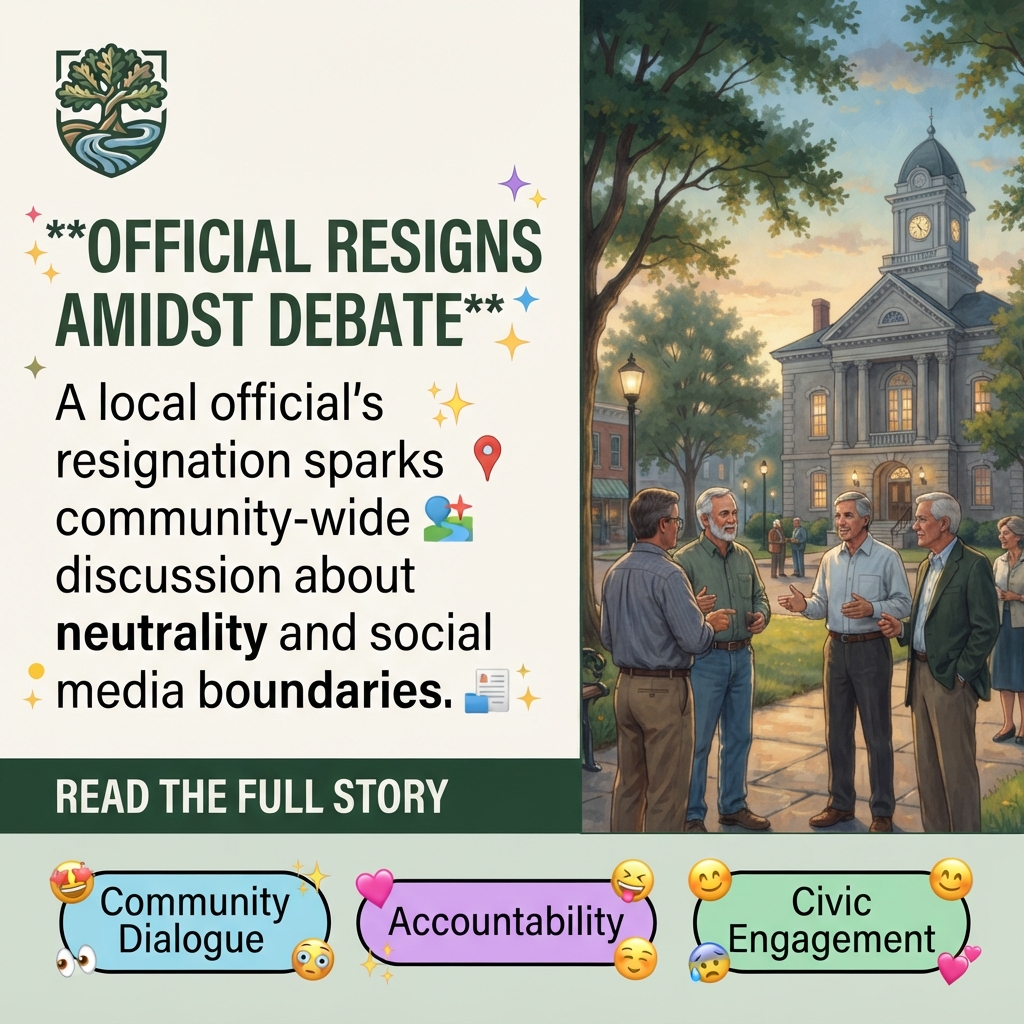
📢 Rhea County Tourism Director Resigns After Social Media Controversy Sparks Debate Over Government Neutrality
The Sequatchie Valley has long thrived on its vibrant community spirit, but recent events in nearby Rhea County have sparked a conversation about how local government engages with residents—especially during contentious elections. As the dust settles on another political season, the resignation of Alex Fine, director of the Rhea County Department of Tourism, raises questions not just about social media boundaries for public officials, but also about how county leadership balances professionalism with community connection.
Fine’s departure follows a viral incident where the department’s Facebook account responded to a parody video mocking then-candidate Adam McRorie—an action that ignited criticism from residents who argued government accounts should remain neutral. The controversy reflects broader tensions in small-town Tennessee, where personal and political lines often blur.
📍 WHY THIS MATTERS: A Lesson for Local Government Engagement
For residents across the Sequatchie Valley—whether in Campaign or neighboring communities like Crossville or Dayton—the situation underscores how public officials’ social media decisions can ripple through a close-knit community. When government accounts engage with political content, even inadvertently, it risks alienating voters and eroding trust—a concern that resonates deeply in rural areas where word spreads quickly.
“This isn’t just about one person or one post,” said a local resident who declined to be named but shared concerns about the broader implications. “When county leaders step into political waters, it can make people feel like their government is picking sides—especially when elections are already emotionally charged.” The incident also highlights how quickly digital interactions can escalate in small communities, where everyone knows someone—and where reputations (and careers) can hinge on a single comment.
❤️ COMMUNITY CONNECTIONS: Where the Story Touches Local Life
The resignation touches several key threads in Rhea County’s social fabric:
- Tourism and Economic Vitality: Fine’s work over three years built relationships with local businesses, festivals, and visitors—efforts that directly support Campaign’s own tourism sector. Many Sequatchie Valley towns rely on similar partnerships to attract out-of-towners, making the question of public-sector professionalism particularly relevant.
- Election Season Ripple Effects: The controversy follows a contentious primary race in Rhea County, where turnout and emotions ran high. For residents who’ve watched local elections unfold over the past year, this incident serves as a reminder of how personal stakes can clash with professional roles.
- Social Media’s Role in Rural Communities: In towns like Campaign, Facebook isn’t just a platform—it’s often the primary way news spreads. The debate over government accounts’ boundaries mirrors conversations happening in Sequatchie County and beyond about how to navigate public discourse online.
👥 HUMAN IMPACT: Who’s Affected—and How?
The immediate impact is felt most acutely by:
- Fine herself: After three years of building the tourism department from the ground up, her resignation leaves unanswered questions about whether her contributions will be sustained. Locally, it’s a reminder that even dedicated public servants can face unforeseen career challenges.
- Rhea County residents: The apology and subsequent statement from County Executive Jim Vincent signal a commitment to accountability, but many wonder how this incident will shape future interactions between government and constituents. For some, it’s a call for clearer guidelines on social media use; for others, it’s proof that public service requires emotional resilience.
- Local businesses: While Fine’s resignation doesn’t directly impact Campaign’s economy, the broader conversation about tourism leadership could inspire similar reflections in Sequatchie County. How do local chambers of commerce or visitor bureaus navigate political seasons without alienating supporters?
🏙️ LOCAL PERSPECTIVE: What This Means for Campaign and Beyond
Campaign, like many towns in the Sequatchie Valley, operates on a tight-knit social network where public figures’ actions often become community talking points. While this incident is specific to Rhea County, its themes—professionalism vs. personal expression, the role of humor in political discourse—are familiar to residents who’ve watched local leaders navigate contentious issues.
“In small towns, everyone’s connected,” said a longtime Campaign resident who works in tourism. “When a county official steps into the spotlight, it’s not just about them anymore. It’s about how that reflects on the whole community.” The situation also raises questions about whether Campaign or other valley towns have their own “unwritten rules” for public officials’ social media use—a topic that could spark discussions at local chambers or civic meetings.
Historically, the Sequatchie Valley has faced similar challenges during election cycles. In 2020, a viral post by a county commissioner in nearby Marion County sparked debates about transparency, showing how quickly digital moments can become defining narratives for local leaders.
💡 OPPORTUNITIES FOR CONNECTION
For residents looking to engage thoughtfully with this story—or similar issues—here are ways to contribute:
- Attend Local Meetings: If your town hosts a public forum or chamber of commerce gathering, ask about social media guidelines for local government accounts. Many counties have informal policies that could use review.
- Support Tourism Efforts: Whether in Campaign or Rhea County, tourism departments rely on community goodwill. Volunteering at festivals, sharing positive visitor experiences online (without political commentary), or supporting local businesses can help sustain the work these leaders do behind the scenes.
- Reflect on Digital Civility: The incident offers a chance to discuss how residents interact with public officials online. Are there ways to hold leaders accountable without crossing into personal attacks? Local libraries, churches, or community centers might host discussions on this topic.
📅 WHAT RESIDENTS SHOULD KNOW
The key details to note:
- Fine’s Resignation: She officially stepped down earlier this week, citing disappointment in how the situation unfolded. Her statement emphasized her pride in building relationships and projects over three years.
- County Apology: Rhea County Executive Jim Vincent released a formal apology, emphasizing accountability and a commitment to professionalism moving forward.
- No Immediate Leadership Change: The post does not indicate who will fill the tourism director role or when that decision may be made. Residents can expect updates from the county’s website or local news outlets like The Herald-News.
- Social Media Guidelines: While no new policies were announced, this incident could prompt Rhea County (and other local governments) to review how public accounts engage with political content. Watch for announcements from county clerks or human resources departments.
⏳ WHAT HAPPENS NEXT
The next steps likely include:
- A Review of Social Media Protocols: Many counties have informal rules about political engagement; this incident may push Rhea County to formalize them or assign oversight to a committee.
- Recruitment for the Tourism Director Role: The position will need a replacement, and the county’s hiring process could take months. Watch for job postings on government websites or through local networks like the Sequatchie Valley Chamber.
- Community Reflection: Residents may see more discussions about civility, transparency, and the role of humor in public discourse—topics that could resurface at town halls or social gatherings.
🤔 COMMUNITY QUESTIONS
As this story unfolds, consider these questions for your own community:
- How should local government accounts engage with political content without alienating residents? Are there clear guidelines—or should they be created?
- What lessons can Campaign and other valley towns learn from Rhea County’s experience about balancing professionalism with community connection?
- When public officials face backlash for social media posts, how can residents support them while holding them accountable?
- How might this incident impact tourism efforts in Rhea County—and what could it teach other towns about the importance of maintaining trust during elections?
- If you’re a small-business owner or volunteer, how do you navigate supporting local leaders without getting caught up in political debates?
🌱 LONG-TERM COMMUNITY IMPACT
The ripple effects of this resignation could extend beyond Rhea County for years:
- Trust in Local Government: If residents feel the county has handled this transparently, it could strengthen confidence in public institutions. Conversely, perceived inconsistency might deepen skepticism—especially during future elections.
- Tourism Department’s Future: The department’s ability to rebuild relationships and attract visitors may depend on how smoothly the transition occurs. For Campaign and other valley towns, it’s a reminder of how fragile those partnerships can be.
- Digital Civility Norms: This incident could prompt broader conversations about online behavior in rural Tennessee. Will more counties adopt social media training for officials? Will residents demand clearer expectations?
- Leadership Lessons: Fine’s departure offers a case study in how quickly reputations can shift—and how resilience matters. For aspiring public servants, it’s a cautionary tale about the emotional labor of service.
🧵 COMMUNITY THREADS: The Invisible Connections Behind the Story
This resignation reveals several hidden threads that weave through Rhea County—and by extension, the broader Sequatchie Valley:
- The Tourism Network 🌿Fine’s work connected Rhea County to regional tourism efforts, including partnerships with local farms, festivals like the Rhea County Fair, and visitors from across Tennessee. In Campaign, similar collaborations between the Chamber of Commerce and local businesses keep the valley’s economy vibrant. Understanding these threads helps residents see how one leader’s actions can ripple into shared economic goals.
- The Election Cycle 🗳️This controversy didn’t happen in a vacuum. It unfolded during a high-stakes primary race, where emotions ran deep and social media became a battleground. For residents who’ve watched local elections unfold—whether in Campaign or Dayton—the incident underscores how personal stakes intersect with professional roles. It’s a reminder that politics isn’t just about policies; it’s about the people behind them.
- The Social Media Divide 📱Rhea County’s Facebook account isn’t just a tool—it’s often the primary way news spreads in rural Tennessee. The debate over its use reflects a broader tension: How do small towns navigate digital communication without losing their sense of community? For Campaign residents, it’s a question that could surface at town meetings or when discussing how local groups (like the Campaign Chamber) manage their own online presence.
- The “Small-Town Reputation” 🏡In towns like Campaign, a public official’s misstep can become a defining narrative—sometimes for years. Fine’s resignation isn’t just about her; it’s about how the community perceives its leaders. For residents who’ve seen similar stories unfold (like in nearby Marion County), it’s a chance to reflect on what it means to be a “good” public servant—and whether the valley’s standards align with those of Rhea County.
As this story continues to unfold, one thing is clear: The Sequatchie Valley’s strength lies in its ability to learn from each other. Whether through tourism partnerships, election reflections, or digital engagement, the choices made today will shape how residents connect—and trust—tomorrow.


0 Comments