
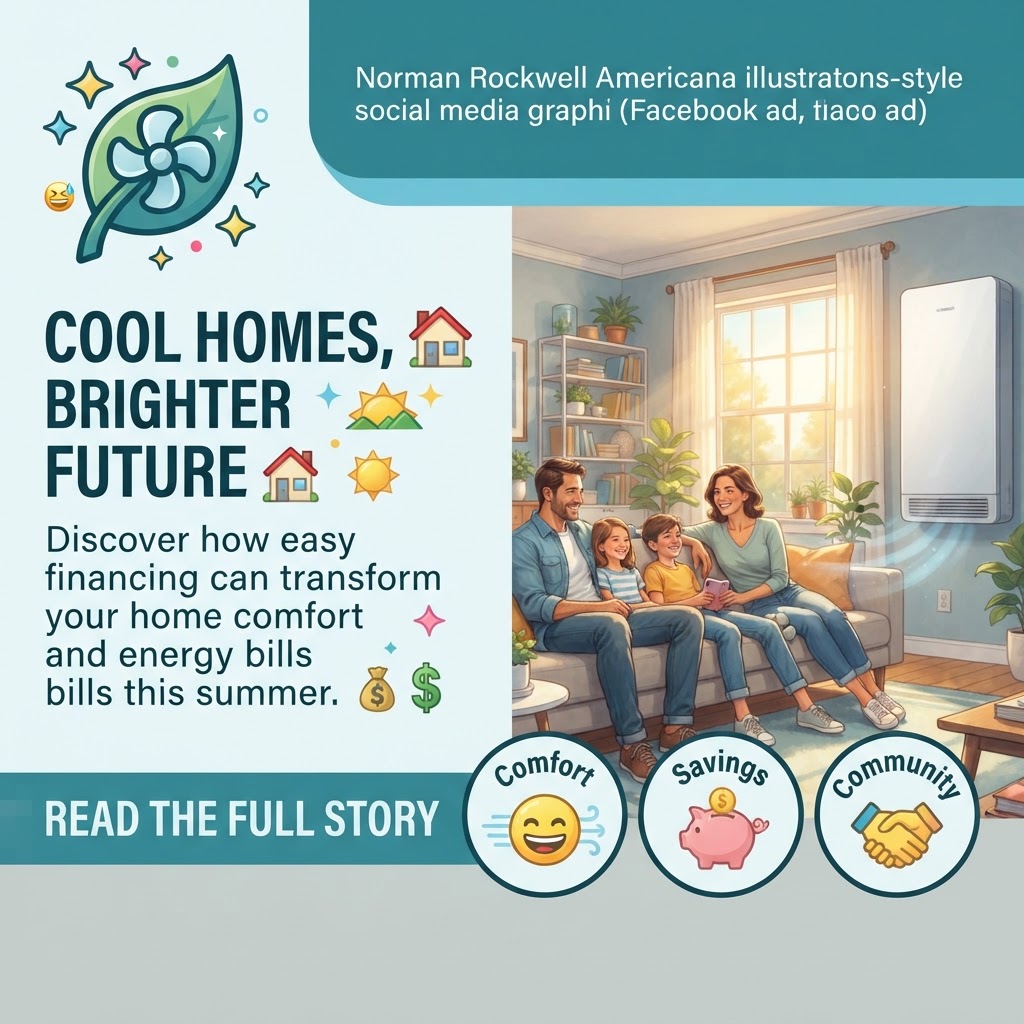
🌡️ Stay Cool This Summer: Heat Pump Financing Helps Sequatchie Valley Residents Beat the Heat
As Tennessee’s summer heat intensifies, Sequatchie Valley residents are reminded that energy efficiency isn’t just about comfort—it’s about saving money and staying safe. With temperatures climbing, now is the perfect time to ensure your cooling system is running at its best.
📍 Why This Matters
For many families in the Sequatchie Valley, summer isn’t just about outdoor adventures—it’s a season of balancing work, school schedules, and rising utility bills. A properly maintained or upgraded heat pump can mean the difference between a comfortable home and one where air conditioners struggle to keep up. Beyond personal comfort, energy efficiency directly impacts household budgets, especially when electricity costs rise during peak usage hours.
This matters most for renters, older adults on fixed incomes, young families with children, and homeowners looking to reduce long-term energy costs. For businesses relying on climate control—like restaurants, small shops, or workshops—the efficiency of cooling systems can also affect operations during the hottest months.
❤️ Community Connections
The Sequatchie Valley Electric Cooperative (SVEC) isn’t just providing a financial tool; they’re offering a lifeline for residents who may feel trapped between high energy costs and outdated cooling systems. This initiative connects directly to several key community threads:
- Energy Affordability: SVEC’s loan program aligns with broader efforts across the region to make home upgrades more accessible, particularly in rural areas where upfront costs can be prohibitive.
- Local Businesses & Homeowners: HVAC contractors and hardware stores in the valley may see increased demand as residents explore new or upgraded systems. This could strengthen local partnerships between energy providers and service professionals.
- Schools & Community Centers: Many of these facilities rely on aging cooling systems to keep students, seniors, and volunteers safe during summer programs. Upgrades here could improve attendance and participation in community events.
- Environmental Stewardship: Heat pumps are more energy-efficient than traditional systems, reducing overall demand on the grid—a shared priority for residents who value sustainability and lower carbon footprints.
👨👩👧👦 Human Impact
Who benefits most from this program? Everyday Sequatchie Valley families—especially those who spend a significant portion of their income on utilities. For example:
- Single parents juggling work and childcare may finally afford to upgrade a system that’s been failing for years, reducing stress during school breaks when cooling needs peak.
- Retirees on fixed incomes could see their summer utility bills drop significantly, freeing up funds for healthcare or travel—two activities many seniors prioritize in the valley.
- Young couples buying homes might choose energy-efficient upgrades as a smart investment, boosting property values and long-term savings.
- Small business owners, such as those running cafés or workshops, could improve customer comfort without breaking their budgets—potentially leading to happier patrons and repeat visits.
🌱 Local Perspective
In the Sequatchie Valley, where rural living often means older homes with less insulation and fewer resources for major renovations, energy efficiency is a recurring conversation. This program reflects a growing trend in Tennessee’s Appalachian region: cooperatives and local governments collaborating to make home improvements more attainable. Similar initiatives have popped up in nearby counties like Grundy and Hamilton, where utilities have partnered with nonprofits to offer rebates or financing for energy upgrades. The difference here? Sequatchie Valley Electric Cooperative (SVEC) is taking a proactive approach by bundling financing directly into their services, removing some of the friction that often discourages homeowners from making upgrades.
Locally, this also ties into the valley’s seasonal rhythms. With summer festivals, farmers’ markets, and outdoor recreation drawing visitors—and residents—cooling systems become a shared responsibility. When community spaces like libraries or churches struggle with overheated rooms during events, it affects everyone from volunteers to attendees.
💡 Opportunities for Connection
Residents who want to take advantage of this program—or simply learn more—have several straightforward next steps:
- Visit the SVEC website (svalleyec.com/heat-pump-financing) to explore financing options, eligibility requirements, and application details.
- Schedule a home energy audit: Many HVAC contractors in the valley offer free or low-cost assessments. This step can help residents identify exactly what upgrades would provide the most savings—whether it’s a new heat pump, better insulation, or smart thermostat integration.
- Attend local workshops: Keep an eye on SVEC’s social media or community bulletin boards for upcoming sessions on energy efficiency. These events often include Q&As with contractors and financial advisors, giving residents hands-on guidance.
- Share the program: Word-of-mouth is powerful in tight-knit communities. Residents who’ve already applied can share their experiences—success stories or tips on navigating the process—to help neighbors feel more confident about taking action.
🗓️ What Residents Should Know
The program details are simple but impactful:
- Easy financing options: Sequatchie Valley Electric Cooperative (SVEC)’s Heat Pump Loan Program is designed to spread the cost of upgrades over time, making it easier for residents to budget for a new system.
- No upfront costs: Unlike traditional loans or credit cards, this program likely avoids high interest rates, reducing financial strain.
- Eligibility is broad: While exact criteria aren’t detailed in the post, programs like these typically prioritize residents who meet income thresholds or own their homes. SVEC’s website will have the full breakdown.
- Deadlines may apply: Funding for cooperative programs often has limited availability, so applying sooner rather than later is wise—especially if you’re planning upgrades before next summer.
⏳ What Happens Next
The next steps are clear but require action from residents:
- Applications open now: There’s no mention of a deadline in the post, but SVEC typically processes applications on a rolling basis. Procrastination could mean waiting for funding cycles or higher demand during peak summer months.
- Contractor partnerships: Once approved, residents will likely need to work with pre-approved HVAC contractors (likely local businesses) to complete the upgrade. SVEC may provide a list of recommended providers.
- Long-term savings tracking: After installation, residents could see their utility bills drop by 20–40% annually, depending on the system and home efficiency. SVEC might offer tools or check-ins to help track progress.
- Potential for expansion: If this program is successful, we may see similar financing options for other energy upgrades—like water heaters or solar panels—in the future.
🤔 Community Questions
As residents consider this opportunity—and the broader topic of home energy efficiency—here are a few questions worth discussing:
- How can Sequatchie Valley residents advocate for even more support? Are there local nonprofits, churches, or civic groups that could partner with SVEC to offer additional resources, like grants or volunteer labor for upgrades?
- What’s the biggest barrier preventing homeowners from making energy-efficient upgrades? Is it cost, lack of information, or simply not knowing where to start? How can community leaders address these gaps?
- How might this program impact property values in the valley? If more homes are equipped with efficient cooling systems, could that become a selling point for future buyers—or even attract new residents looking for lower utility costs?
- What other seasonal challenges could SVEC address next? With winter heating needs looming, might financing options expand to include insulation, smart thermostats, or heat pump water heaters?
- How can renters benefit from this program? Many valley residents live in rental properties. Could landlords be incentivized to upgrade cooling systems for tenant satisfaction—or would a separate program for renters make more sense?
🌿 Long-Term Community Impact
The ripple effects of this initiative could extend far beyond individual savings:
- Economic Boost for Local Businesses: Increased demand for HVAC services and hardware could strengthen partnerships between valley contractors, suppliers, and cooperatives—keeping dollars circulating locally.
- Improved Public Health: Proper cooling reduces the risk of heat-related illnesses, especially for vulnerable populations like children, seniors, and those with respiratory conditions. This aligns with broader health initiatives in rural Tennessee.
- Environmental Stewardship: By reducing energy waste, the valley could see a collective drop in carbon emissions, contributing to cleaner air and water—a shared goal for Sequatchie’s natural beauty and outdoor recreation economy.
- Community Pride & Resilience: When residents invest in their homes, it fosters a sense of stability. This program could inspire other collaborative efforts—like neighborhood cleanups or shared solar projects—that strengthen the valley’s identity as a place where community matters.
🧵 Community Threads: The Hidden Connections
Every energy upgrade story is also a story about the people, traditions, and systems that make Sequatchie Valley unique. Here are some of the invisible threads this initiative weaves into:
- The “Stay & Play” Economy 🏡✨Sequatchie Valley’s tourism relies on visitors—and residents—enjoying outdoor activities like hiking, fishing, and festivals. When community spaces (like libraries or event venues) have reliable cooling, they can host more programs, drawing people together. This program could indirectly support the local economy by ensuring that summer gatherings remain comfortable for all attendees.
- The Intergenerational Home 👨👩👧👦Many valley homes are passed down through generations, with older adults sharing spaces with grandchildren or adult children. A new heat pump isn’t just a utility upgrade—it’s about creating safer, more livable spaces for multigenerational families. This aligns with the valley’s strong family values and emphasis on keeping roots planted.
- The Farmer & The Fixer-Upper 🌾🛠️While this program focuses on heat pumps, it touches on a broader theme in the valley: the balance between tradition and modernization. Farmers who’ve lived with aging equipment for decades might now see an opportunity to upgrade—not just for comfort, but to stay competitive with younger neighbors or attract tenants to their properties.
- The Church & The Community Center 🏪🙌Many valley churches and community centers rely on volunteers who may not have the latest cooling tech at home. If these spaces upgrade their systems, they set a standard for others—showing that collective action can make a difference. It’s a practical way to live out the valley’s emphasis on service and neighborly support.
- The Teacher & The Student 🎓📚Schools in the valley often face the challenge of outdated HVAC systems during summer school or after-school programs. If local families upgrade their own cooling, it could inspire schools to seek similar funding—leading to safer, more engaging learning environments for kids who rely on air conditioning during hot months.




0 Comments