

🐱 The Cats Need Names: Building a Simple Community-Cat Census

🐾 The Scaredy Cat Project — Article #20
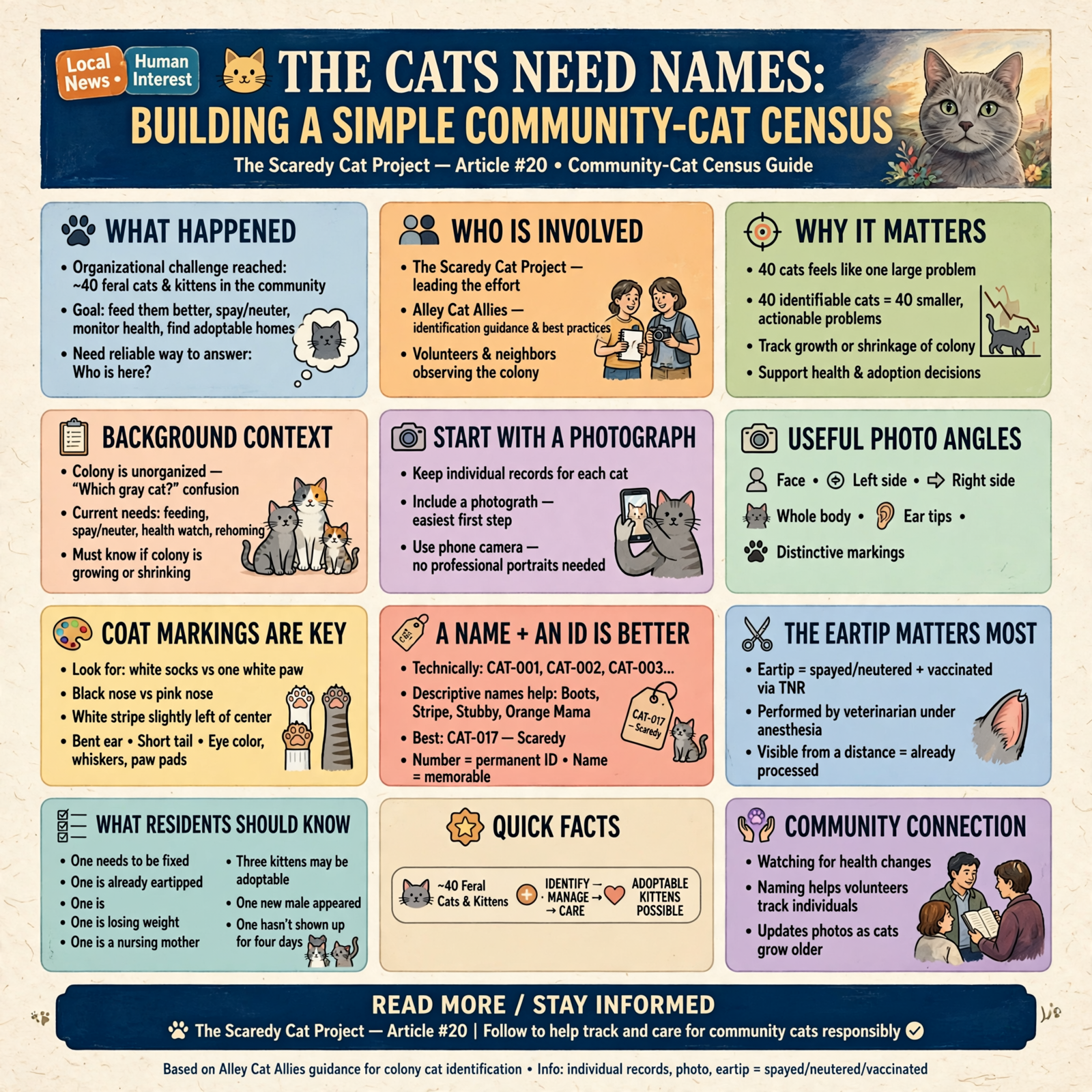
We have reached an organizational problem.
There are roughly 40 feral cats and kittens around us.
We want to feed them better.
We want to get them spayed or neutered.
We want to watch for health changes.
We want to find homes for the cats that can become pets.
We want to know whether the colony is growing or shrinking.
And somewhere in the middle of all that, somebody says:
“What about that gray cat?”
Which gray cat?
“You know. The gray one.”
This is not a management system.
📋 We Need a Census

Not a government census.
Not a seventeen-page application.
Not a bureaucracy.
We simply need a reliable way to answer:
Who is here?
That’s more important than it sounds.
🐾 A Colony Becomes Manageable When the Cats Become Individuals
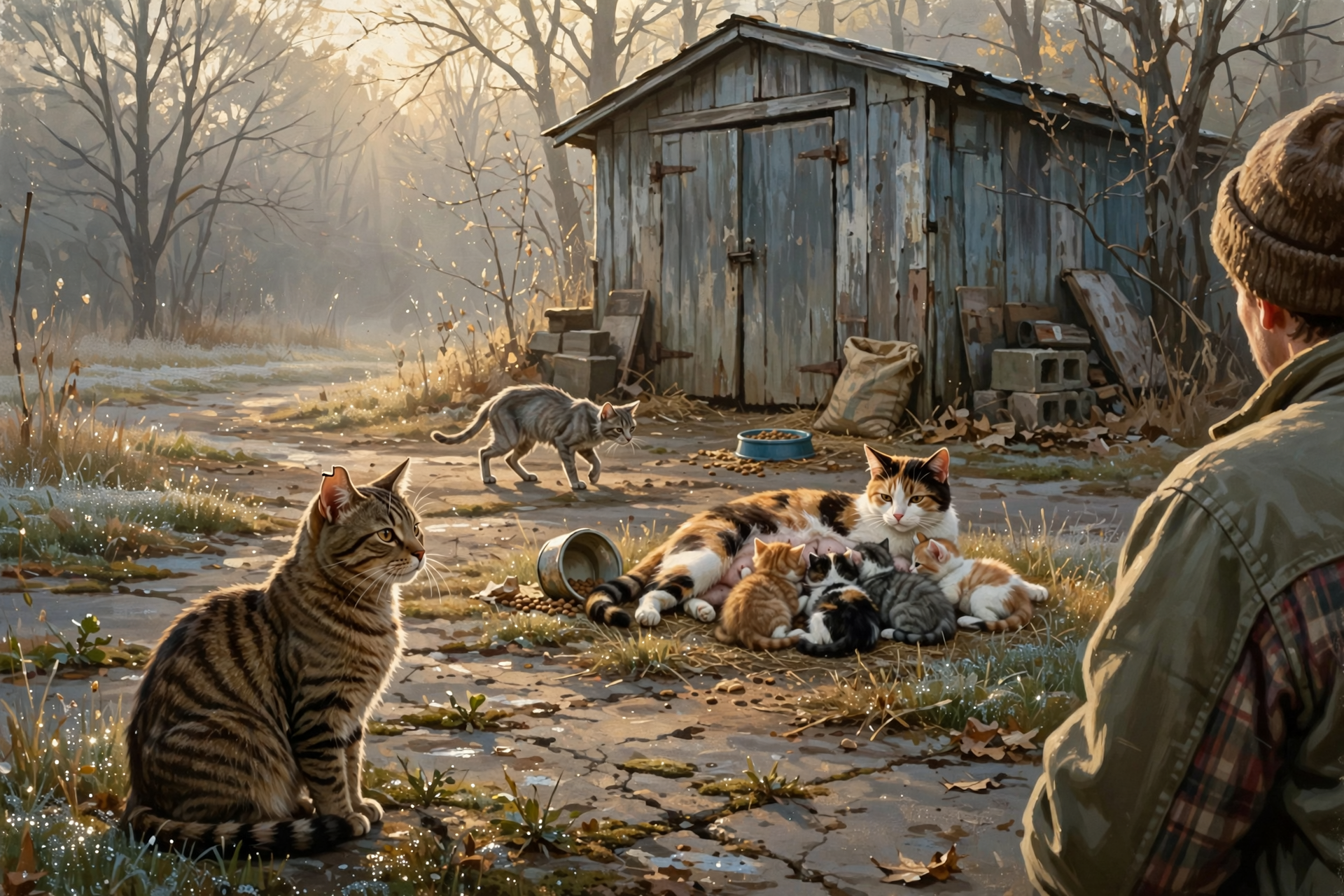
Forty cats can feel like one large problem.
But forty identifiable cats become forty smaller problems.
One needs to be fixed.
One is already eartipped.
One is losing weight.
One is a nursing mother.
Three kittens may be adoptable.
One new male appeared last week.
One hasn’t shown up for four days.
That’s actionable information.
📸 Start With a Photograph

Alley Cat Allies recommends keeping individual records for colony cats and specifically suggests including a photograph of each cat and updating photos as the cat grows older.
That may be the easiest part of the entire system.
Most of us already carry a camera everywhere.
It’s called a phone.
We do not need professional portraits.
We need identification photos.
📷 Useful Photo Angles
When possible, I would try to capture:
- 👤 Face
- ⬅️ Left side
- ➡️ Right side
- 🐾 Whole body
- 👂 Ear tips
- 🎨 Distinctive markings
One clear photo may be enough for some cats.
Others may need several.
🎨 Coat Markings Become Surprisingly Useful
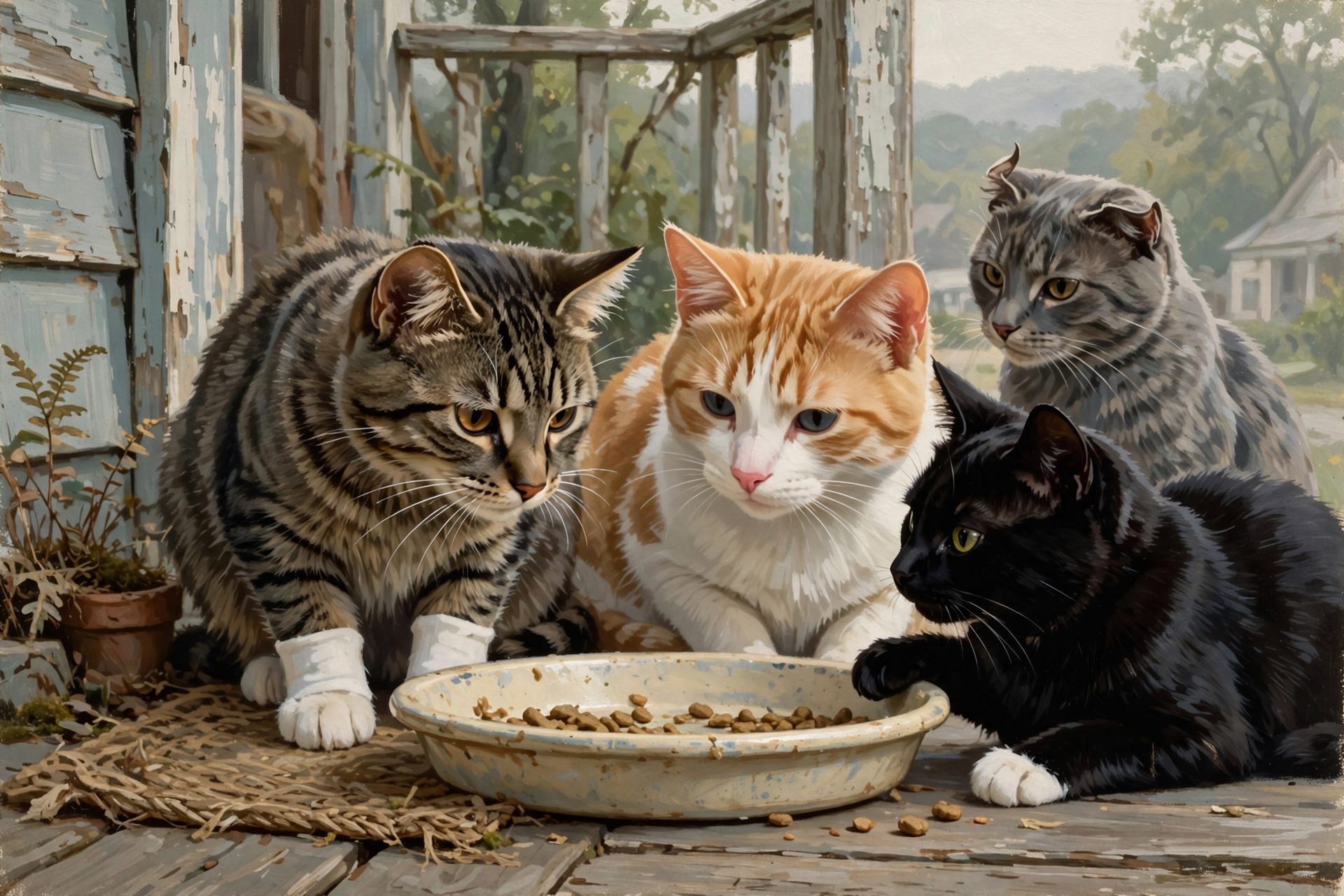
When you really start looking, cats that initially look alike often aren’t.
One has white socks.
Another has one white paw.
One has a black nose.
Another has a pink nose.
One has a white stripe slightly left of center.
One has a bent ear.
One has a short tail.
Alley Cat Allies’ identification guidance notes that eye color, nose color, whiskers, paw pads and distinctive physical traits can all help distinguish individual cats.
😹 And Yes, Names Help
Technically, we could assign:
CAT-001.
CAT-002.
CAT-003.
That would be organized.
It would also be rather dull.
Cats tend to acquire names whether we plan for them or not.
Scaredy certainly did.
A descriptive name can actually help identification.
Boots.
Stripe.
Stubby.
Orange Mama.
Whatever works.
We can still give each cat a unique ID behind the scenes.
🔢 A Name and an ID Are Better Than Either Alone

I like the idea of something like:
CAT-017 — Scaredy
The number gives us a permanent identifier.
The name gives humans something memorable.
If another cat eventually gets nicknamed Scaredy Junior, the database doesn’t care.
CAT-017 remains CAT-017.
👂 The Eartip May Be the Most Important Marking of All

For community cats, an eartip has a specific meaning.
Alley Cat Allies describes eartipping as the preferred visible identification method for a community cat that has been spayed or neutered and vaccinated through TNR. The procedure is performed by a veterinarian while the cat is already under anesthesia.
That means when we see an eartip from a distance, we immediately know something extremely valuable:
This cat has already been through the process.
✂️ Why Eartipping Matters So Much
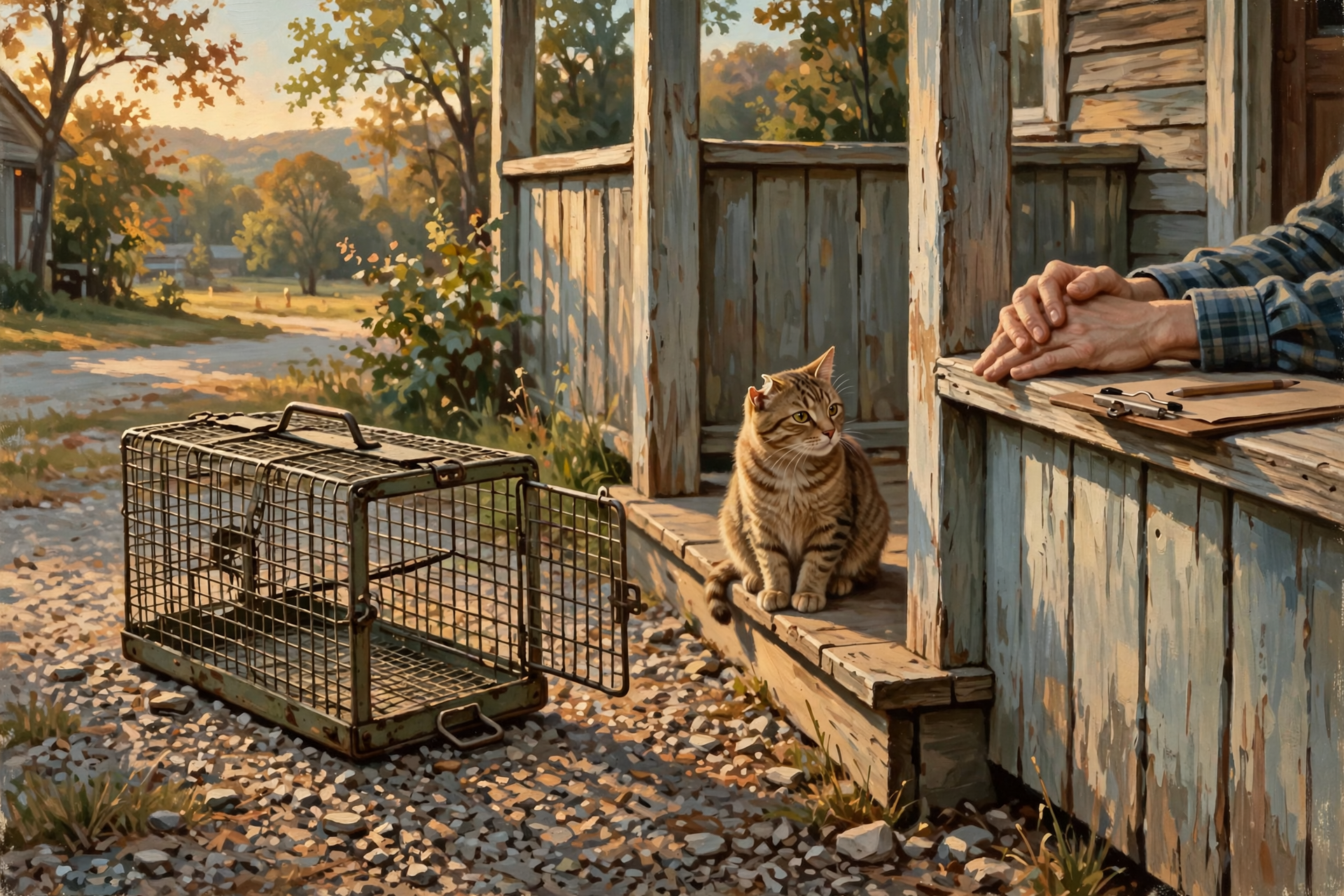
Imagine trapping a truly feral cat.
Transporting it.
Taking it to a clinic.
Only to discover it was already fixed.
That’s stress for the cat.
Work for the caregiver.
Use of a trap.
Transportation.
Clinic time.
And potentially money.
A visible eartip prevents much of that.
The ASPCA similarly describes eartipping as a visible way to prevent unnecessary retrapping and repeat surgery.
📊 Our Census Should Track Fixed Status First

If population control is one of our primary goals, then one of the most useful fields in the entire census is:
Spay/Neuter Status.
I would use:
- ✅ Fixed — confirmed
- 👂 Eartipped
- ❌ Not fixed — confirmed
- ❓ Unknown
Unknown is important.
We should not turn guesses into facts.
⚥ Sex Matters Too

If we’re trying to prioritize limited spay and neuter money, knowing whether a cat is male or female helps.
Sometimes sex is obvious.
Sometimes it isn’t.
Especially at a distance.
Again, the correct database entry when we don’t know is:
Unknown.
Not:
“Looks kind of male-ish.”
📅 Approximate Age Is Good Enough
We aren’t going to know birthdays for most community cats.
That’s fine.
We don’t need:
Born April 17 at 3:42 p.m.
We need useful categories.
🐾 Kitten
Still clearly growing.
🐱 Young Adult
Fully grown or nearly so.
🐈 Adult
Mature animal.
👴 Older Adult
Obviously aging or known to have been around for years.
That is enough for colony management.
⚖️ Body Condition Belongs in the Census

In the previous article, we discussed monitoring whether the feeding plan is actually helping.
The census gives us somewhere to record that.
We could keep it very simple:
- 🔻 Thin
- ✅ Reasonable
- 🔺 Heavy
For friendly cats we can examine more closely, we could use a formal Body Condition Score.
But for many ferals, the visual trend matters more than false precision.
📈 Trend Is More Important Than One Observation

Suppose CAT-021 looks thin today.
Maybe that’s normal for that cat.
But suppose the record says:
August: reasonable.
September: reasonable.
October: slightly thin.
November: clearly thin.
Now we have a trend.
That deserves attention.
🥣 Feeding Behavior Belongs Here Too

I would add a simple field:
Feeding Behavior.
Possibilities might include:
- 😸 Bold
- 🐱 Normal
- 🙀 Timid
- 🥣 Needs separate feeding
- 😿 Poor appetite
That could help us recognize why one particular cat keeps losing weight even when plenty of food is available.
🐾 Temperament May Determine the Cat’s Future
Not every outdoor cat has the same relationship with people.
Some are genuinely feral.
Some are cautious.
Some are friendly strays.
Some kittens can be socialized.
Some adults may walk into the house tomorrow if given the opportunity.
Scaredy started aloof and eventually became Muh Gurl.
That means temperament belongs in our records.
🙀 Feral
Avoids close human contact.
😼 Cautious
Tolerates humans nearby but doesn’t seek contact.
😸 Friendly
Approaches people or accepts touch.
🏡 Potentially Adoptable
Appears likely to adapt to a home.
🏡 Adoption Potential Should Be a Formal Field
This may sound cold.
It isn’t.
If we don’t record which cats appear adoptable, those opportunities can disappear in the daily chaos.
A friendly kitten becomes an adult.
A sociable stray settles permanently into the colony.
And six months later someone says:
“Wasn’t that one friendly?”
Let’s capture the opportunity when we see it.
🐾 Kittens Need Their Own Tracking

Kittens are particularly important because timing matters.
We should know:
- 🐾 Which litter?
- 🐱 How many?
- 👩 Which mother, if known?
- 📅 Approximate age?
- ⚖️ Growing normally?
- 😸 Socialized or socializable?
- 🏡 Foster possibility?
- 🏠 Adoption possibility?
A litter of four kittens should not simply enter the database as:
“Four little gray ones.”
👩 Linking Kittens to Mothers Could Help With TNR

If we know which female produced which litter, that gives us useful information.
That mother becomes a particularly important spay candidate.
If the same female produces another litter, the record makes the pattern impossible to miss.
This is exactly the kind of problem a census can turn from anecdote into action.
📍 Feeding Location Matters

If we eventually have multiple feeding stations, each cat may have a preferred location.
That is useful.
We might discover:
CAT-012 usually appears at Shed Station.
CAT-018 usually appears near the RV.
CAT-031 only eats behind the barn.
Now when a cat is missing, we know where it normally appears.
📅 Last Seen May Become an Important Field

I learned this lesson the hard way with Scaredy.
When she disappeared, I counted the days.
Thirty-six of them.
With forty cats, it becomes much harder to know exactly how long one individual has been missing unless we track it.
A simple:
Last Seen
field could help.
👀 New Cat Is an Event

The ASPCA specifically emphasizes monitoring colonies for new cats so intact newcomers can be identified and incorporated into TNR efforts quickly.
That matters because one new unfixed female isn’t simply:
one more mouth.
Potentially, she is:
one more litter.
So I would add:
Date First Seen.
📉 Colony Size Should Become a Measured Outcome

If we’re serious about:
Feed them. Fix them. Find them homes when we can.
then eventually our total number should fall.
Not overnight.
But over time.
The ASPCA emphasizes monitoring both existing cats and new arrivals as an important part of reducing community-cat populations through TNRM.
That means the census gives us a real scoreboard.
📈 Population Rising
Something isn’t working.
➡️ Population Stable
Better, but we still need to keep fixing.
📉 Population Gradually Falling
Now the system is moving toward the goal.
✂️ Fixed Percentage May Be More Important Than Total Count
Imagine two colonies of forty cats.
Colony A
10 fixed.
30 intact.
Colony B
35 fixed.
5 intact.
The total count is identical.
The future is not.
That means I would track:
percentage known fixed.
That may become one of our most important management numbers.
👂 The Eartip Lets Us Measure From a Distance

This is another reason eartipping is so useful.
We don’t have to catch every cat to ask:
How many appear to be fixed?
ASPCA notes that colony monitoring can include counting cats and the proportion with visible eartips, even using structured observation routes or binoculars when necessary.
For our smaller local situation, a phone camera may be enough.
🩺 Medical History Should Stay Simple but Useful

Alley Cat Allies recommends keeping medical records for each cat, including vaccinations, spay/neuter information and other procedures.
Our record might include:
- ✂️ Spayed/neutered date
- 💉 Rabies vaccination
- 💉 Other known vaccines
- 🩺 Major medical treatment
- 🐛 Parasite treatment
- 💊 Medication notes
- 🔢 Microchip number if present
We don’t need to reconstruct a lifetime veterinary chart for every feral.
But information we actually know should not disappear.
🔢 Microchip Information Belongs With the Cat

If a cat is scanned and has a microchip, document it.
Alley Cat Allies specifically recommends recording microchip manufacturer and number when available.
That could help determine whether a seemingly feral newcomer is actually someone’s lost pet.
🏠 “Owned?” Could Be an Important Question Too
Not every cat eating at a community feeding station is necessarily homeless.
Some may belong to neighbors.
Some may split their time between several households.
Cats are not known for respecting administrative boundaries.
So I would include:
Known Owner/Caregiver: Yes / No / Unknown
That may prevent a lot of confusion.
📋 What Should the Actual Record Contain?

Here’s my first-pass version.
Identification
- 🔢 Unique Cat ID
- 🐱 Name or nickname
- 📸 Photo
- 🎨 Coat color and markings
- 👂 Distinctive features
Basic Information
- ⚥ Sex
- 📅 Approximate age
- 📅 Date first seen
- 📅 Date last seen
TNR / Medical
- ✂️ Fixed status
- 👂 Eartipped
- 📅 Surgery date
- 💉 Vaccination status
- 🔢 Microchip
- 🩺 Medical notes
Condition
- ⚖️ Body condition
- 🥣 Appetite
- ✨ Coat
- 🐾 Mobility
- 🟢🟡🔴 Wellness status
Behavior
- 🙀 Feral
- 😼 Cautious
- 😸 Friendly
- 🏡 Adoption potential
Colony
- 📍 Feeding location
- 👩 Mother, if known
- 🐾 Litter relationship, if known
- 📝 Notes
🟢🟡🔴 Keep the Health Status Simple
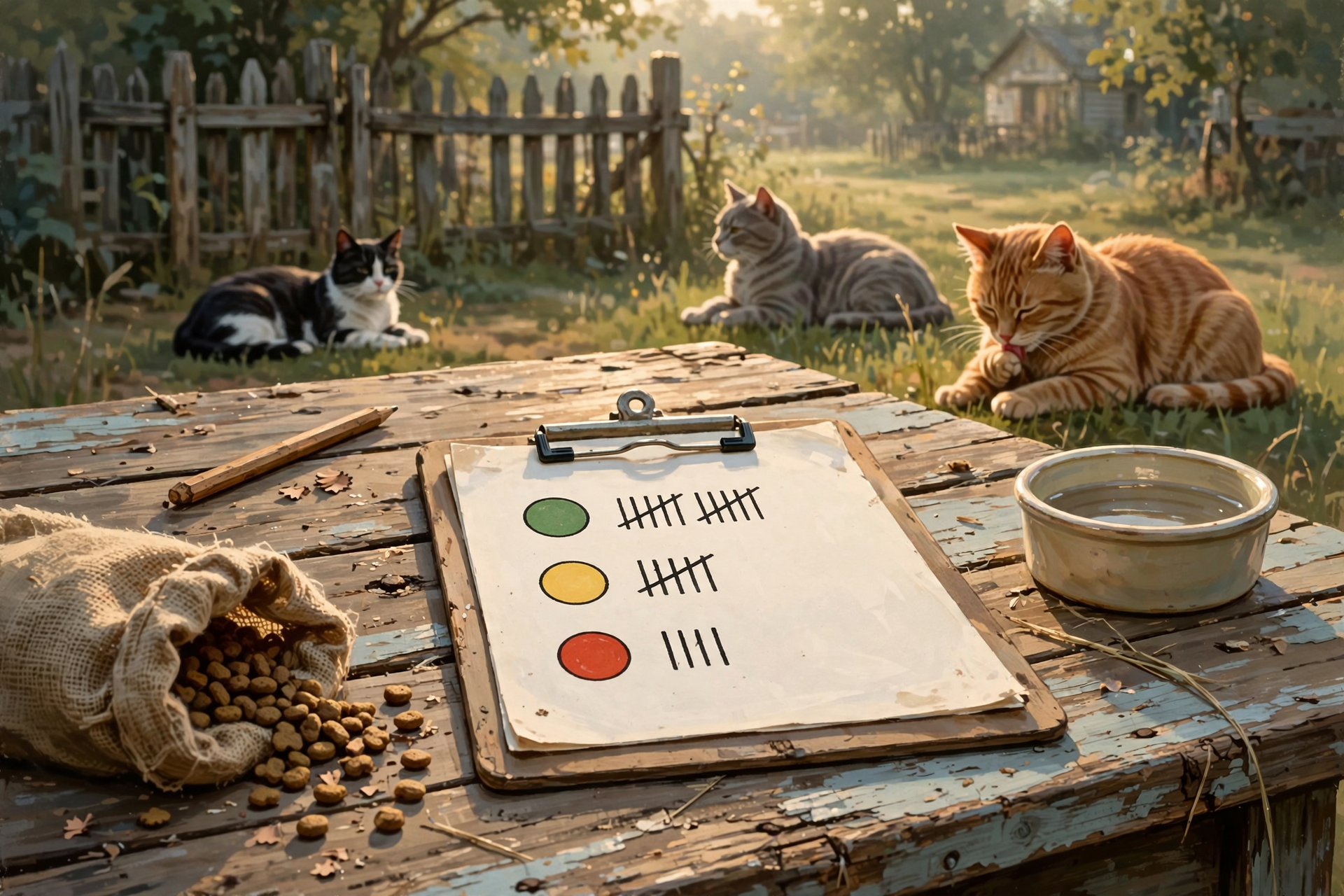
From the previous article, I still like:
🟢 Green
Appears stable.
🟡 Yellow
Something needs watching.
🔴 Red
Needs immediate attention or intervention.
That lets us scan the census quickly.
Forty cats become:
34 green.
4 yellow.
2 red.
Now I know where to focus.
📊 The Colony Dashboard Almost Builds Itself

Once we track individuals, we can calculate:
- 🐱 Total active cats
- 🐾 Kittens
- ⚥ Males
- ⚥ Females
- ✂️ Known fixed
- ❓ Fix status unknown
- 👂 Eartipped
- 🏡 Potentially adoptable
- 🟢 Green health
- 🟡 Yellow health
- 🔴 Red health
- 📅 New arrivals this month
- 🏠 Adoptions this month
- 📉 Colony change
That’s a management system.
💰 It Also Helps Us Spend Spay/Neuter Money Intelligently

Suppose we finally get enough money to fix ten cats.
Without records, we may simply trap whoever shows up.
With a census, we can make better decisions.
Which cats are intact?
Which females have already produced litters?
Which cats are easiest to trap?
Which ones might be pregnant?
Which animals are already eartipped?
Information turns limited money into more useful action.
🏡 It Also Creates an Adoption List Automatically

If we tag cats as:
friendly
or:
potentially adoptable
then our census produces a list of animals we should be photographing and promoting.
That keeps adoption from becoming an afterthought.
📸 The Photo Can Eventually Become the Adoption Photo

This is another nice side effect.
If we already photograph each cat periodically, then when one becomes a serious adoption candidate we already have:
- 📸 Photos
- 📅 History
- ⚥ Sex
- ✂️ Fix status
- 😸 Temperament notes
- 🩺 Known health information
That makes creating an adoption listing much easier.
📝 The Census Should Be Easy Enough That We’ll Actually Use It

This is probably the most important design rule.
A brilliant system nobody updates is worthless.
So I don’t want:
72 required fields.
Complicated forms.
Five passwords.
Or a thirty-minute data-entry session every time a cat appears.
I want:
photo + a few facts + easy updates.
📱 A Phone Should Be Enough in the Field

If we’re standing near a feeding station and a new cat appears, the ideal workflow is:
1️⃣ Take a Photo
2️⃣ Give It a Temporary Name or ID
3️⃣ Record Location
4️⃣ Mark Eartip Yes/No/Unknown
5️⃣ Estimate Age and Sex If Reasonably Known
6️⃣ Save
Everything else can be added later.
That is much more realistic.
🤖 Eventually, AI Might Help With Identification

Here’s where this project could get interesting technologically without needing technology on day one.
If we accumulate good photographs, software may eventually help compare:
- 🎨 Coat patterns
- 👤 Face markings
- 👂 Ear shape
- 🐾 Body markings
and suggest:
“This may be CAT-027.”
I would still want a human confirming it.
But with forty or more cats, assisted identification could eventually be useful.
📊 We Could Also Count Cats Automatically From Feeding-Station Photos
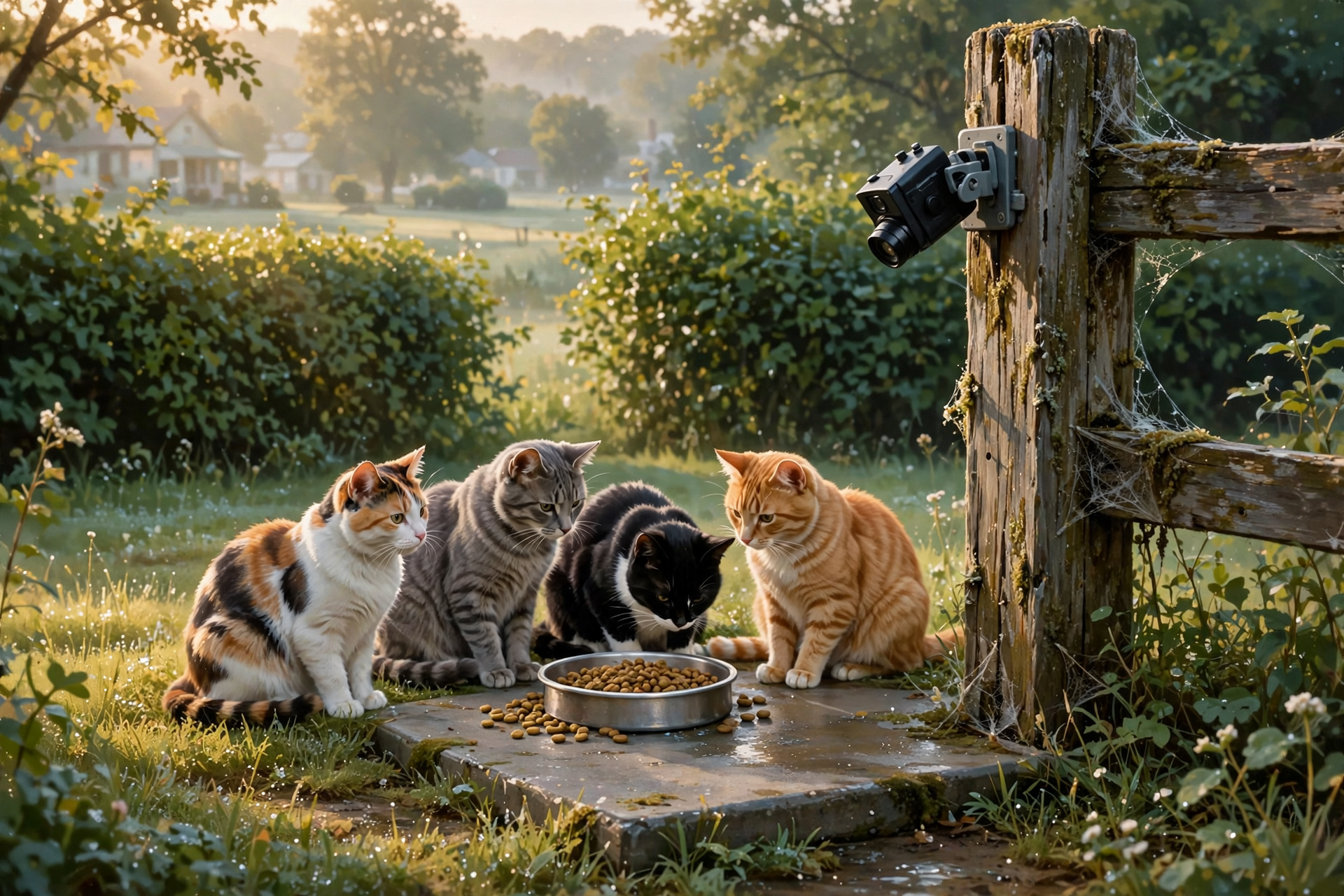
A simple camera aimed at a feeding station could eventually help answer:
How many cats visited today?
Which known cats appeared?
Which cat hasn’t appeared recently?
Is there a new cat?
That is a future project.
Not a requirement for getting started.
🐱 Scaredy Will Not Need Facial Recognition
Scaredy is easy to identify.
She is the cat:
supervising me.
requesting tuna.
complaining about service quality.
and monitoring my health.
Her database record could probably be:
CAT-001 — Muh Gurl — Management.
But the other thirty-nine may require a little more structure.
📉 The Census Lets Us Finally Measure the Mission

Our slogan is:
Feed them. Fix them. Find them homes when we can. Help the rest age gracefully.
Each part becomes measurable.
🥣 Feed Them
Are cats maintaining reasonable body condition?
✂️ Fix Them
What percentage are sterilized?
🏡 Find Them Homes
How many adoption candidates became pets?
❤️ Help the Rest Age Gracefully
Are older cats being identified and monitored?
Now the project has outcomes.
🔜 Next: Which Cats Should We Fix First?
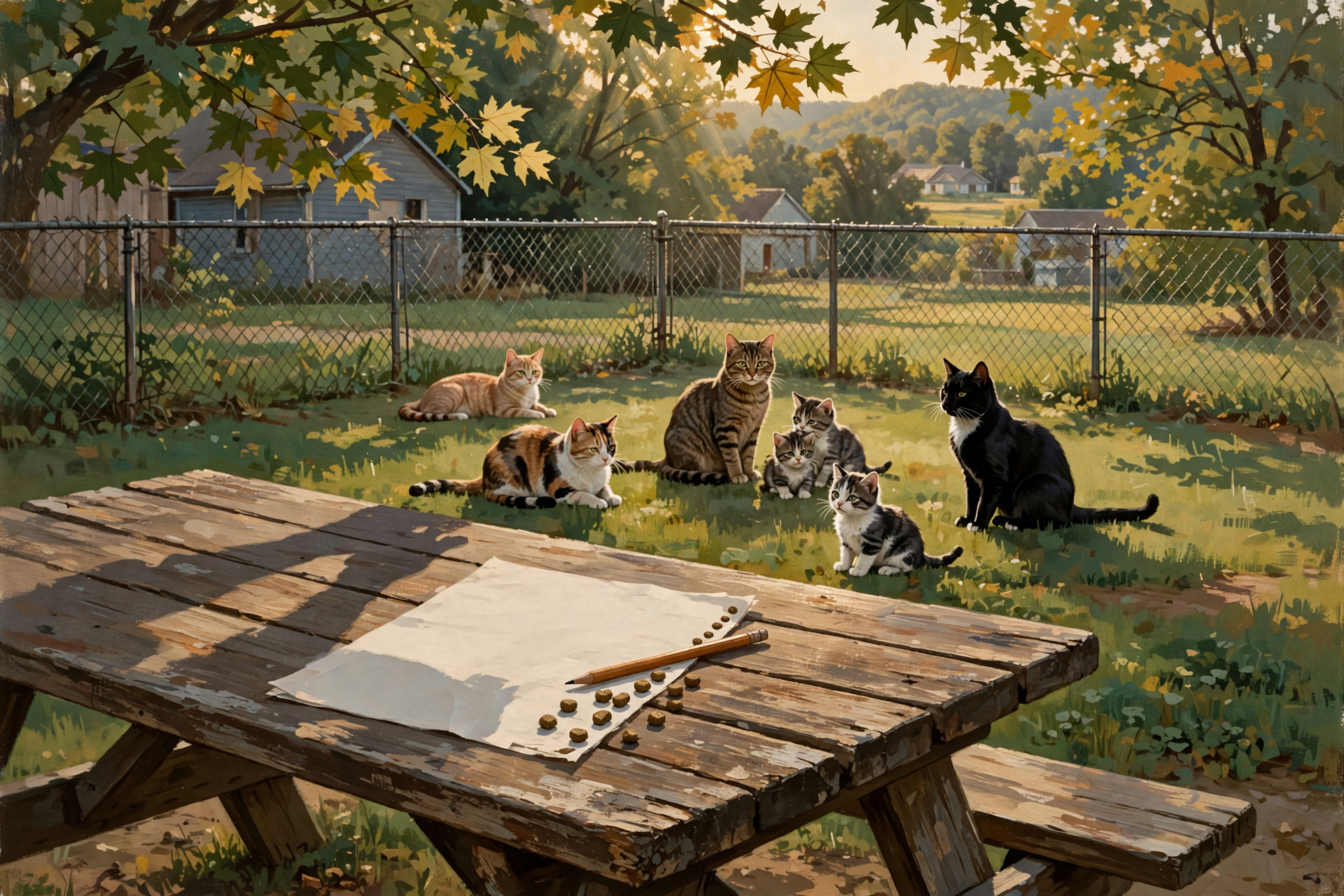
Once we know who is in the colony, another question becomes unavoidable.
We probably will not have enough money to spay or neuter forty cats in one afternoon.
So if resources are limited:
Which cats should we prioritize?
The next article will look at:
- ♀️ Adult females
- 🐾 Kittens approaching reproductive age
- 🤰 Pregnant cats
- ♂️ Intact males
- 👩 Mothers with litters
- 👂 Already-eartipped cats
- 🏡 Adoptable kittens
- 📊 How sterilization percentage affects population control
The feeding project helps today’s cats.
The TNR strategy determines how many cats we’ll be feeding tomorrow.
📣 Do You Already Keep Track of Your Community Cats?

If you care for outdoor cats around Dunlap or Sequatchie County, we’d like to know what works for you.
Do you name them?
Photograph them?
Track which ones are fixed?
Use a spreadsheet?
Know which kittens belong to which mother?
How do you tell similar-looking cats apart?
Your system may be simpler—or better—than the one we’re building.
That’s exactly the kind of practical experience The Scaredy Cat Project wants to collect.
❤️ Feed Them. Fix Them. Find Them Homes When We Can. Help the Rest Age Gracefully.

A census sounds administrative.
It isn’t.
It’s how we stop treating forty cats as one blurry problem.
This one is Scaredy.
This one needs to be fixed.
This one is losing weight.
This kitten could be adopted.
This mother has produced two litters.
This one disappeared.
This one came back.
This one is getting old.
That’s not paperwork.
That’s knowing who we’re taking care of.
And once we know who they are, we can do a much better job deciding what they need next.
🐾 Feed them. Fix them. Find them homes when we can. Help the rest age gracefully.
🔎 Sources & Further Reading

- Alley Cat Allies — Recordkeeping
- Alley Cat Allies — Community Cat Protocol: Eartipping
- Alley Cat Allies — Cat Identification Guide
- ASPCA — Position Statement on Community Cats




0 Comments