
🐱 How Do We Know Whether the Cats Are Actually Doing Better?

🐾 The Scaredy Cat Project — Article #19
We’ve spent eighteen articles talking about food.
What’s in it.
What cats need.
What different ingredients provide.
What they cost.
Whether wet or dry food makes more sense.
How to build a practical feeding system.
But all of that leaves one question more important than everything we’ve discussed so far:
Are the cats actually doing better?
🥣 An Empty Bowl Is Not a Health Report

It is very easy to confuse:
“The cats ate everything.”
with:
“The feeding plan is working.”
Those are not the same statement.
A hungry cat may enthusiastically eat food that is nutritionally incomplete.
A cat may eat more than it needs.
A dominant cat may eat part of another cat’s portion.
A kitten may appear enthusiastic at the bowl while still failing to grow properly.
So appetite matters.
But appetite by itself cannot be our scoreboard.
📊 The Cats Themselves Have to Become the Scoreboard
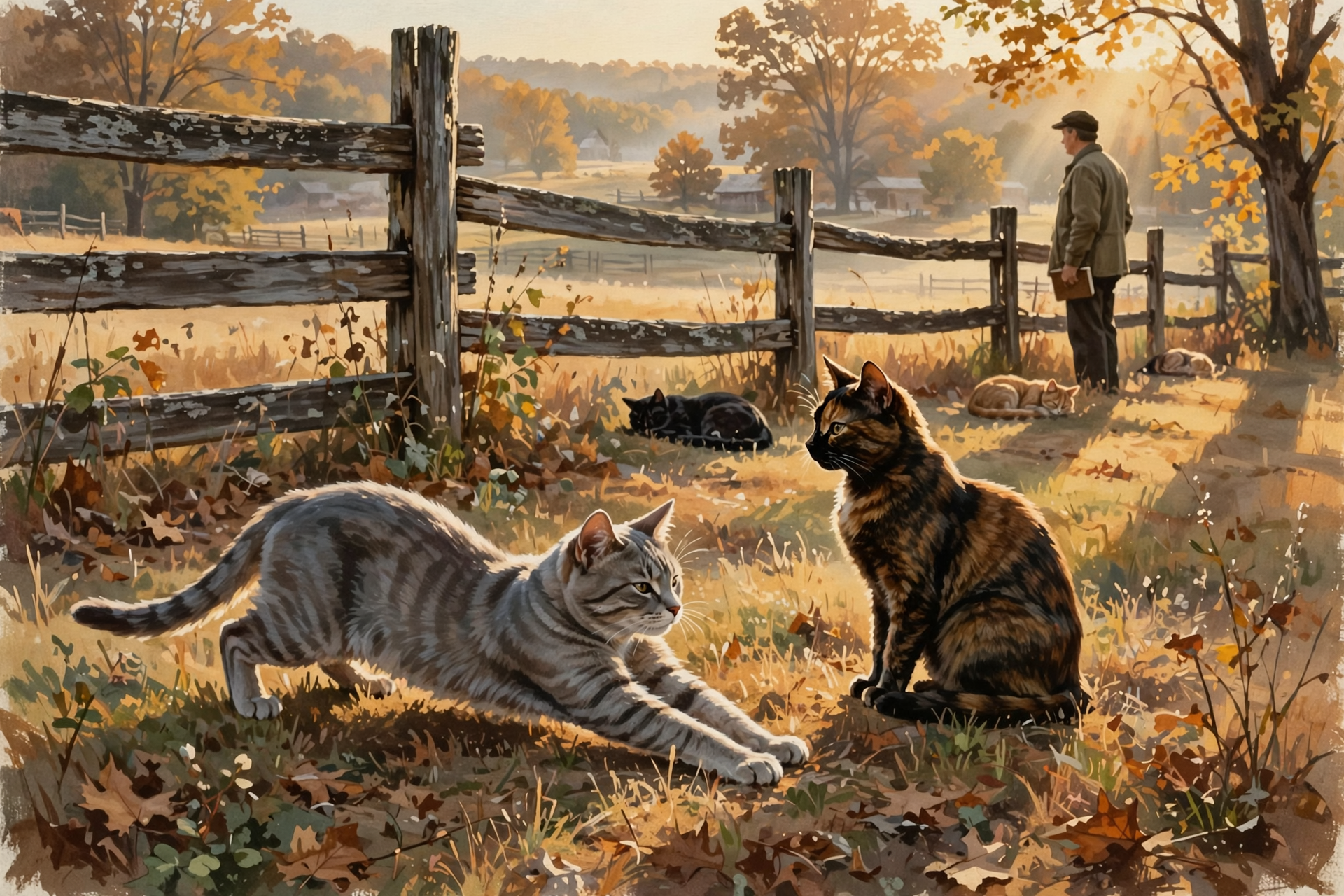
If we’re going to improve this feeding system over time, we need to watch the animals themselves.
Not with laboratory precision.
We’re caring for feral and community cats, not operating a research hospital.
But consistent observation can tell us a lot.
I want to begin watching for changes in:
- ⚖️ Body condition
- 🥣 Appetite
- ✨ Coat quality
- 😸 Activity
- 💧 Hydration
- 💩 Stool
- 🐾 Kitten growth
- 👴 Older-cat condition
- 👀 Eyes and general appearance
- 🧠 Behavior
Perhaps most importantly:
change over time.
⚖️ Body Condition May Be the Most Useful Starting Point
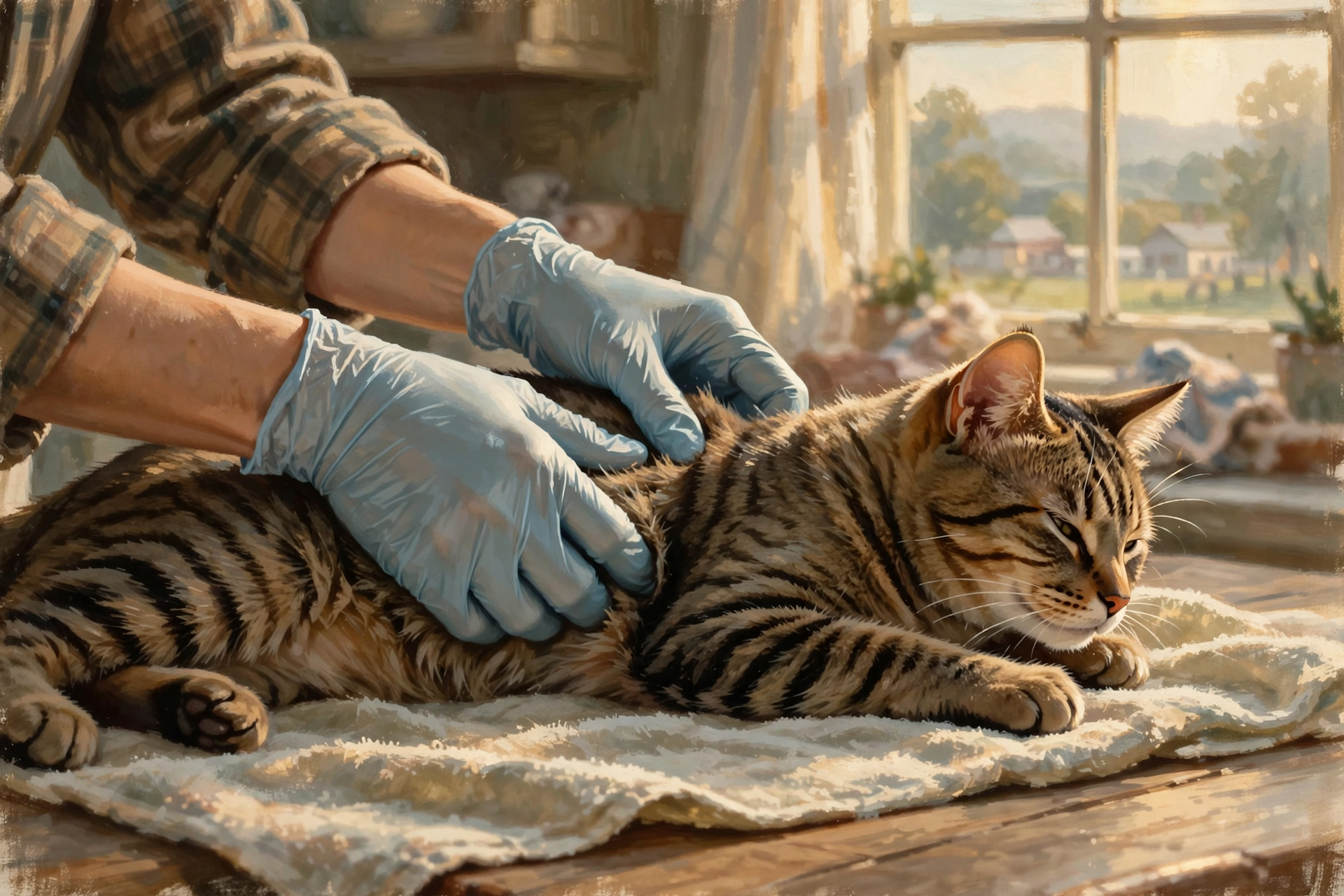
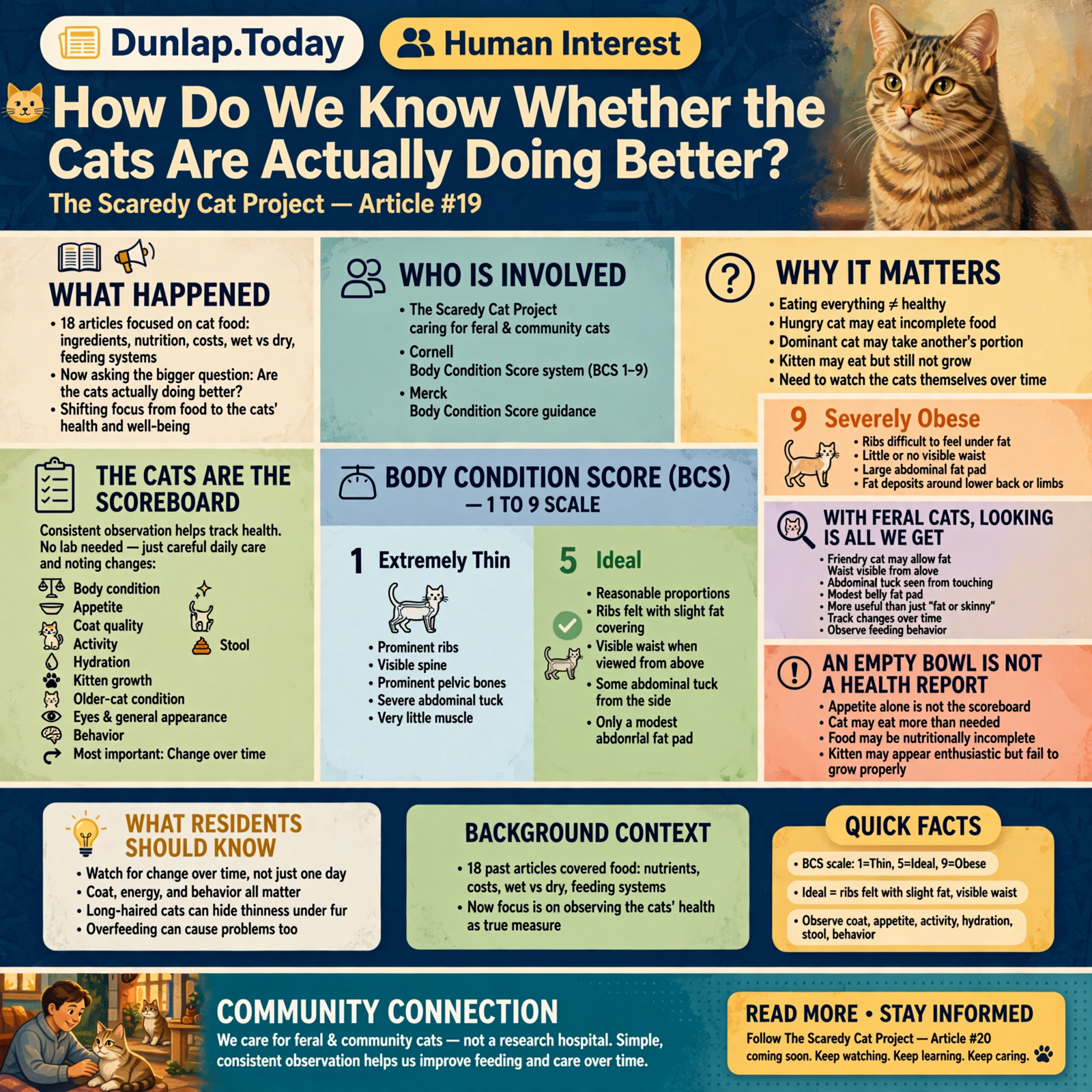
Cornell and Merck both use a system called a Body Condition Score, usually shortened to BCS.
One common version uses a scale from 1 through 9.
On that scale:
- 1️⃣ represents an extremely thin cat
- 5️⃣ is generally considered ideal
- 9️⃣ represents a severely obese cat
The point isn’t to turn every caregiver into a feline judge at a livestock show.
The point is to look beyond body weight alone.
🐱 What Does an Ideally Conditioned Cat Look Like?
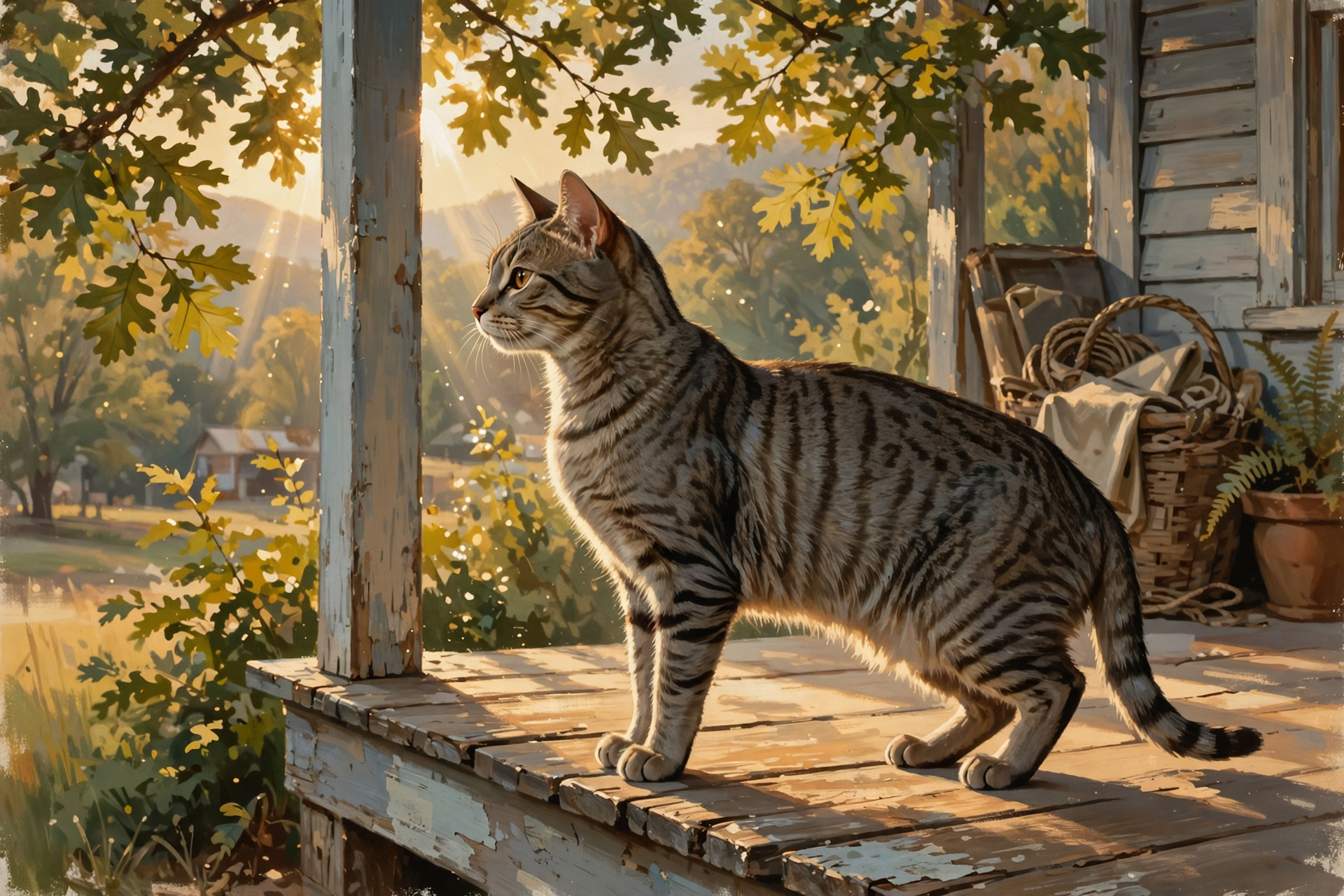
According to Cornell’s current body-condition guidance, a cat around the ideal middle of the scale should generally have:
- ⚖️ Reasonable overall proportions
- 🦴 Ribs that can be felt with a slight fat covering
- 👀 A visible waist behind the ribs when viewed from above
- 📐 Some abdominal tuck when viewed from the side
- 🐱 Only a modest abdominal fat pad
That’s much more useful than simply asking:
“Does this cat look fat or skinny?”
🦴 What Does an Underweight Cat Look Like?
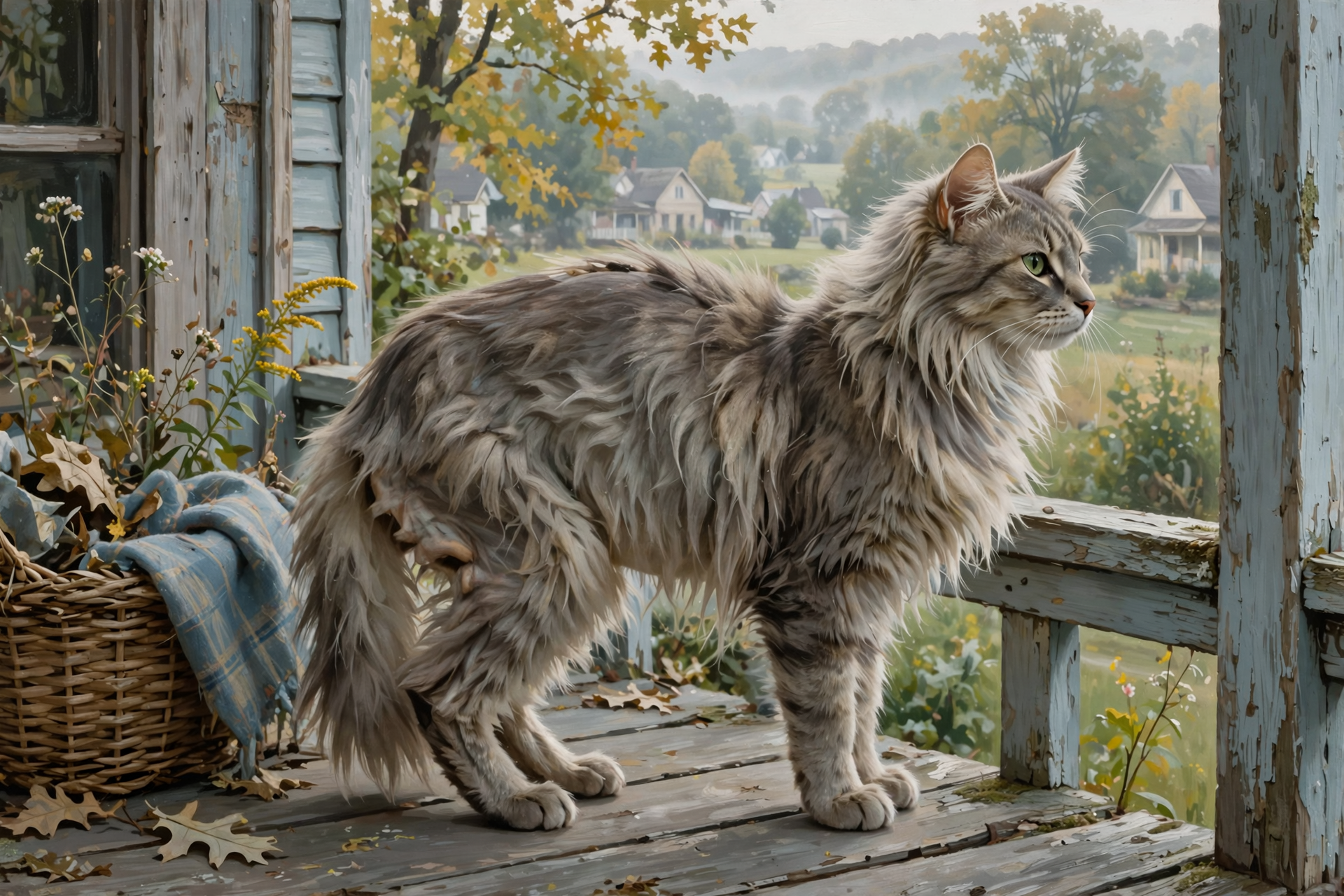
A very thin cat may show:
- 🦴 Prominent ribs
- 🦴 A visible spine
- 🦴 Prominent pelvic bones
- 📐 A severe abdominal tuck
- 💪 Very little visible muscle
That is different from a naturally slender cat.
And with long-haired cats, the coat can hide just how thin the animal actually is.
🧈 What Does an Overweight Cat Look Like?
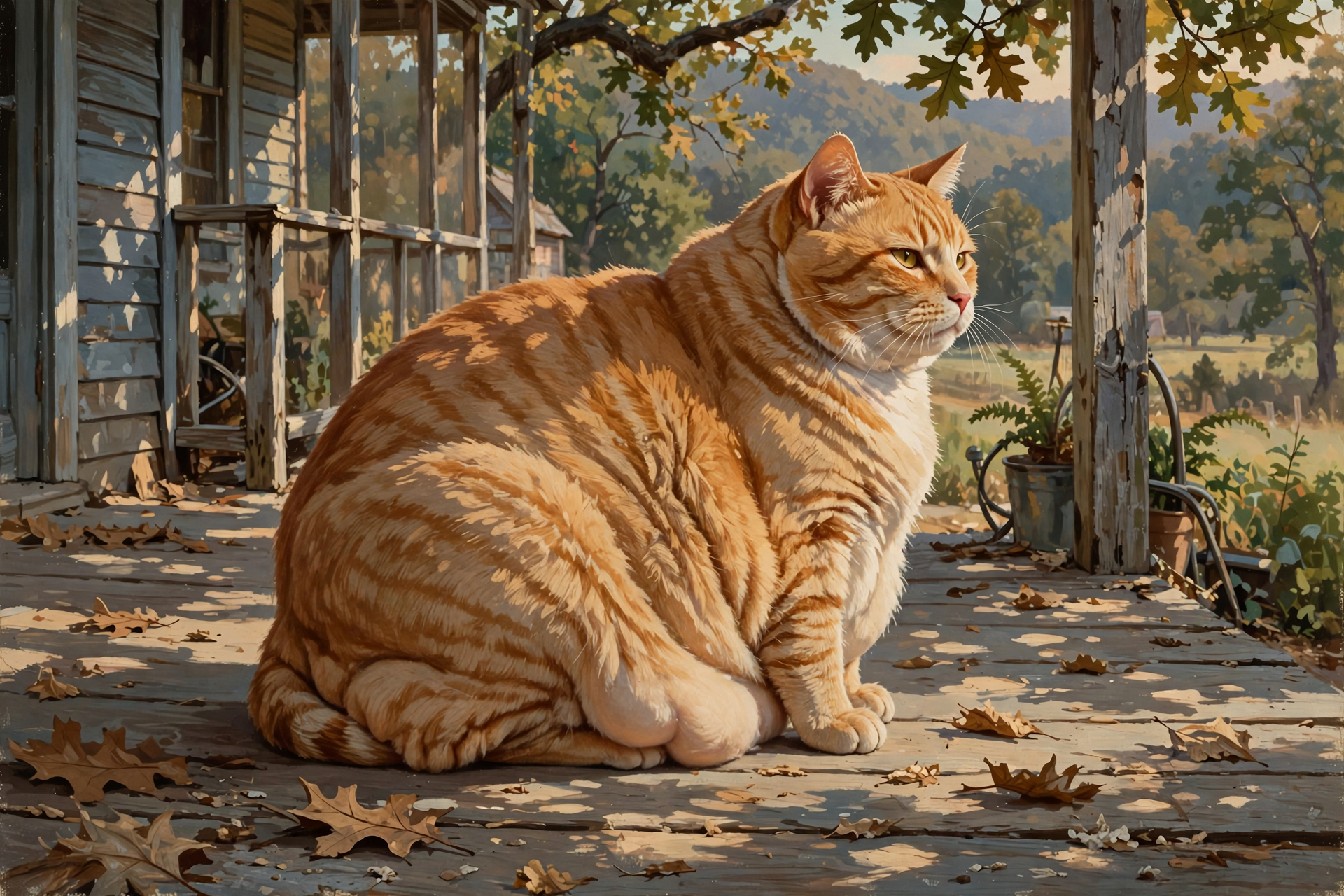
At the other end of the scale, an overweight cat may have:
- 🦴 Ribs that are difficult to feel beneath fat
- ⭕ Little or no visible waist
- ⬇️ A large abdominal fat pad
- 🧈 Fat deposits around the lower back or limbs
This matters because feeding community cats isn’t simply about preventing starvation.
Overfeeding can create problems too.
👀 With Feral Cats, Sometimes Looking Is All We Get

A friendly cat may let us run our hands over its ribs.
Scaredy certainly does.
A genuinely feral cat may regard that proposal as completely unreasonable.
So with community cats, we may sometimes have to rely on:
- 👀 Side view
- 👀 Overhead view
- 📸 Photographs
- 📅 Changes over time
- 🥣 Feeding behavior
That won’t give us a perfect Body Condition Score.
It can still tell us whether a cat appears to be getting thinner, heavier or staying about the same.
📸 Photos May Become One of Our Best Tools
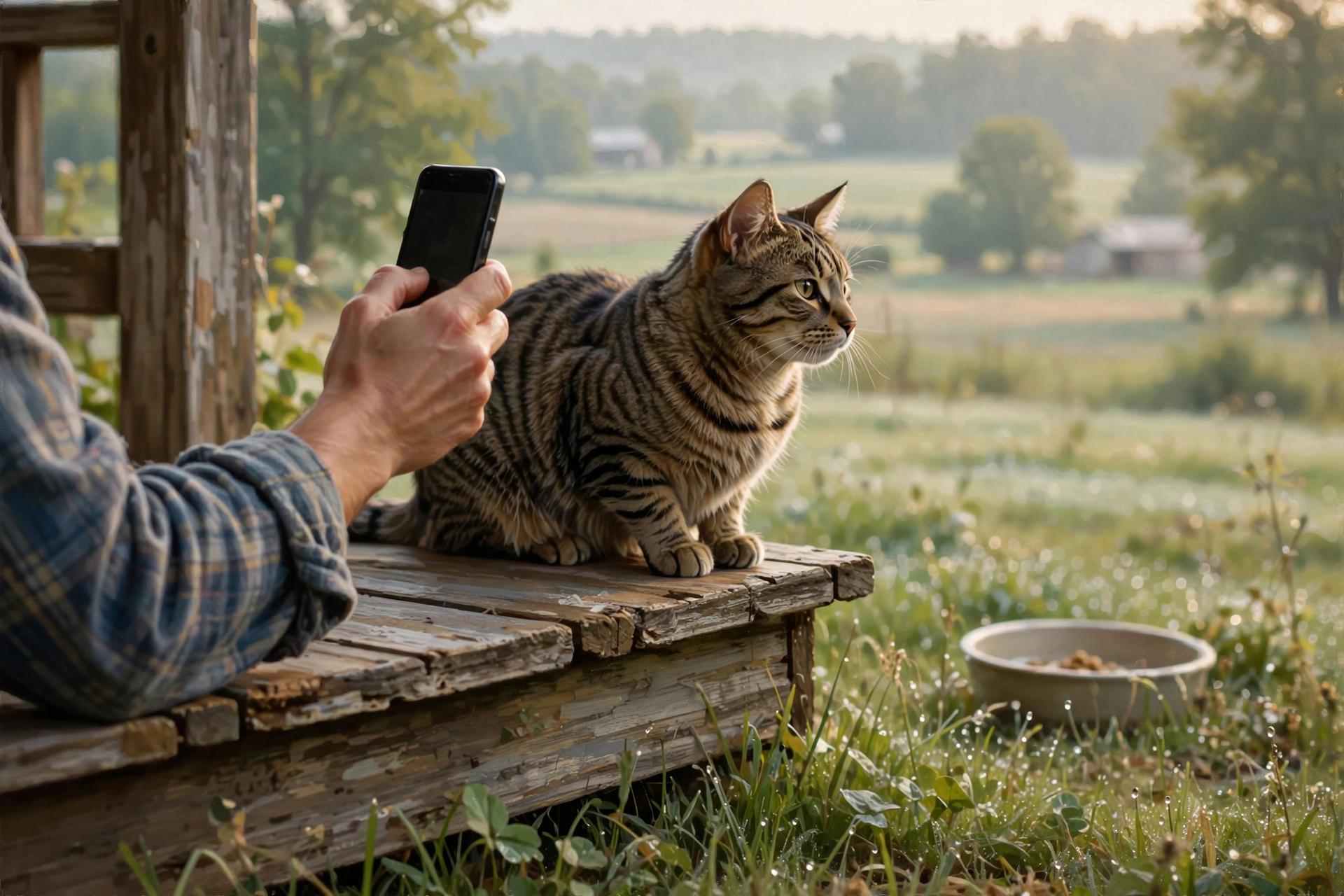
We’ve already accidentally discovered this with Scaredy.
A photograph of her while I was away is what started the nutrition part of this project.
Martha and I looked at the picture and wondered:
Does Scaredy look healthier?
That same idea can become more systematic.
If we periodically photograph recognizable colony cats from similar angles, we may be able to notice changes we miss day to day.
📅 Monthly Photos
A monthly photo of a recognizable cat could show gradual weight change.
👀 Side and Overhead Views
When possible, those angles can help show waist and abdominal condition.
🏷️ Individual Identification
If we can reliably tell cats apart, the photos become much more useful.
We don’t need glamour portraits.
The cats do not need senior pictures.
We need consistency.
⚖️ Friendly Cats Could Be Weighed Occasionally
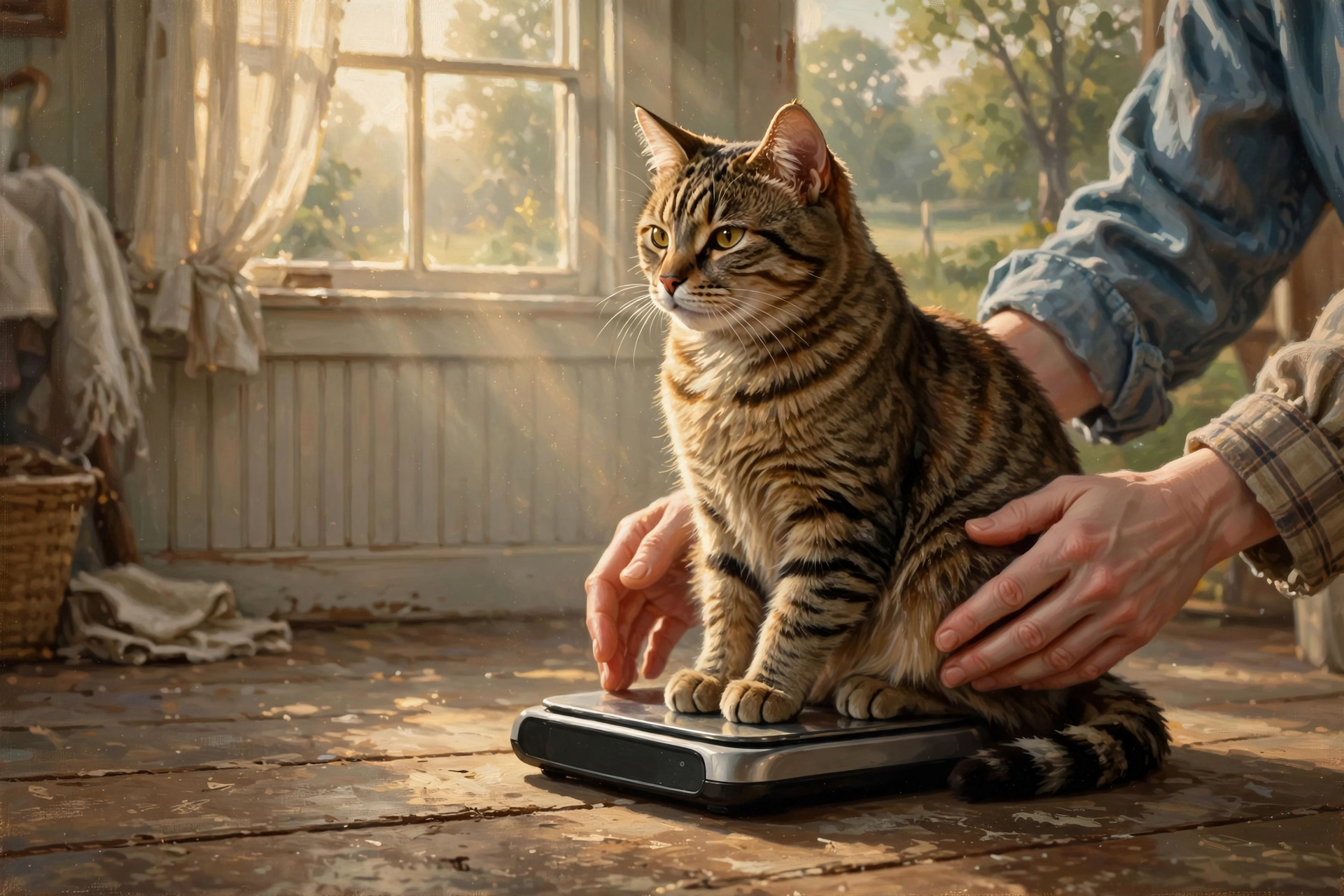
For cats that can be safely handled, actual weight provides useful information.
A single weight doesn’t tell us everything.
A trend does.
For example:
8.2 pounds → 8.4 → 8.6
may tell a very different story from:
8.2 → 7.7 → 7.1.
The direction matters.
📉 Unexpected Weight Loss Deserves Attention
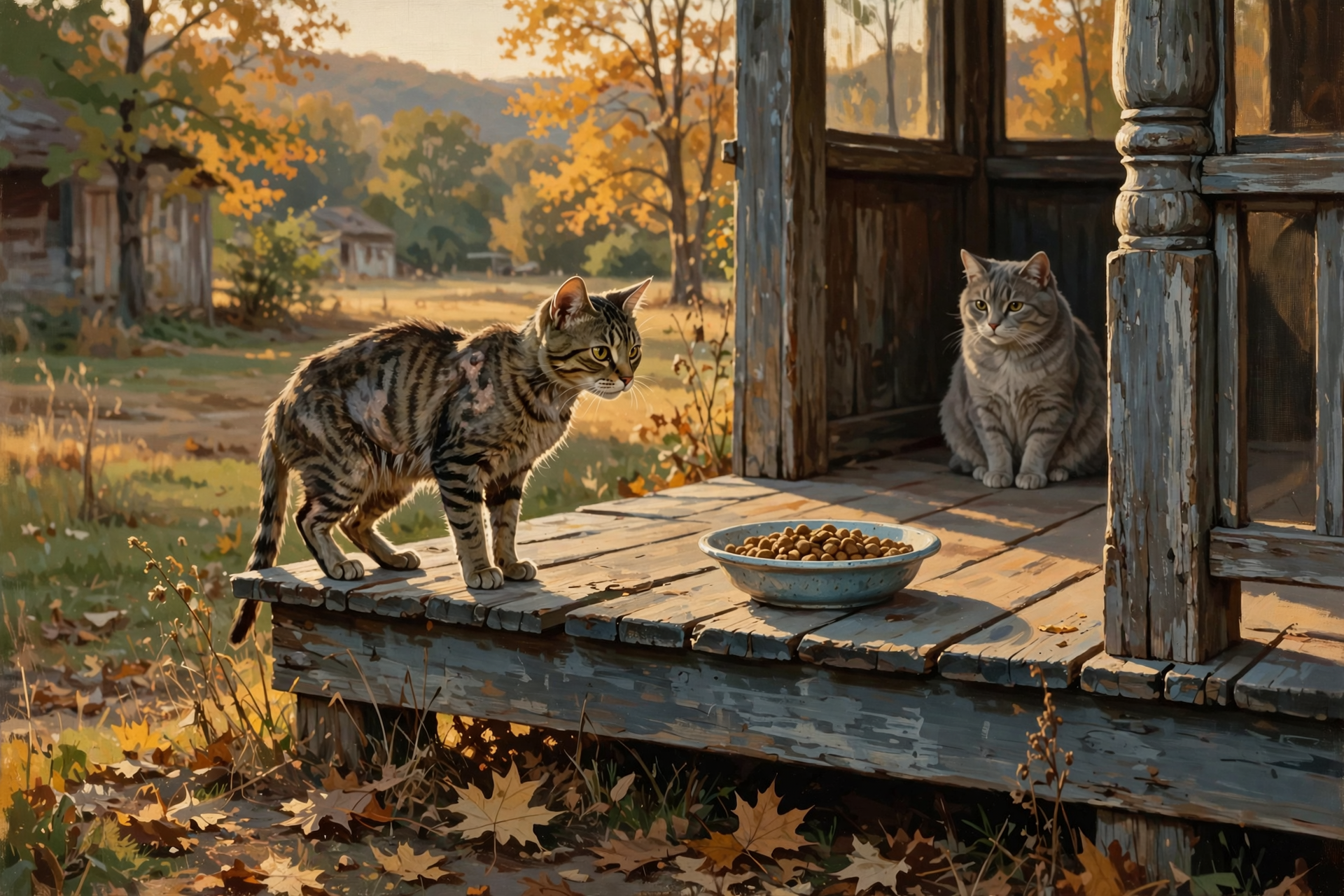
A cat losing weight despite eating may have something going on beyond food quantity.
Possible causes can include:
- 🦷 Dental problems
- 🦠 Parasites
- 💩 Digestive disease
- 🧬 Metabolic disease
- 🐛 Fleas or other parasite burdens
- 😿 Chronic illness
- 🐱 Competition preventing adequate food access
Our job as ordinary caregivers isn’t necessarily to diagnose the cause.
Our job is to notice:
this cat is changing.
🥣 Appetite Is Still Important
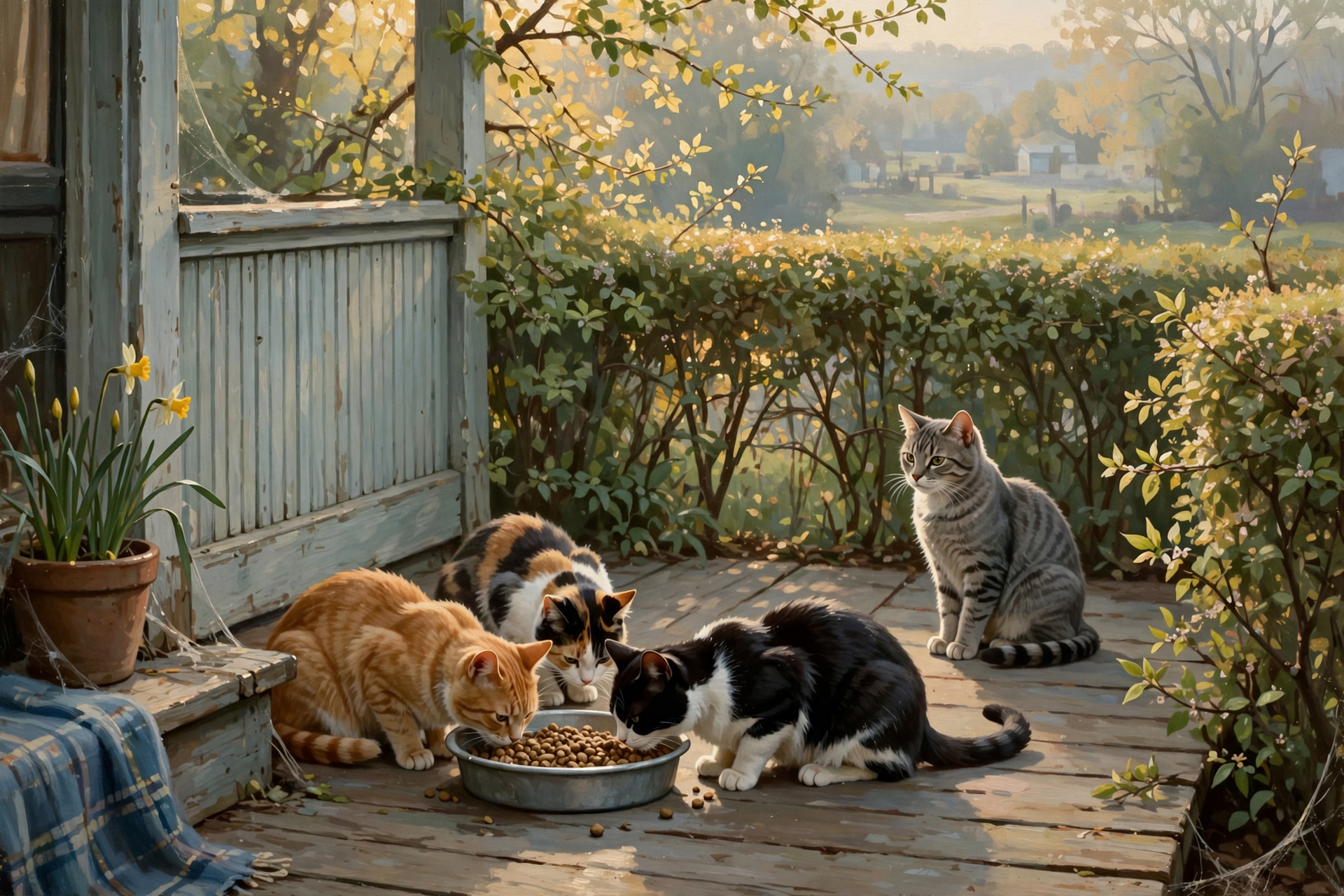
Although an empty bowl doesn’t prove health, appetite remains one of our most useful observations.
A cat that normally appears at every meal and suddenly doesn’t eat is telling us something.
Cornell emphasizes that cats refusing food can develop serious medical problems, particularly if food refusal continues while the animal is losing weight.
So I would pay attention to:
- 🥣 Who comes to eat
- ⏱️ How quickly they eat
- 😿 Who seems interested but can’t eat
- 🙀 Who suddenly disappears from feeding time
- 🐱 Who starts eating much more or much less than usual
👀 “Interested but Not Eating” Is Different From “Not Hungry”
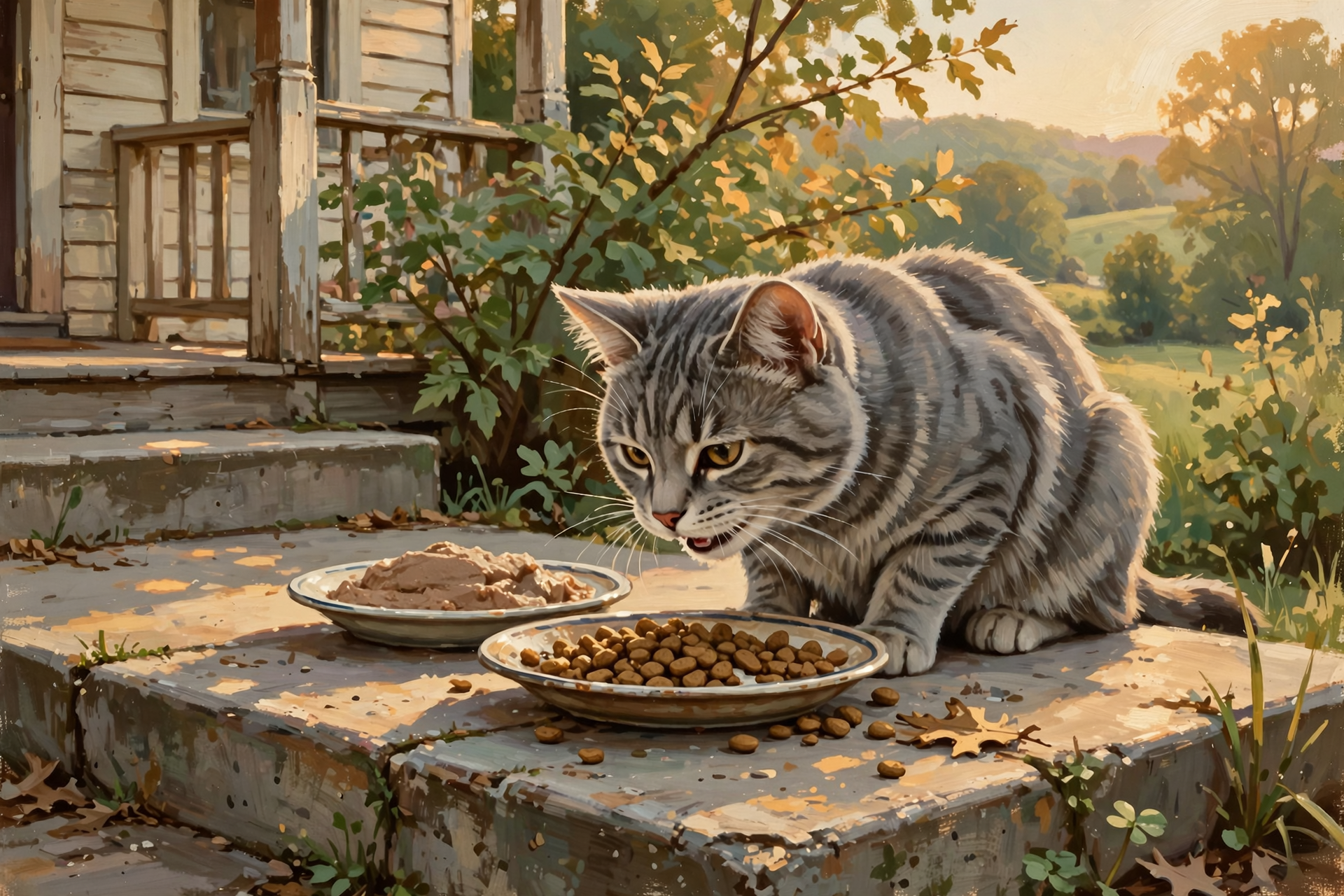
This distinction can matter.
A cat may approach food.
Sniff it.
Try to eat.
Then back away.
That could point toward problems such as mouth pain, dental disease or difficulty chewing.
Cornell notes that periodontal disease and other dental problems can make dry food difficult for some cats to eat.
So if one cat suddenly prefers soft food, that’s potentially useful information.
✨ Coat Quality Is Another Visible Clue
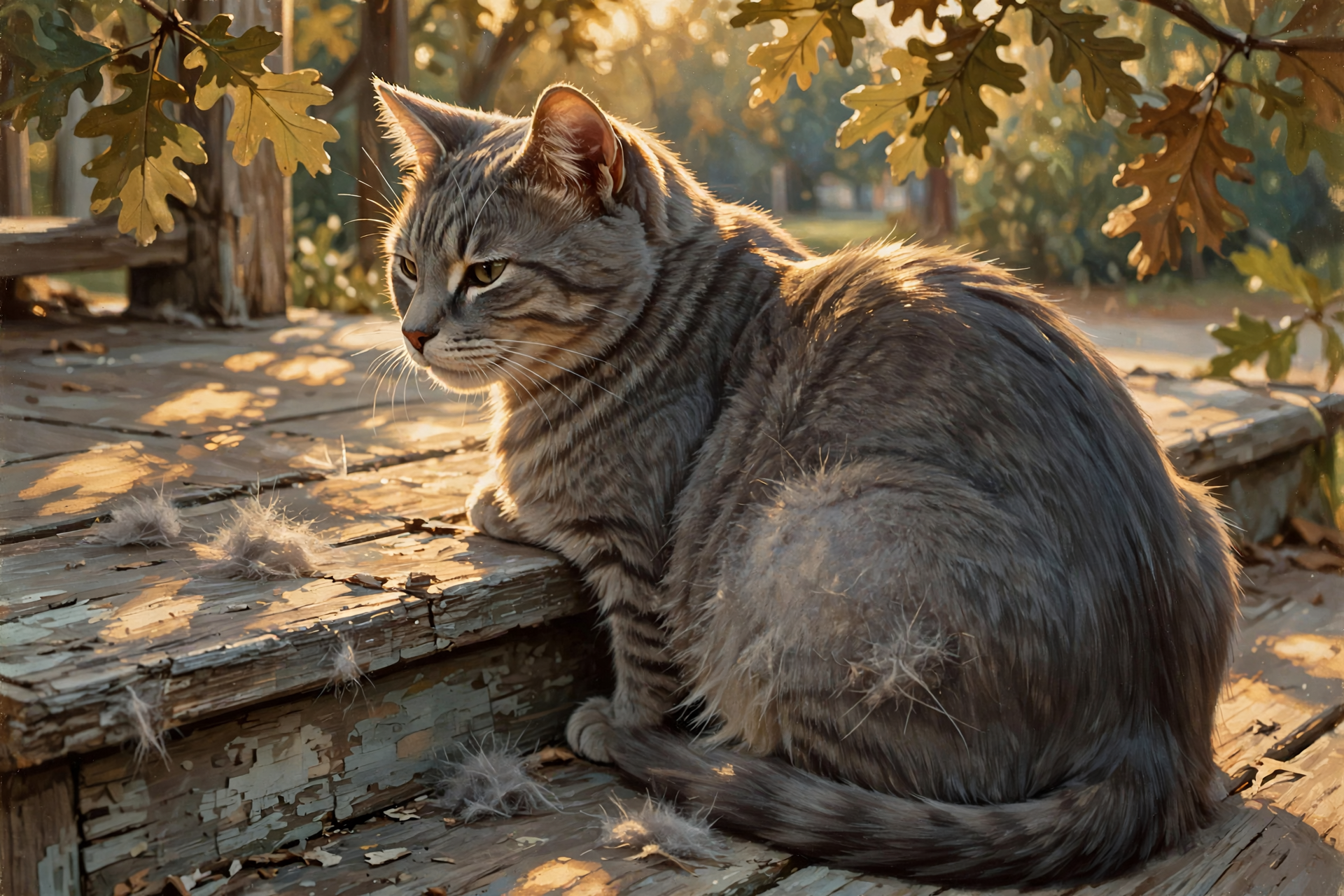
A healthy cat generally spends quite a bit of time grooming.
That means the coat can give us clues about overall condition.
I would watch for:
- ✨ Smooth versus rough coat
- 🪮 Groomed versus greasy or matted appearance
- 🩹 Bald patches
- 🐛 Heavy flea burden
- ⚠️ Skin sores
- 📉 Deterioration over time
A rough coat does not automatically mean a nutritional deficiency.
Parasites, illness, age, weather and skin disease can all affect appearance.
But again:
change is information.
😸 Activity Tells Us Something Too
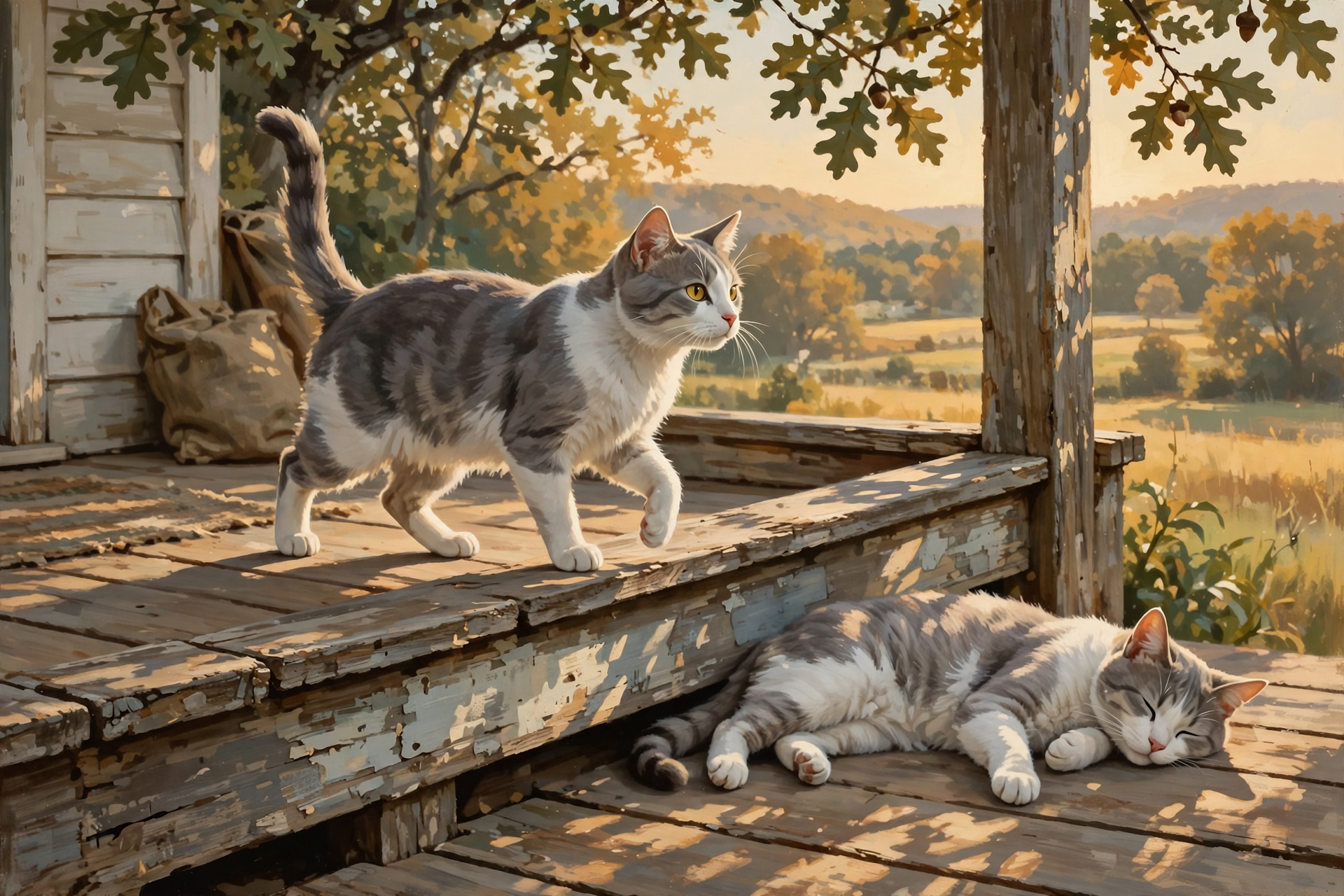
Healthy cats are not all equally active.
Scaredy has moments when her primary activity is supervising me from a comfortable location.
But every cat has a baseline.
We can notice when that baseline changes.
Does a cat:
- 🐾 Walk normally?
- 🌳 Climb normally?
- 😸 Interact with familiar cats?
- 👀 Stay alert?
- 🥣 Approach food normally?
- 😿 Suddenly hide more than usual?
A previously active animal becoming lethargic is worth noticing.
🧠 Behavior Is Health Information

People who care for the same cats every day become surprisingly good at recognizing normal behavior.
You know which cat waits by the shed.
Which one eats first.
Which one stays ten feet away until you leave.
Which one talks.
Which one refuses to shut up.
Which one thinks the entire property belongs to him.
When that behavior changes suddenly, it can tell us something long before we have a number on a scale.
💧 Hydration Is Harder to Judge From a Distance

Hydration becomes tricky with feral cats because some traditional checks require handling the animal.
That may not be realistic.
So instead of pretending we can diagnose dehydration from twenty feet away, I would focus on the system:
- 🥣 Is clean water always available?
- ☀️ Is there enough in hot weather?
- ❄️ Does it stay unfrozen in winter?
- 🧹 Are bowls clean?
- 💧 Are cats actually using the stations?
For friendly cats, changes in drinking behavior may also be worth noticing.
🚰 Drinking Much More Can Be Information Too
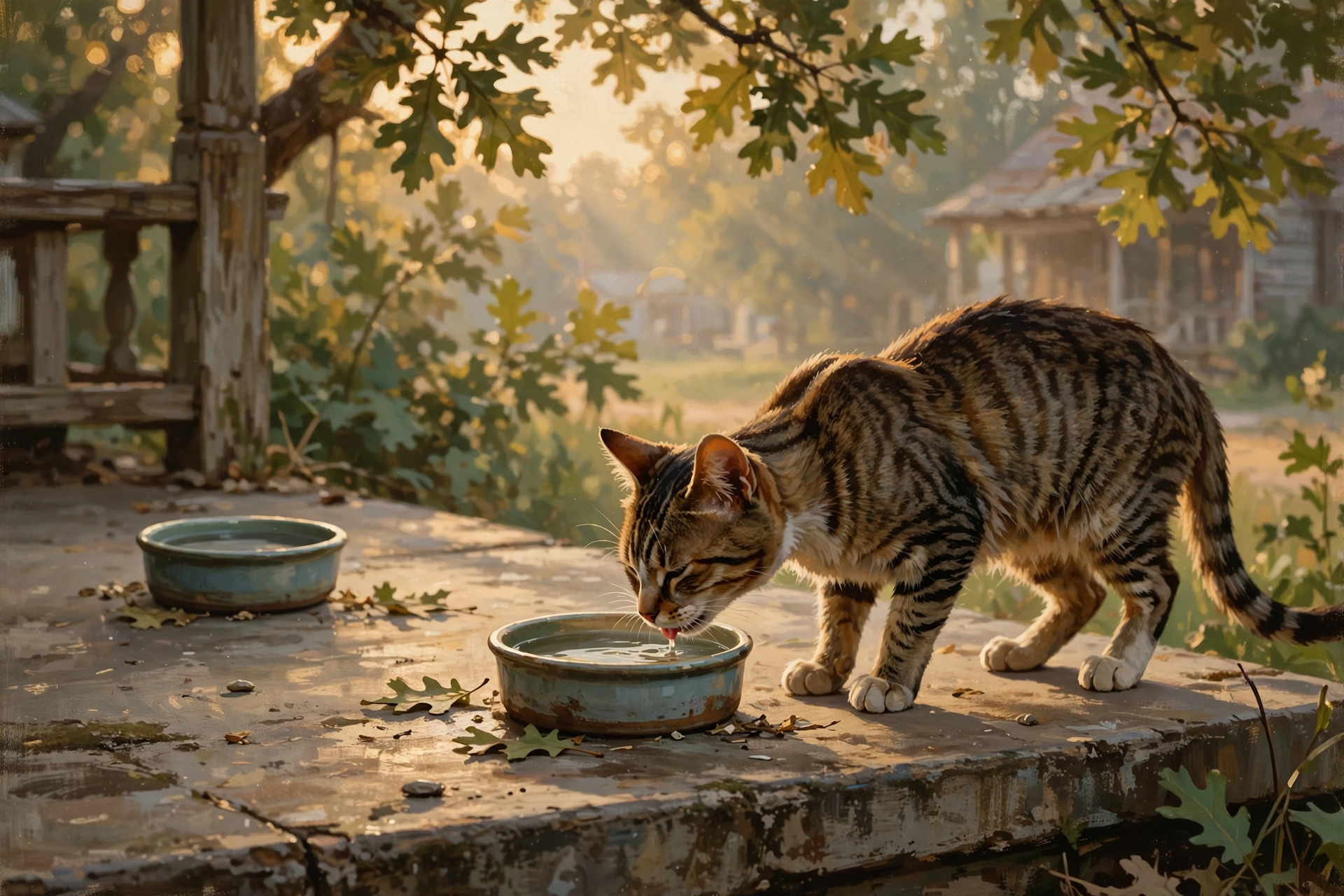
A cat suddenly drinking substantially more water than usual may deserve attention.
That does not automatically tell us why.
But increased thirst can accompany several medical problems.
Again, the caregiver’s job isn’t necessarily diagnosis.
It’s recognizing:
this is different from normal.
💩 Yes, We Need to Talk About Poop

There are few ways to make an article glamorous after the heading:
“Let’s talk about stool.”
But if we’re changing food, stool gives us useful information.
Watch for:
- 💩 Persistent diarrhea
- 🪨 Very hard stool
- 🩸 Visible blood
- 🪱 Visible parasites
- 📈 Sudden widespread changes after changing food
One cat having a bad day is one thing.
Half the colony developing diarrhea immediately after we introduce a new supplement is a different story.
🧪 This Is Why Ingredient Testing Should Be Gradual

If we introduce:
Chicken heart.
Egg.
Sardines.
Beef heart.
And a new dry food.
all in the same week…
then the cats develop digestive problems…
we’ve learned almost nothing.
Which change caused it?
We don’t know.
So the smarter system is:
change one major variable at a time when practical.
🐾 Kitten Growth May Be One of the Clearest Indicators
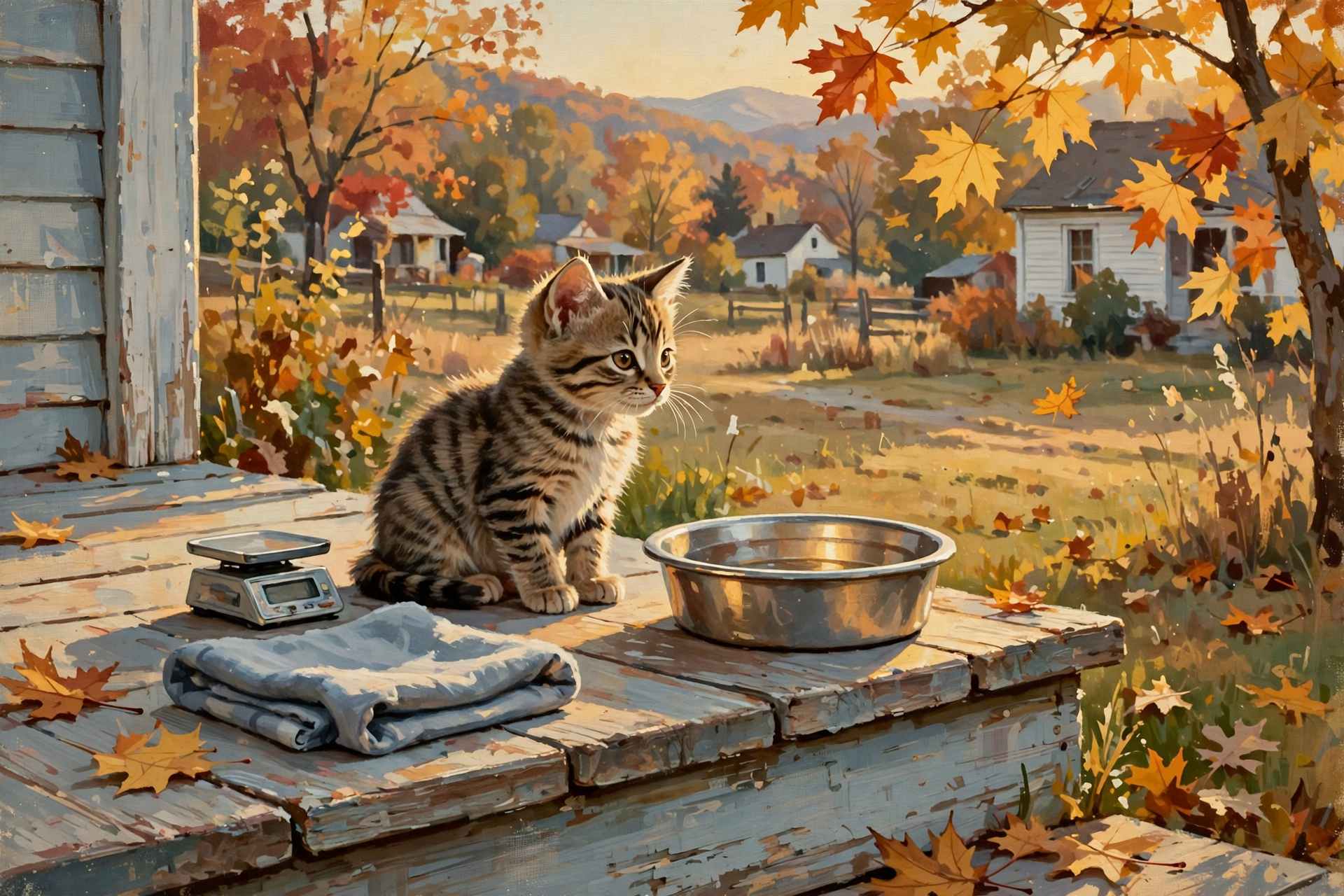
Kittens are growing animals.
That means a kitten that consistently eats but fails to grow deserves attention.
Cornell notes that kittens require more food per pound of body weight than adult cats and generally need more frequent feeding during early growth.
For kittens we can handle, periodic weight measurements could be very useful.
For feral kittens, photographs and visual comparison may be our best available tool.
📈 Healthy Kittens Should Generally Be Moving Forward
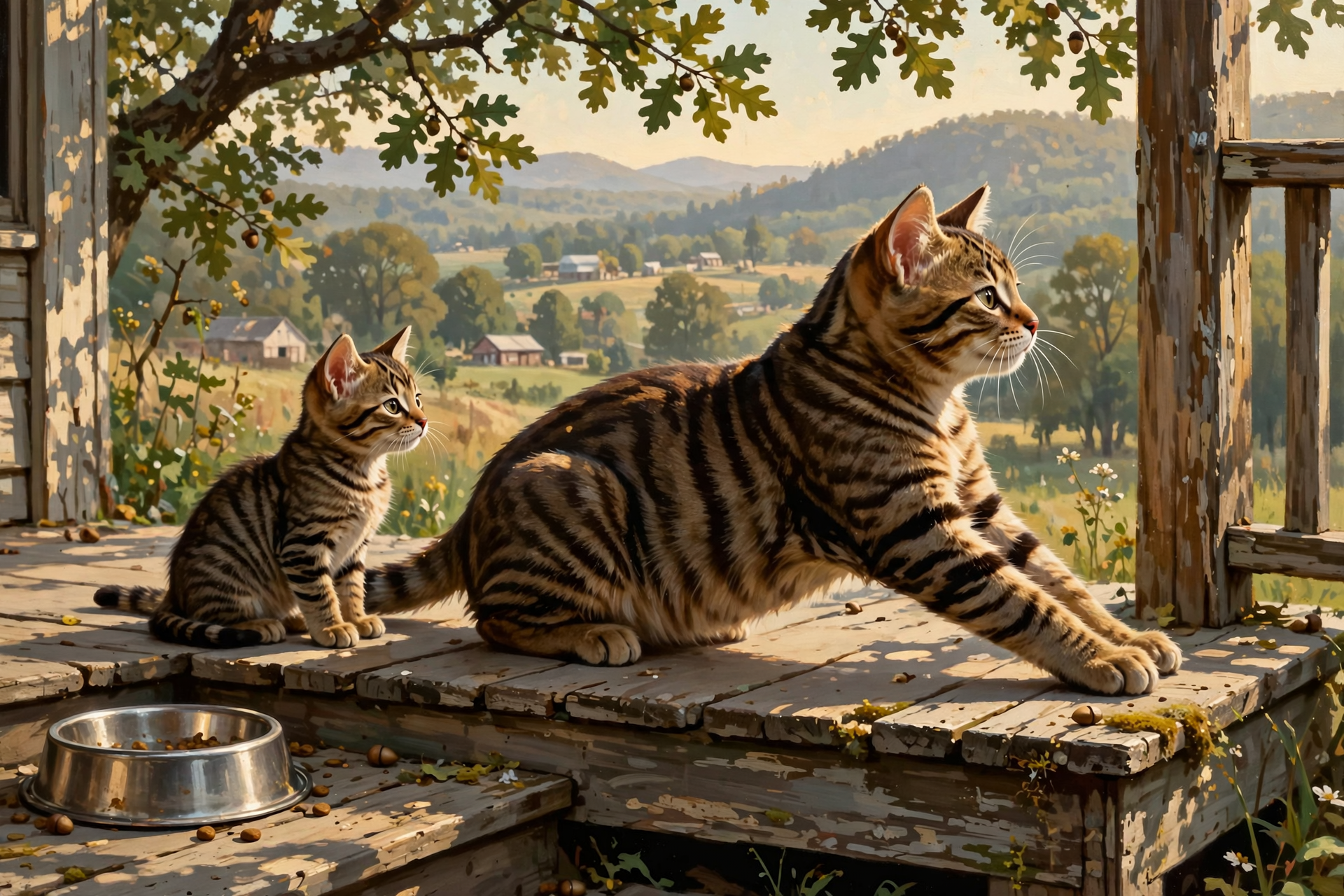
Not necessarily at the same rate.
Not necessarily in a perfectly straight line.
But over time we should expect:
- ⚖️ Increasing body size
- 💪 Increasing strength
- 😸 Increasing activity
- ✨ Improving coat
- 🥣 Strong appetite
A kitten that remains extremely thin while littermates grow deserves a closer look.
🍼 Nursing Mothers Deserve Special Attention
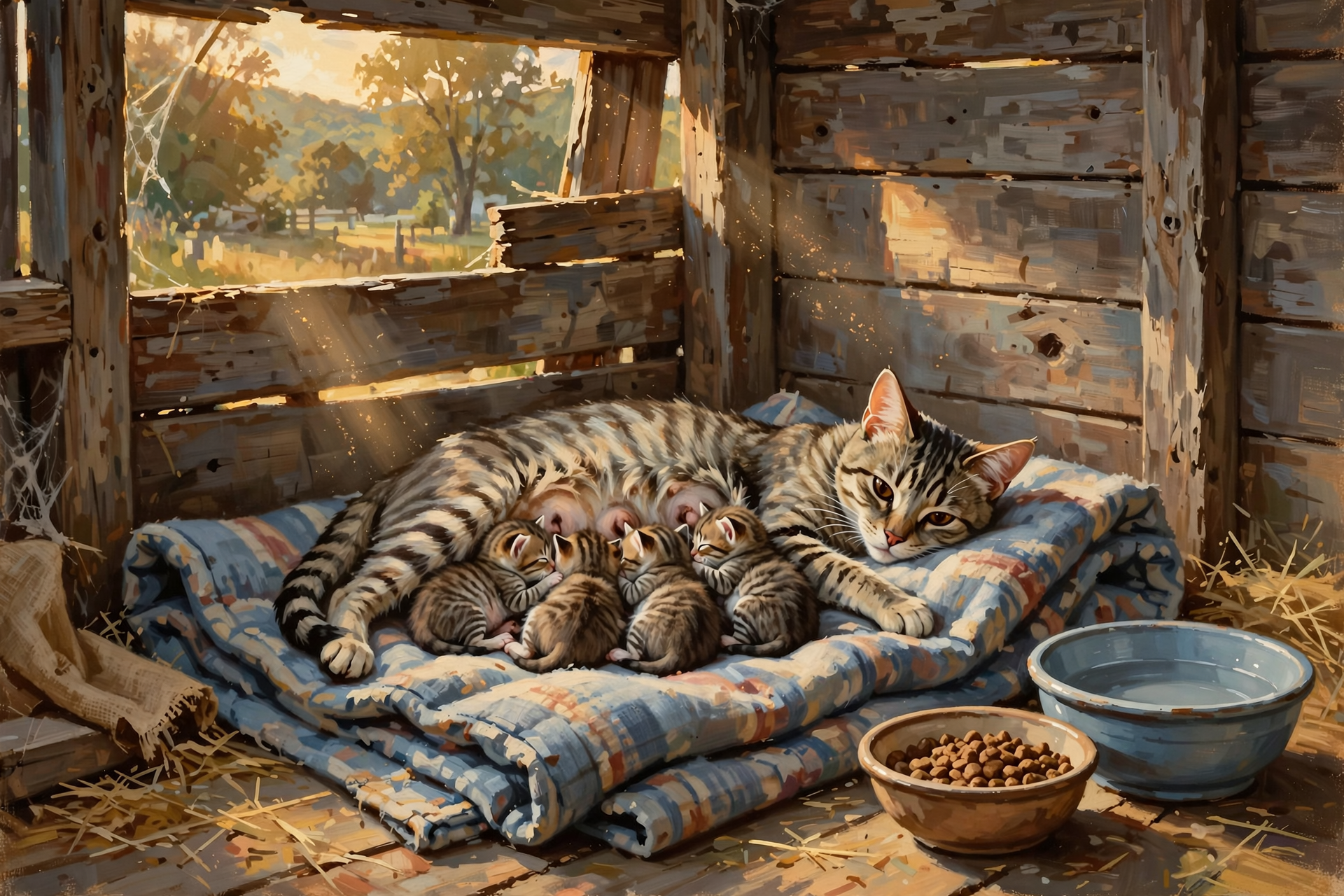
A nursing mother is feeding herself and producing milk for kittens.
That is an enormous nutritional demand.
She may require substantially more calories than an ordinary adult cat.
So if we see a nursing mother becoming progressively thinner, simply giving every cat identical portions may not be enough.
This is where targeted feeding matters.
👴 Older Cats Need a Different Kind of Watching
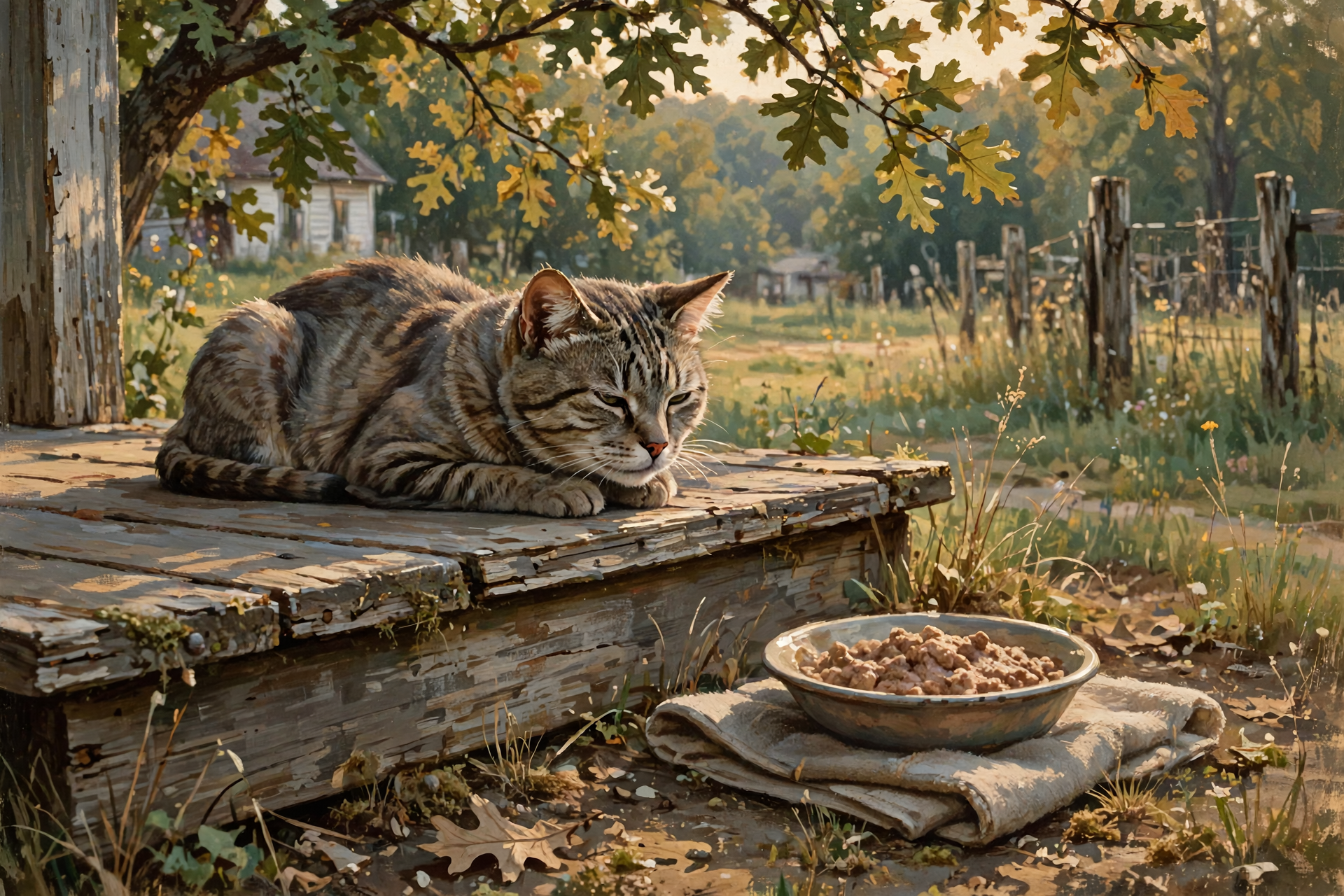
Older cats may naturally become:
- 🐾 Less active
- 🦷 More likely to have dental problems
- ⚖️ More prone to weight change
- 😿 More vulnerable to chronic illness
That means an older community cat may benefit from an individual feeding exception.
Softer food.
A quieter feeding location.
More palatable food.
Additional observation.
👴 “Aging Gracefully” Needs to Mean Something
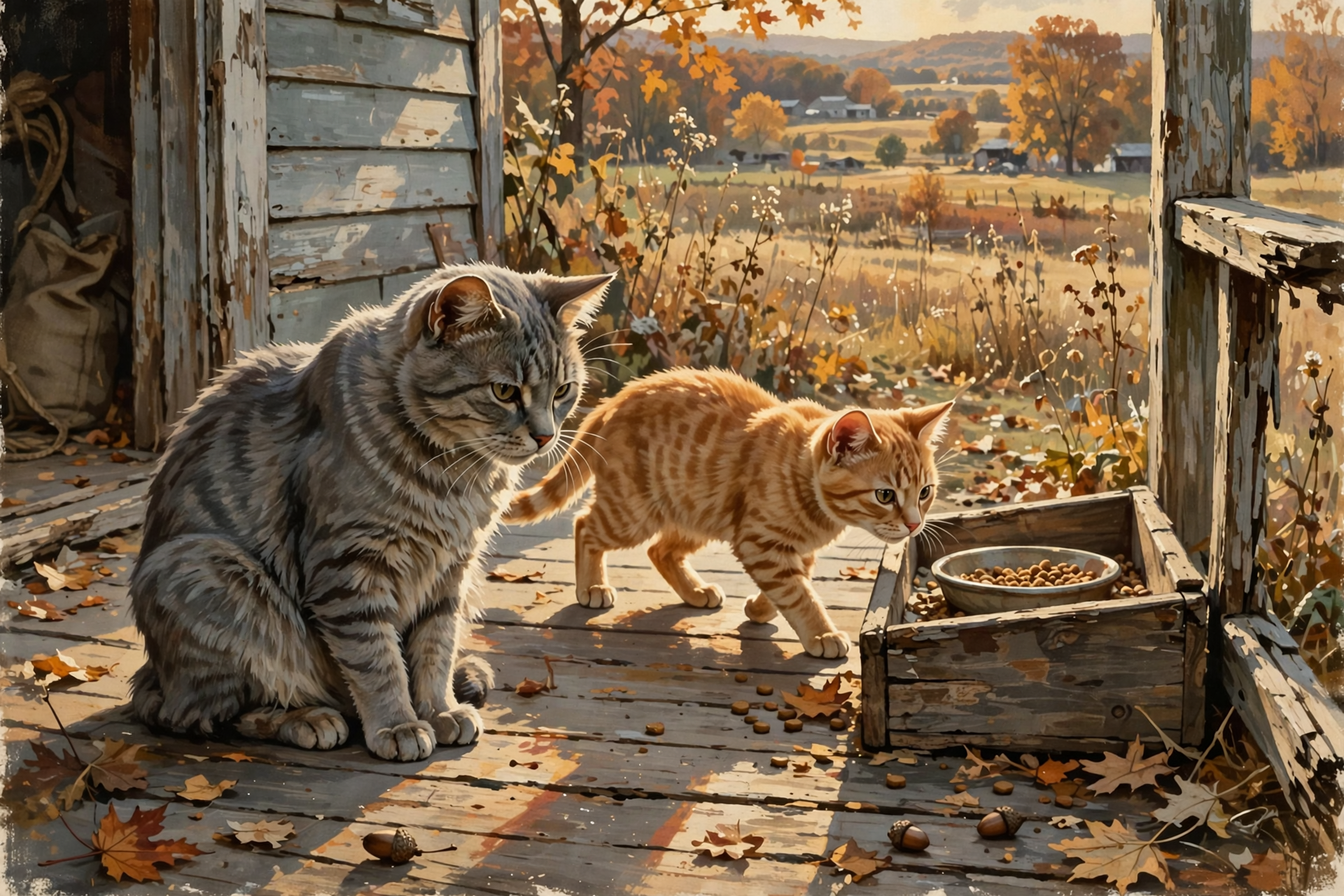
We’ve used that phrase in our project mission:
Help the rest age gracefully.
That shouldn’t simply mean:
leave them outside until they disappear.
It means noticing when an older cat starts struggling.
Can it still eat?
Can it still move comfortably?
Can it maintain weight?
Can it compete at the feeding station?
Does it need a little help?
That’s part of colony care too.
👀 Eyes and Face Can Give Us Useful Clues
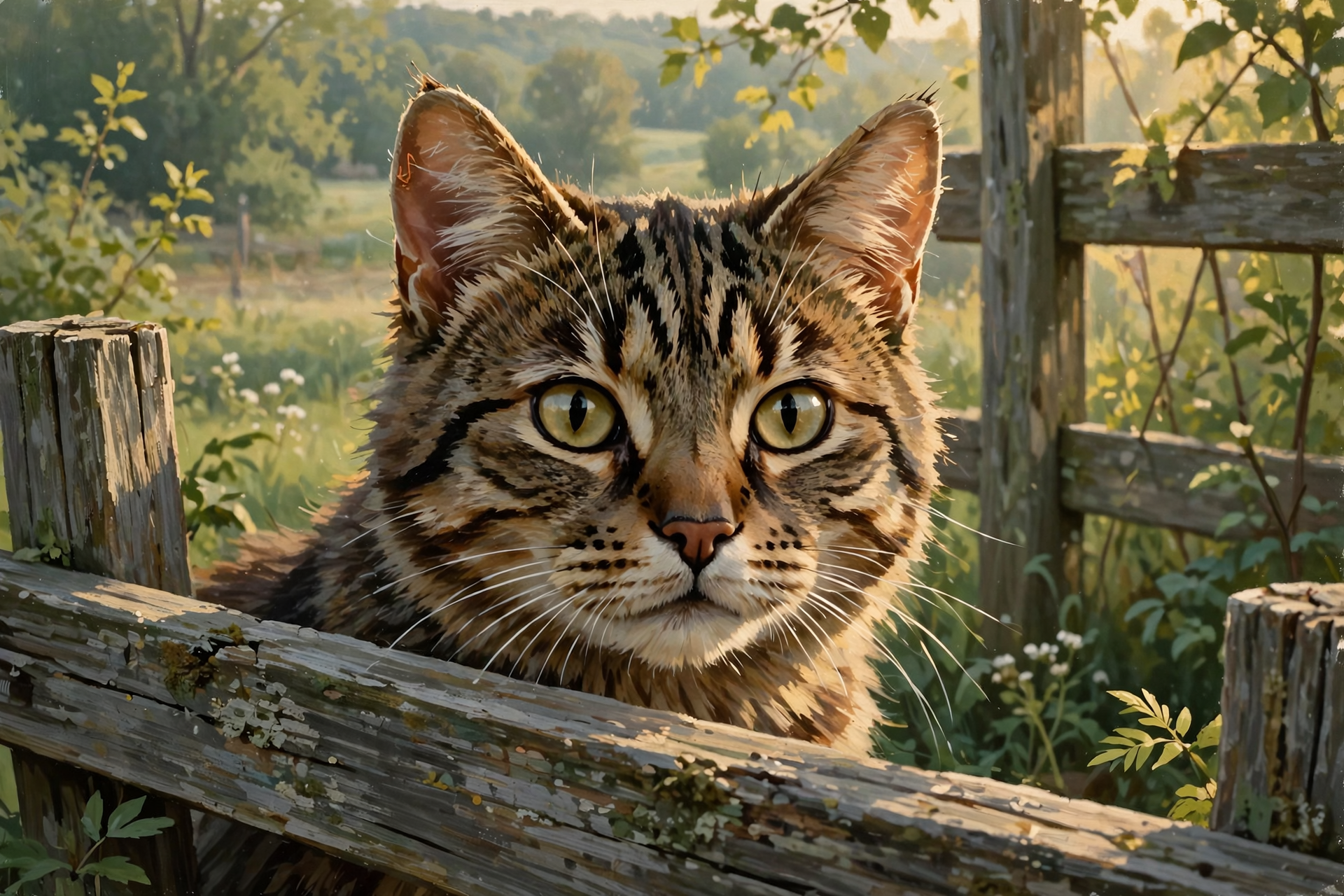
From a distance, we can often see whether a cat looks generally bright and alert.
Things worth noticing include:
- 👀 Persistent eye discharge
- 🤧 Nasal discharge
- 😿 Squinting
- 👃 Difficulty breathing
- 😴 Unusual dullness
Those signs are not simply nutrition issues.
But the point of our feeding system isn’t merely nutrition.
It’s helping us observe the animals consistently enough to notice when something changes.
🍽️ Feeding Time Is Our Daily Roll Call
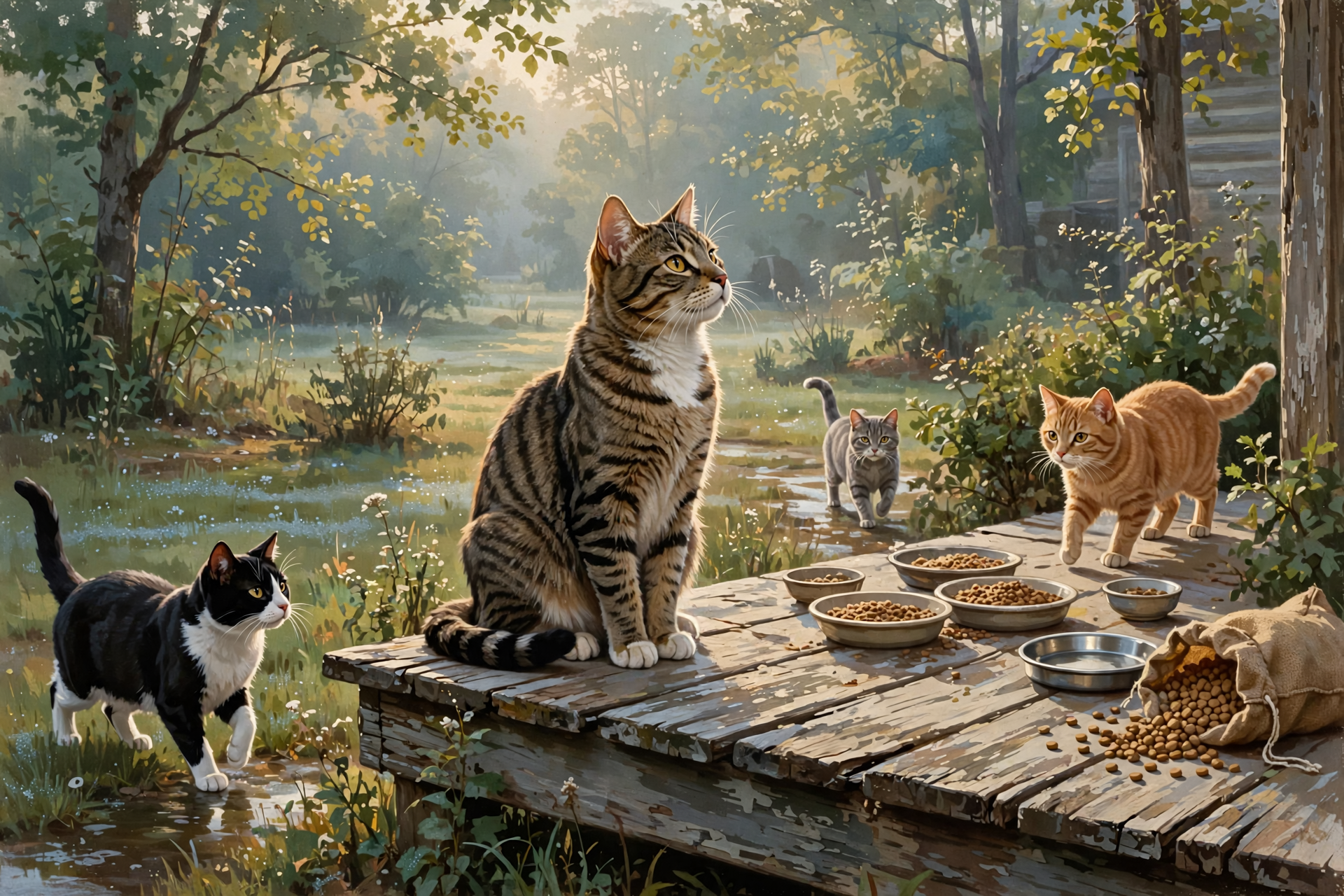
This may be one of the biggest benefits of feeding on a predictable schedule.
The cats show up.
We see them.
That gives us a daily chance to ask:
- 🐱 Is everyone here?
- 🥣 Is everyone eating?
- 🐾 Is anyone limping?
- ⚖️ Does anyone look thinner?
- 😿 Is anyone behaving strangely?
- 🐈 Is there a new cat?
- 🐾 Are there new kittens?
The feeding station becomes a monitoring station.
🏷️ We May Need Names—or At Least IDs
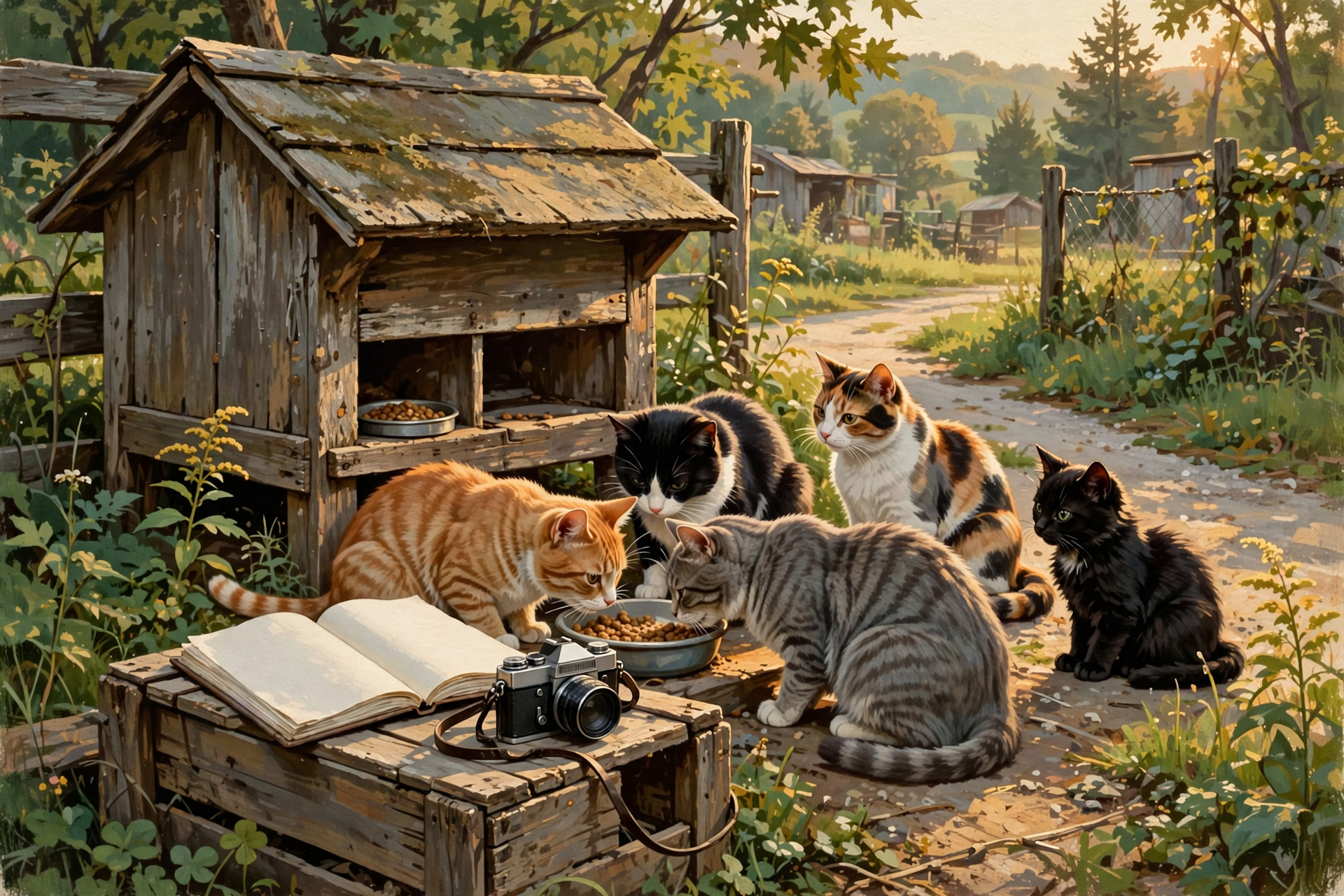
This gets harder when there are forty cats.
Scaredy is easy.
She’s Scaredy.
But eventually:
“that black-and-white cat”
becomes difficult when six cats are black and white.
We may need simple identifiers.
🐱 Name
If the cat already has one.
📸 Photo
Probably our easiest identification tool.
🎨 Coat Description
Color and markings.
⚥ Sex
When known.
✂️ Fixed Status
When known.
📅 Approximate Age
Kitten, young adult, mature, older.
That would make long-term observation much easier.
📸 A Simple Cat Census Could Become Extremely Valuable
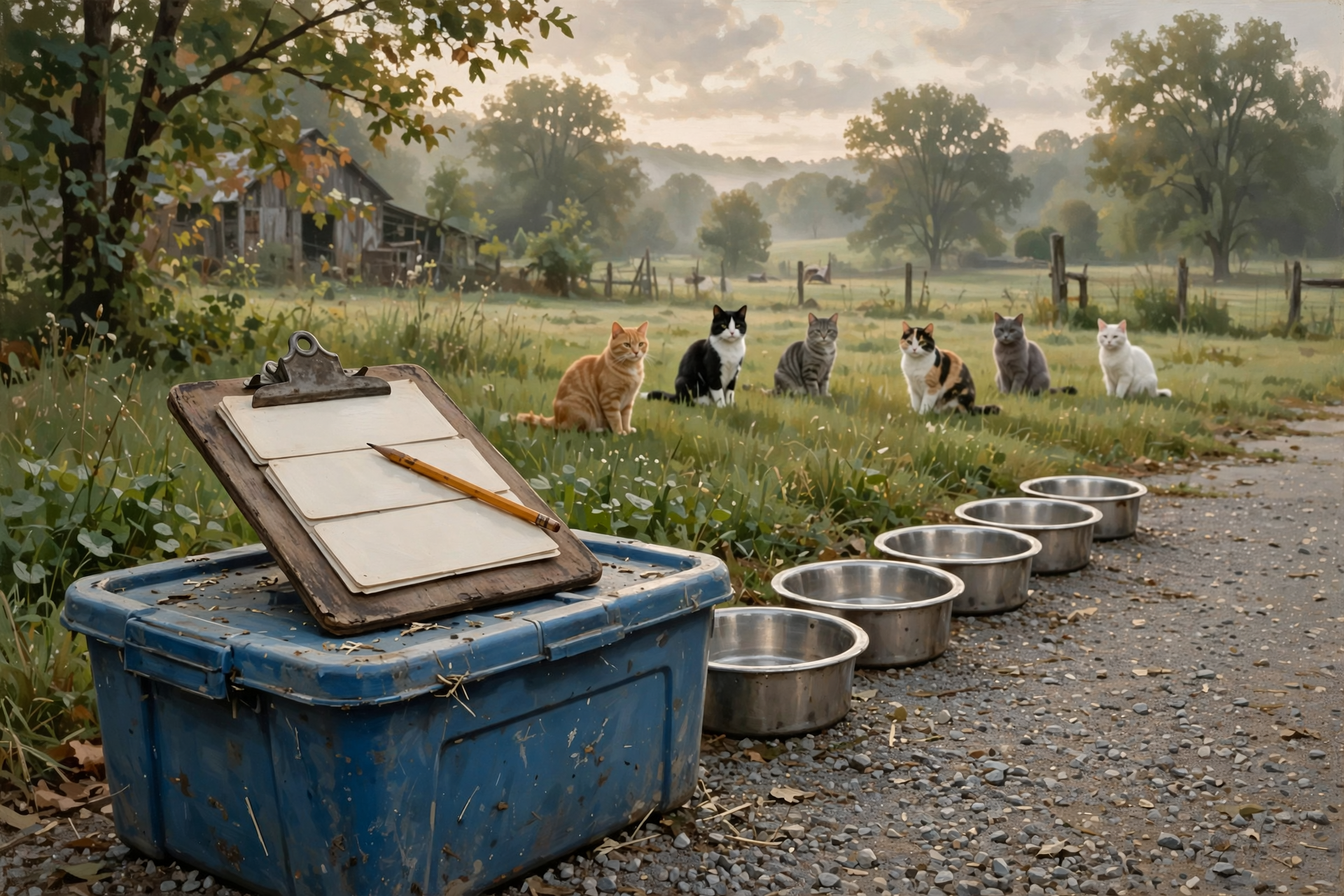
Imagine a record for each recognizable cat:
Name: Scaredy
Photo: Current
Sex: Female
Approximate age: Adult
Fixed: Yes/No/Unknown
Body condition: Thin/Ideal/Heavy or estimated BCS
Feeding behavior: Strong appetite
Notes: Tuna lobbyist
Repeat that for forty cats and suddenly we have something much more useful than:
“There are a bunch of cats outside.”
📊 The Scaredy Cat Wellness Scorecard

I think this should become our standard observational scorecard.
⚖️ Body Condition
Improving, stable or declining?
For friendly cats, use the 9-point Body Condition Score when practical.
🥣 Appetite
Normal, increased, reduced or absent?
✨ Coat
Clean and groomed, rough, greasy, matted or thinning?
😸 Activity
Normal for that cat, increased or reduced?
💧 Water
Normal use, unusual increase, or difficult to observe?
💩 Stool
Normal when observed, persistently loose, unusually hard or otherwise concerning?
🐾 Mobility
Normal, stiff, limping or struggling?
👀 Eyes and Nose
Clear or persistent discharge?
🐛 Parasite Signs
Fleas, visible worms, scratching or skin irritation?
📈 Trend
Better, stable or worse than last month?
🟢 Green, 🟡 Yellow and 🔴 Red May Be Easier Than Numbers
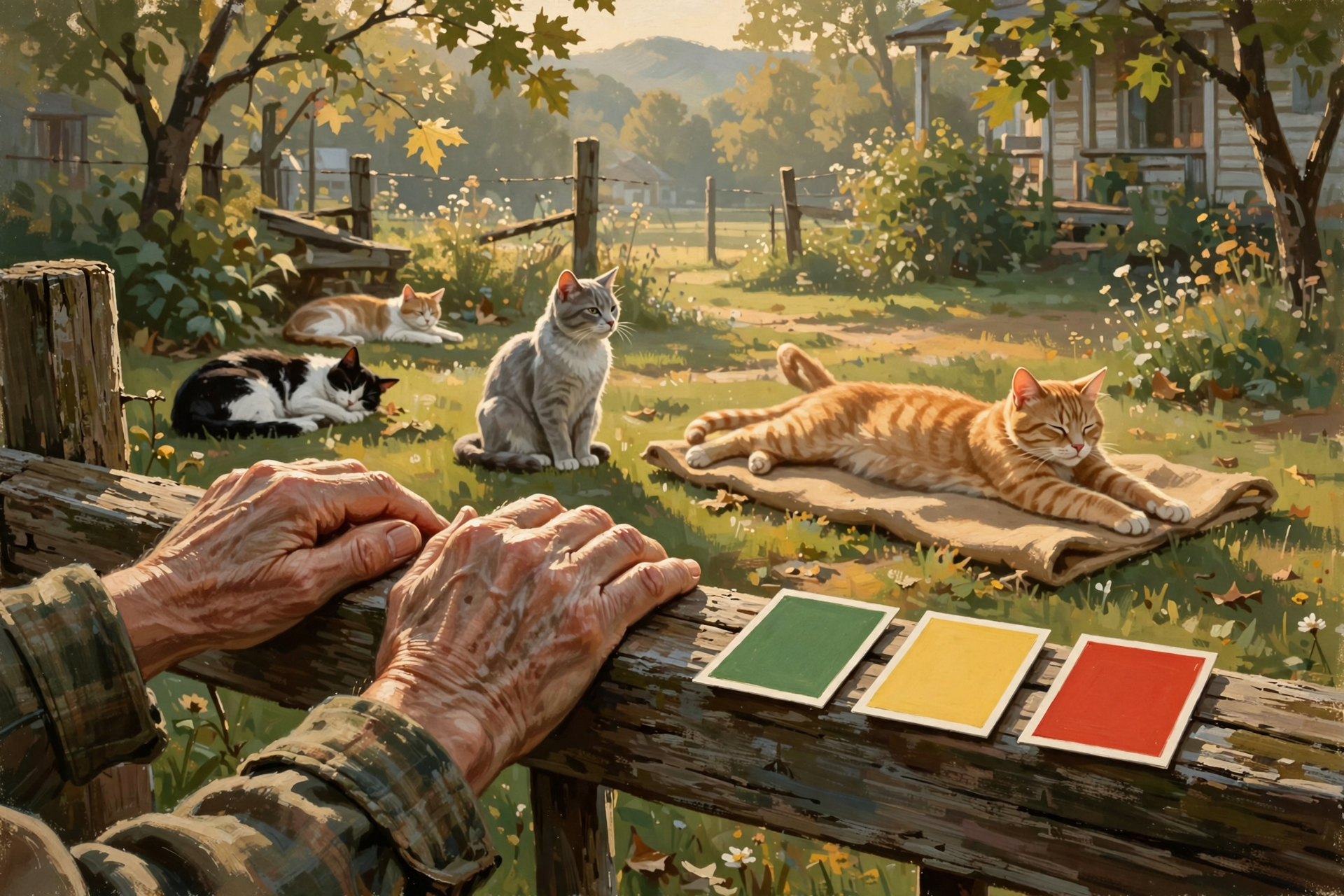
For forty cats, we don’t necessarily need complicated medical charts.
A simple traffic-light system might work.
🟢 Green
Looks stable.
Eating normally.
Normal activity.
Body condition appears reasonable.
🟡 Yellow
Something changed.
Slight weight loss.
Reduced appetite.
Rougher coat.
Limping.
Needs closer observation.
🔴 Red
Significant deterioration.
Not eating.
Severe weight loss.
Difficulty breathing.
Major injury.
Unable to move normally.
Now we’re no longer evaluating cat food.
We’re dealing with an animal that needs direct attention.
📉 Trends Matter More Than One Bad Day

Scaredy can have a bad hair day.
I certainly can.
A cat might skip one meal.
It might have one loose stool.
It may sleep more after a particularly active night.
One observation is information.
A repeating pattern is stronger information.
That is why regular tracking matters.
📅 Monthly Review May Be Enough for Most Cats
We don’t need to conduct a wellness audit every morning.
Perhaps the system looks like this:
Daily
Notice major changes.
Who appears?
Who eats?
Weekly
Pay attention to any yellow-flag cats.
Monthly
Update photos and general condition for recognizable cats.
Review kitten growth.
Look for trends.
That’s manageable.
💰 Health Tracking Is Part of Cost Control
This may sound like a separate issue from our feeding budget.
It isn’t.
If an inexpensive food leads to:
- 📉 Declining body condition
- 💩 Persistent digestive problems
- 🗑️ Excessive waste
- 😿 Poor appetite
then the cheap food isn’t actually performing well.
Conversely, a slightly more expensive food that maintains healthy body condition with less waste may be the better economic choice.
📊 Cost and Condition Belong on the Same Dashboard
I think our eventual feeding dashboard should show:
- 💵 Cost per cat per day
- 🔥 Cost per 1,000 calories
- 🗑️ Food waste
- 🐱 Colony count
- 🐾 Kitten count
- ⚖️ Number of thin cats
- 🟢 Green-condition cats
- 🟡 Yellow-condition cats
- 🔴 Red-condition cats
- ✂️ Number fixed
- 🏡 Number adopted
Now we’re measuring outcomes instead of activity.
“We distributed 200 pounds of food” is activity.
“Body condition improved while cost per cat remained sustainable” is an outcome.
❤️ That Is the Real Goal of the Project

We’re not trying to become exceptionally efficient at pouring cat food into bowls.
We’re trying to help living animals.
That means success should look like:
- ⚖️ More cats maintaining healthy body condition
- 🐾 Kittens growing appropriately
- 🥣 Cats reliably eating
- ✨ Better-looking coats
- 💧 Reliable water
- ✂️ More cats spayed or neutered
- 🏡 More adoptable cats finding homes
- 📉 Fewer new kittens over time
That’s a much better scoreboard than pounds of kibble purchased.
🐱 Scaredy Is Still Our Best Reminder
Scaredy was once so thin after her thirty-six-day adventure that she could barely walk when we finally got her out of that tree.
Today I look at pictures of her and wonder whether she looks healthier.
That comparison is exactly what this article is about.
Not:
Did Scaredy eat?
Of course Scaredy ate.
She has people trained for that.
The better question is:
How is Scaredy doing?
And eventually:
How are all of them doing?
🔜 Next: The Cats Need Names—Building a Simple Community-Cat Census

The more we talk about monitoring health, feeding, spaying, neutering and adoption, the more obvious another problem becomes.
We need to know which cat we’re talking about.
So the next Scaredy Cat Project article will look at building a simple colony census.
Not bureaucracy.
Just enough information to keep track of:
- 📸 Photo
- 🐱 Name or ID
- 🎨 Markings
- ⚥ Sex
- 📅 Approximate age
- ✂️ Spay/neuter status
- ⚖️ Body condition
- 🐾 Temperament
- 🏡 Adoption potential
- 🩺 Health observations
- 📍 Regular feeding location
Because you can’t manage forty cats very well when every conversation starts with:
“You know…the gray one.”
📣 What Changes Do You Watch For?

If you care for community cats around Dunlap or Sequatchie County, we’d like to know what you’ve learned from watching them over time.
Can you tell when a cat is losing weight?
Do certain cats disappear from feeding time when they’re sick?
Have you noticed coat changes after improving their food?
Do you photograph or weigh friendly cats?
How do you keep track of kittens?
Those practical observations could help us build a simple wellness system that ordinary caregivers can actually use.
❤️ Feed Them. Fix Them. Find Them Homes When We Can. Help the Rest Age Gracefully.
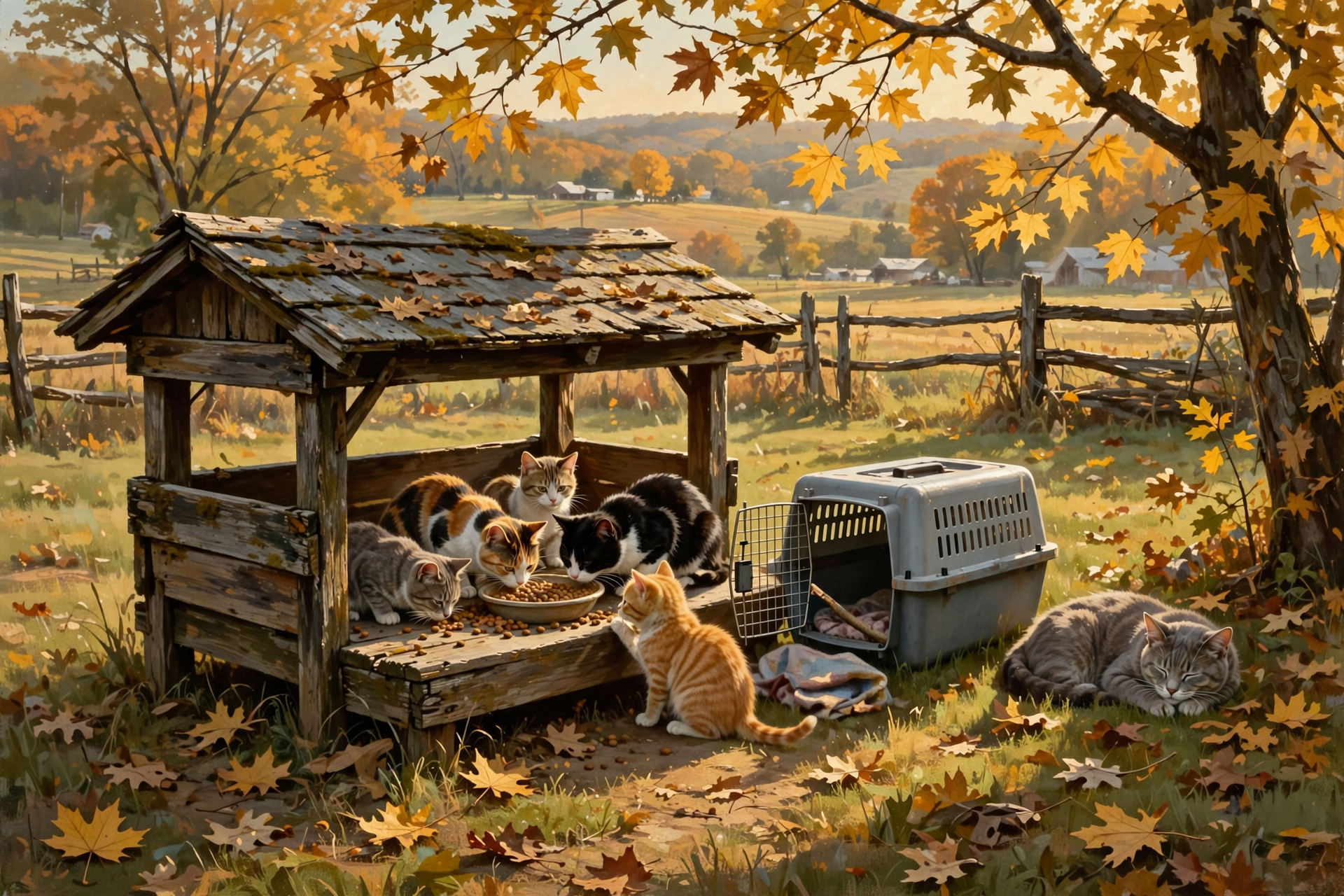
Food is a means.
Not the outcome.
The outcome is healthier cats.
Stronger kittens.
Older cats that can maintain weight.
Animals that show up, eat, groom, move and live as comfortably as circumstances allow.
Then fewer kittens.
More fixed cats.
More adoptions.
A smaller, healthier colony over time.
That’s how we’ll know whether The Scaredy Cat Project is working.
The bowls can tell us how much food disappeared.
The cats have to tell us whether it helped.
🐾 Feed them. Fix them. Find them homes when we can. Help the rest age gracefully.
🔎 Sources & Further Reading

- Cornell University College of Veterinary Medicine — Feline Health Center, Feeding Your Cat
- Cornell University College of Veterinary Medicine — Obesity
- Cornell University College of Veterinary Medicine — How Often Should You Feed Your Cat?
- Merck Veterinary Manual — Overview of Nutrition: Small Animals

0 Comments